PALS AHA & Pediatric Emergency Preparedness Workshop – Batch 1
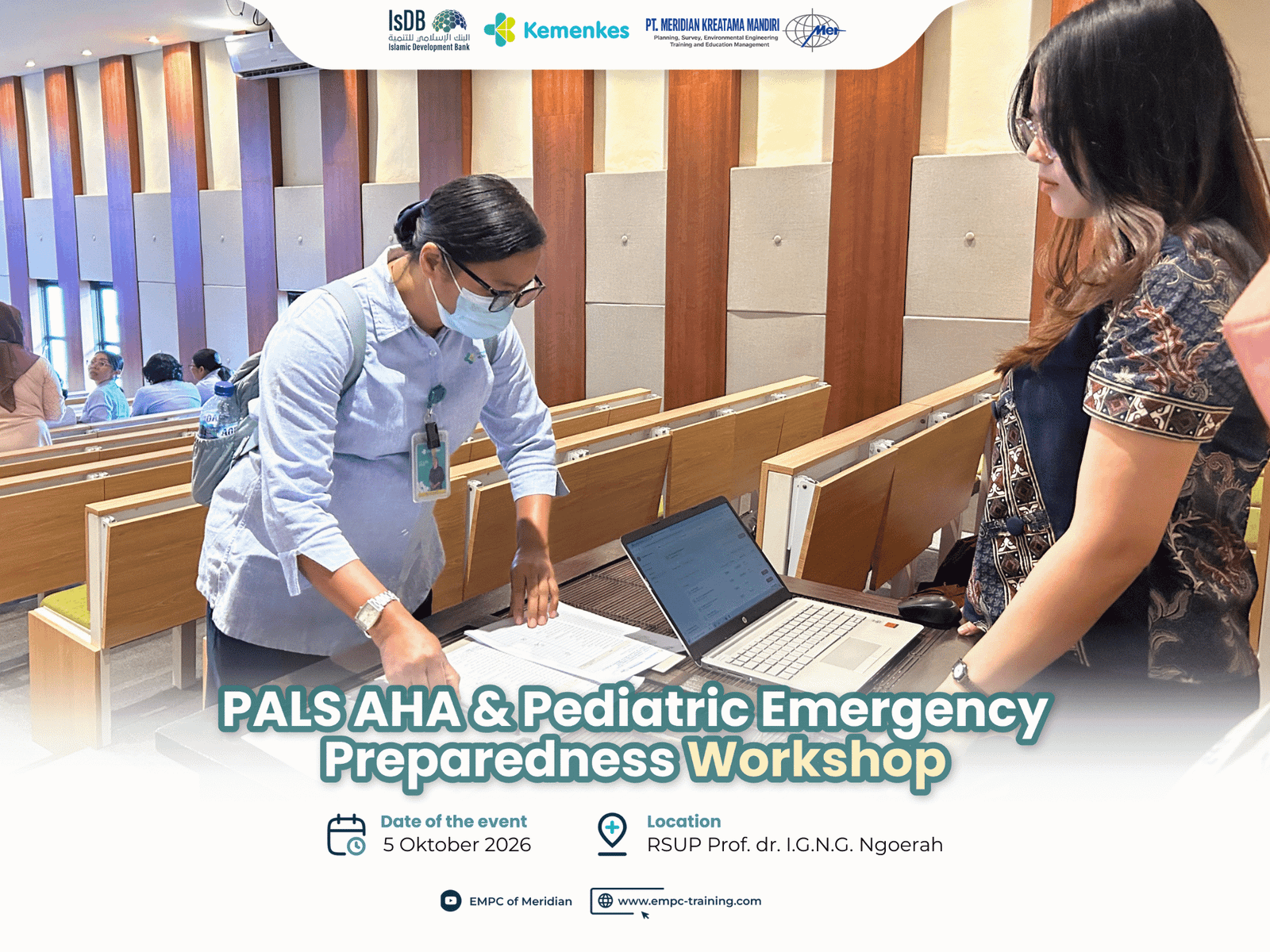
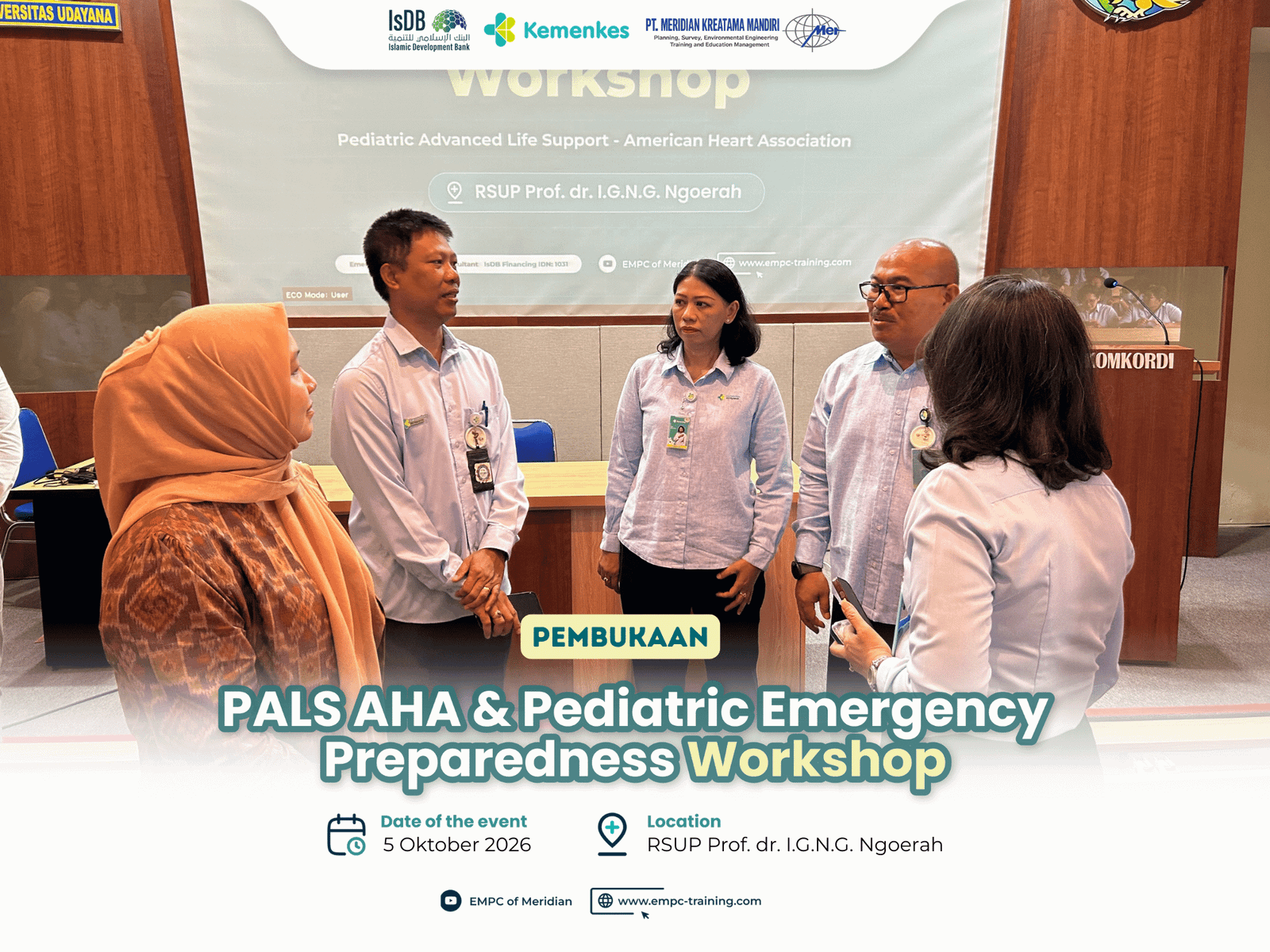
Bali, 5-7 October 2026 — The PALS AHA & Pediatric Emergency Preparedness Workshop – Batch 1 was successfully conducted at RSUP Prof. Dr. I.G.N.G. Ngoerah, Bali, as part of the EMPC Program Hospital Training under IsDB Project IDN: 1031.
The training brought together healthcare professionals from RSUP Prof. Dr. I.G.N.G. Ngoerah to strengthen their knowledge, clinical skills, and preparedness in responding to pediatric emergencies. Through interactive learning sessions, discussions, and practical activities, participants were encouraged to enhance their ability to provide timely and effective emergency care for pediatric patients.
The PALS (Pediatric Advanced Life Support) training, aligned with the American Heart Association (AHA)framework, focuses on developing essential competencies in the recognition and management of critically ill and injured children, including effective resuscitation and emergency response.
As the first batch of the PALS training program, the workshop marks an important step in strengthening pediatric emergency preparedness and supporting the development of a more capable and responsive hospital emergency care system.
The training also reflects the commitment of EMPC – PT Meridian Kreatama Mandiri, in collaboration with project partners and healthcare institutions, to support continuous capacity building and improve the quality of emergency healthcare services in Indonesia.
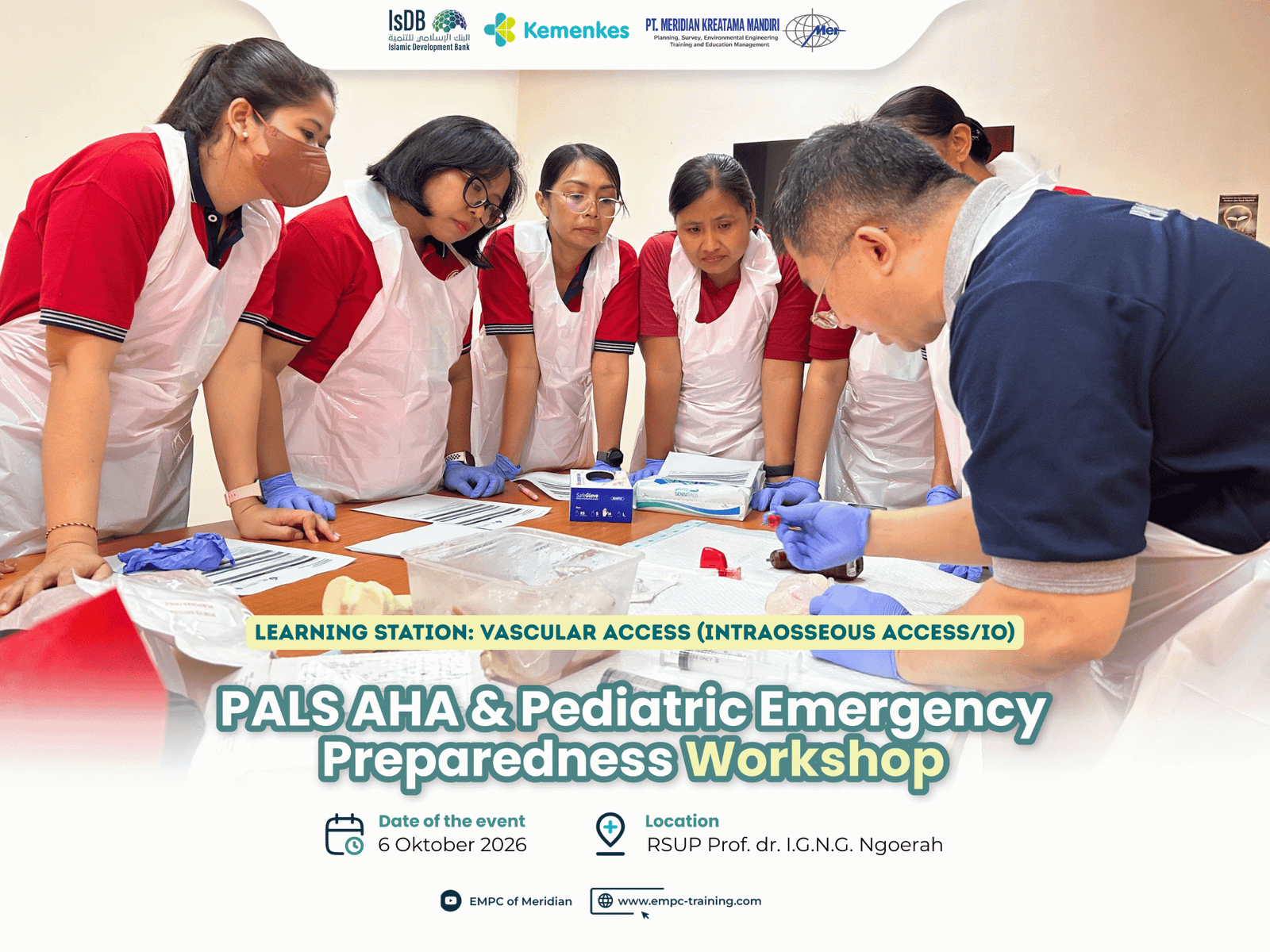
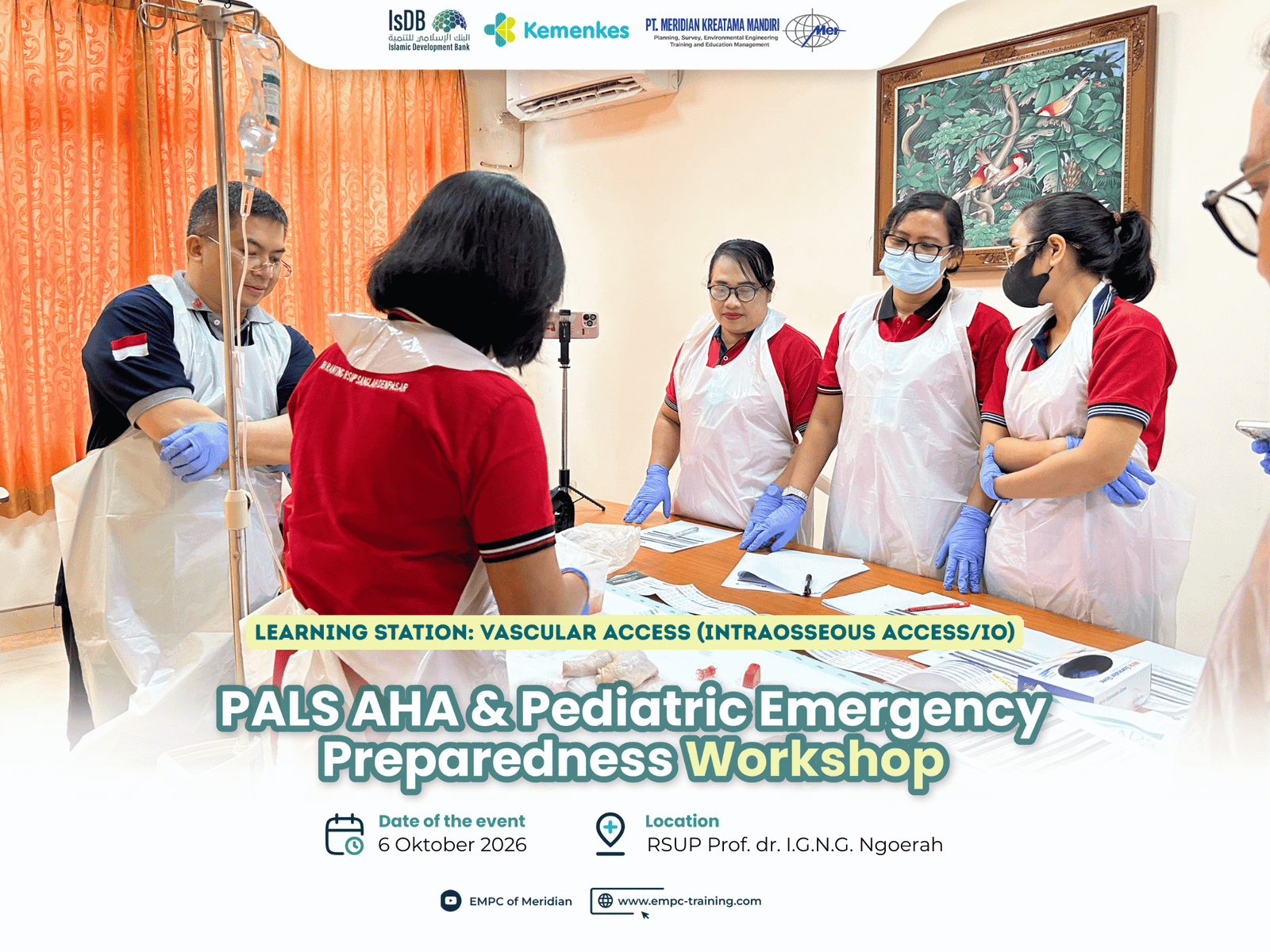
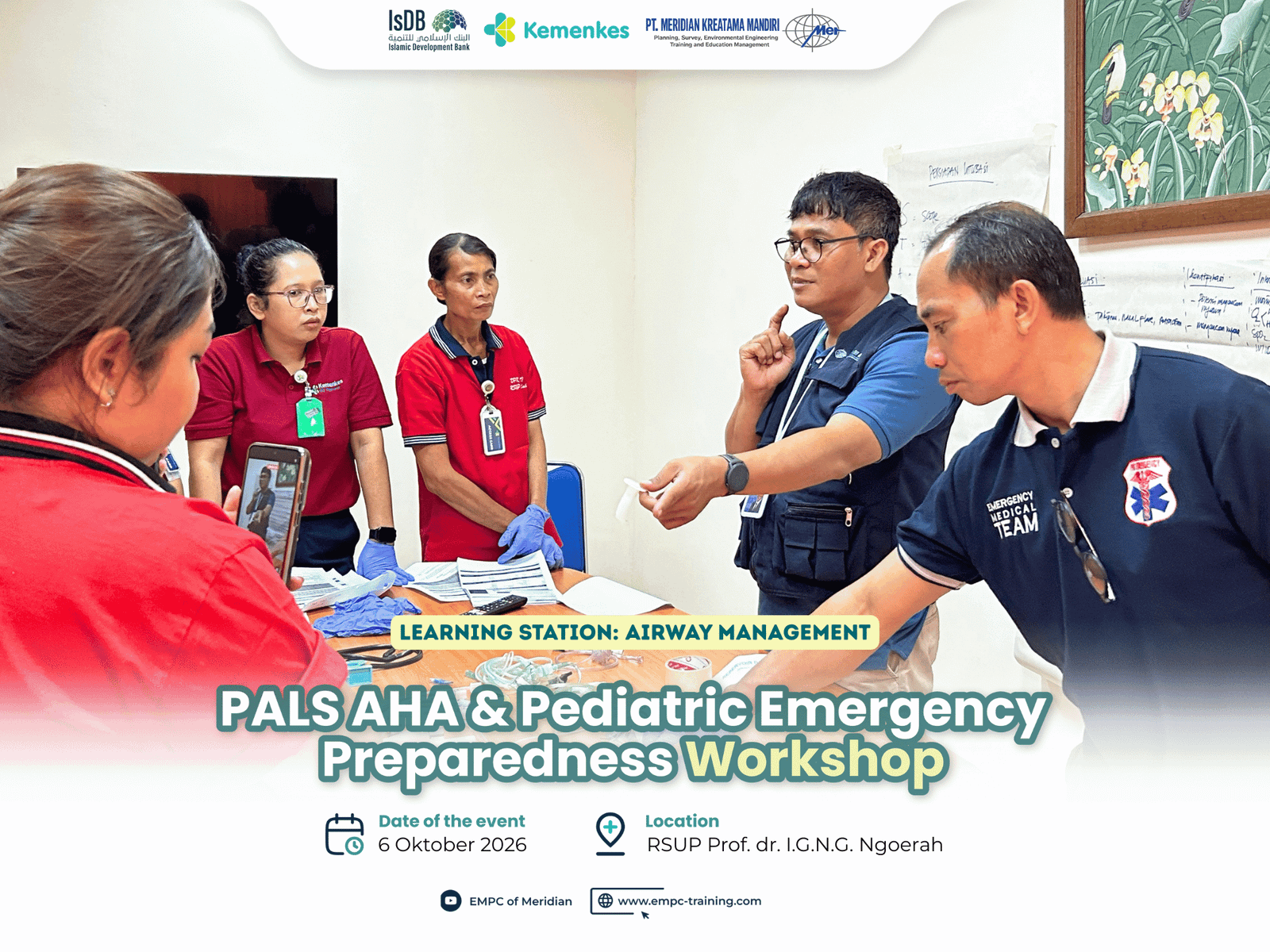
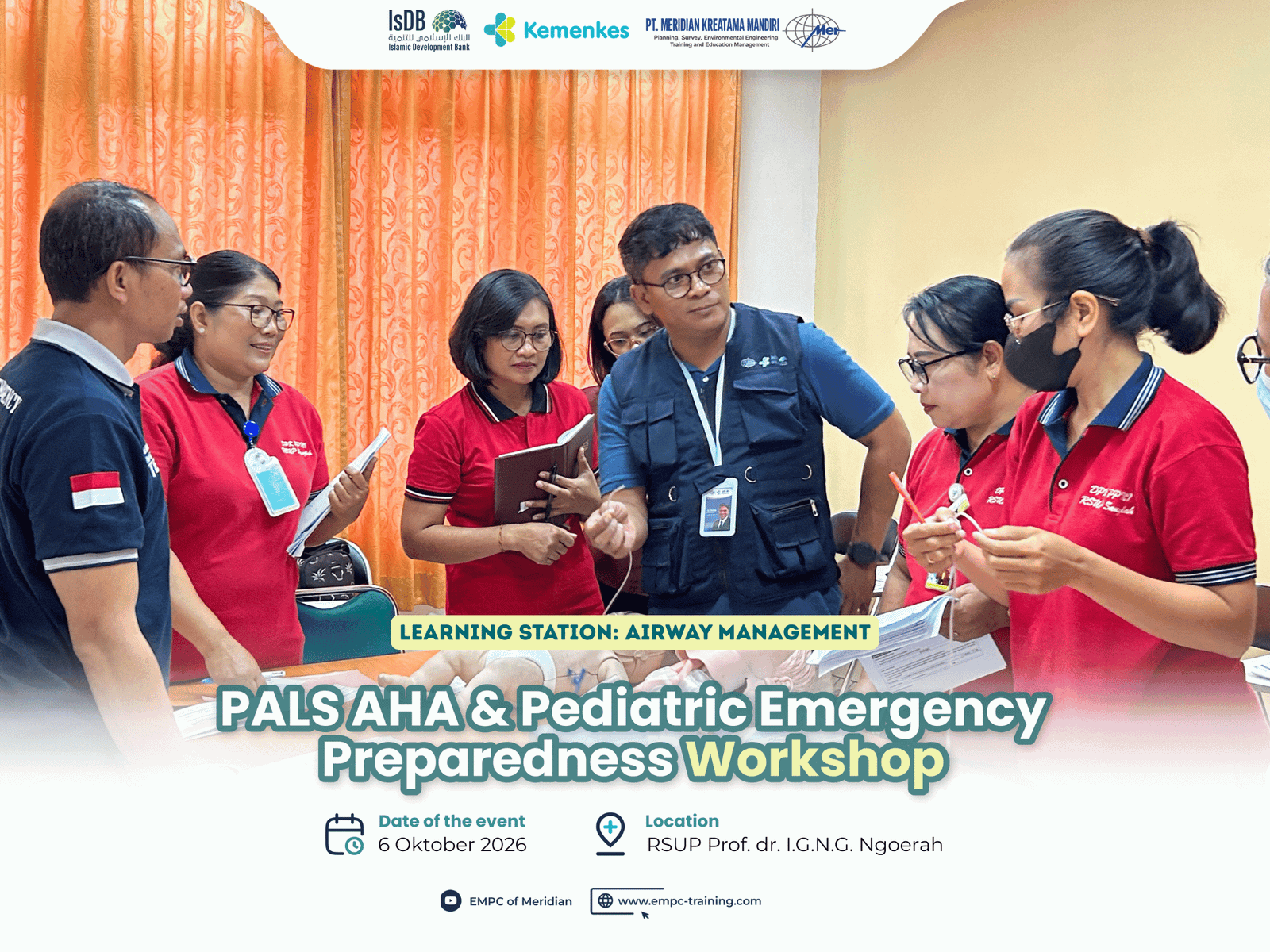
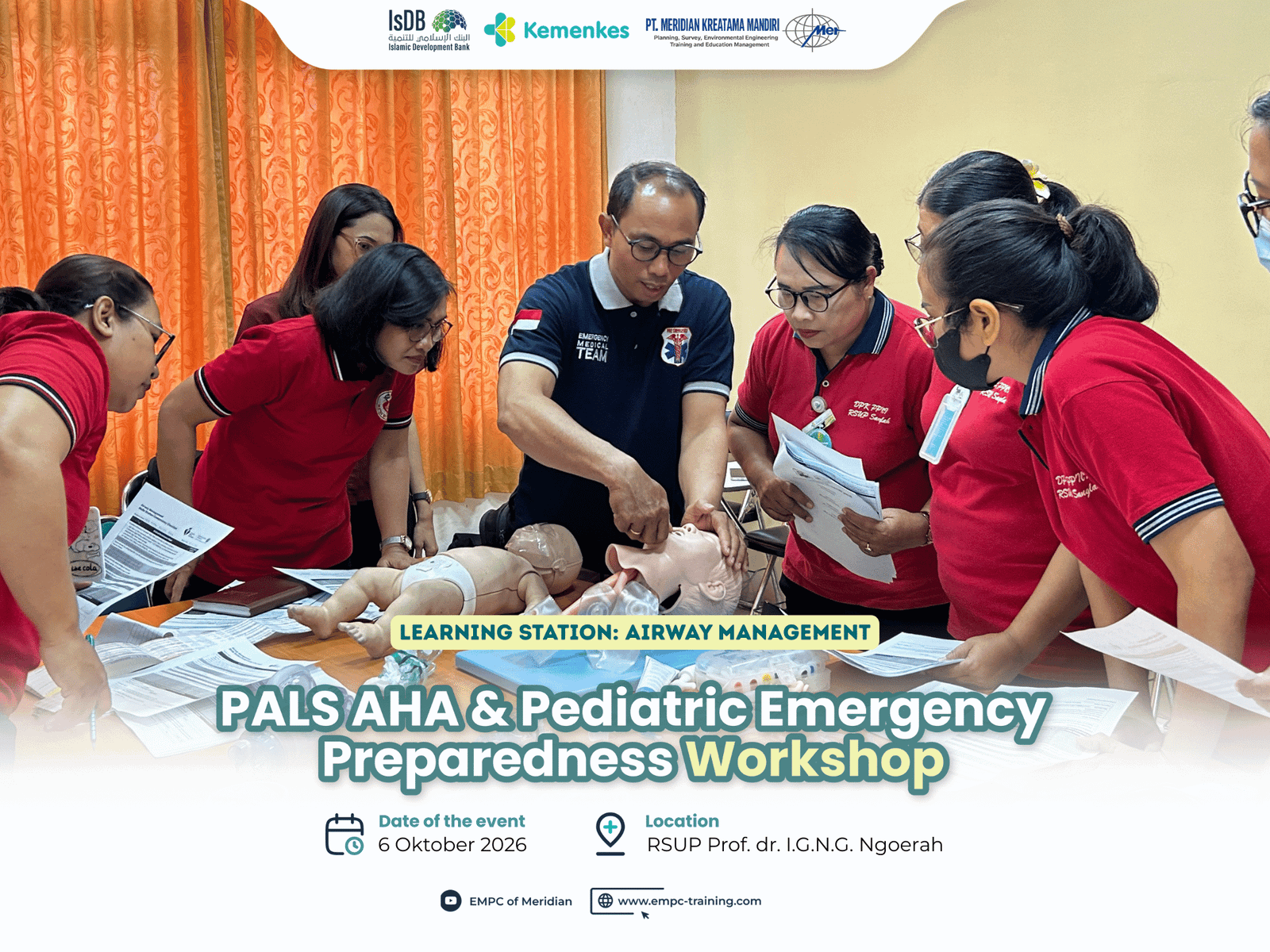
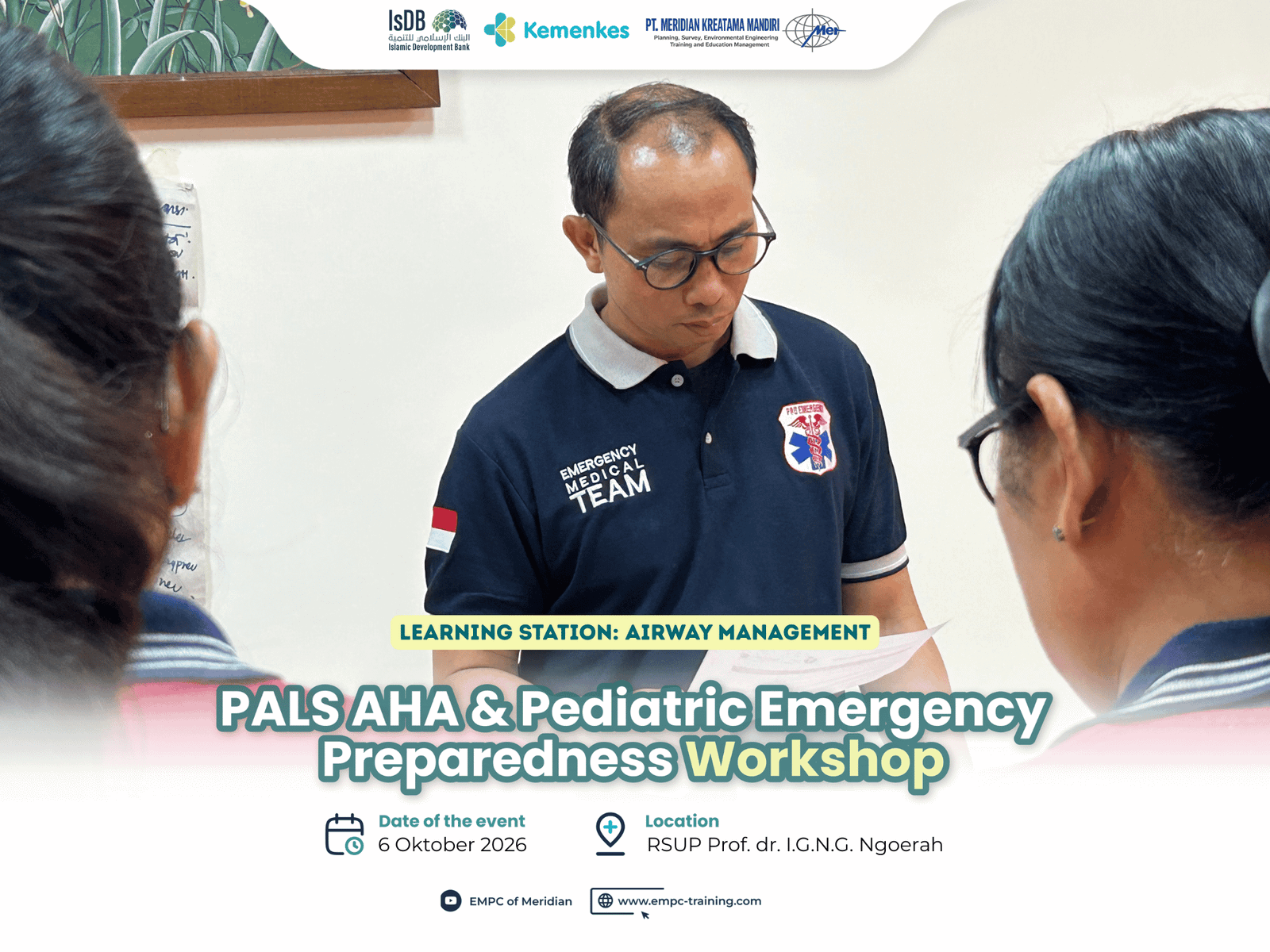
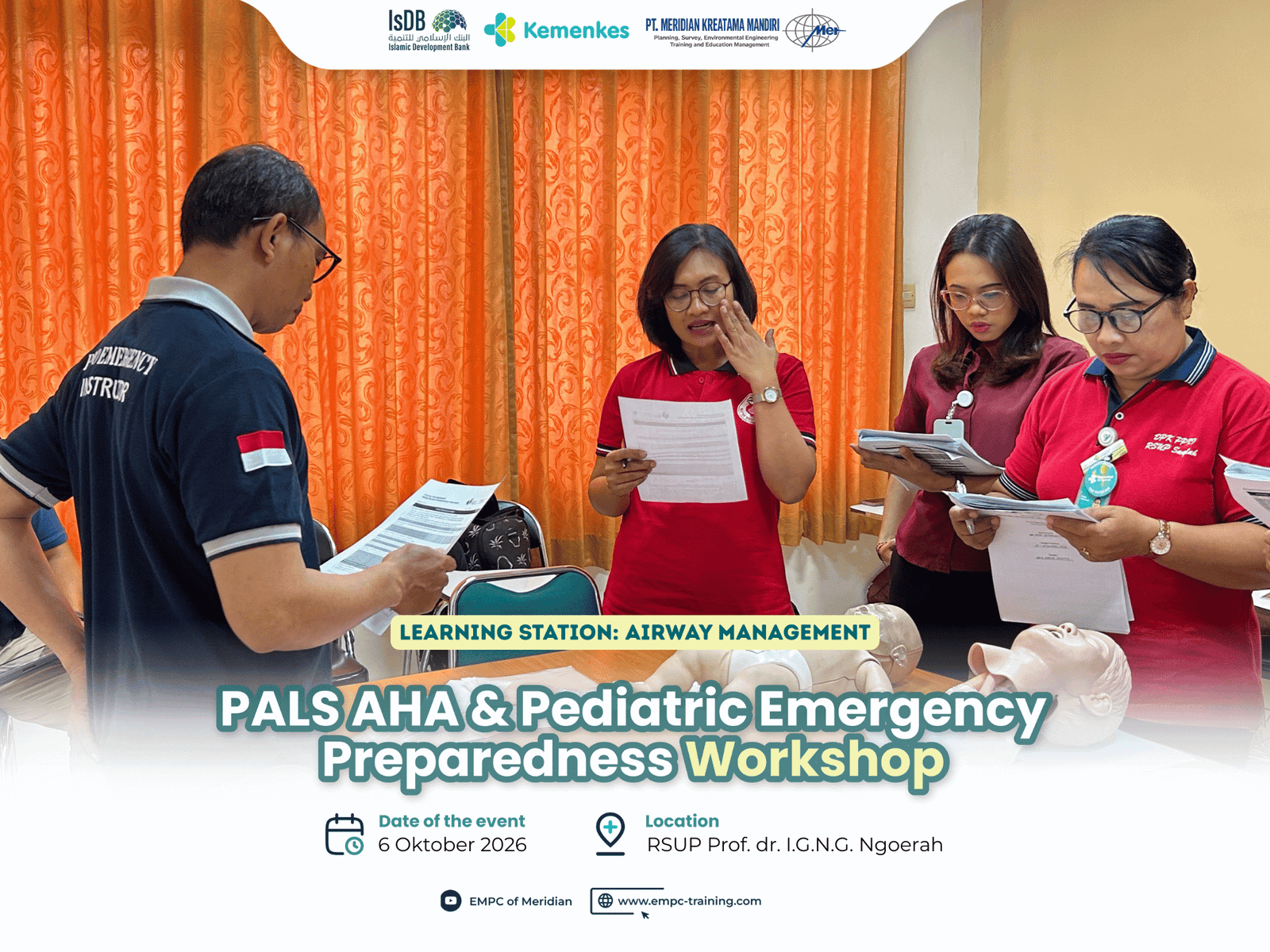
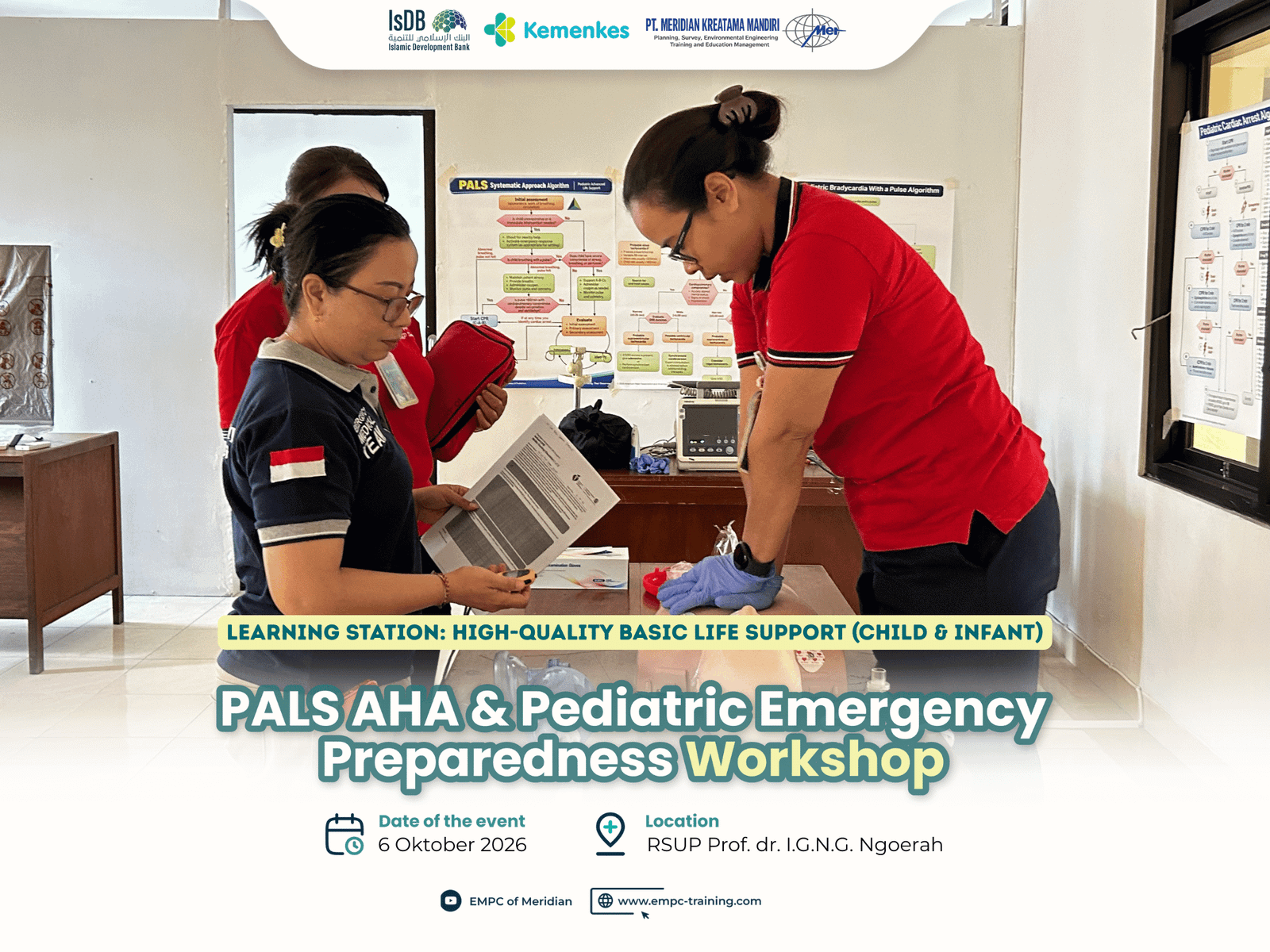
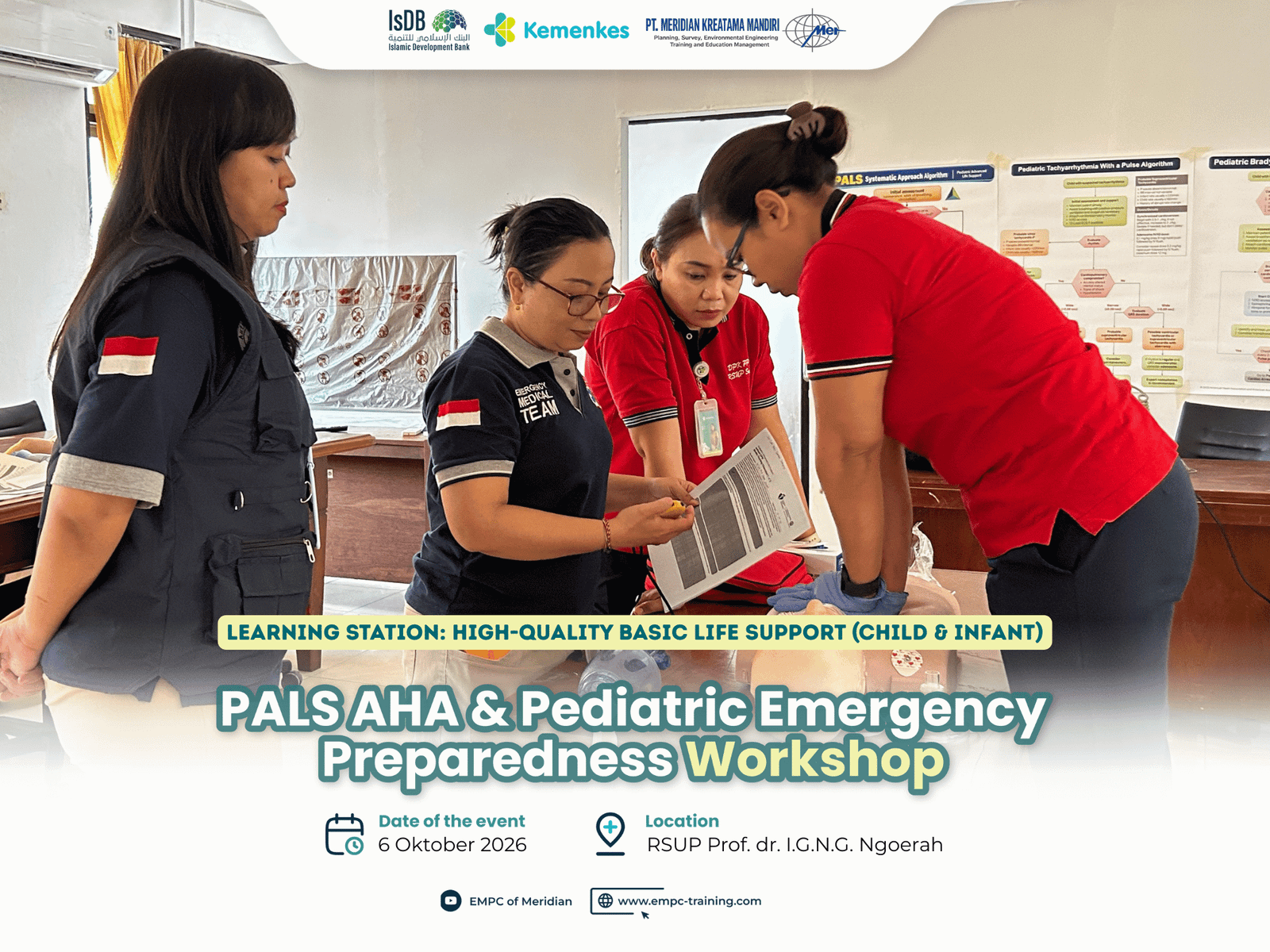
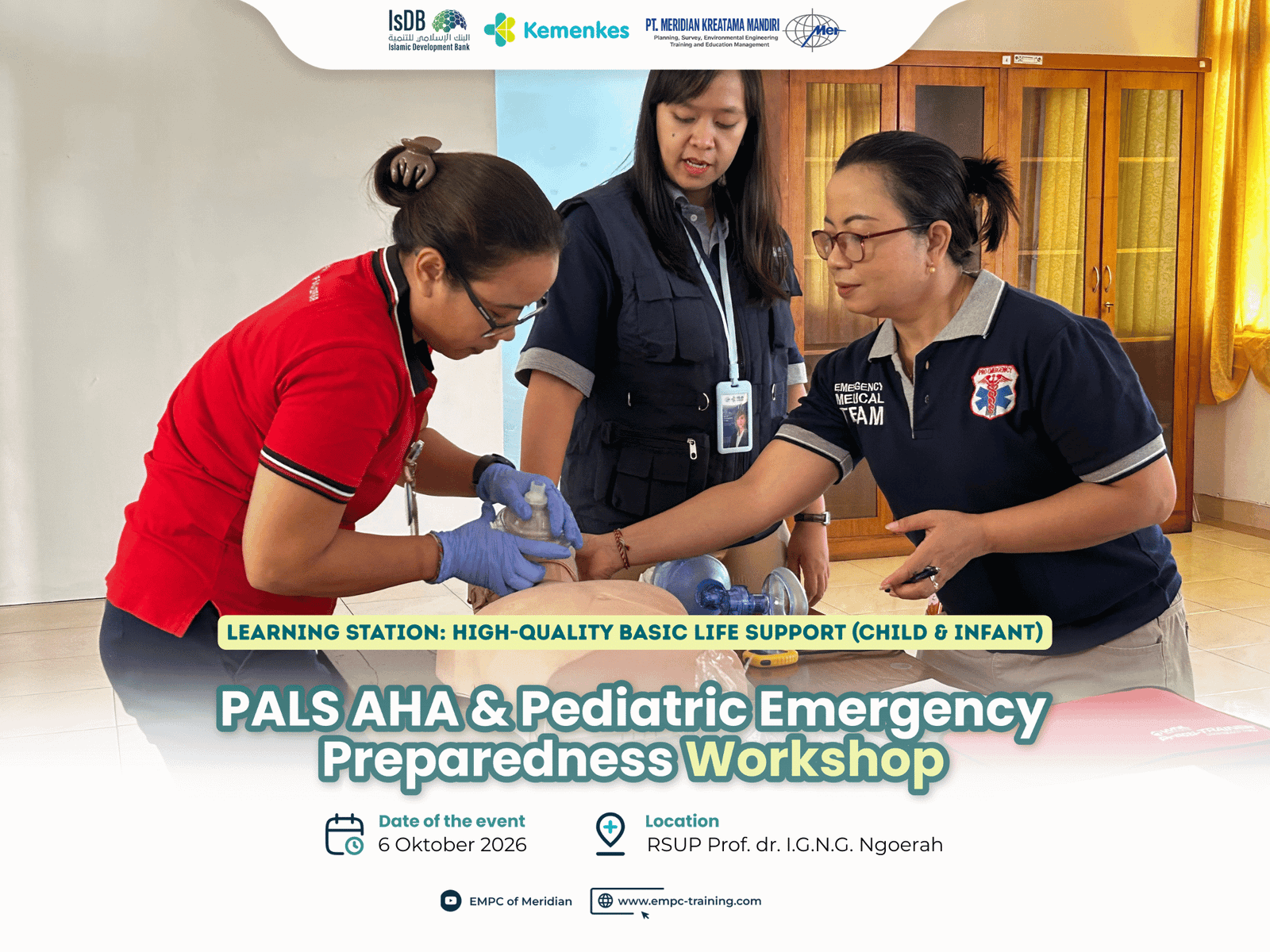
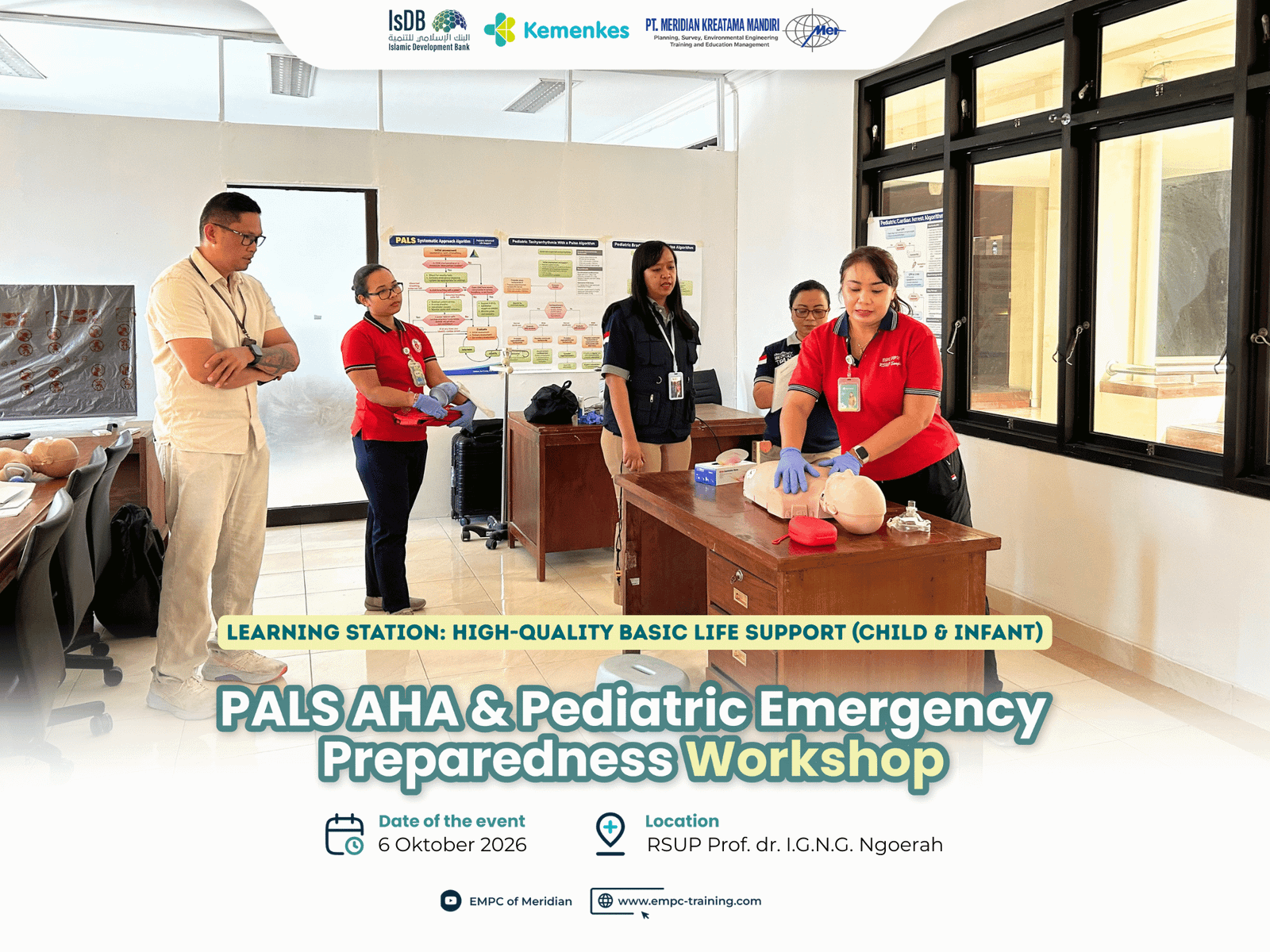
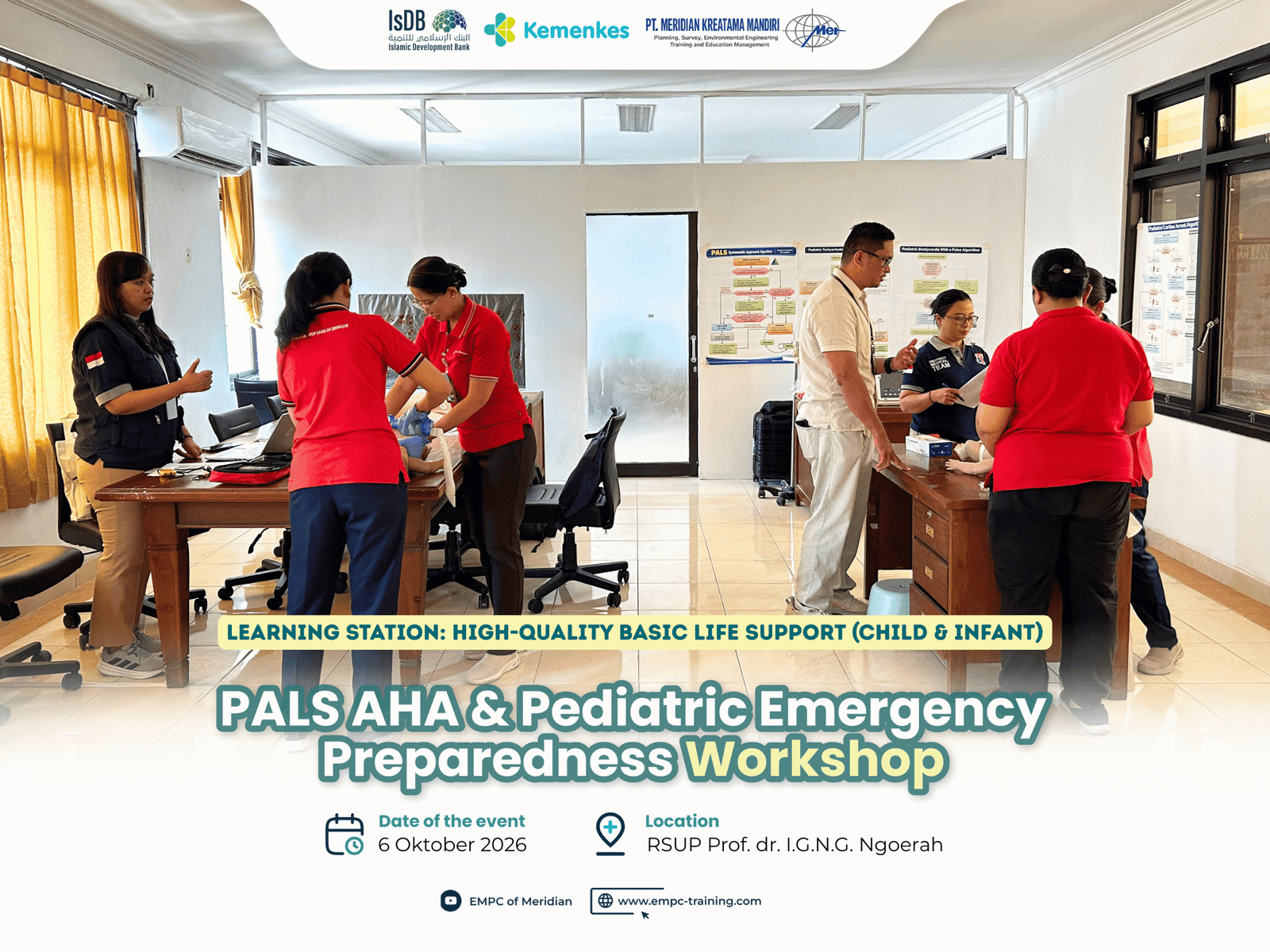
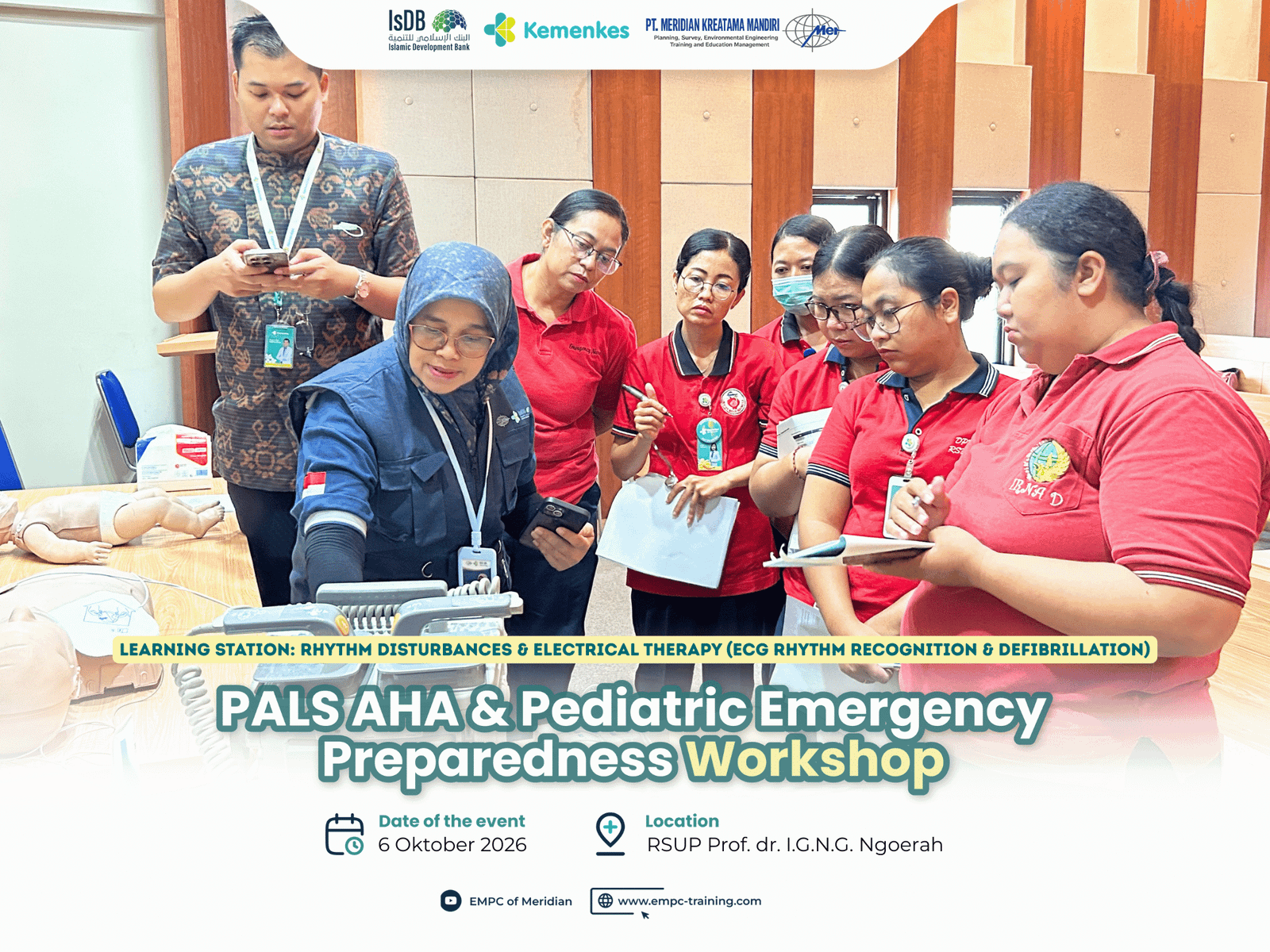
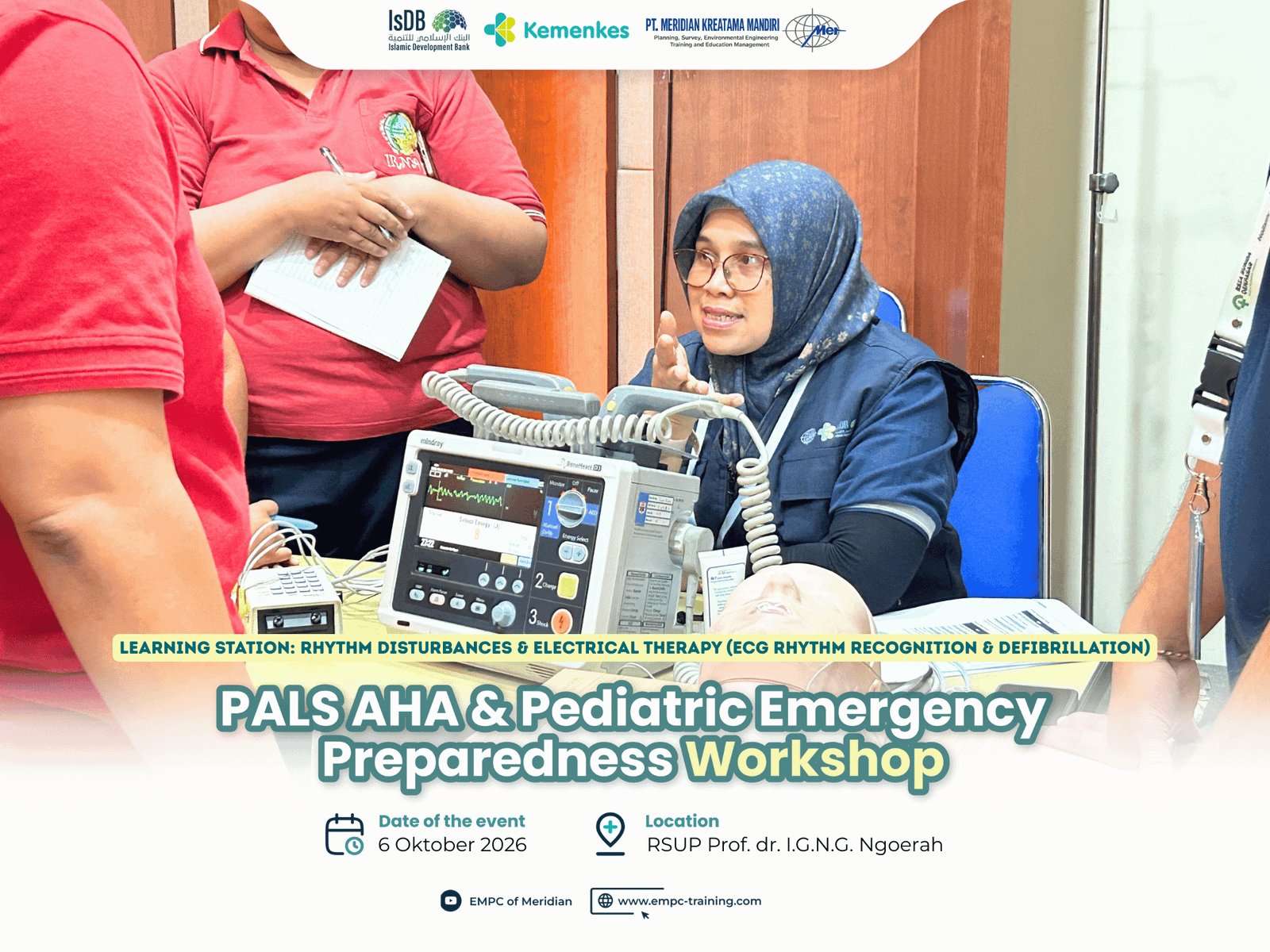
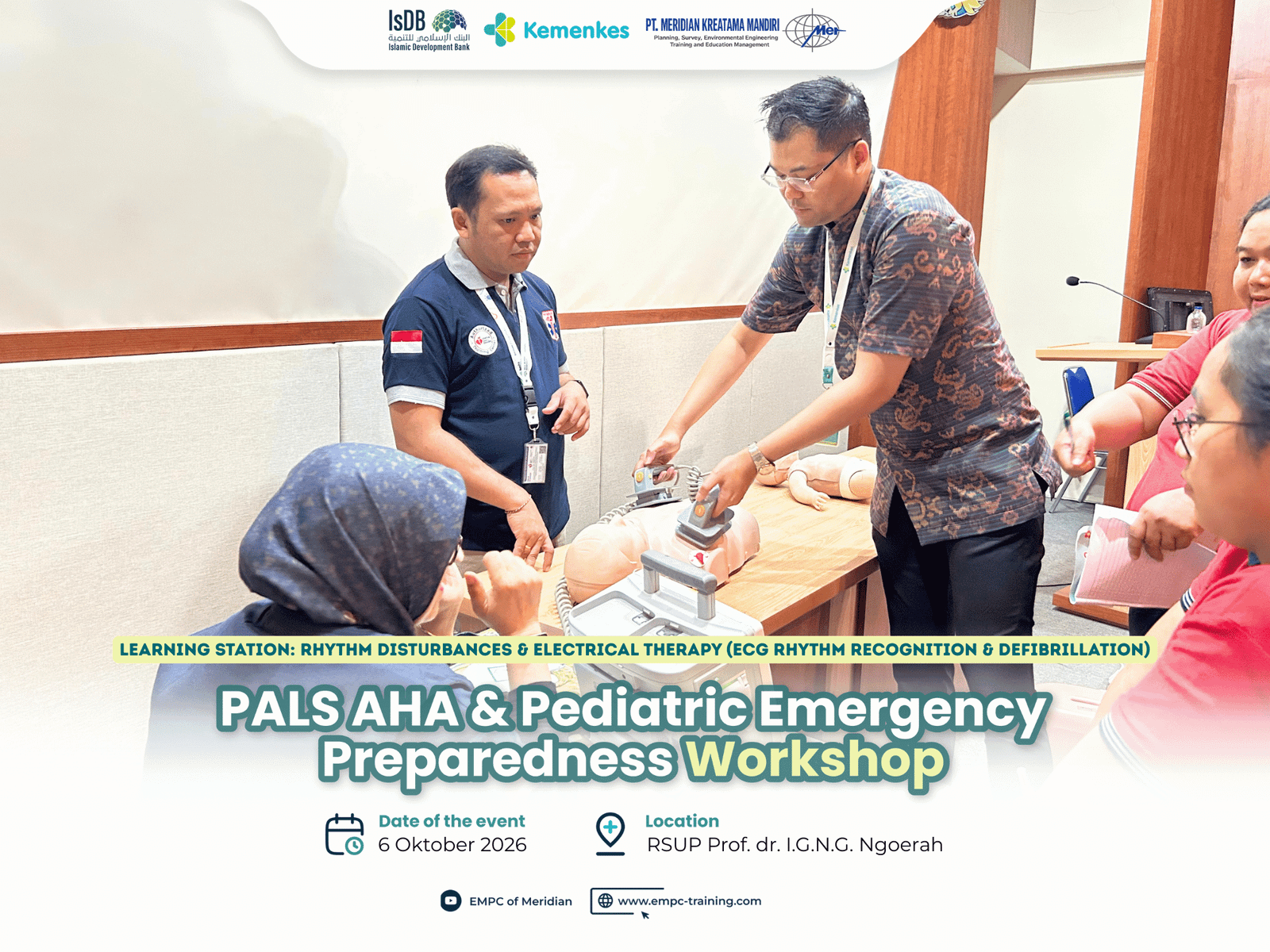
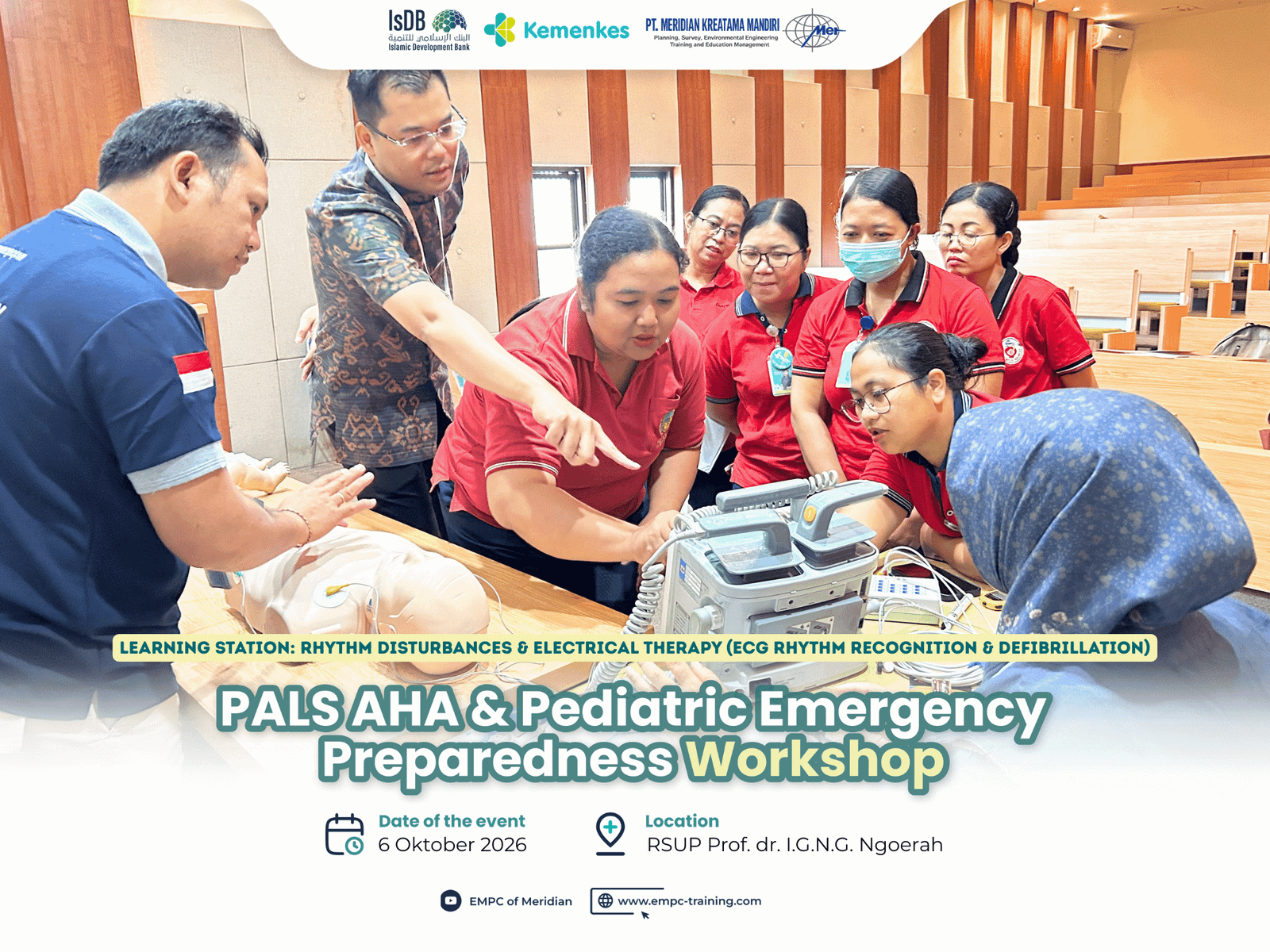
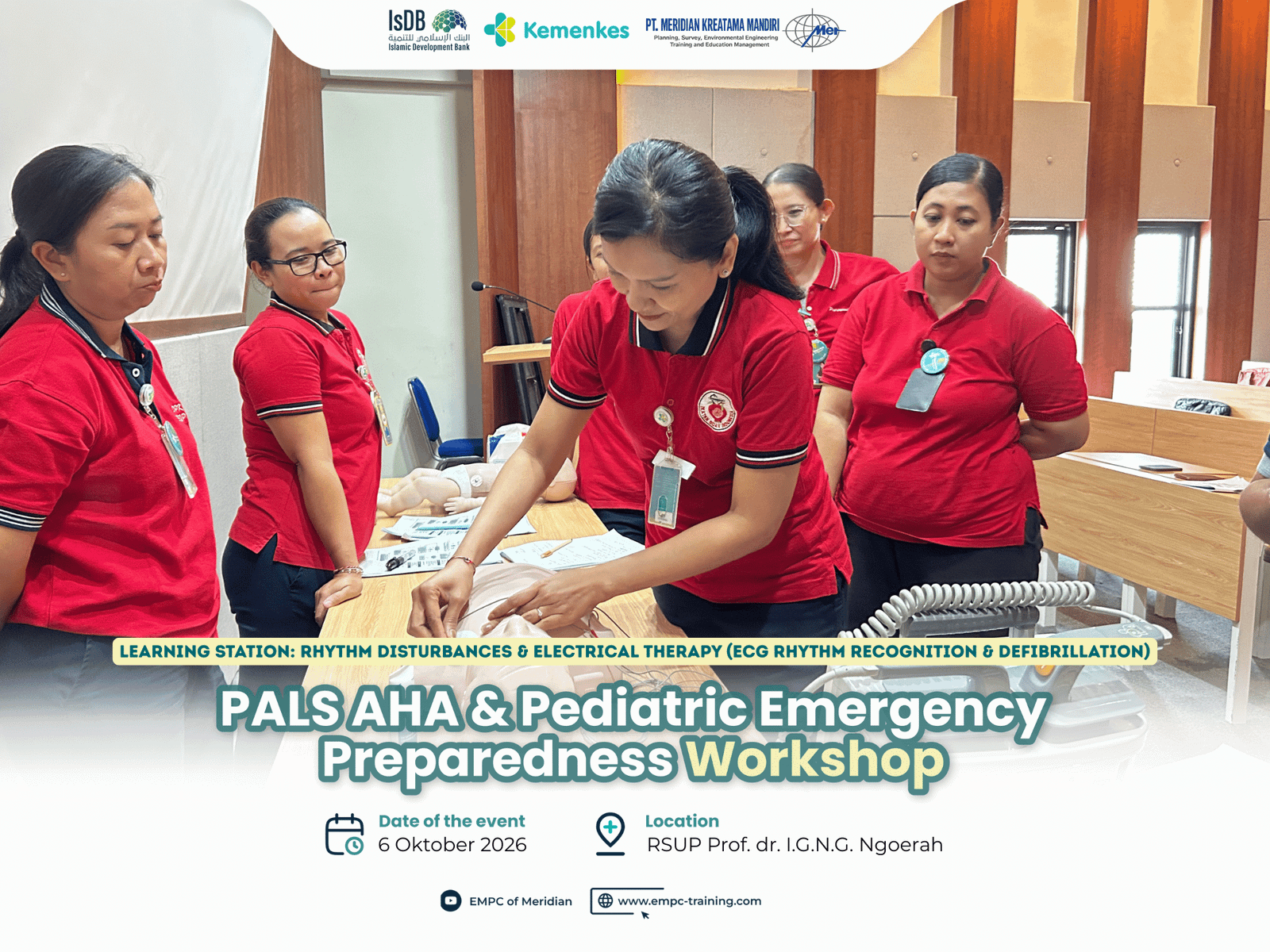
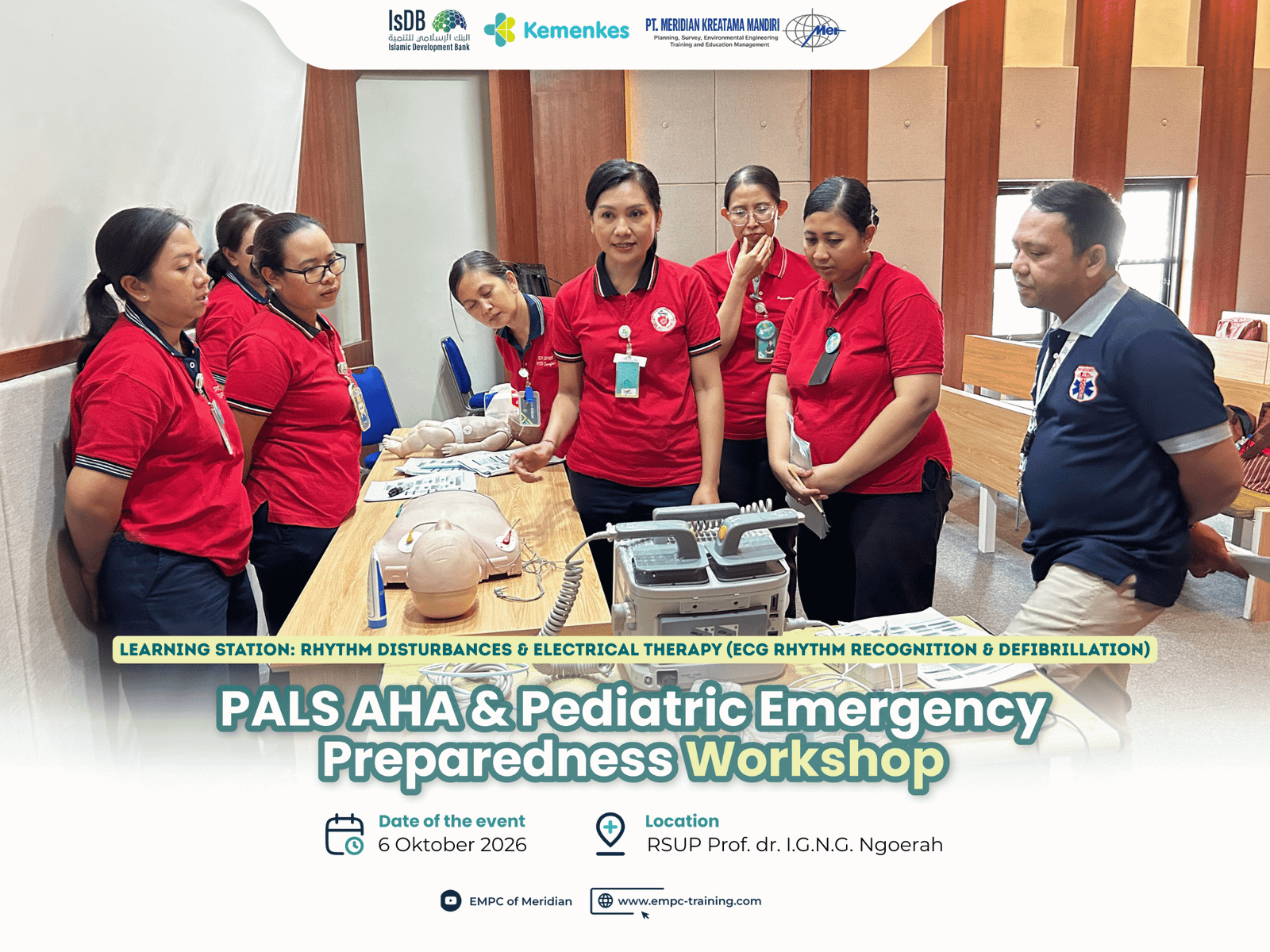
On the second day of the training, participants took part in a series of hands-on learning stations designed to strengthen their practical skills in pediatric emergency management. The sessions provided opportunities for participants to apply key concepts through simulation, demonstrations, and guided practice.
The Day 2 activities consisted of four learning stations:
- Rhythm Disturbances & Electrical Therapy
Participants learned ECG rhythm recognition and defibrillation, focusing on the identification and management of life-threatening rhythm disturbances. - High-Quality Basic Life Support (Child & Infant)
This station focused on the essential principles and techniques of providing high-quality Basic Life Support (BLS) for pediatric and infant patients, including effective chest compressions and coordinated resuscitation. - Airway Management
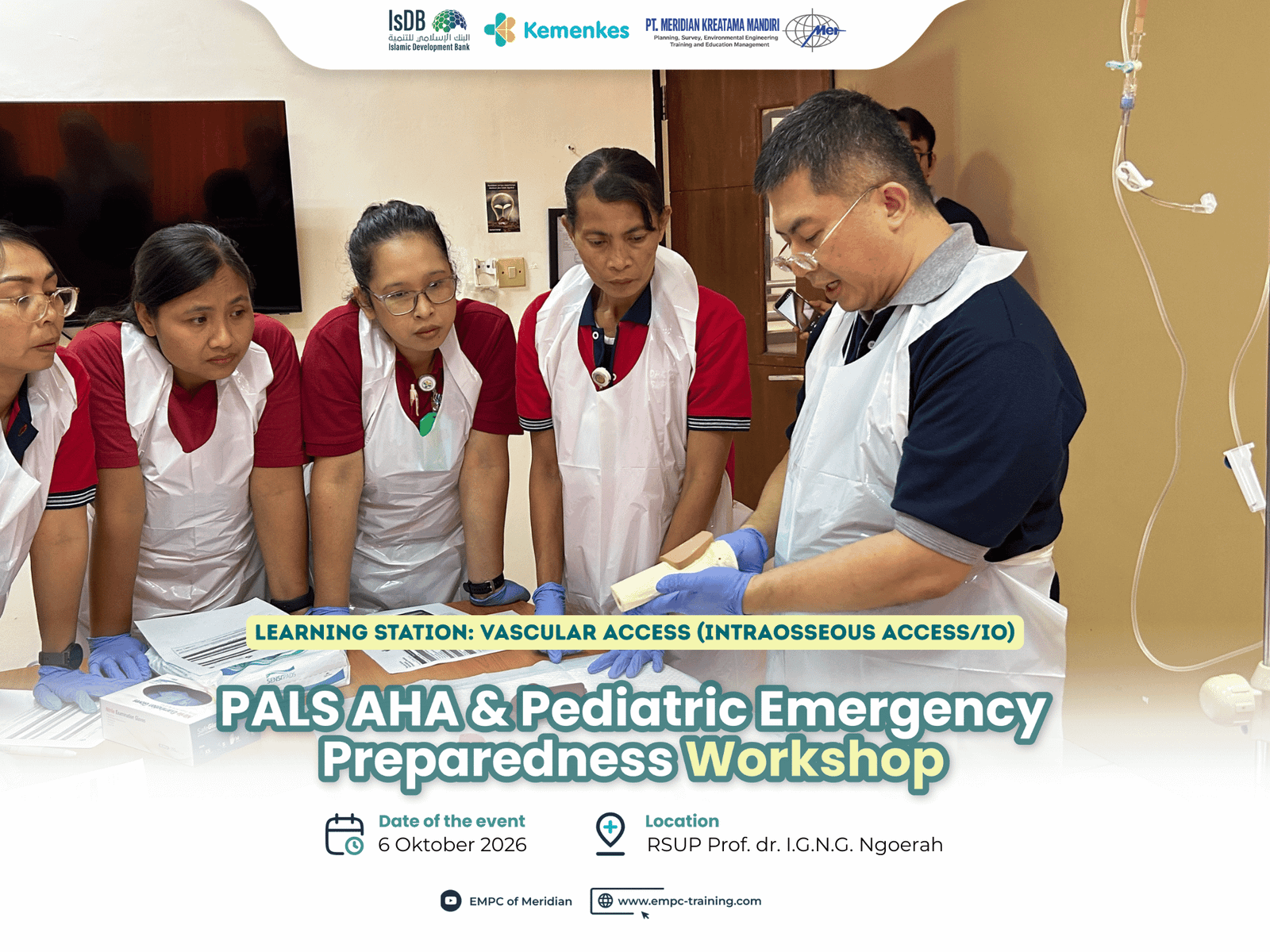
Participants practiced essential airway management techniques to maintain and support effective ventilation in critically ill pediatric patients. - Vascular Access – Intraosseous Access (IO)
Participants were introduced to intraosseous (IO) access as an emergency vascular access technique, particularly in situations where conventional intravenous access is difficult or cannot be established promptly.
Through these practical learning stations, participants were able to develop greater confidence and competency in performing critical interventions during pediatric emergencies. The hands-on approach also encouraged active participation, teamwork, and effective decision-making in emergency situations.
5 October 2026
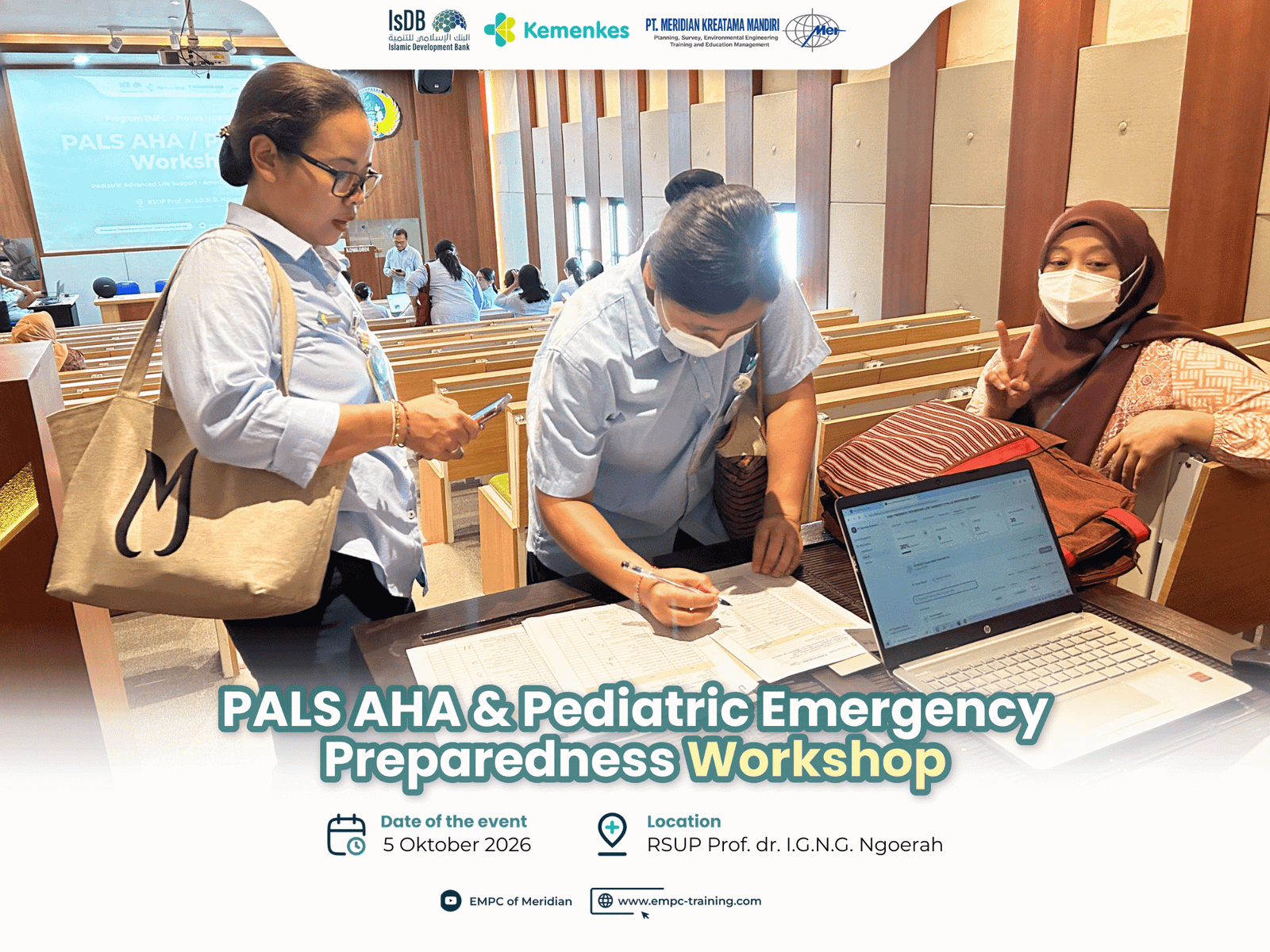
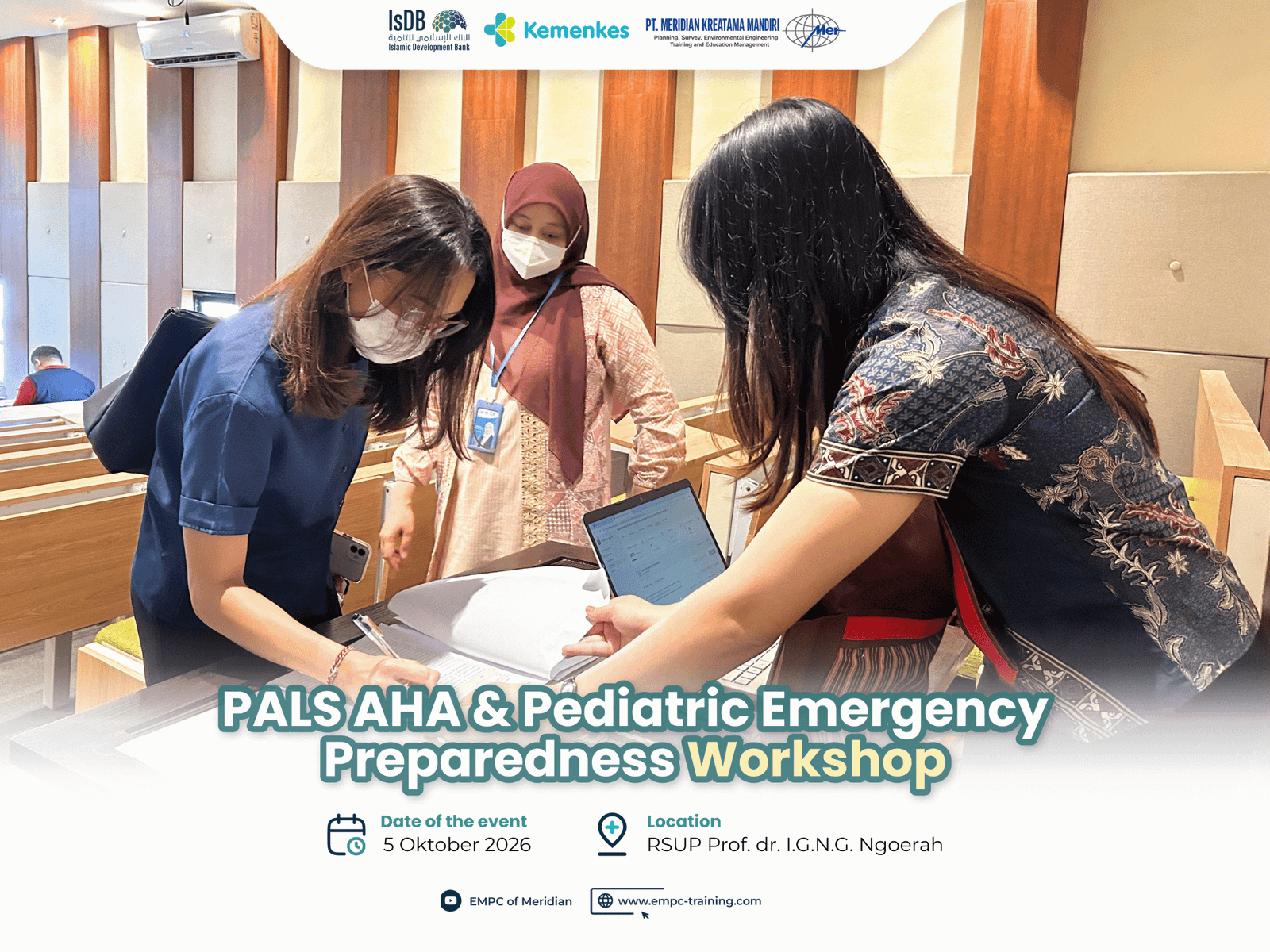
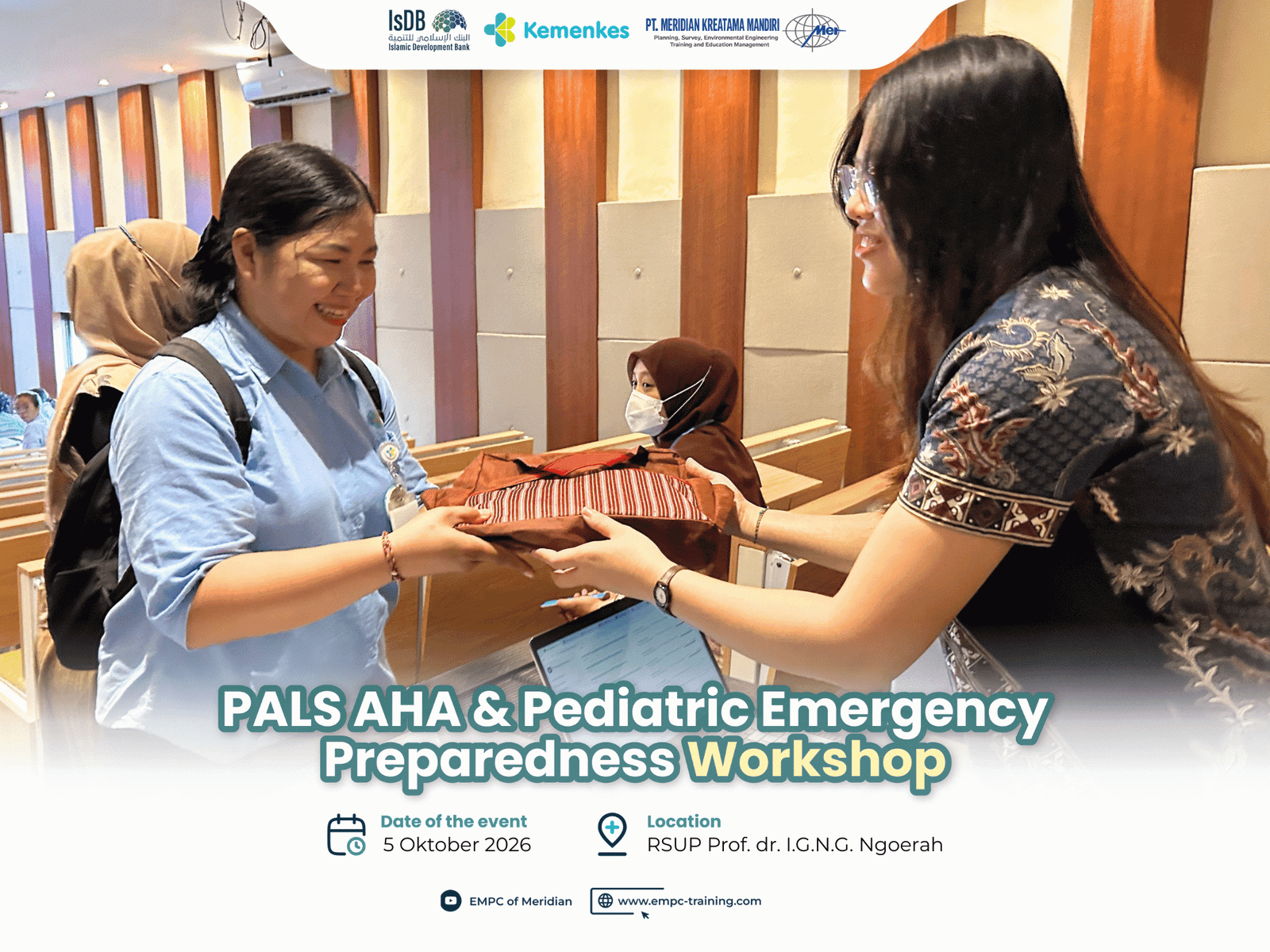
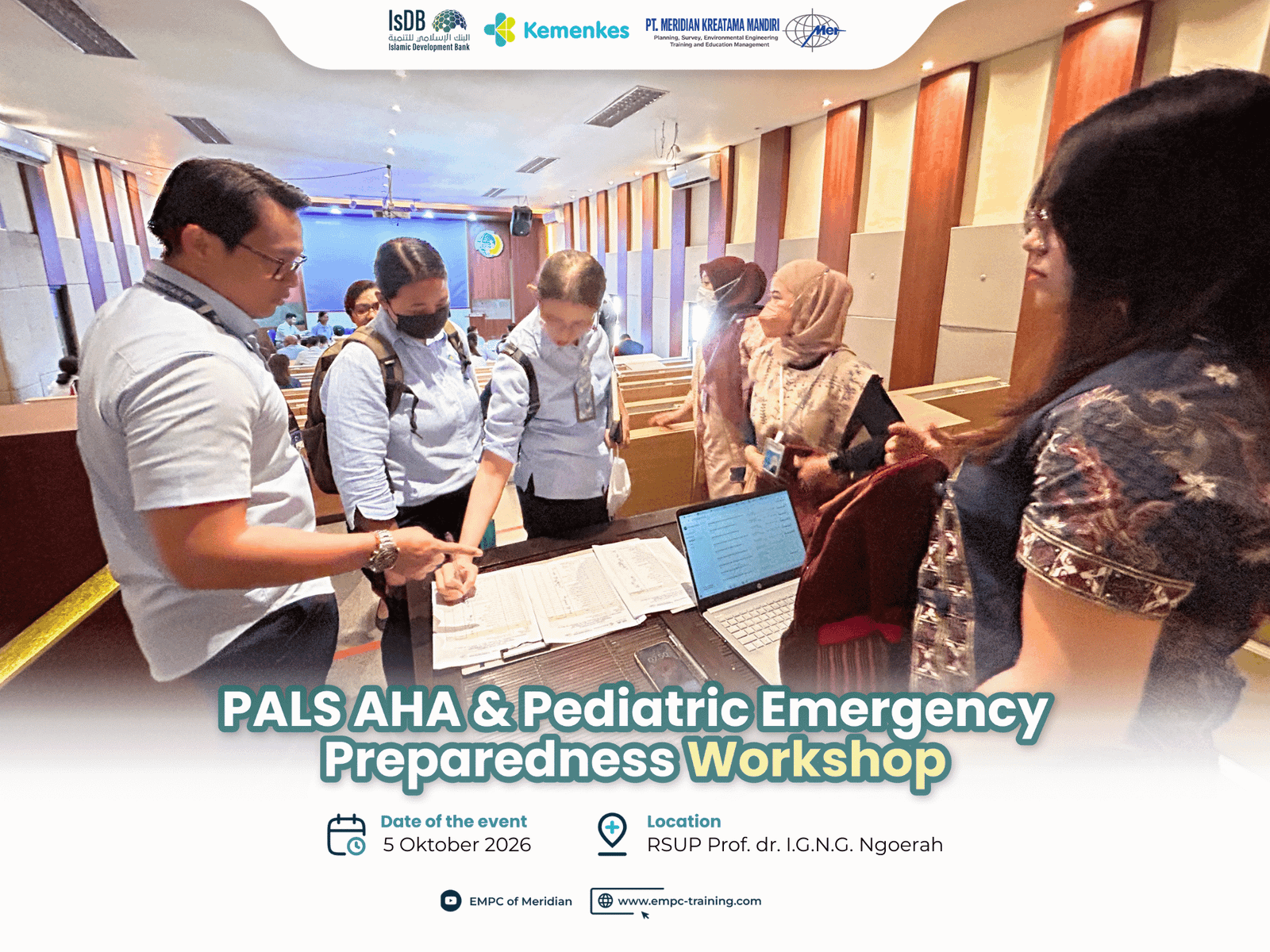
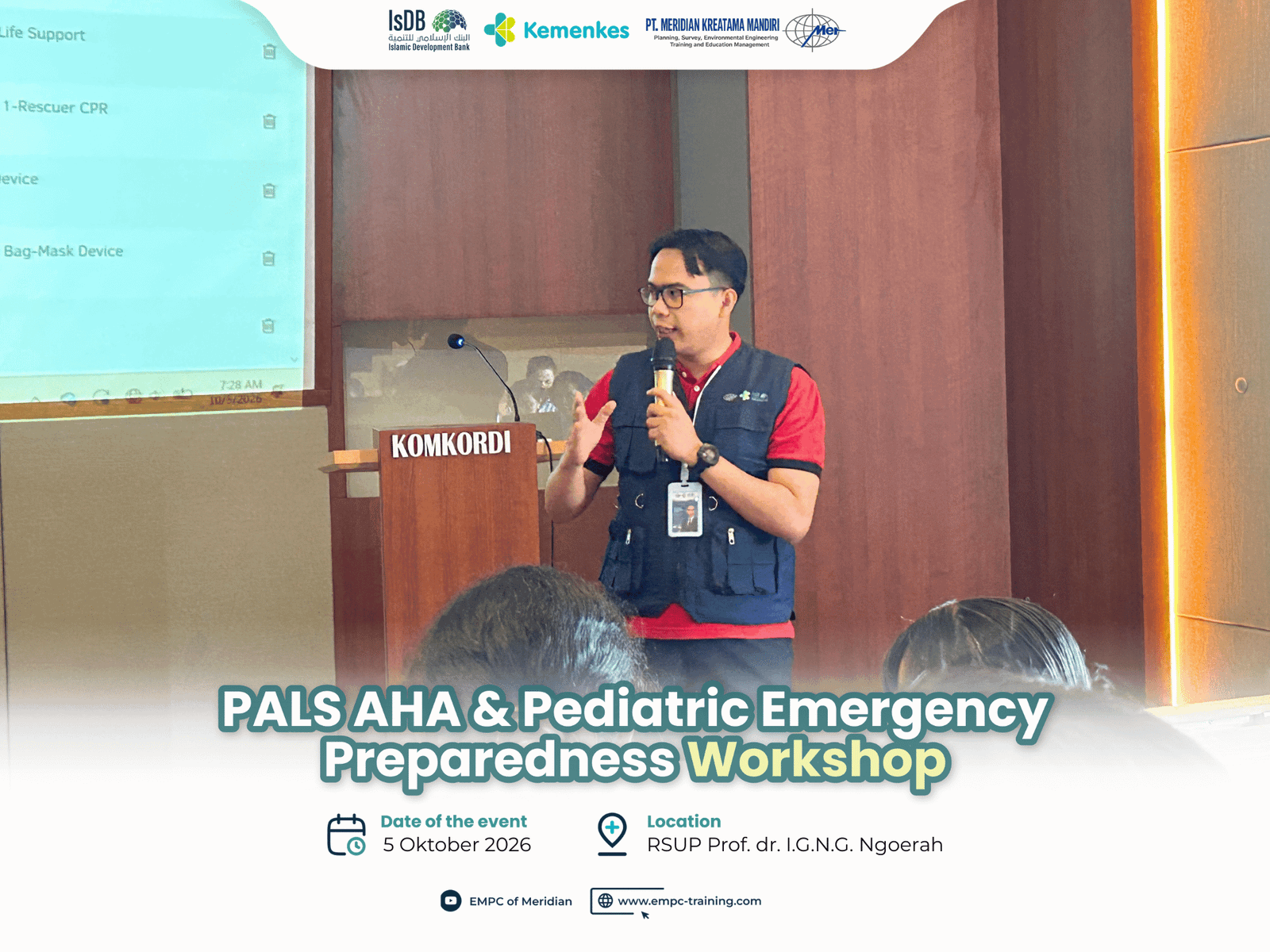
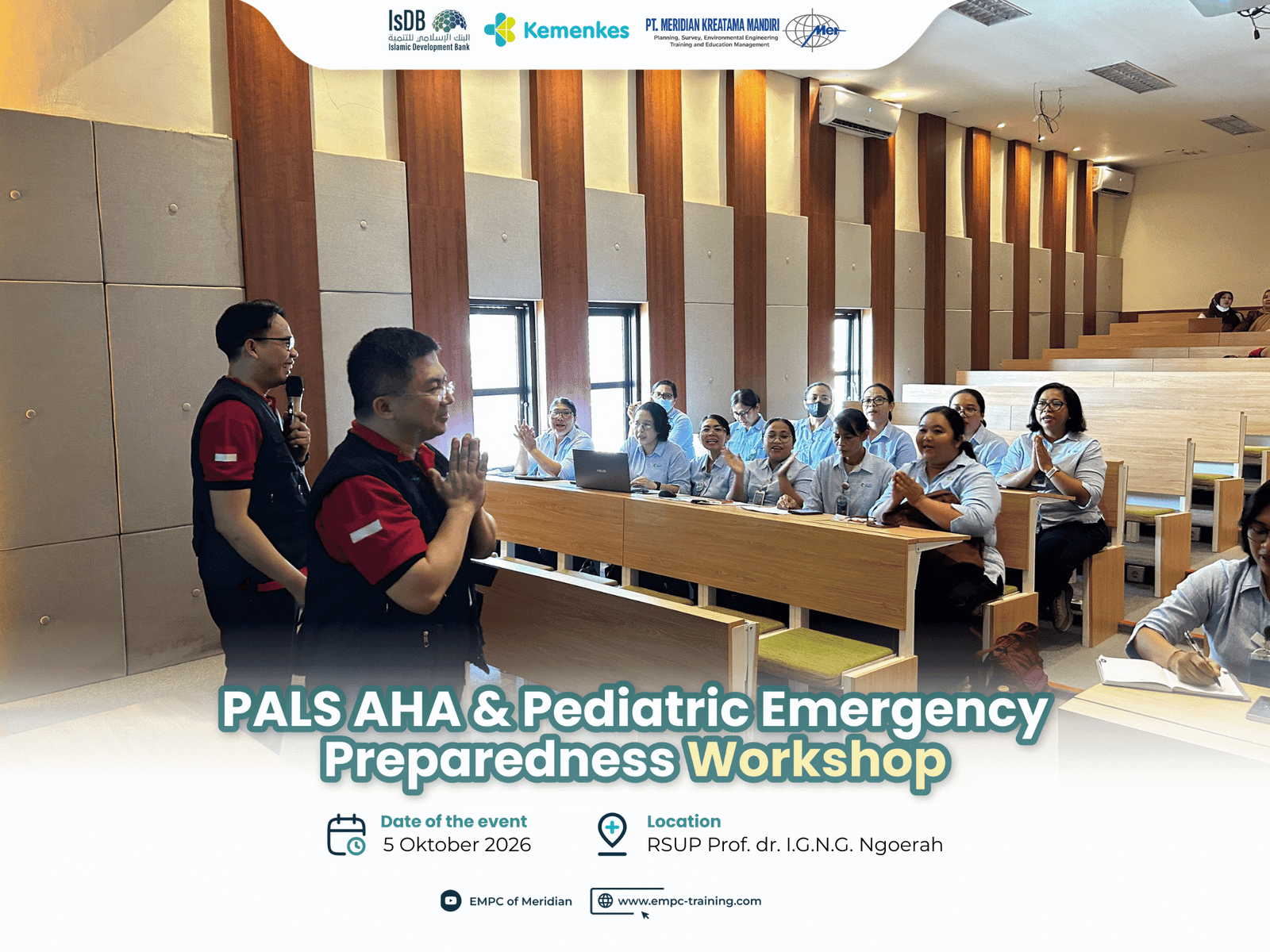
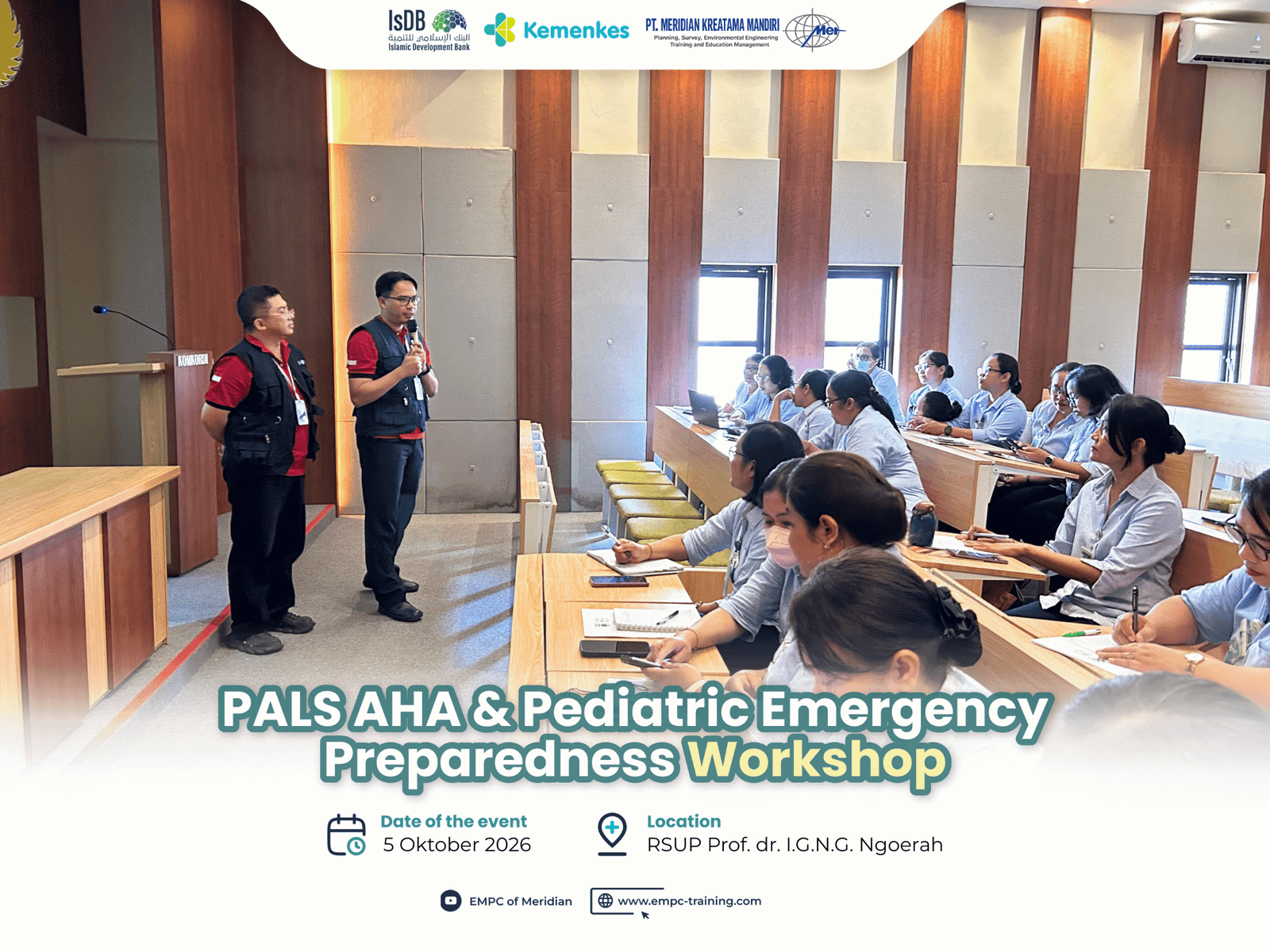
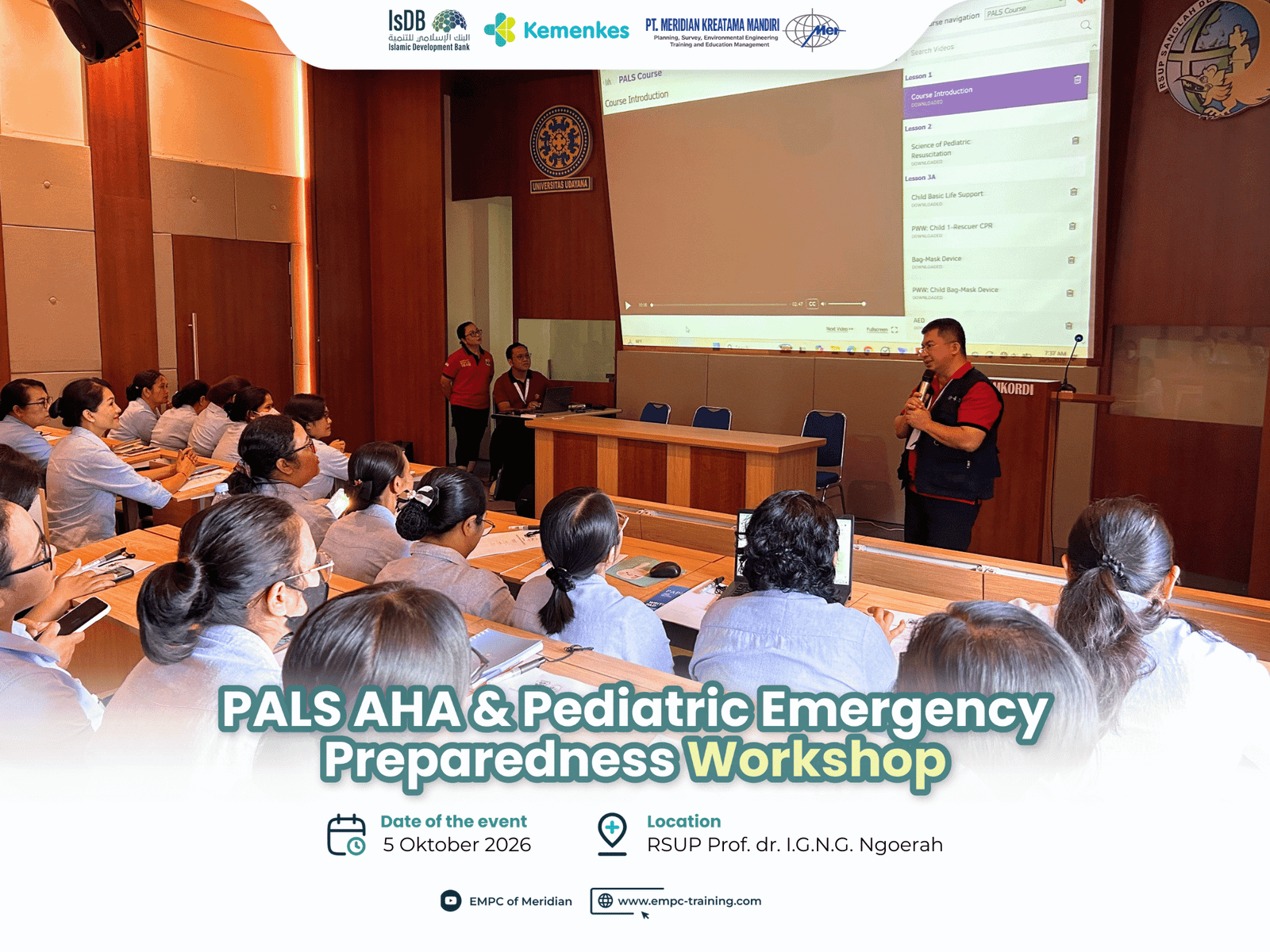
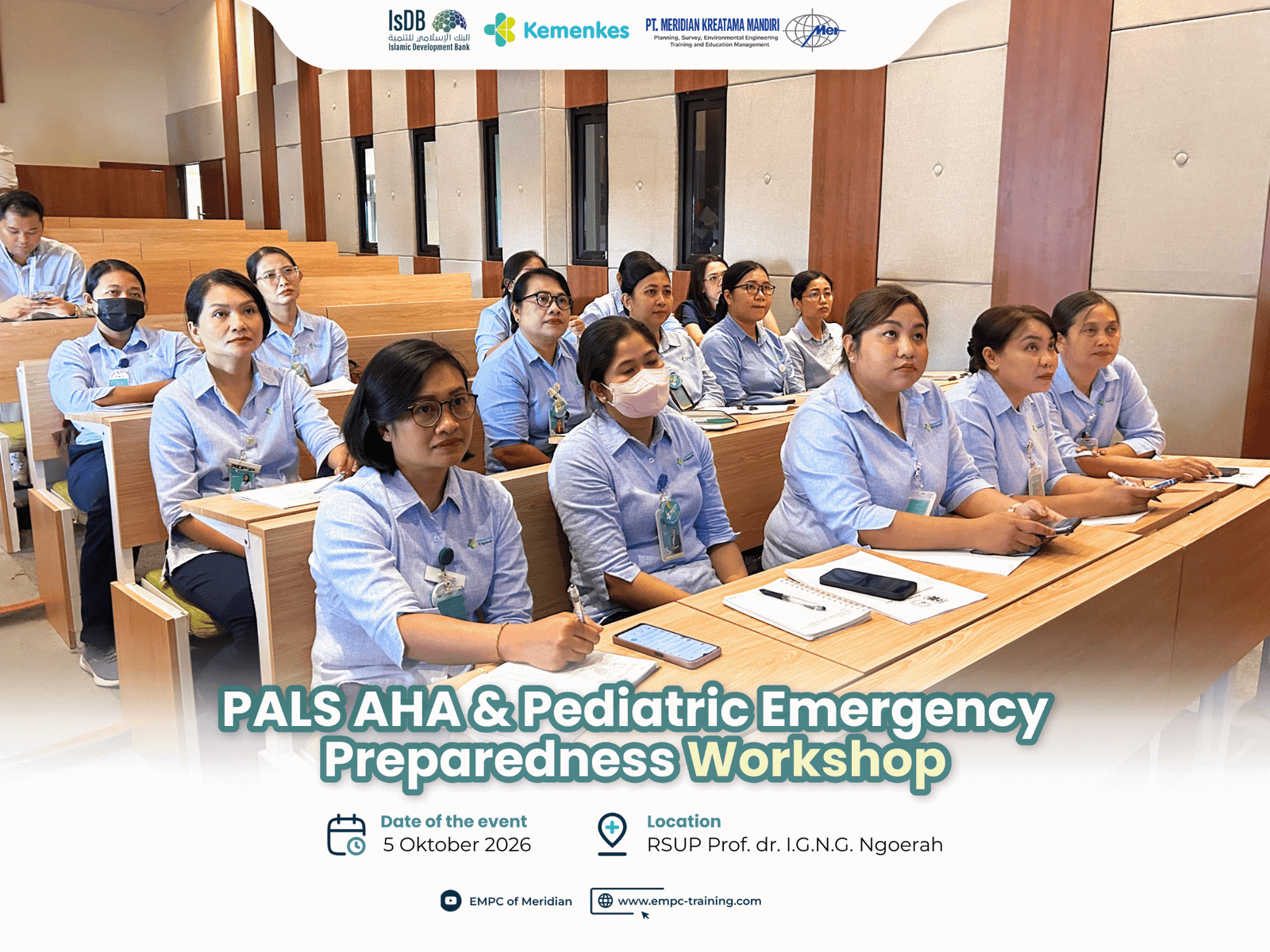
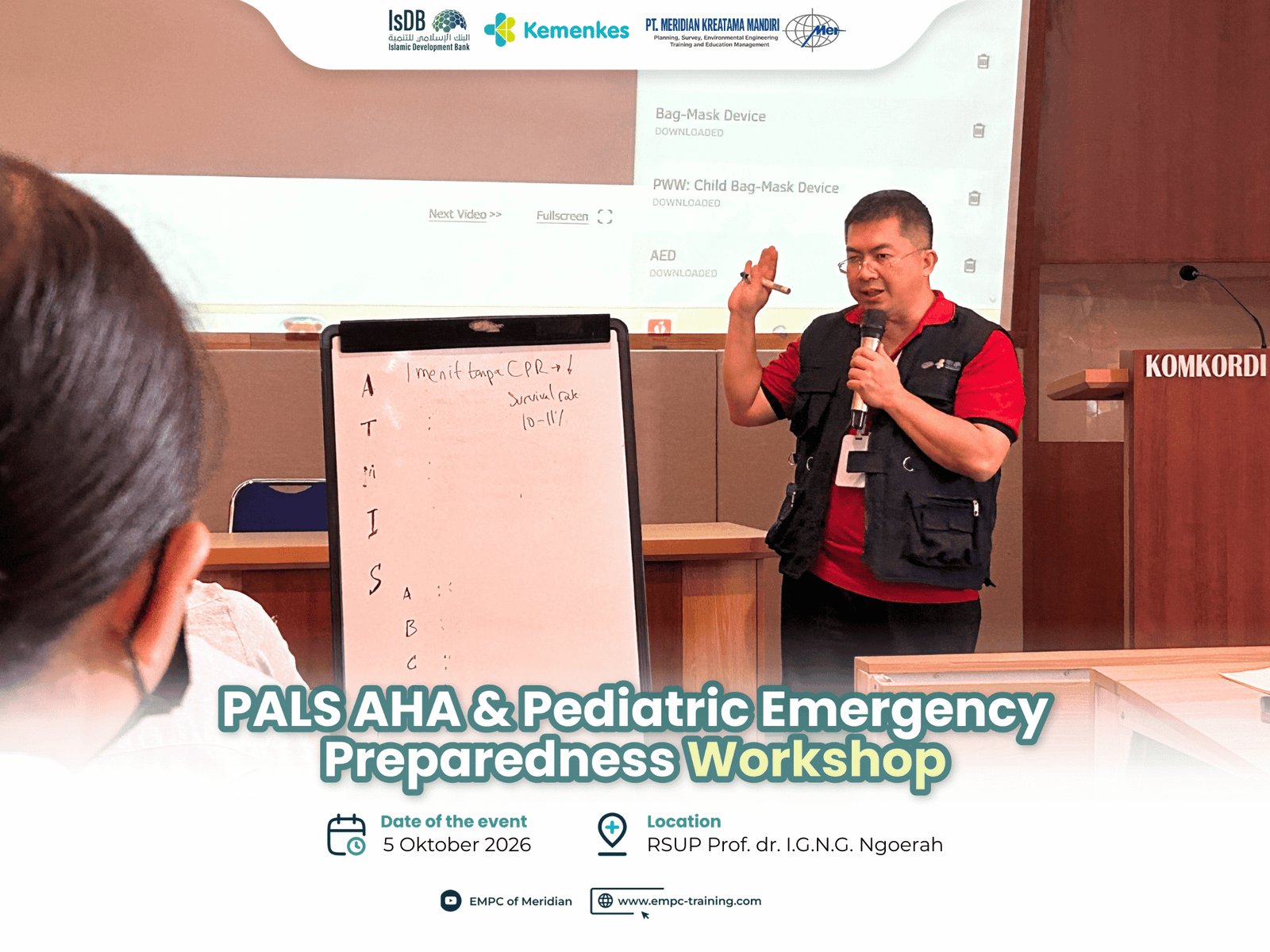

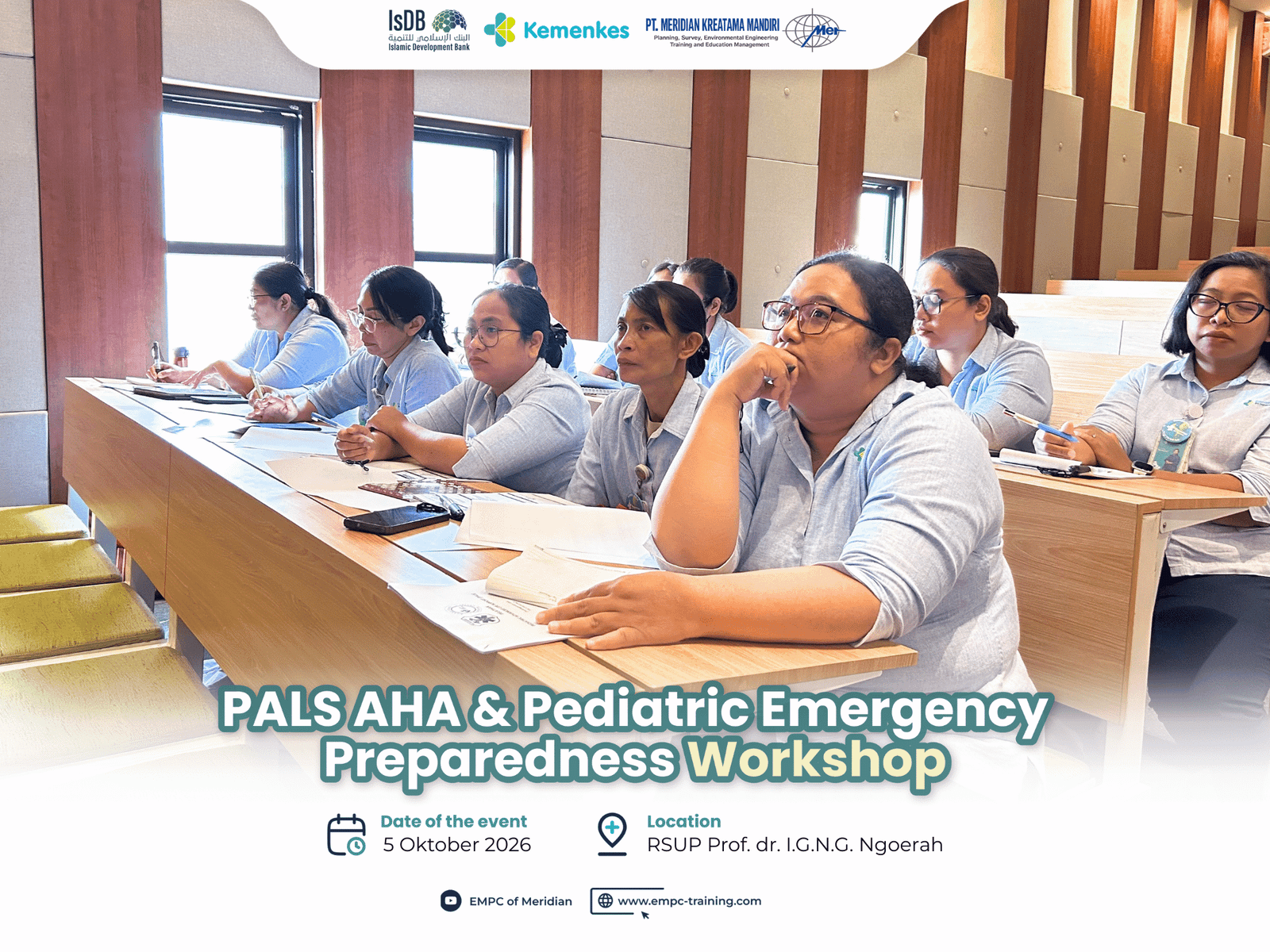
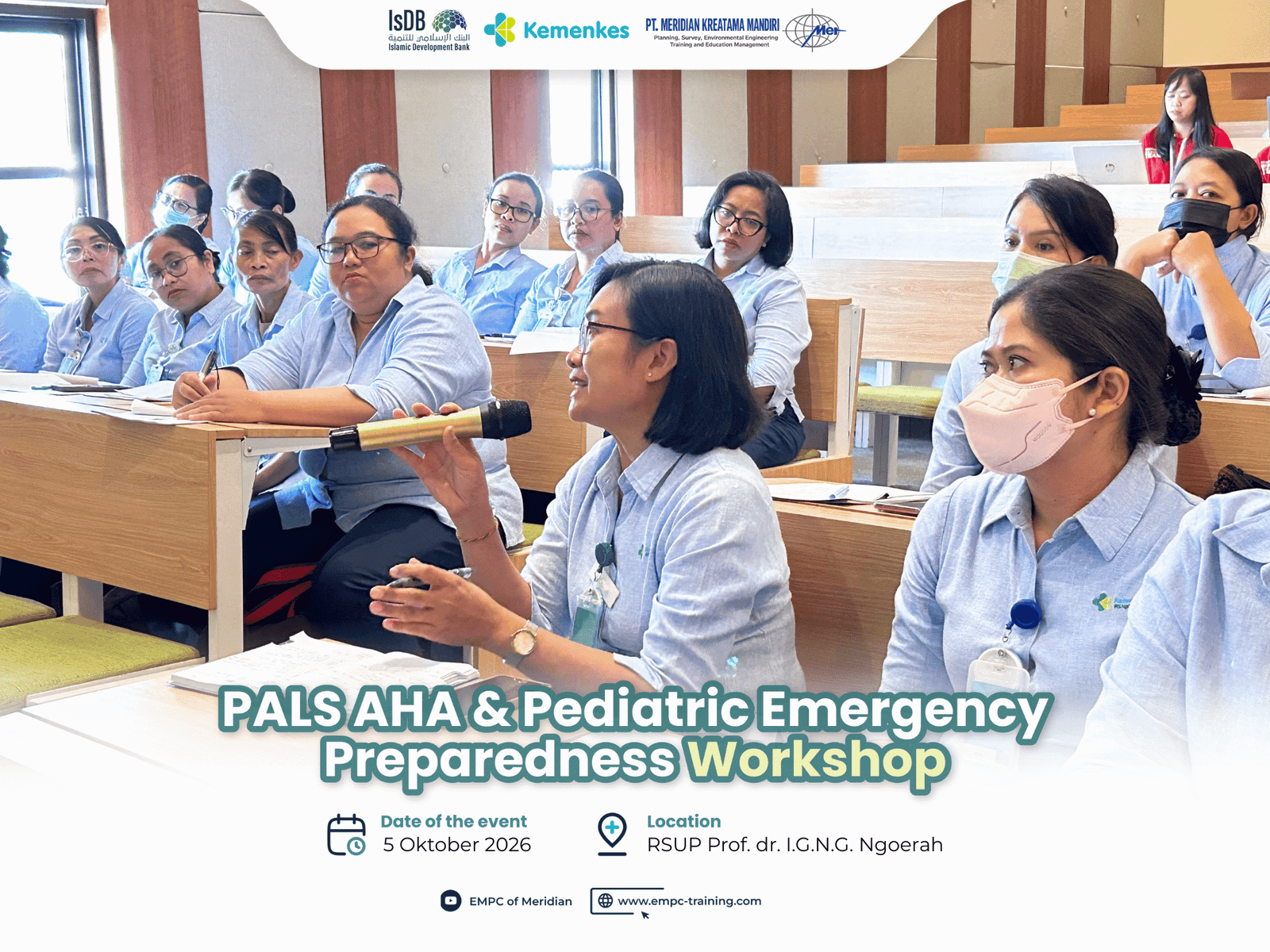
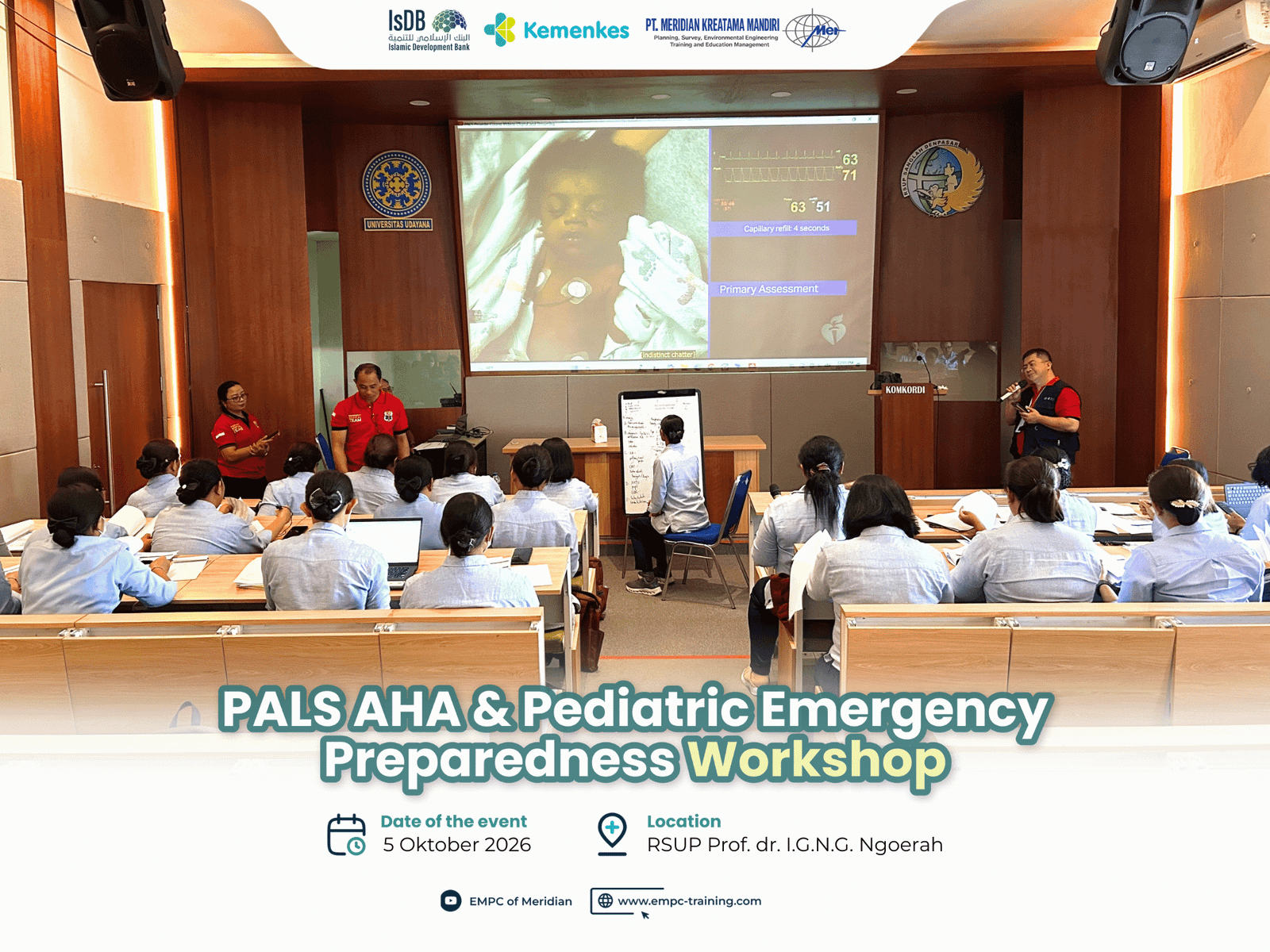

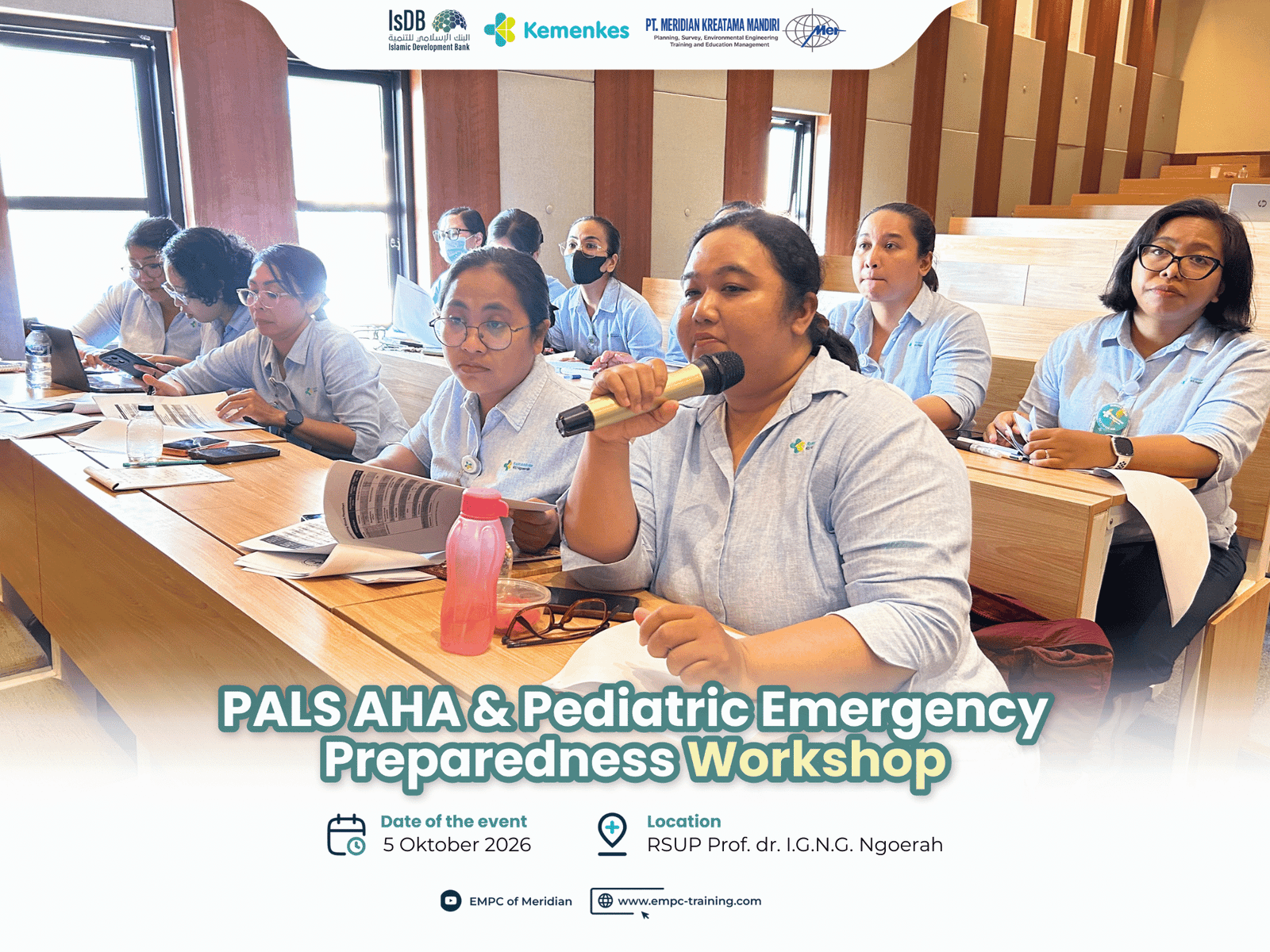
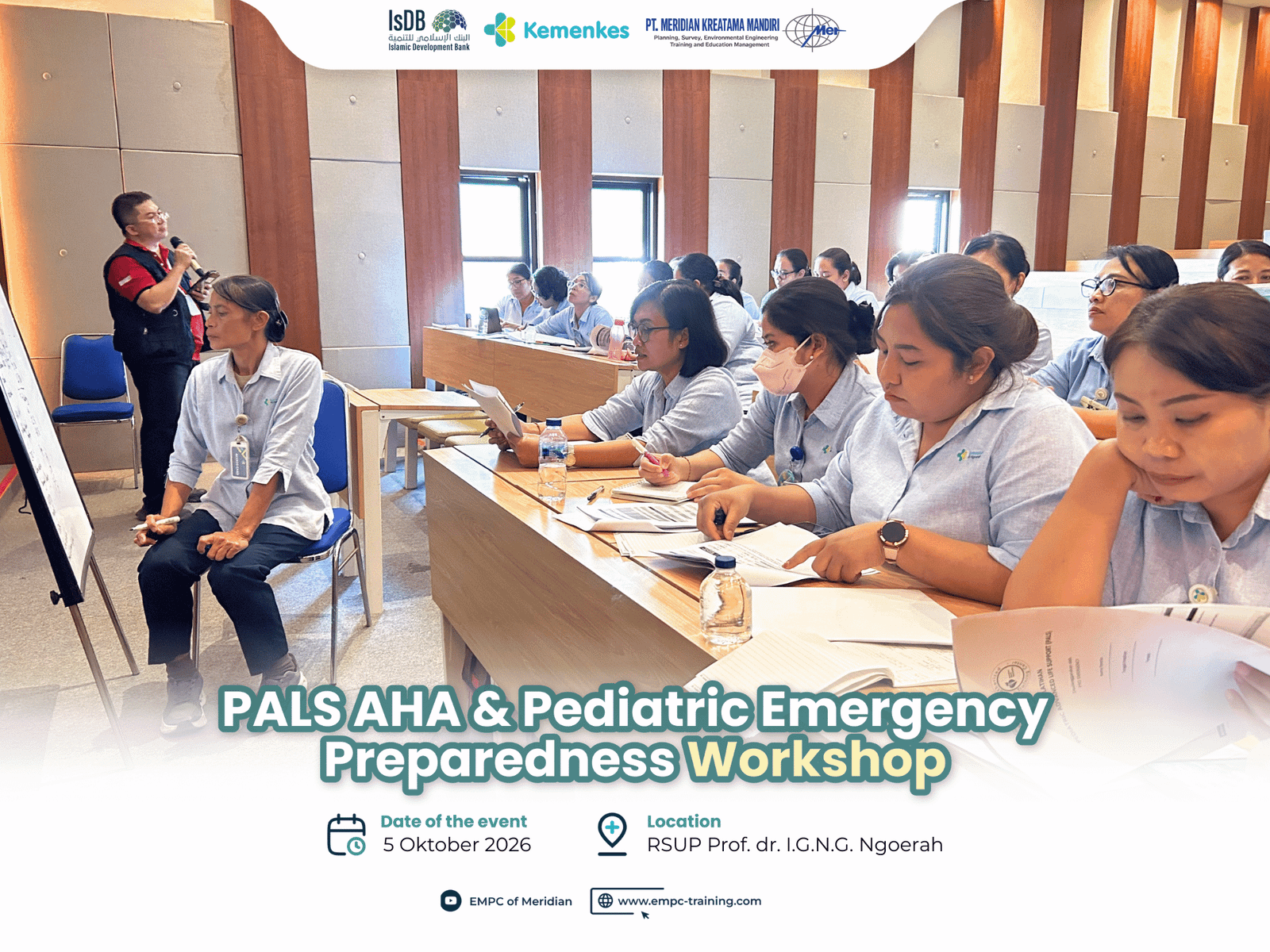
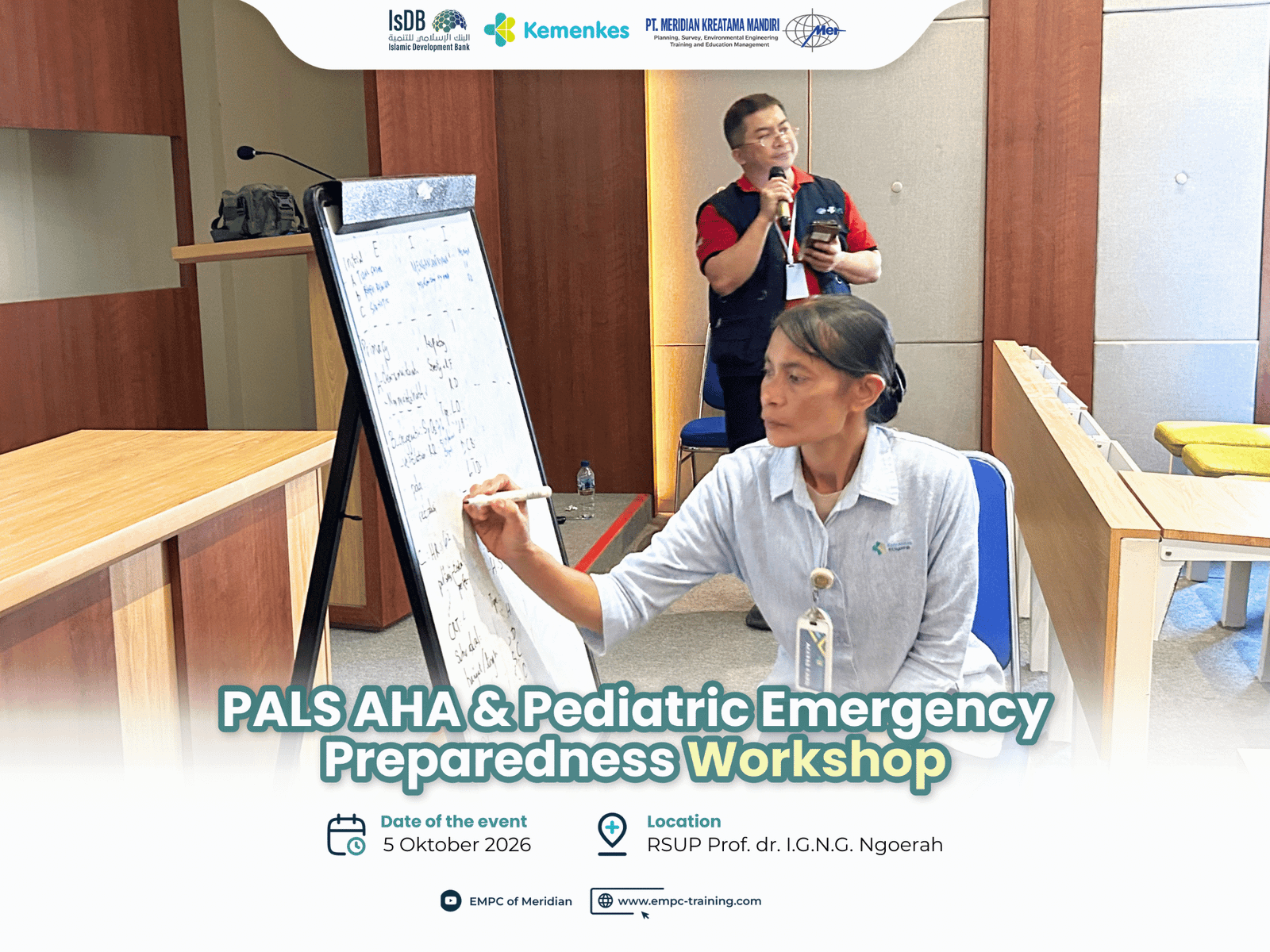
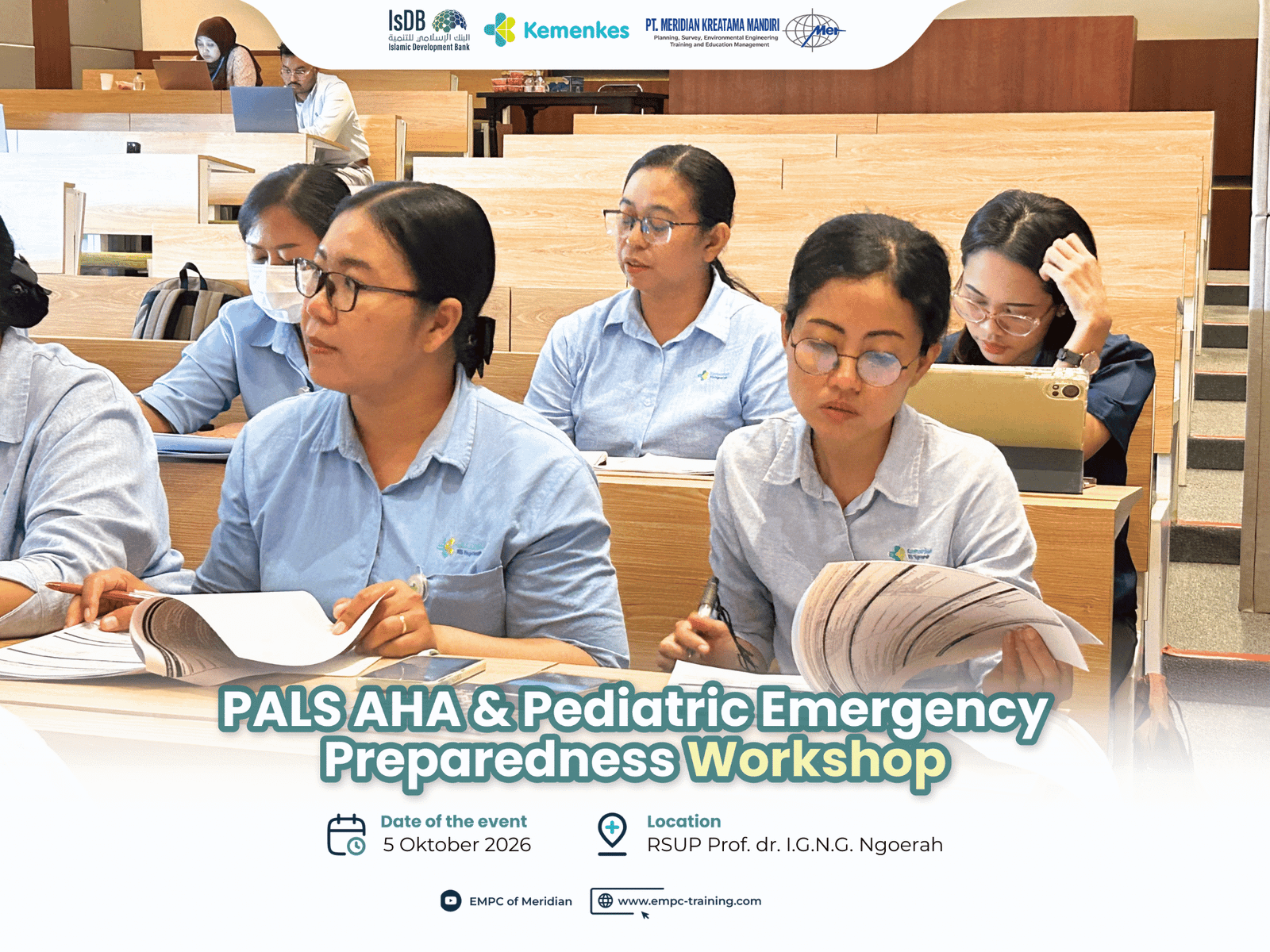
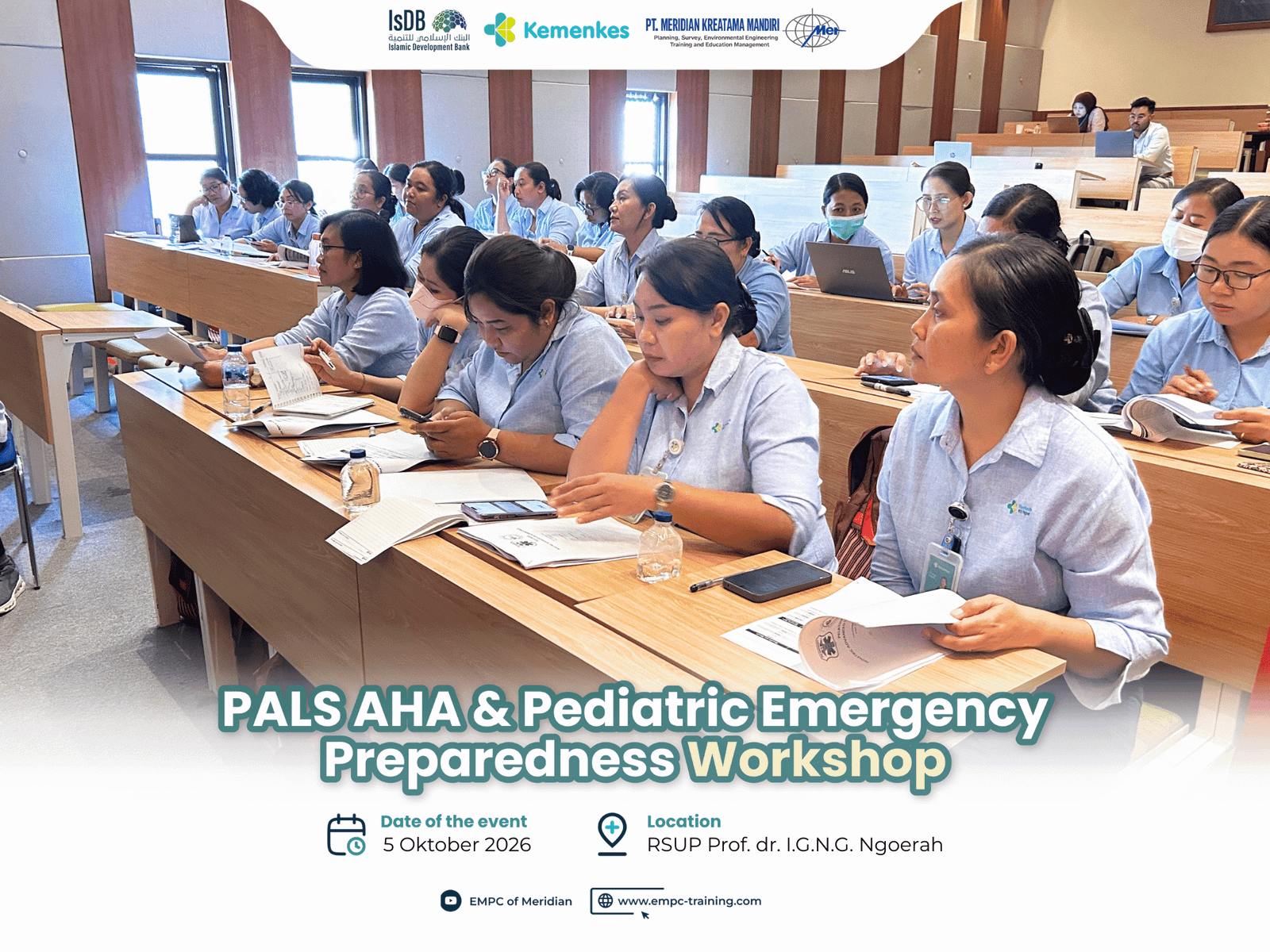

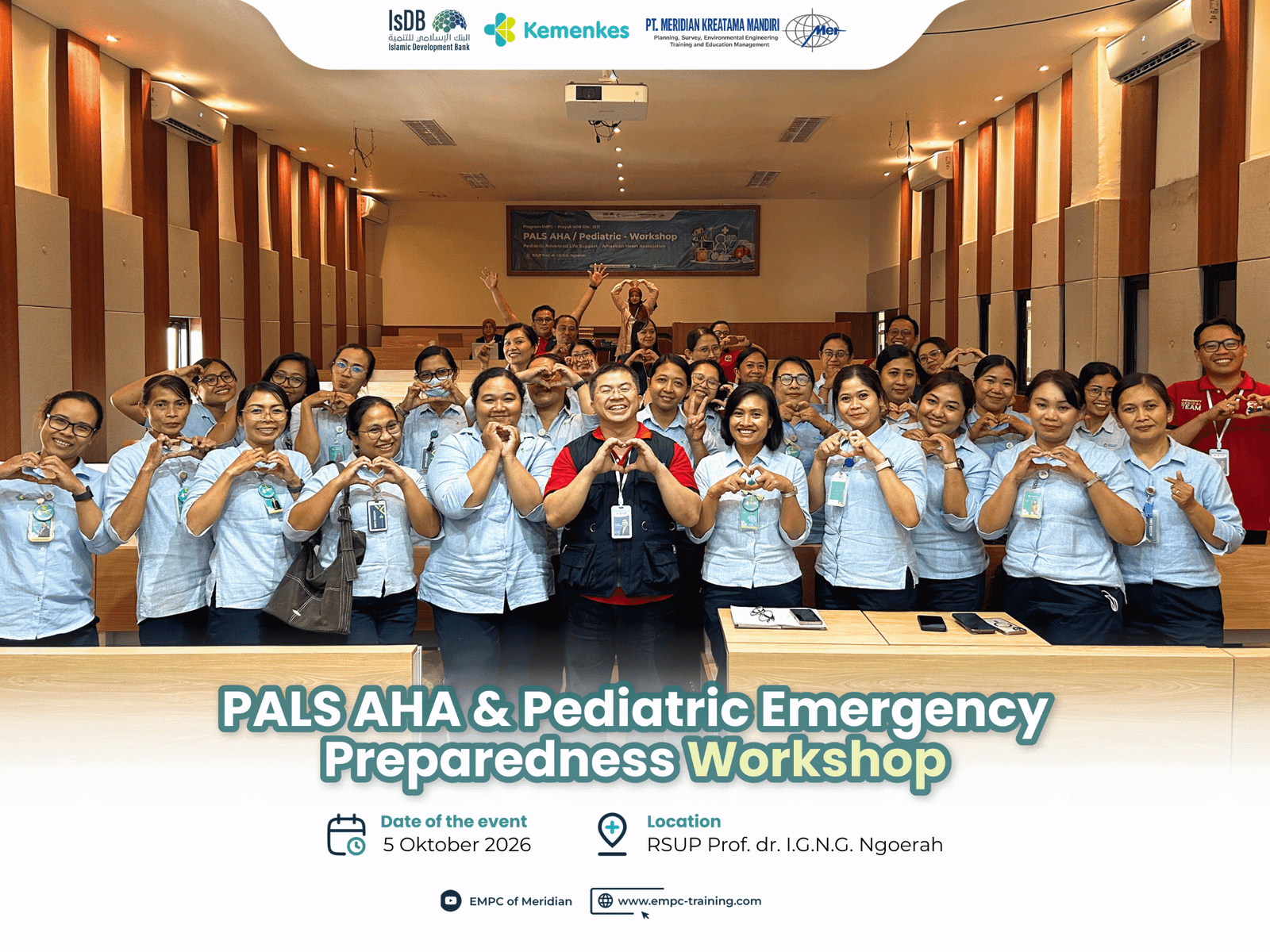





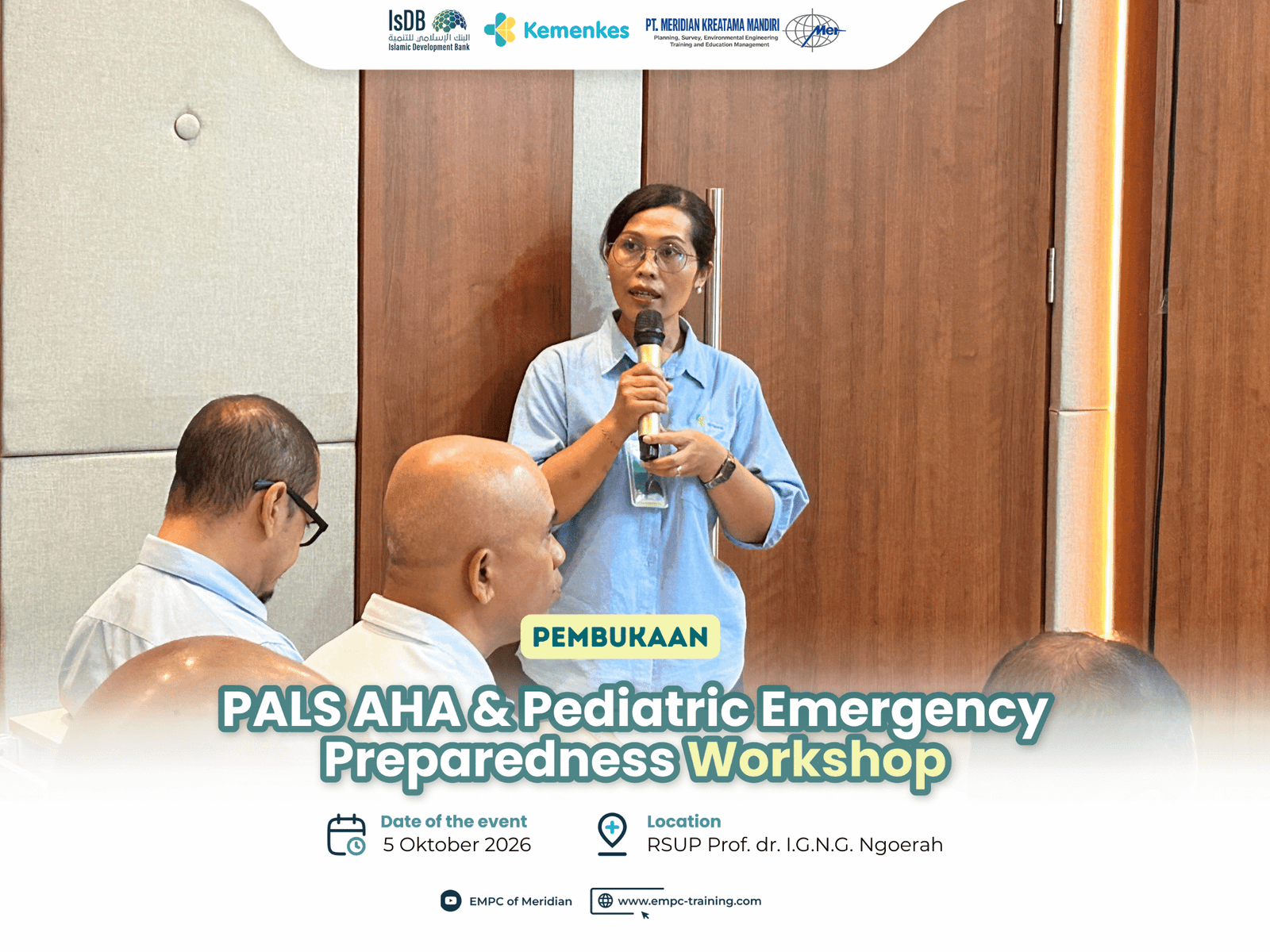
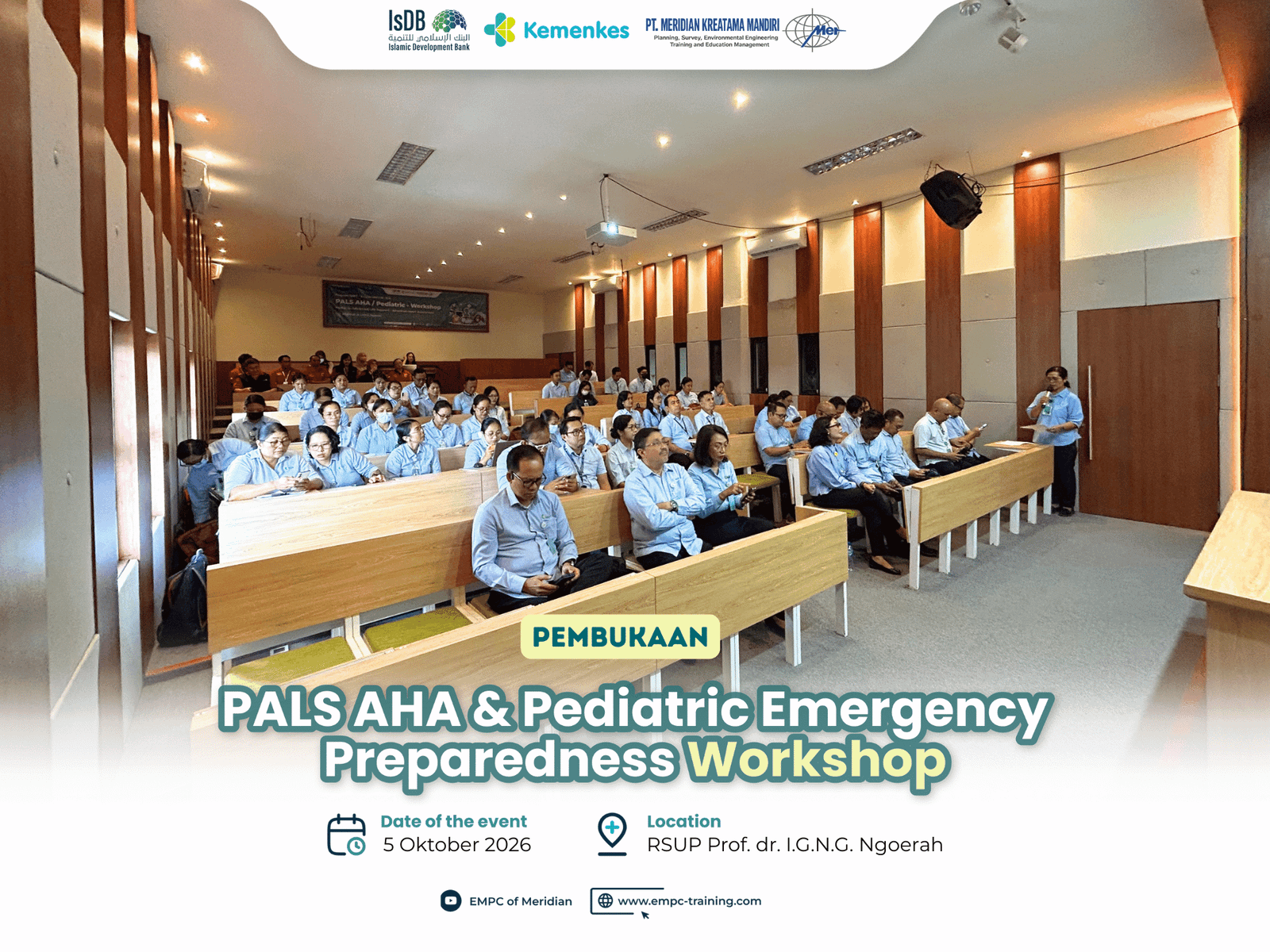
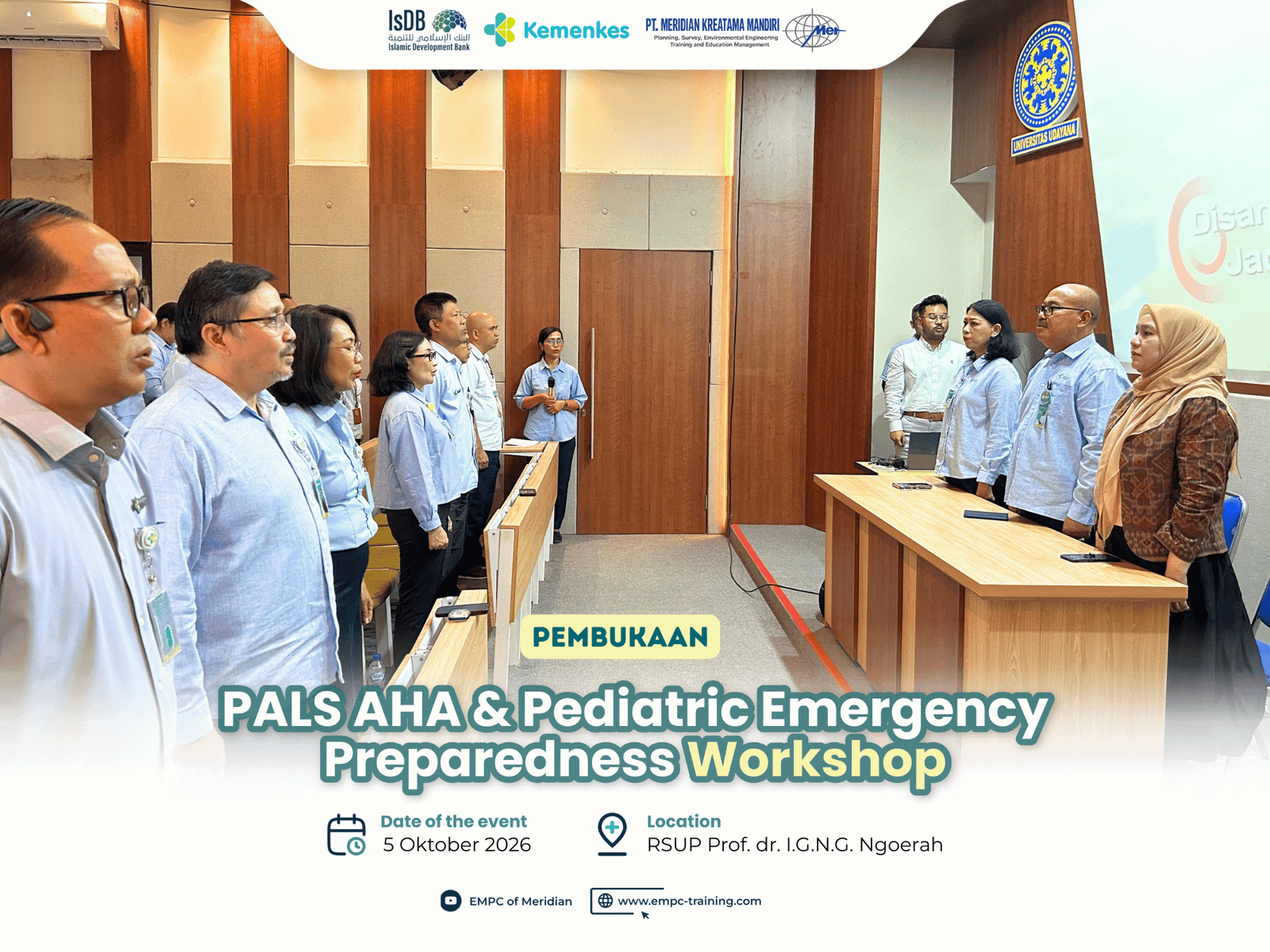
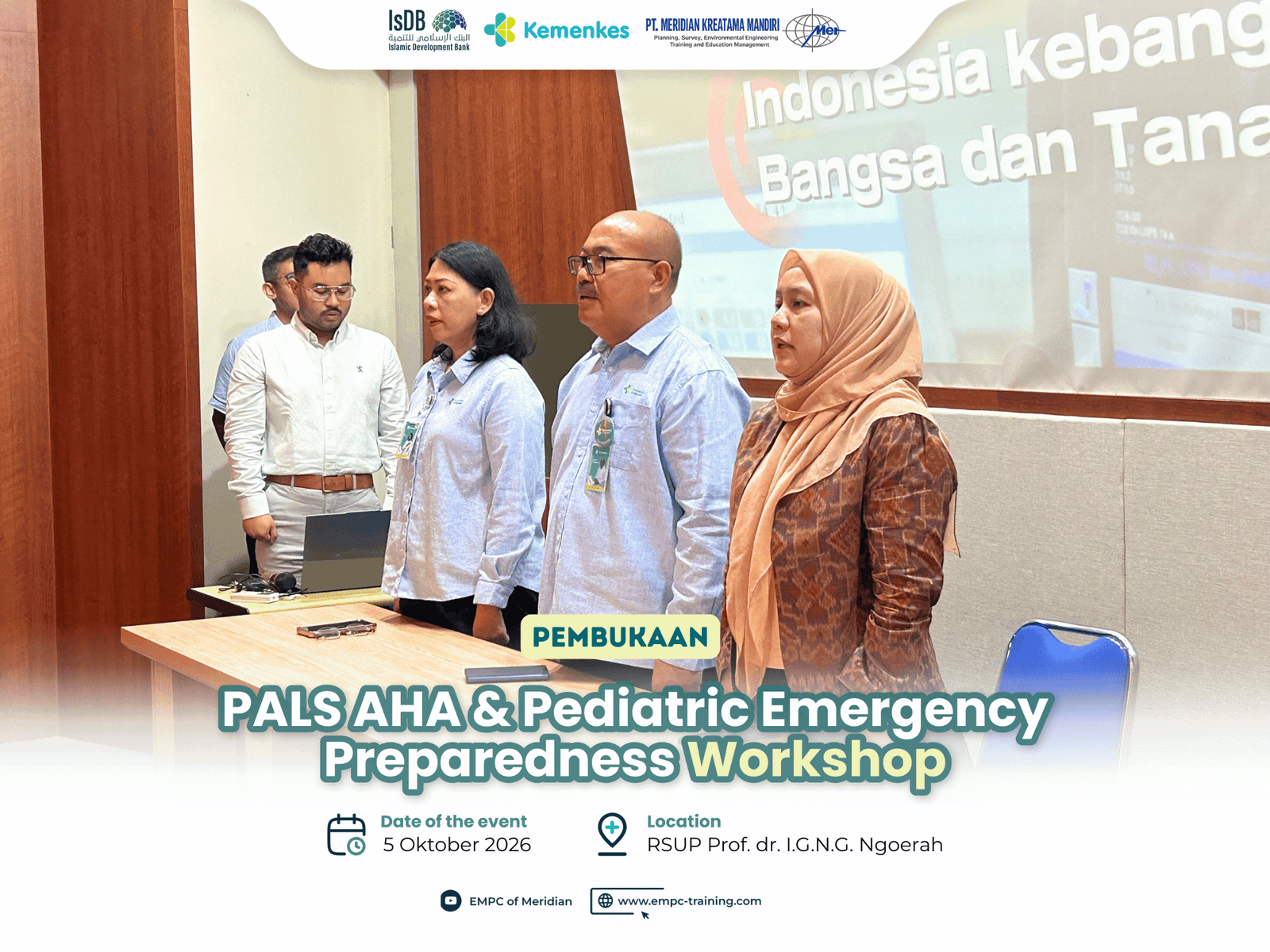
Opening of the EMPC Program Hospital Training – IsDB Project IDN: 1031
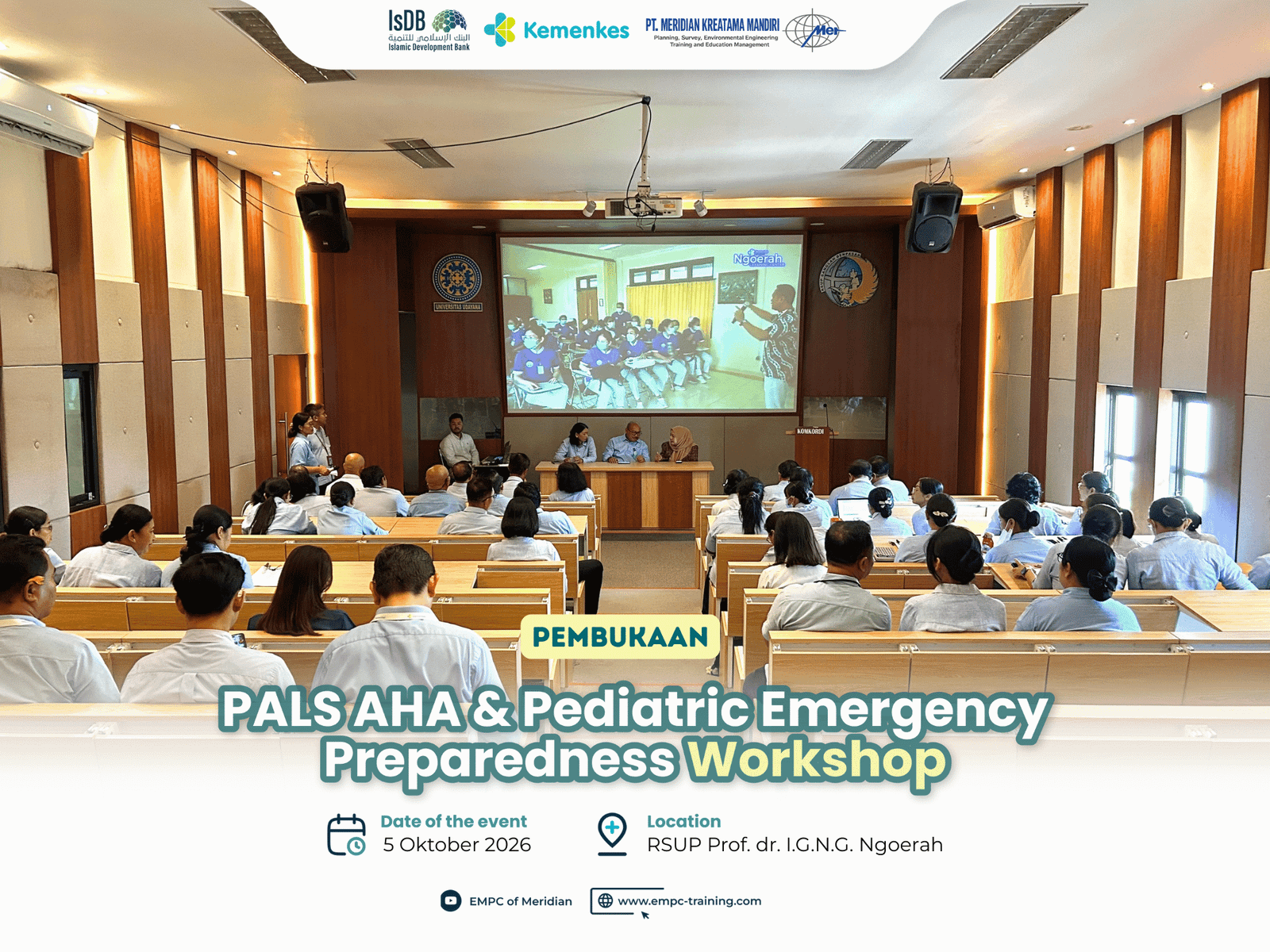
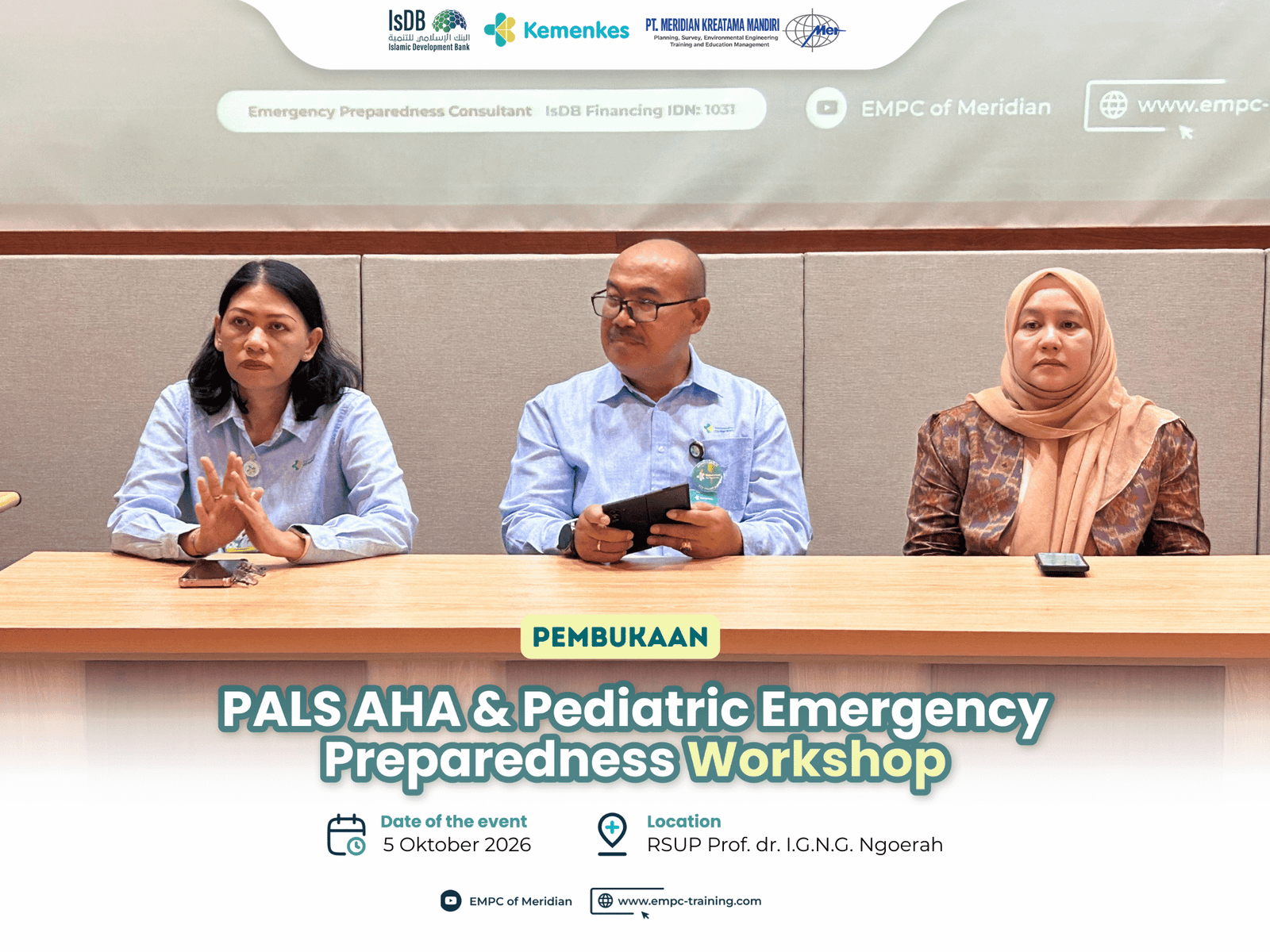
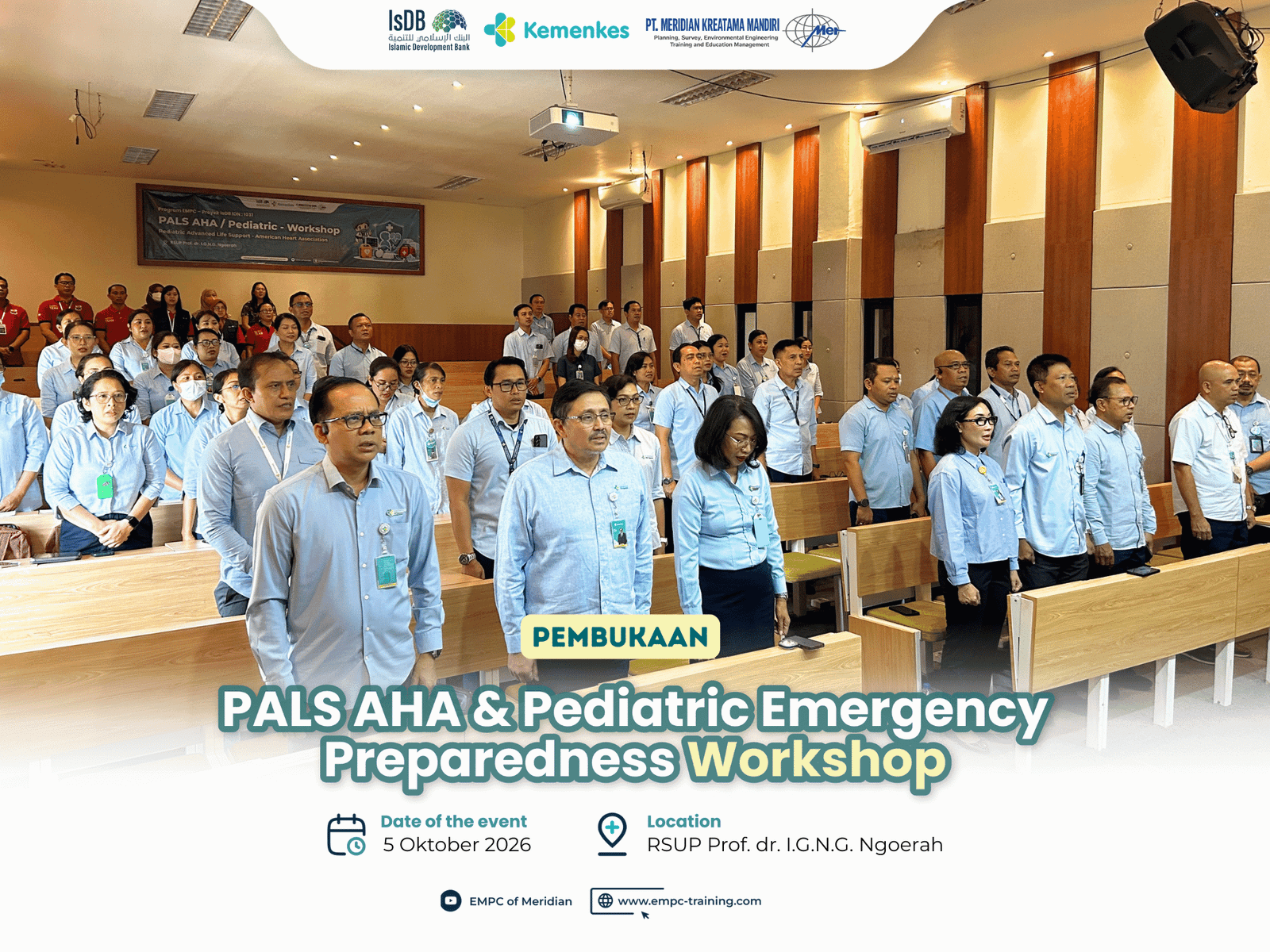
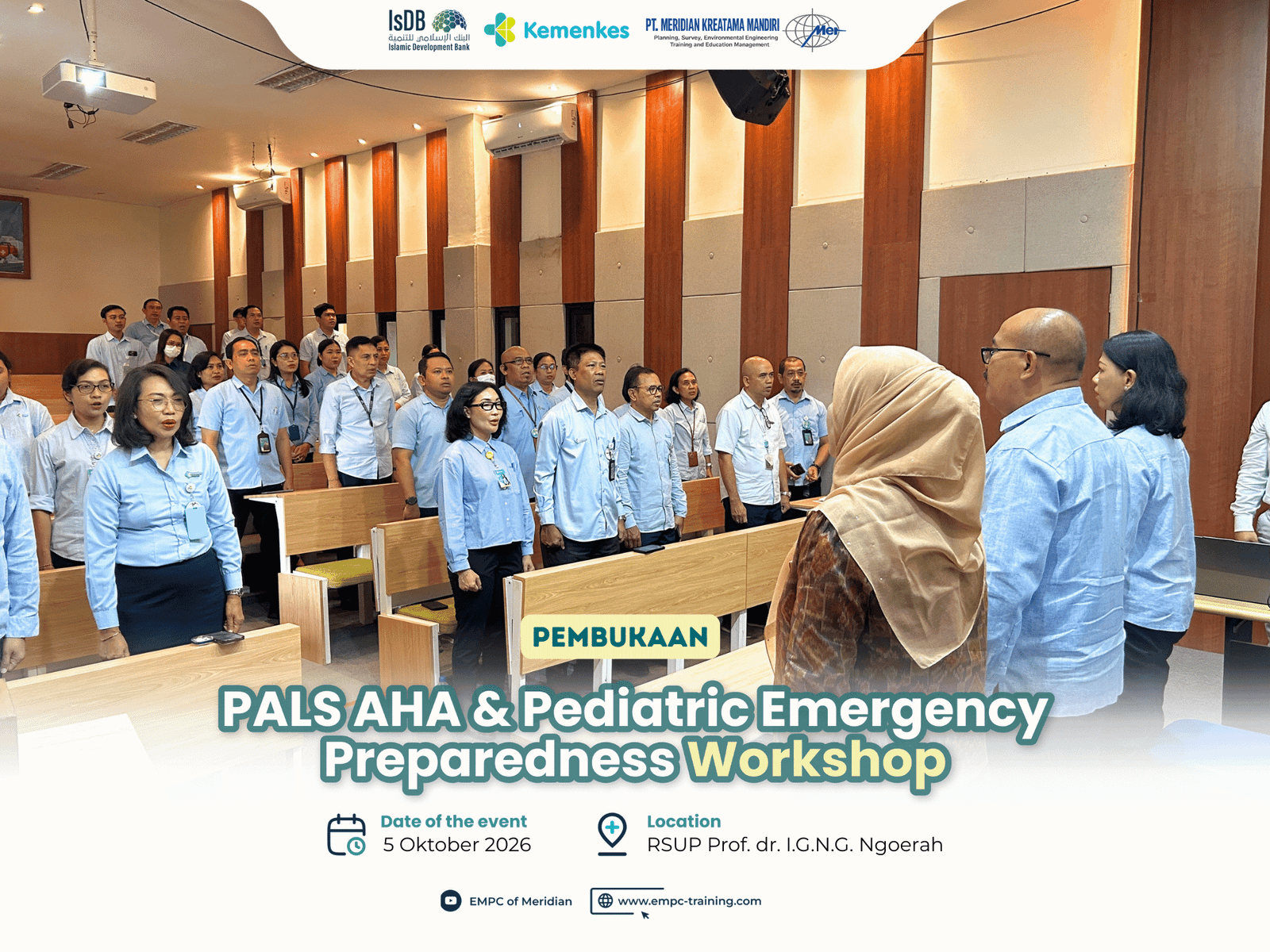
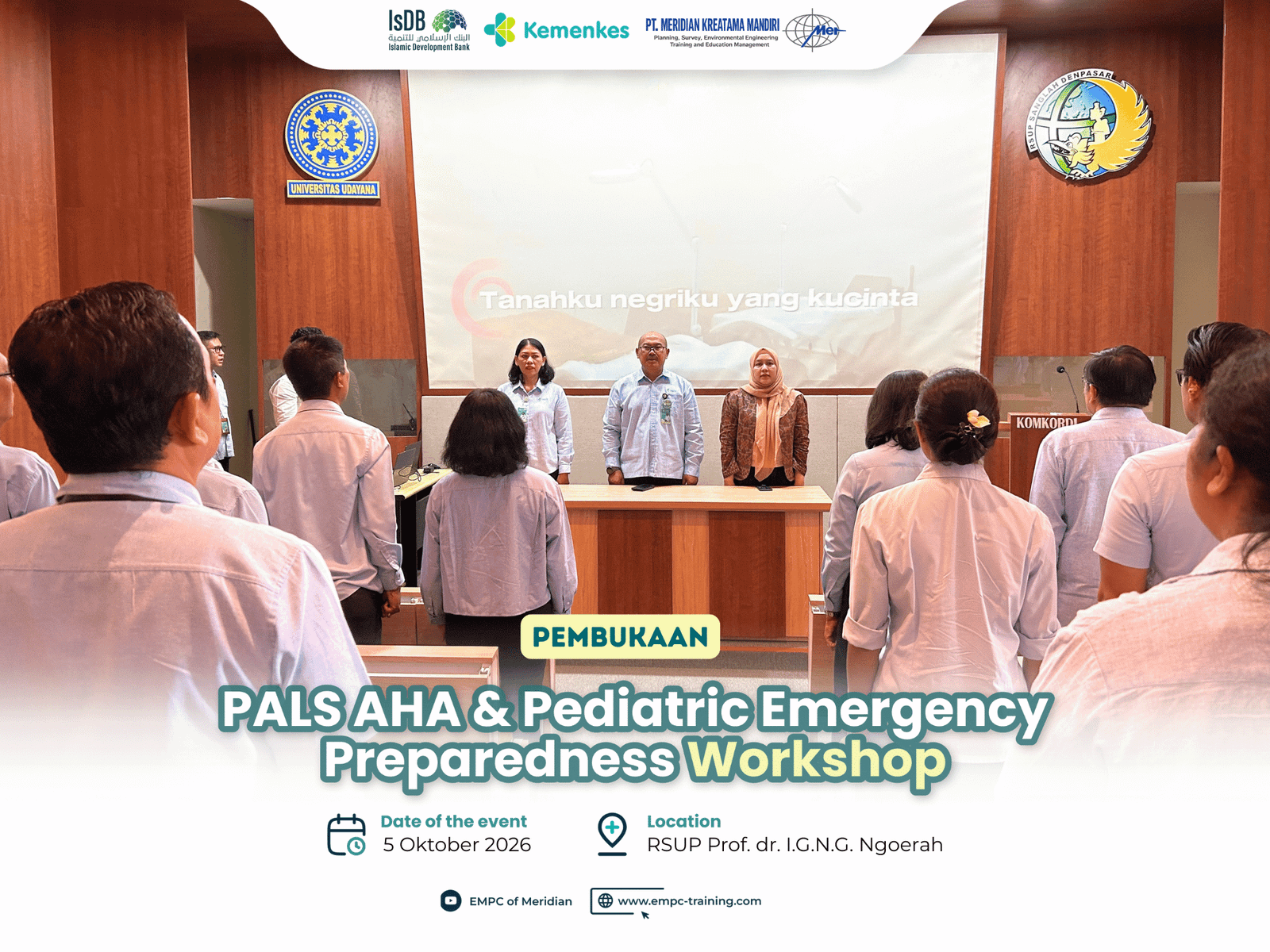
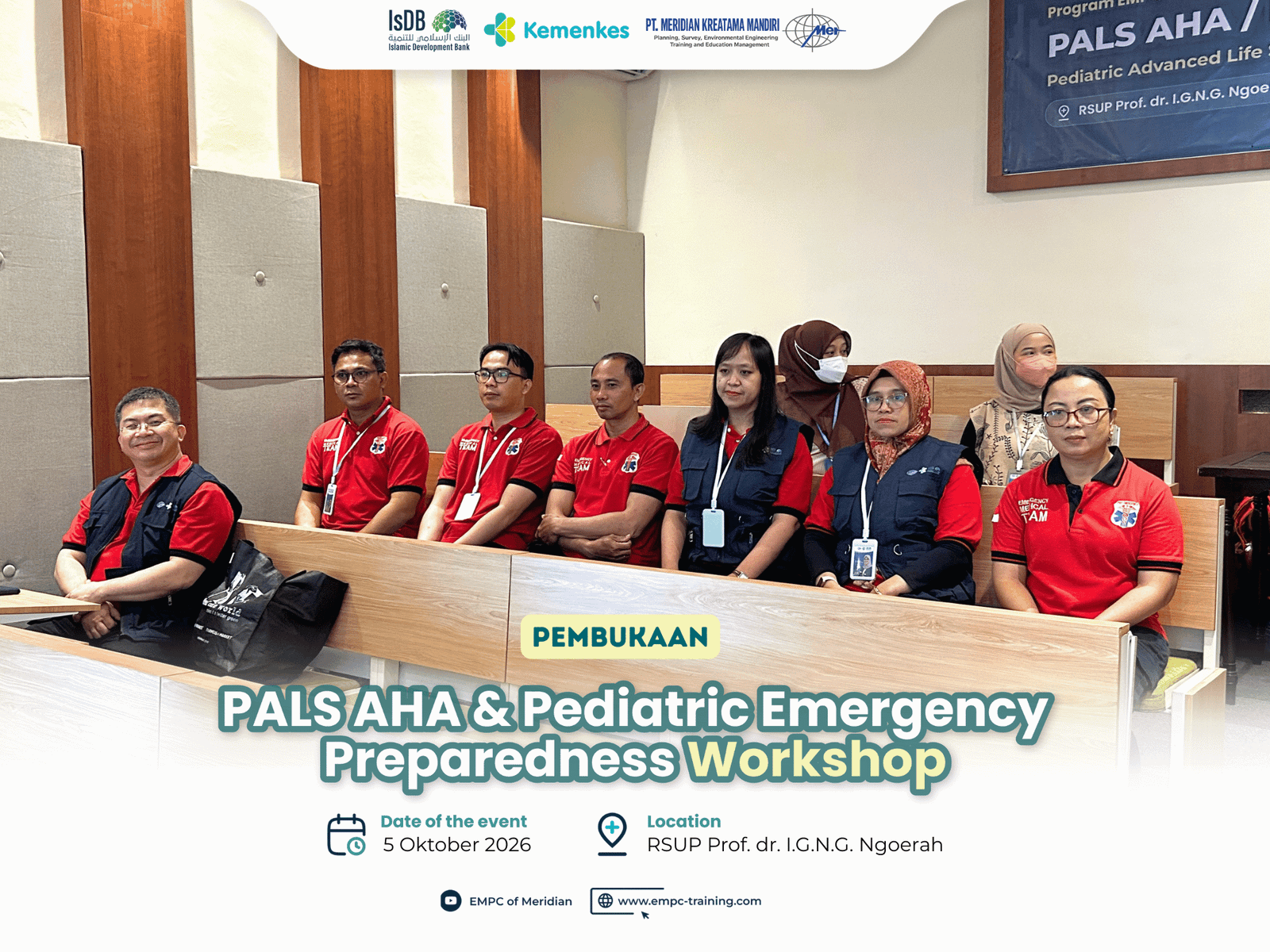
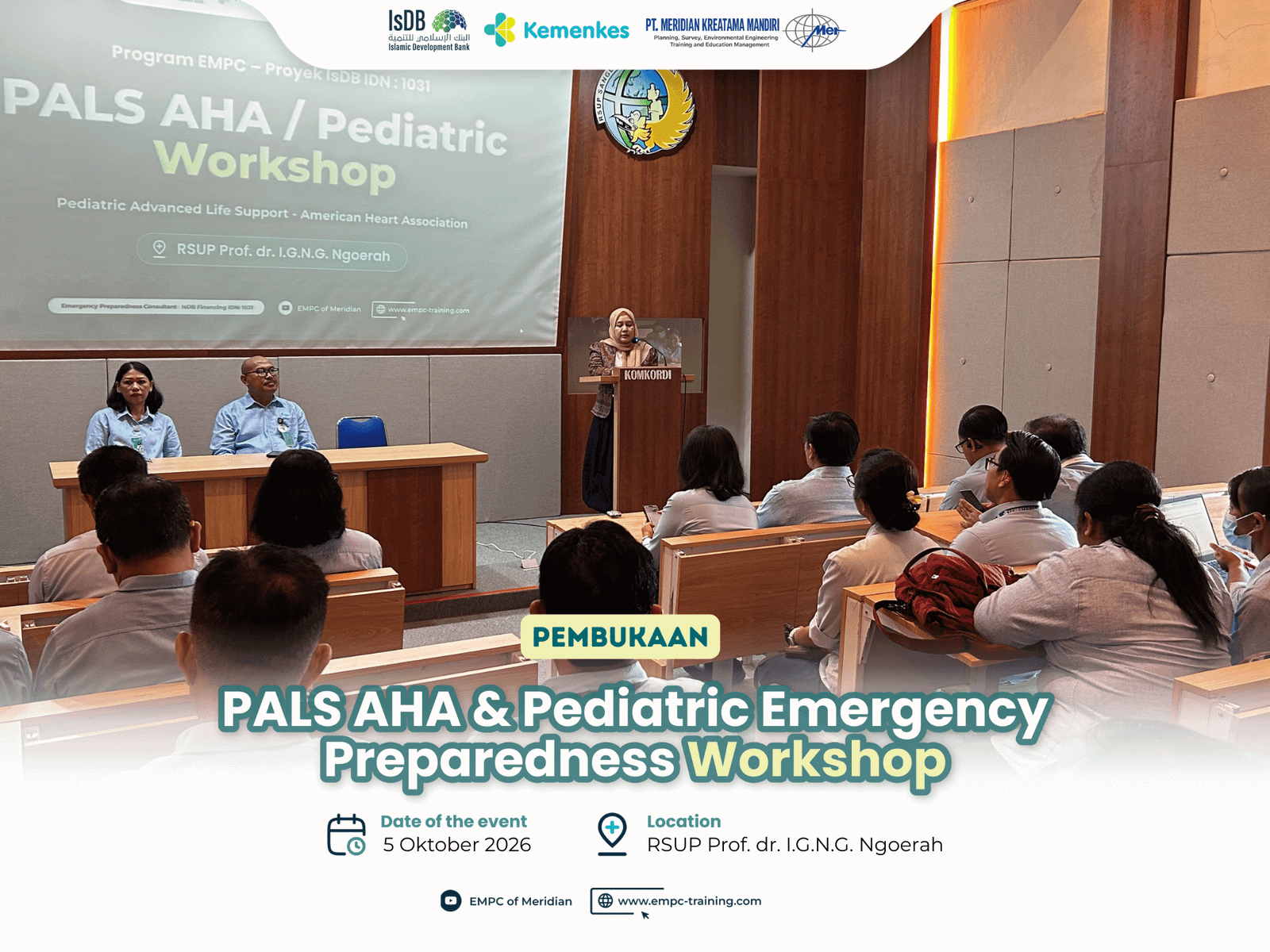
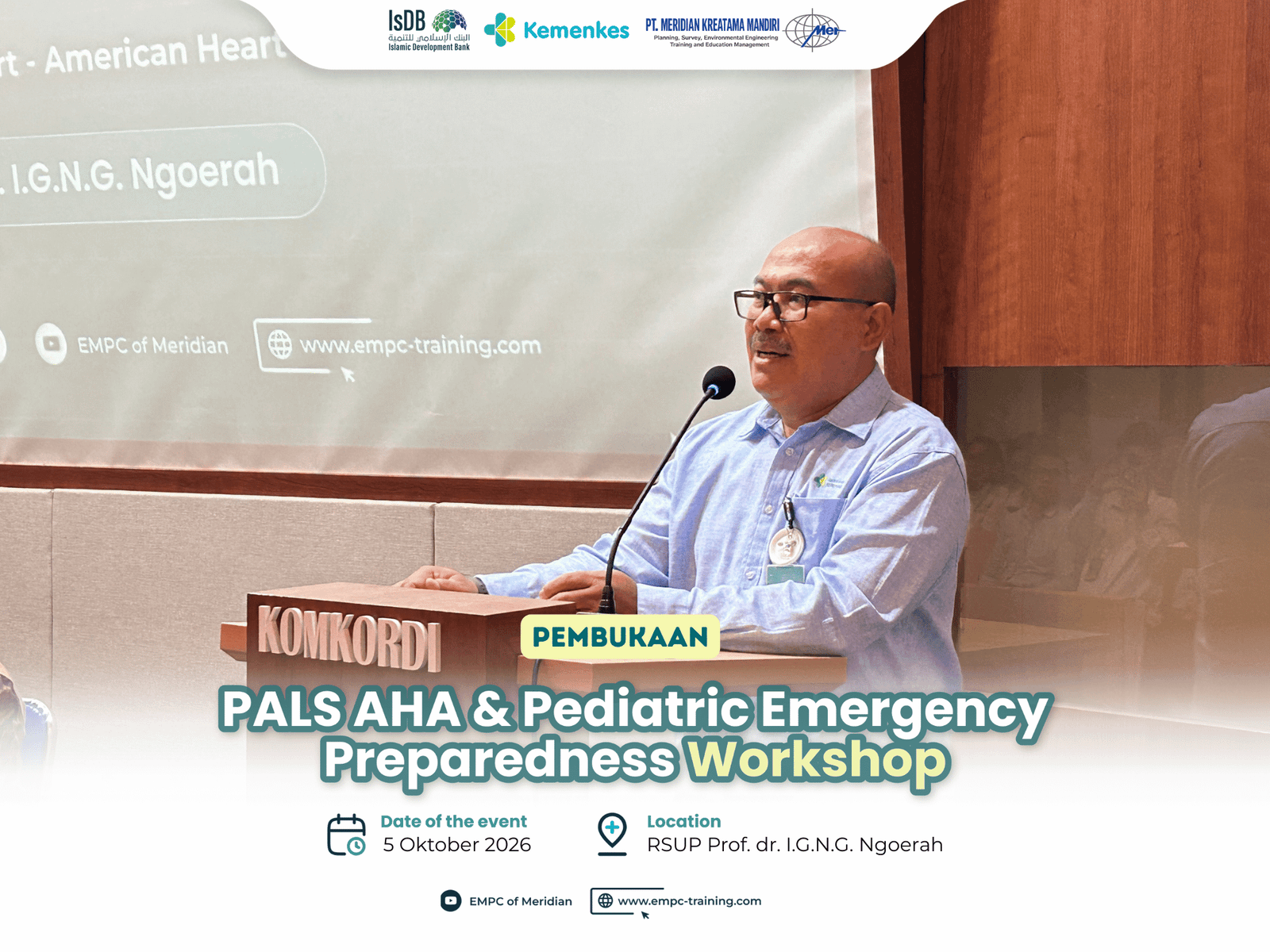
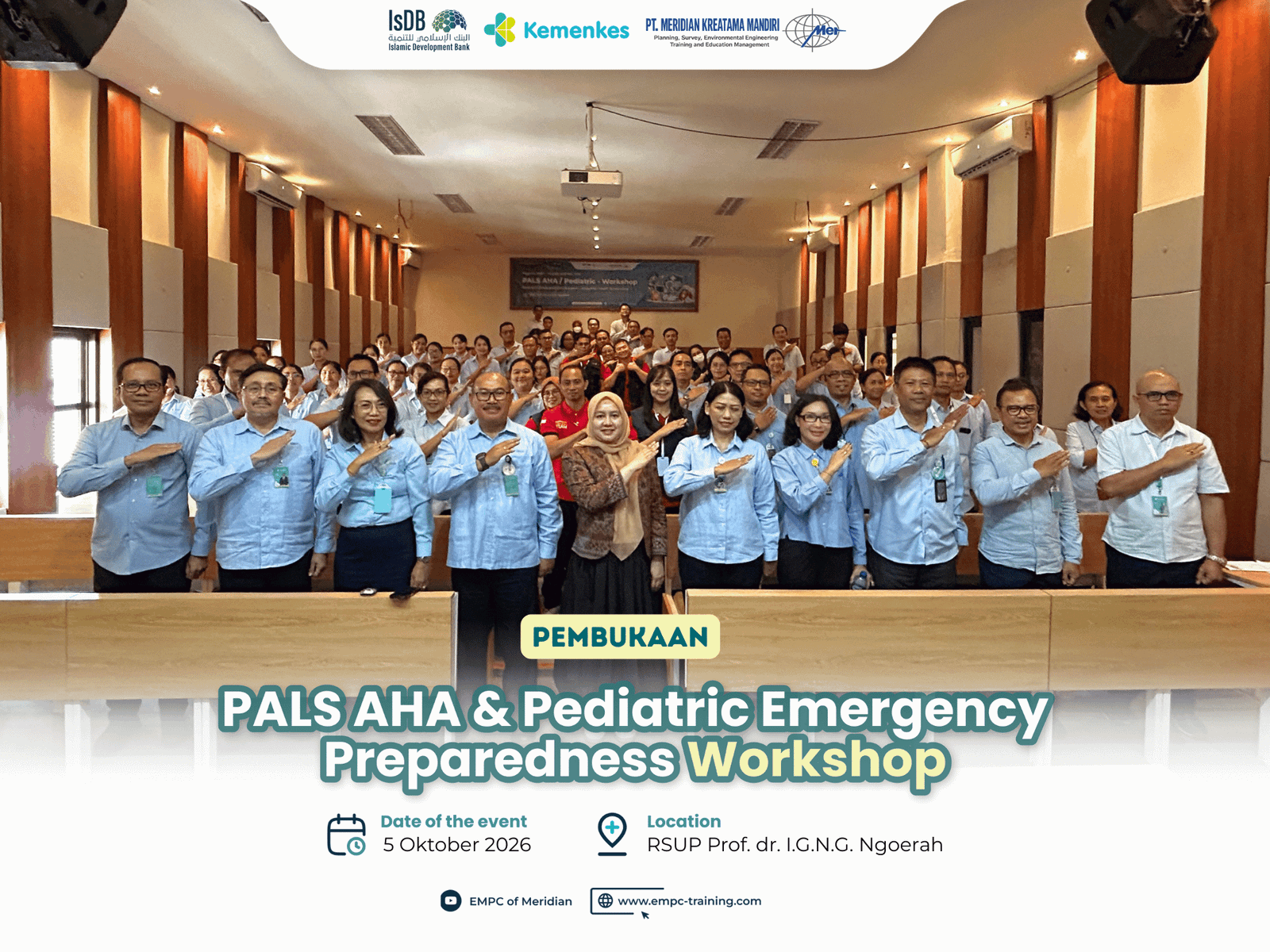
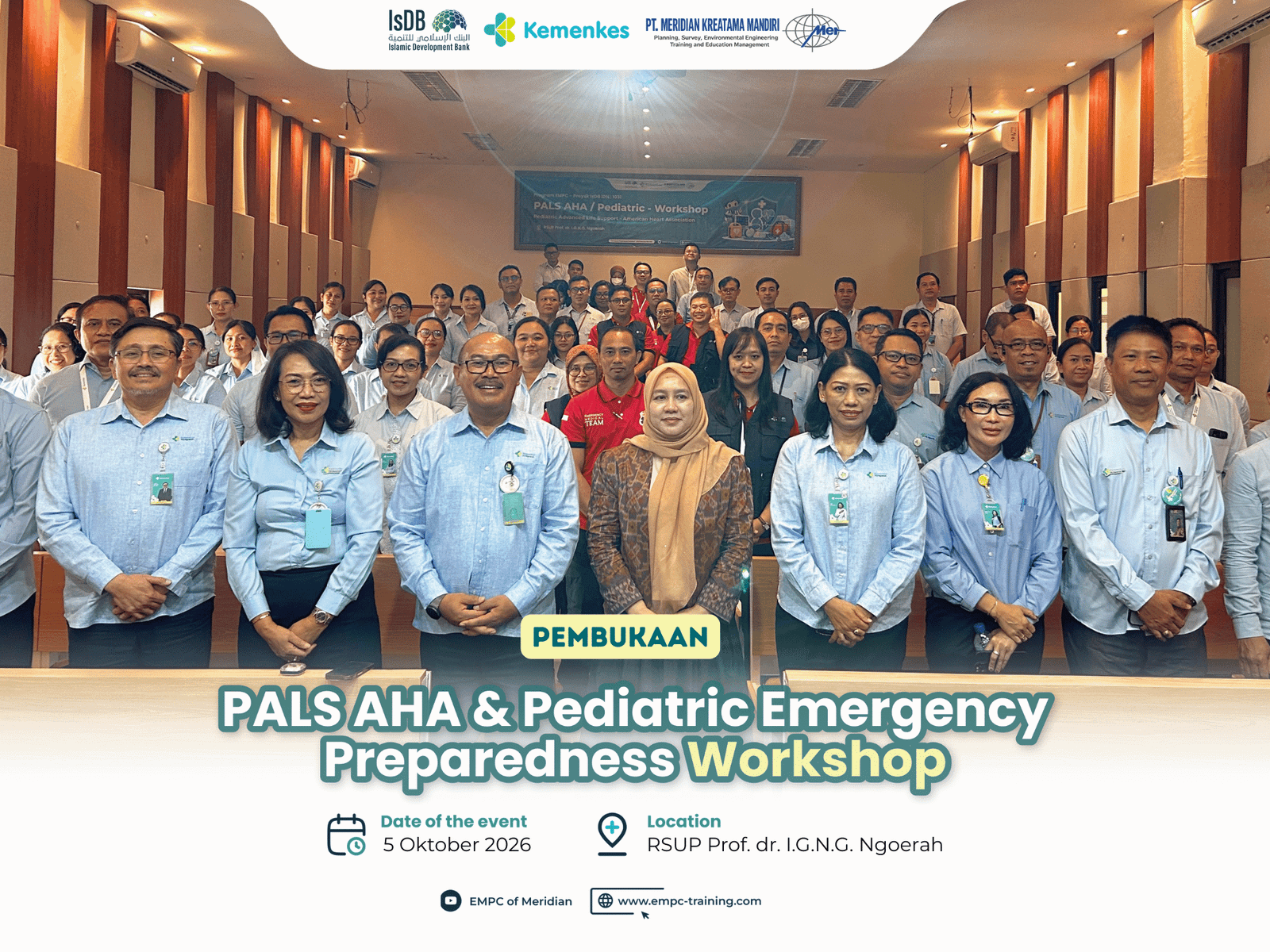
Bali, 5 October 2026 The EMPC Program Hospital Training under the Islamic Development Bank (IsDB) Project IDN: 1031 was officially opened at RSUP Prof. Dr. I.G.N.G. Ngoerah, Bali, marking an important step in strengthening hospital emergency preparedness and response capacity.
The opening ceremony was officially inaugurated by the President Director of RSUP Prof. Dr. I.G.N.G. Ngoerah, Dr. I Gusti Ngurah Ketut Sukadarma, S.Kp., M.Kes. In his opening remarks, he emphasized the importance of strengthening the preparedness and capacity of healthcare professionals in responding effectively to emergency and critical situations, particularly in pediatric care.
The event was also attended by representatives of the hospital, project stakeholders, healthcare professionals, and the EMPC team. A welcoming address was delivered by the Director of EMPC – PT Meridian Kreatama Mandiri, highlighting the significance of collaboration among healthcare institutions, experts, and project partners in supporting the improvement of hospital emergency preparedness.
The opening session marked the commencement of the PALS AHA & Pediatric Emergency Preparedness Workshop, which focuses on enhancing participants’ knowledge, skills, and readiness in managing pediatric emergencies. Through a combination of expert-led sessions, practical learning, and interactive discussions, the training is designed to strengthen the capacity of healthcare personnel in providing timely and effective emergency care.
The EMPC Program Hospital Training is part of the broader IsDB Project IDN: 1031, which aims to contribute to the strengthening of healthcare services and emergency preparedness in Indonesia. The program reflects a shared commitment to building more resilient healthcare systems through capacity building, knowledge transfer, and collaboration among key stakeholders.
The successful opening of the program at RSUP Prof. Dr. I.G.N.G. Ngoerah marks the beginning of a series of activities aimed at supporting hospitals in developing stronger emergency preparedness and response capabilities.
5 October 2026


Our Progress
Our journey began on July 23rd, 2026, and will continue until January 2028. What started as a shared vision has grown into something real.
Built through tireless collaboration with the Ministry of Health and six partner hospitals. Every step, every milestone has brought us closer to making meaningful change in healthcare.

This is our journey
And you're part of it
"Healing is a matter of time, but it is sometimes also a matter of opportunity." ~ Hippocrates
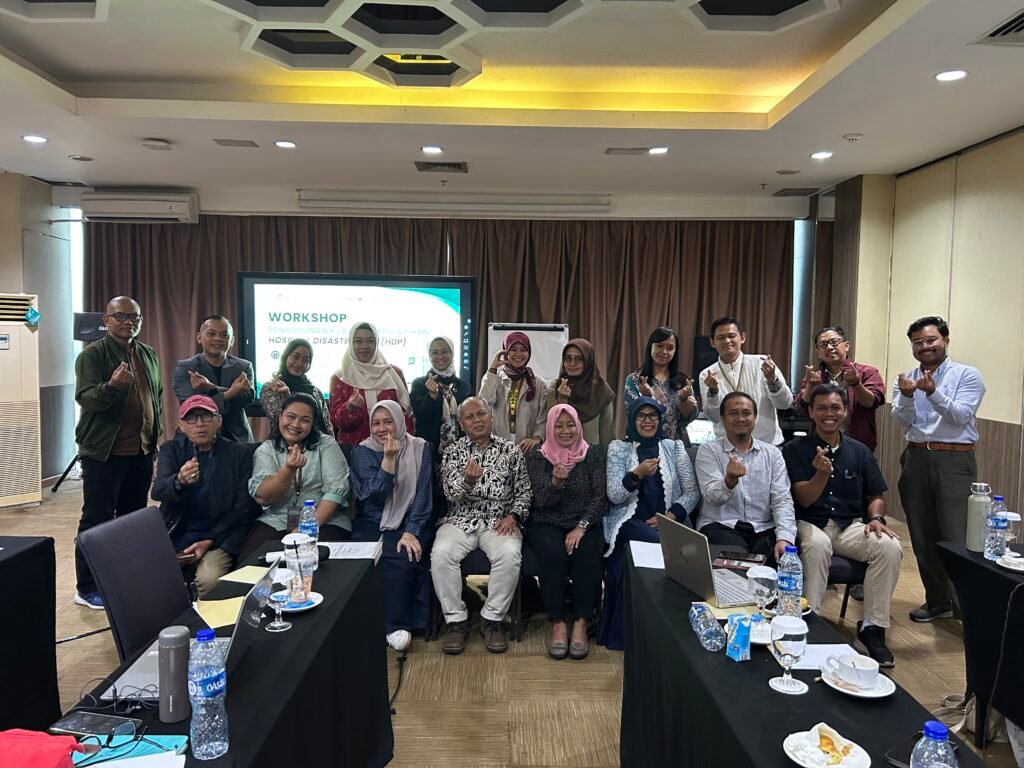
Discussion and Validation of Training Needs Analysis (TNA) Results
On 22 September 2026, a discussion and validation session on the Training Needs Analysis (TNA) results was conducted as part of the preparation for the upcoming training program. The session brought together relevant stakeholders to review the findings obtained during the TNA process, discuss identified training needs and gaps, and ensure that the results accurately reflected the conditions and requirements of the participating hospital.
The discussion focused on reviewing the preliminary findings, gathering feedback from the participants, clarifying key observations, and validating the identified training priorities. Through an interactive discussion, participants provided input based on their experiences and operational needs, which served as an important reference for refining the TNA results.
The validation process aimed to establish a shared understanding of the current conditions, priority gaps, and areas requiring further development, ensuring that the subsequent training program can be appropriately aligned with the hospital’s needs and project objectives.
22 September 2026


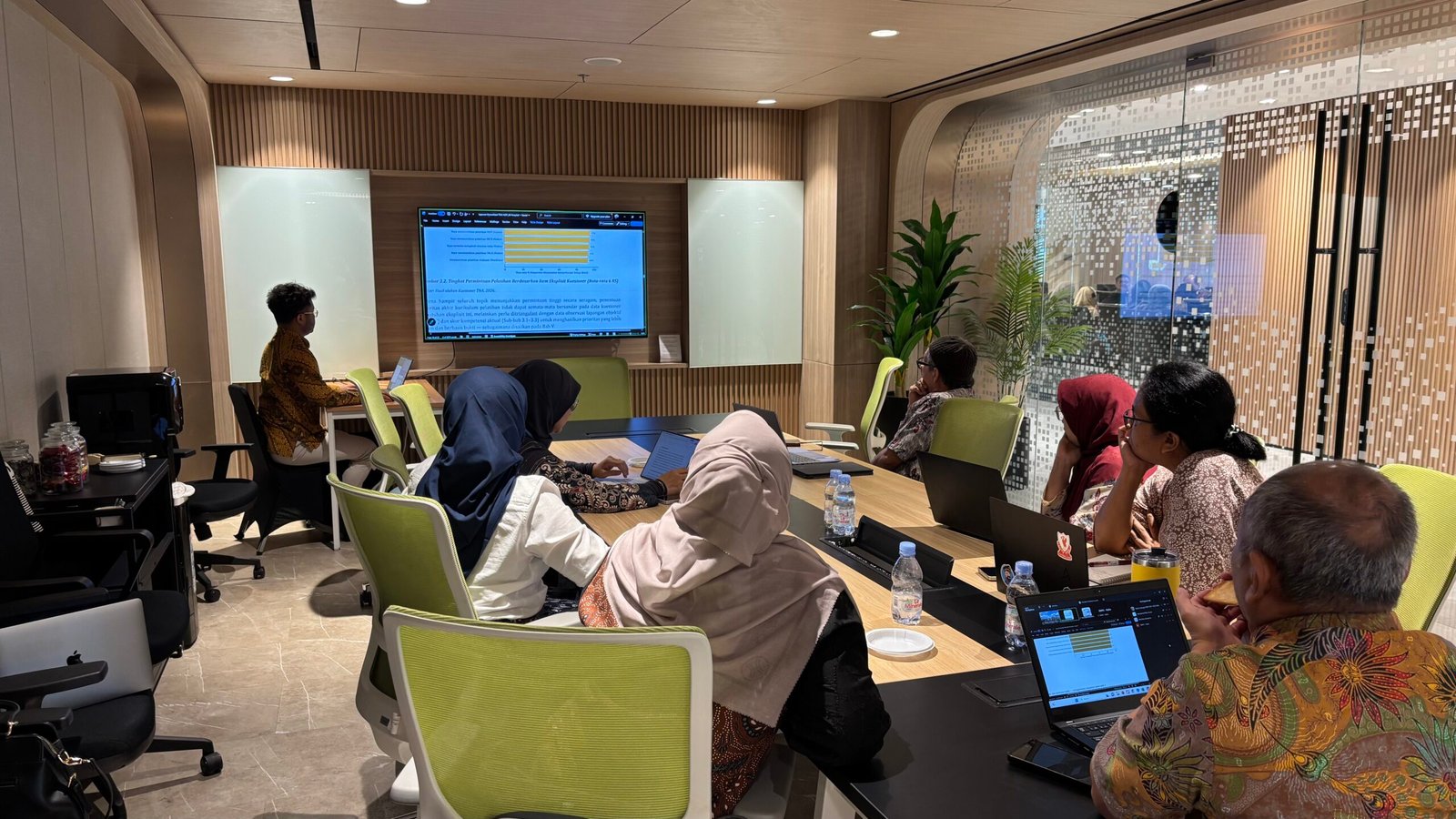
Overseas Training Meeting
On 16 September 2026, a meeting was held to discuss the Overseas Training program. The meeting brought together relevant team members to discuss the preparation and planning of the upcoming overseas training activities.
The discussion covered key aspects of the training, including the proposed program, participant requirements, coordination, and other necessary preparations. The meeting also served as an opportunity to align expectations and identify the next steps to ensure the overseas training can be implemented effectively and in accordance with the project’s objectives.
16 September 2026
EMPC Progress Meeting
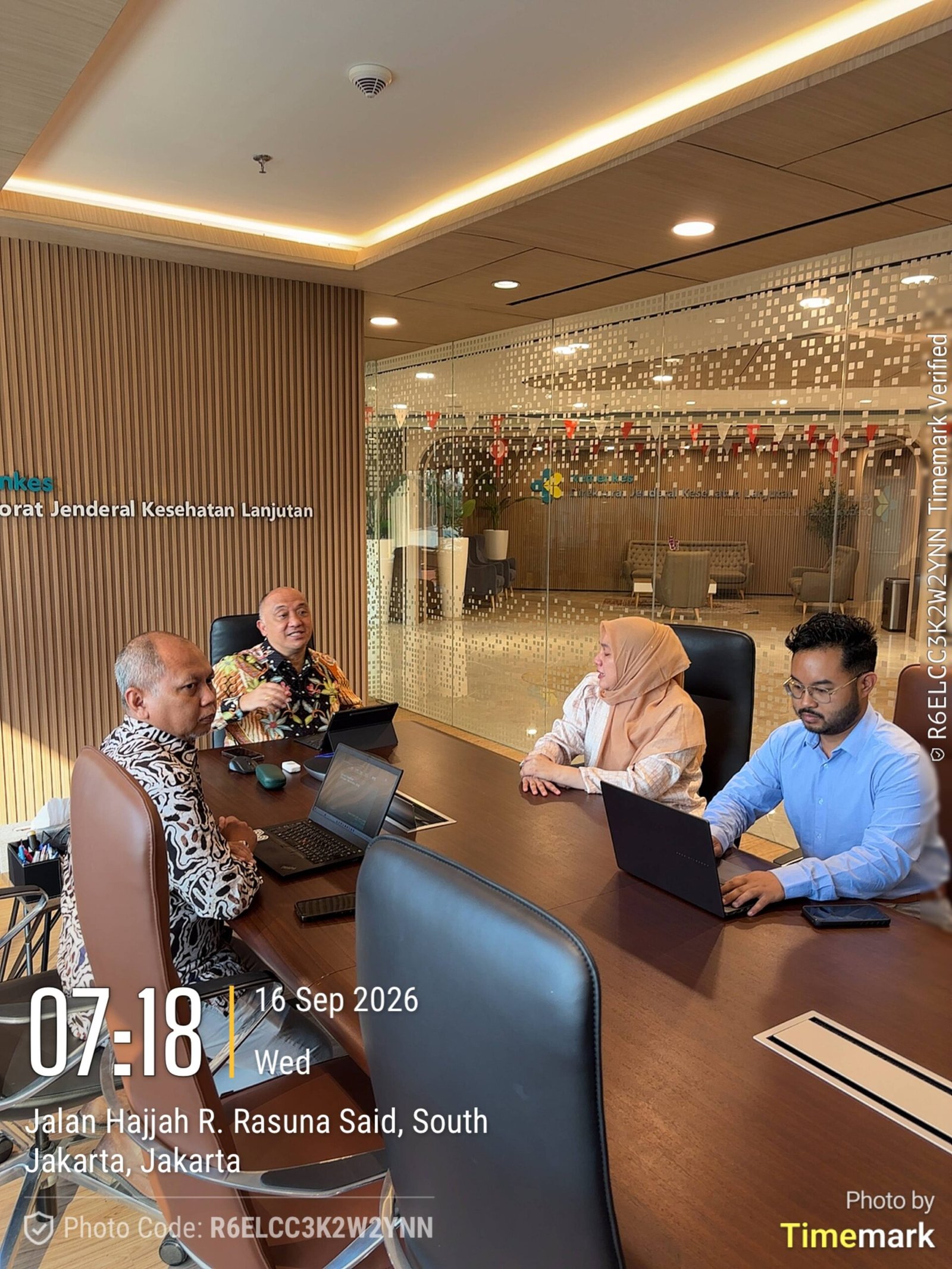
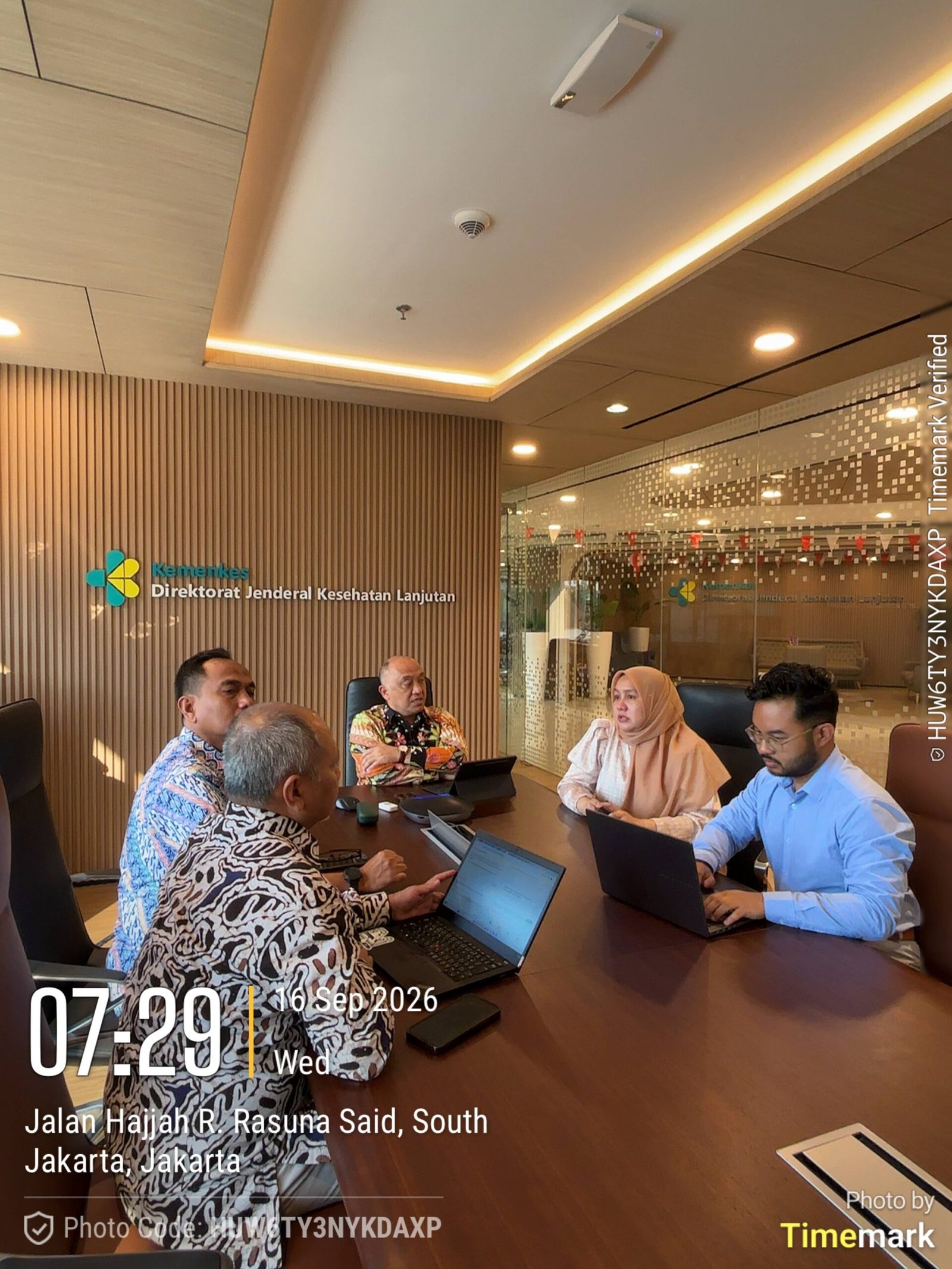
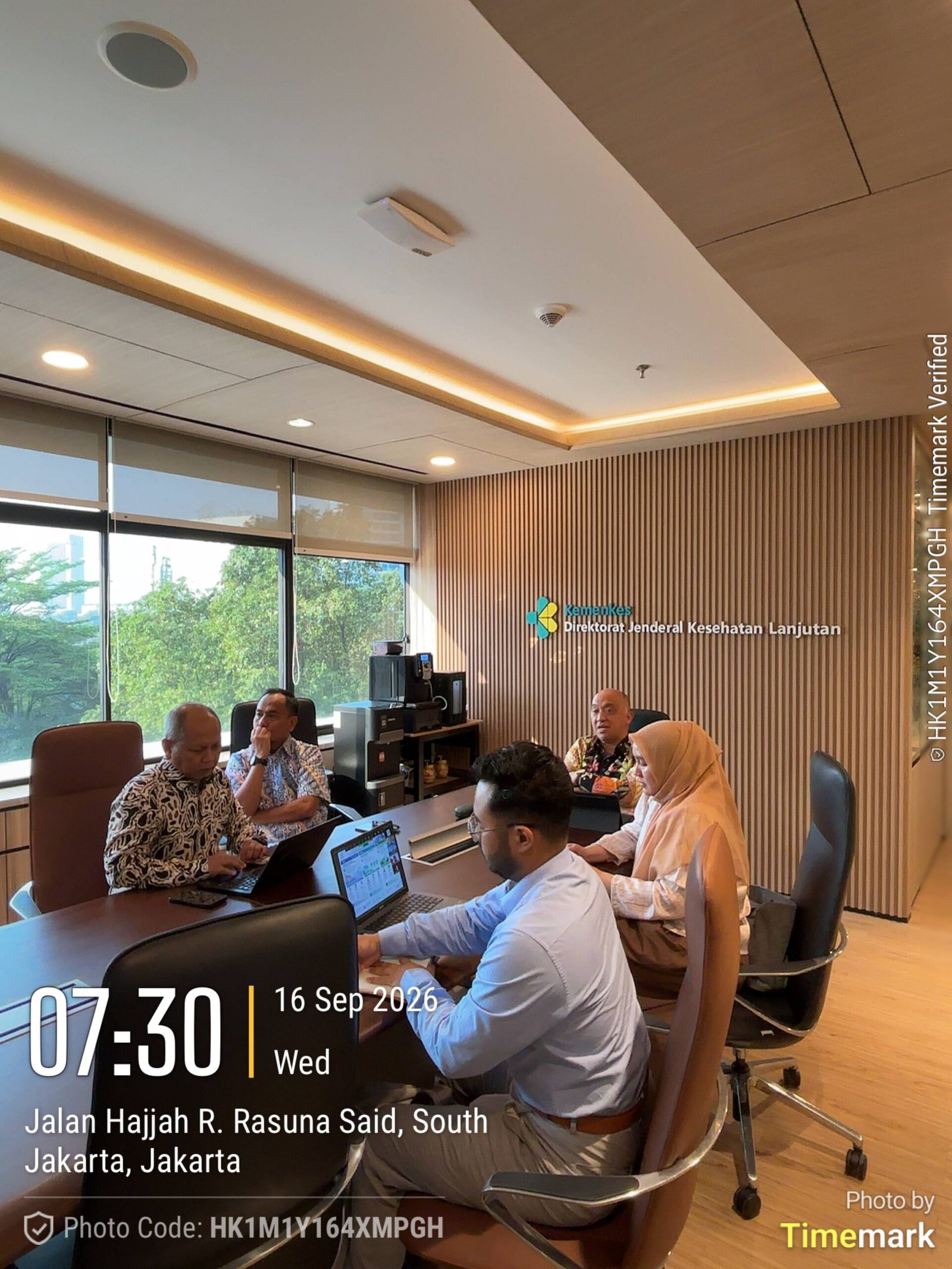
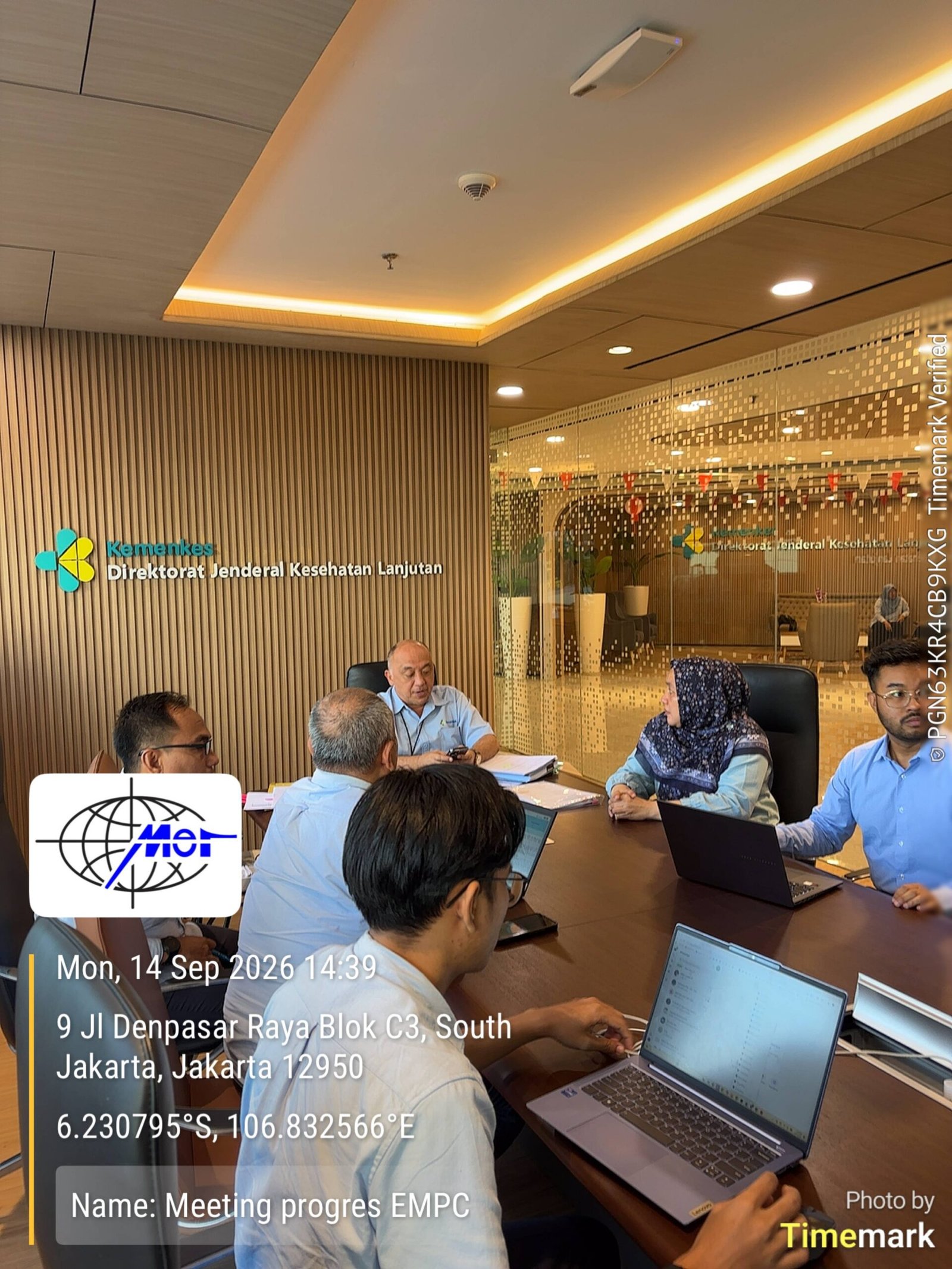
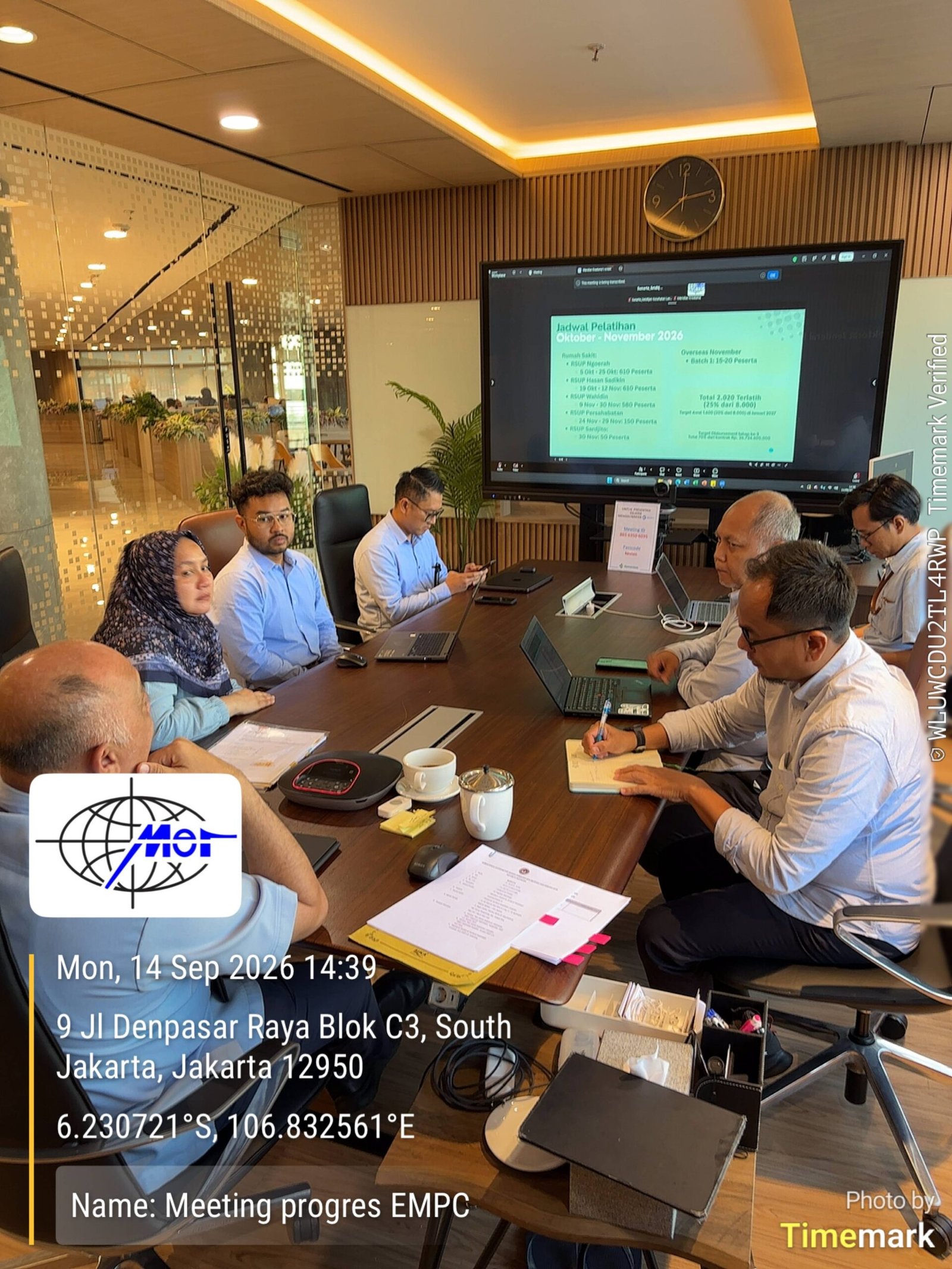
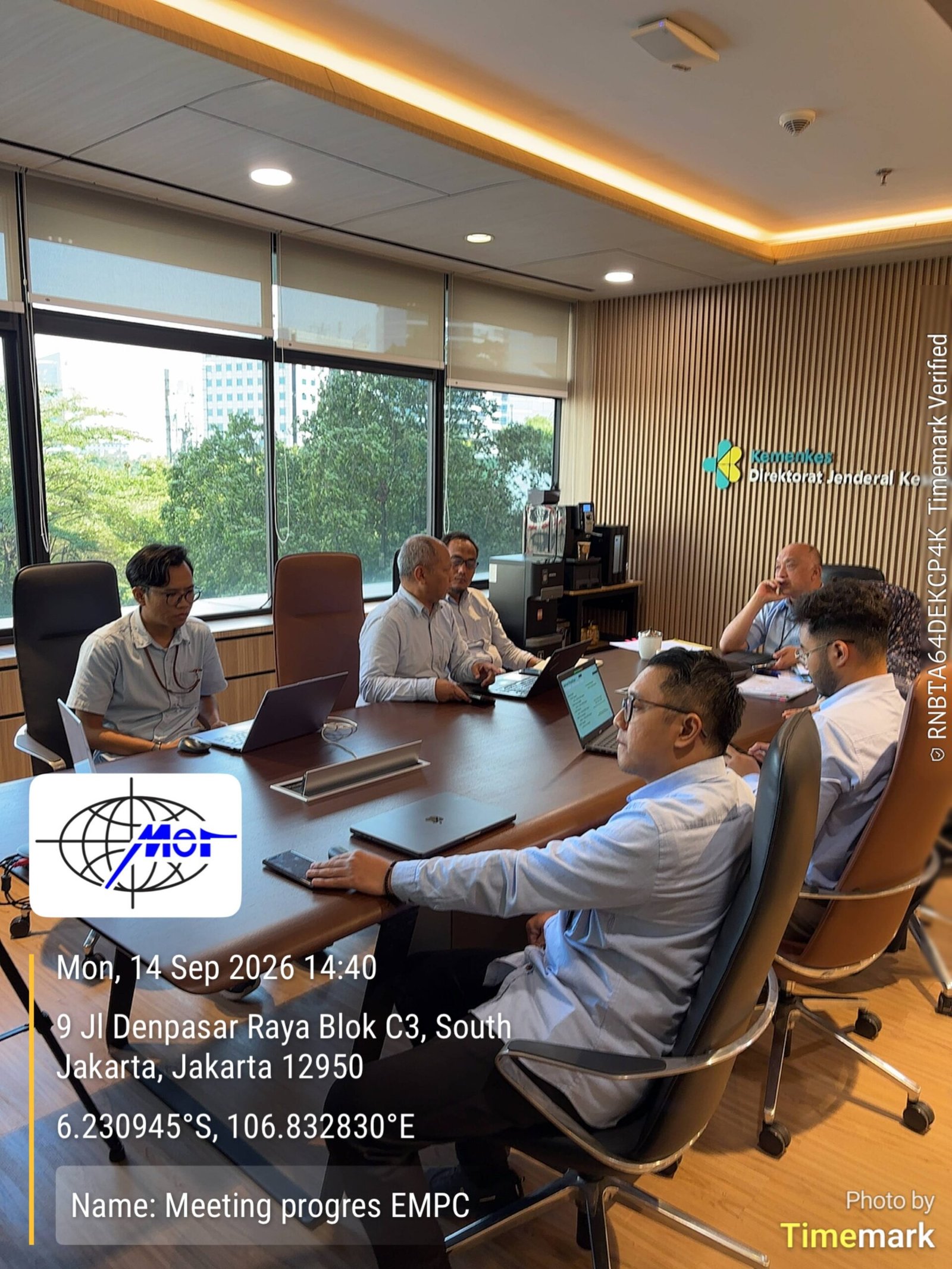
On 14 September 2026, an EMPC Progress Meeting was held to review the current progress of the EMPC program and discuss ongoing activities. The meeting brought together relevant team members to provide updates, review the implementation status, and discuss matters requiring further coordination.
The discussion also focused on ongoing activities, identified challenges, and the necessary follow-up actions to ensure that the EMPC program continues to progress in accordance with the established plans and project objectives.
14 September 2026
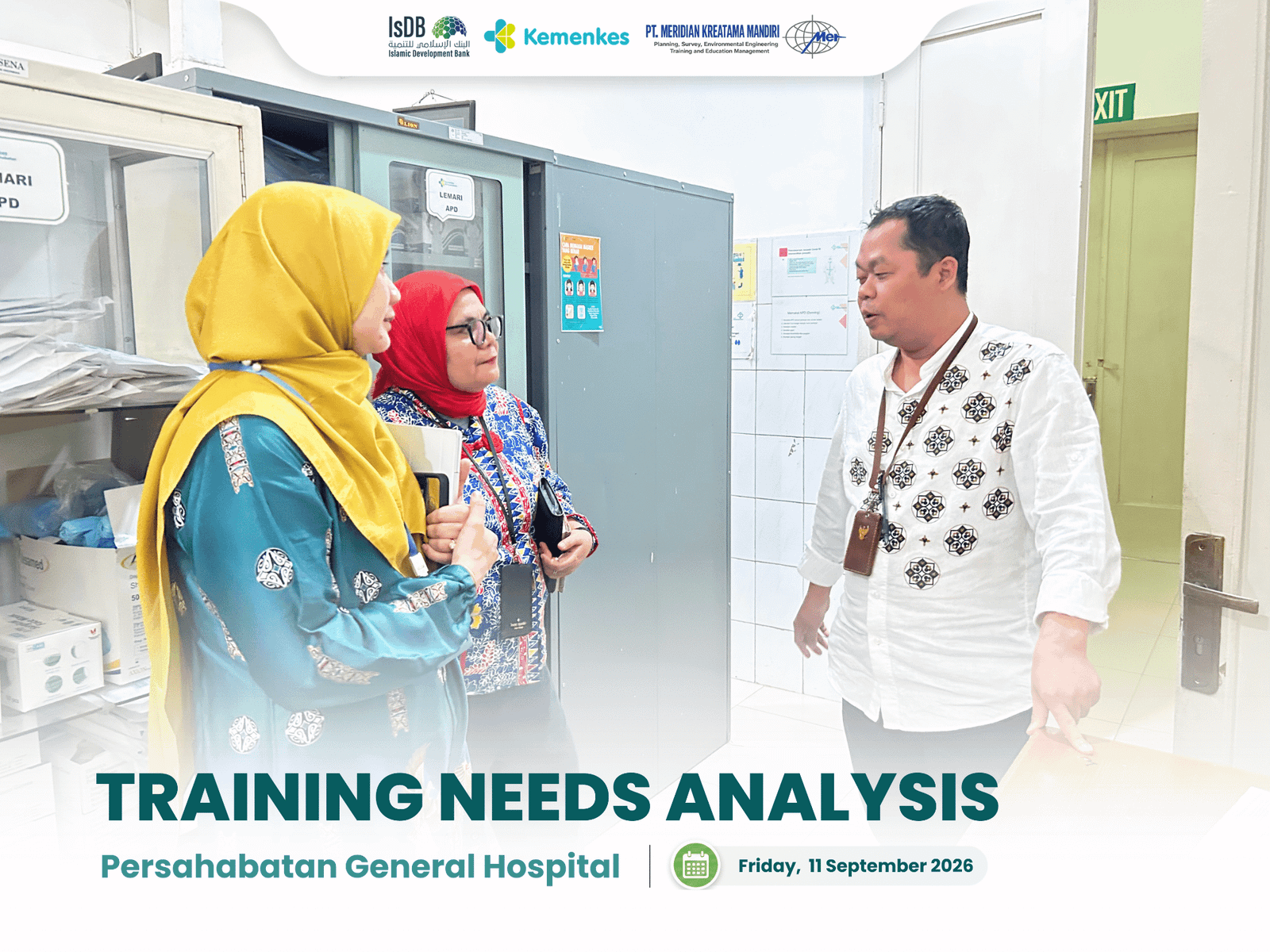
TRAINING NEEDS ANALYSIS
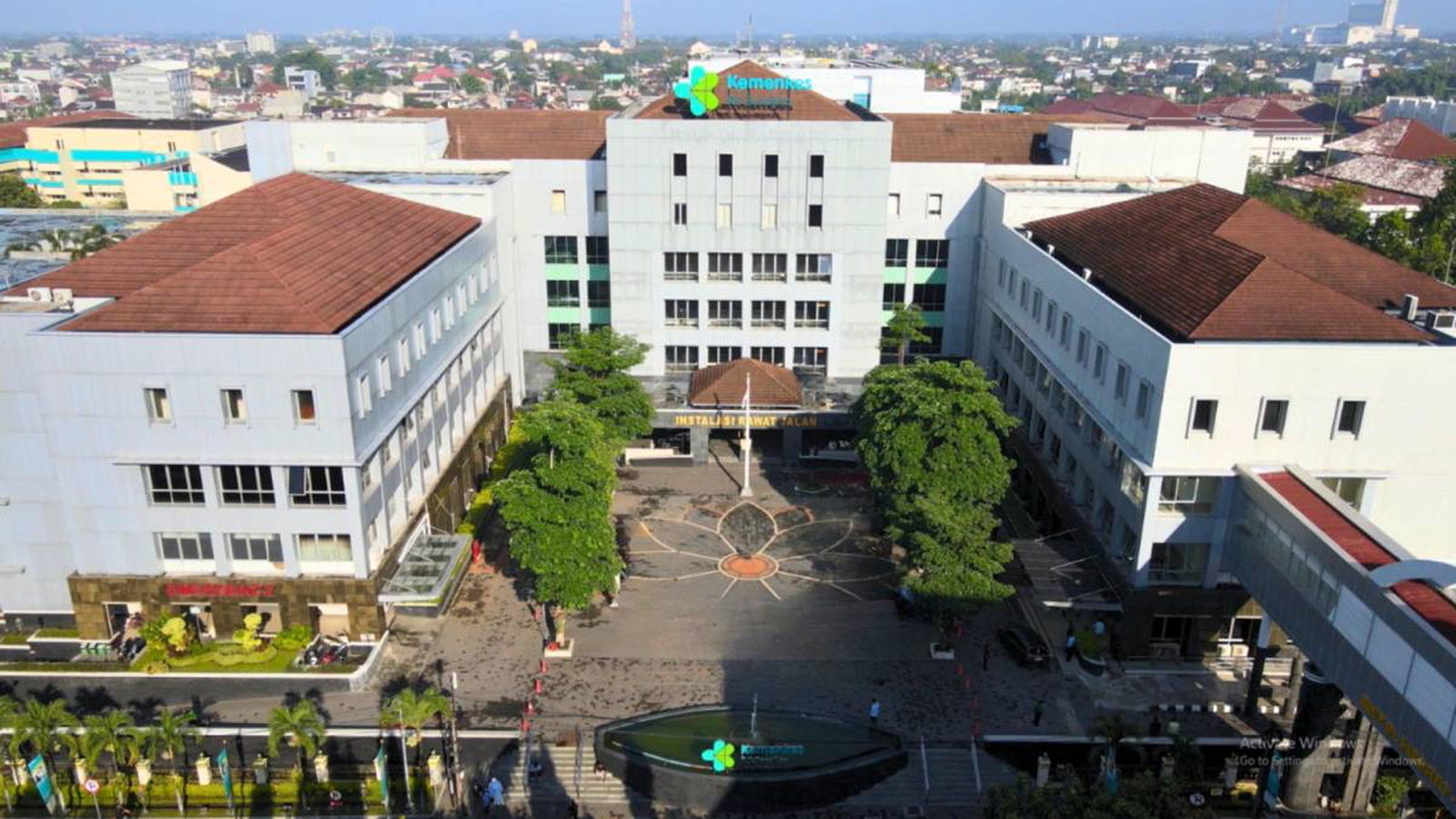
Persahabatan
General Hospital
Persahabatan General Hospital, Jakarta
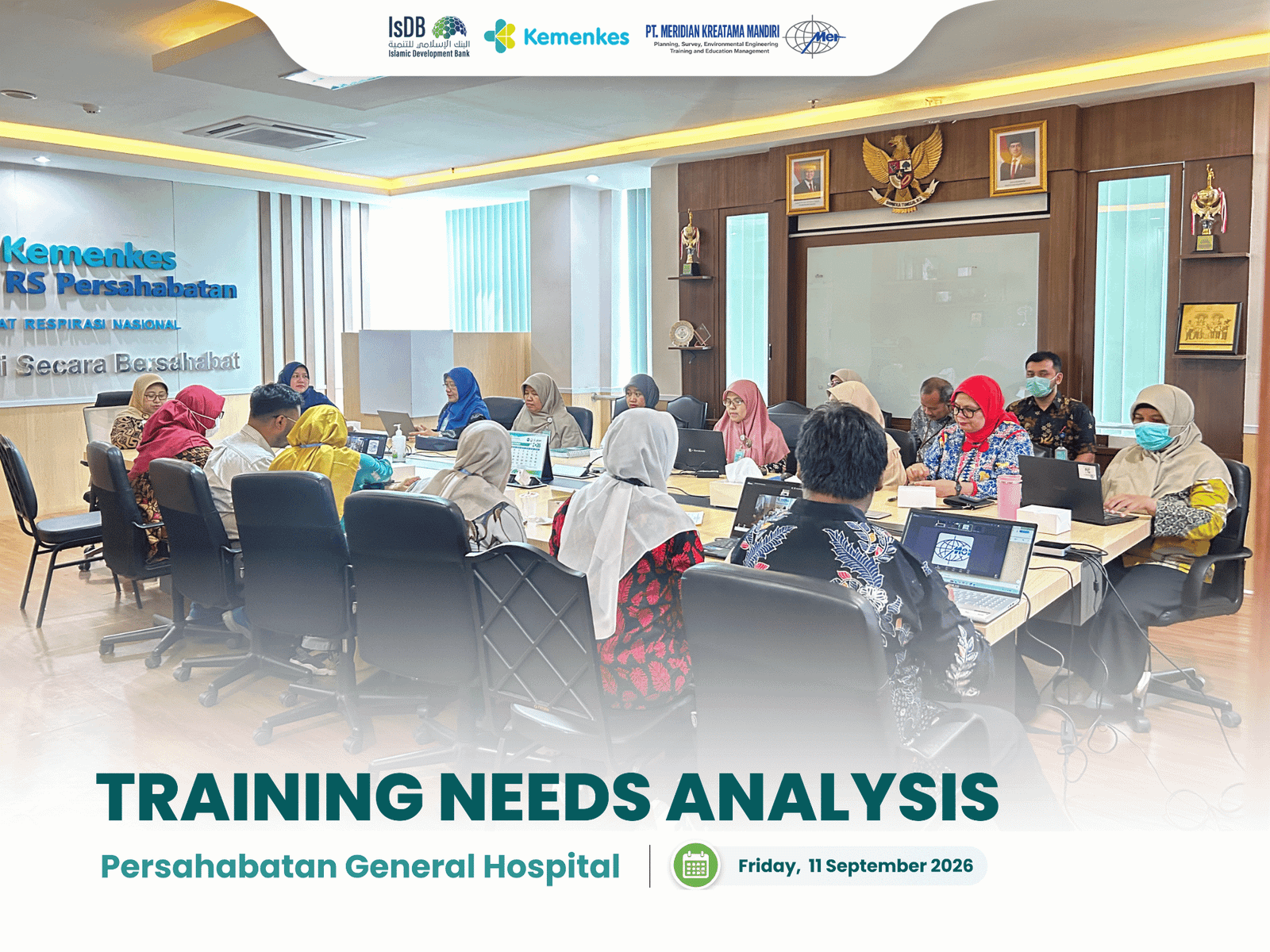
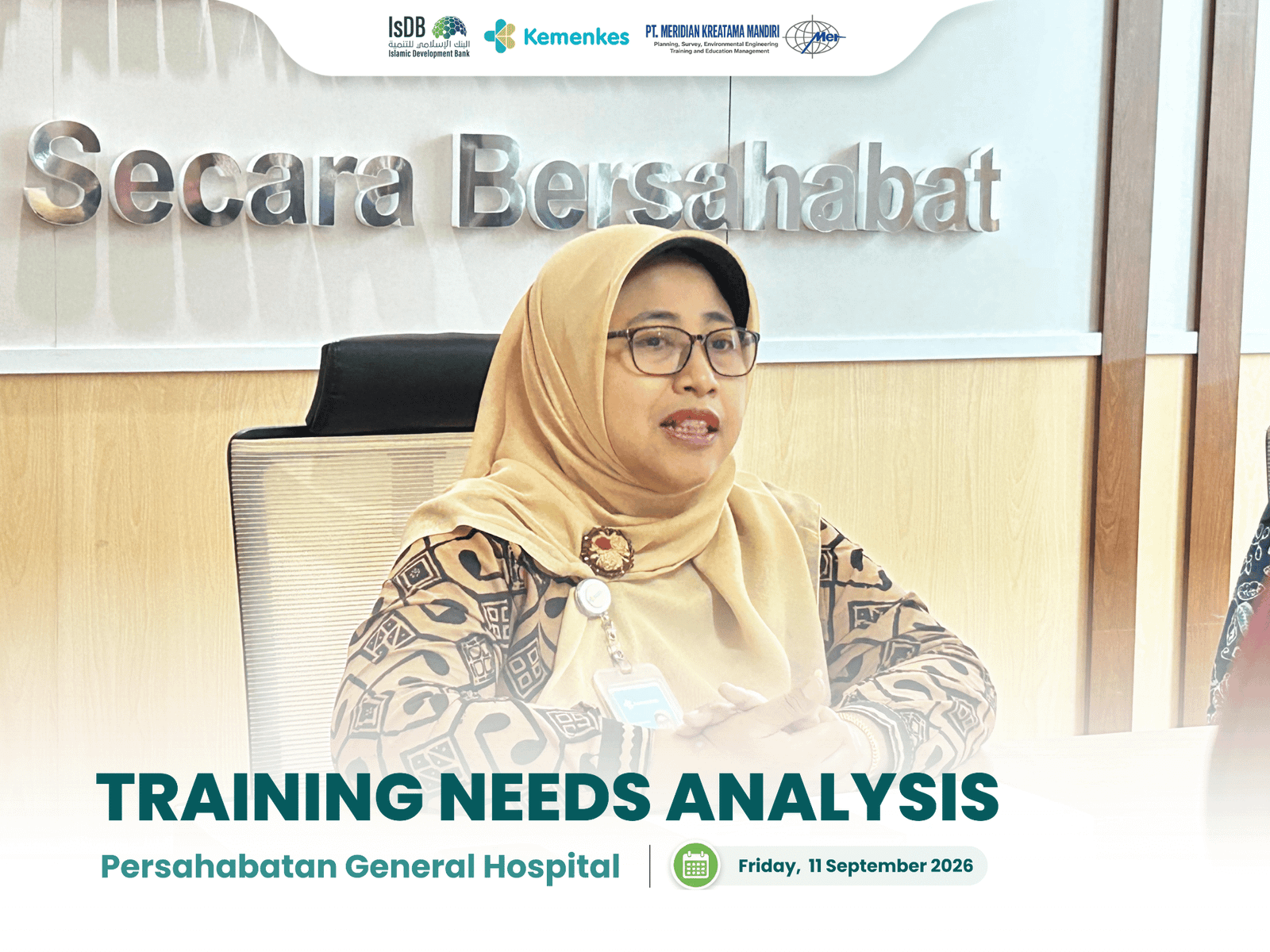
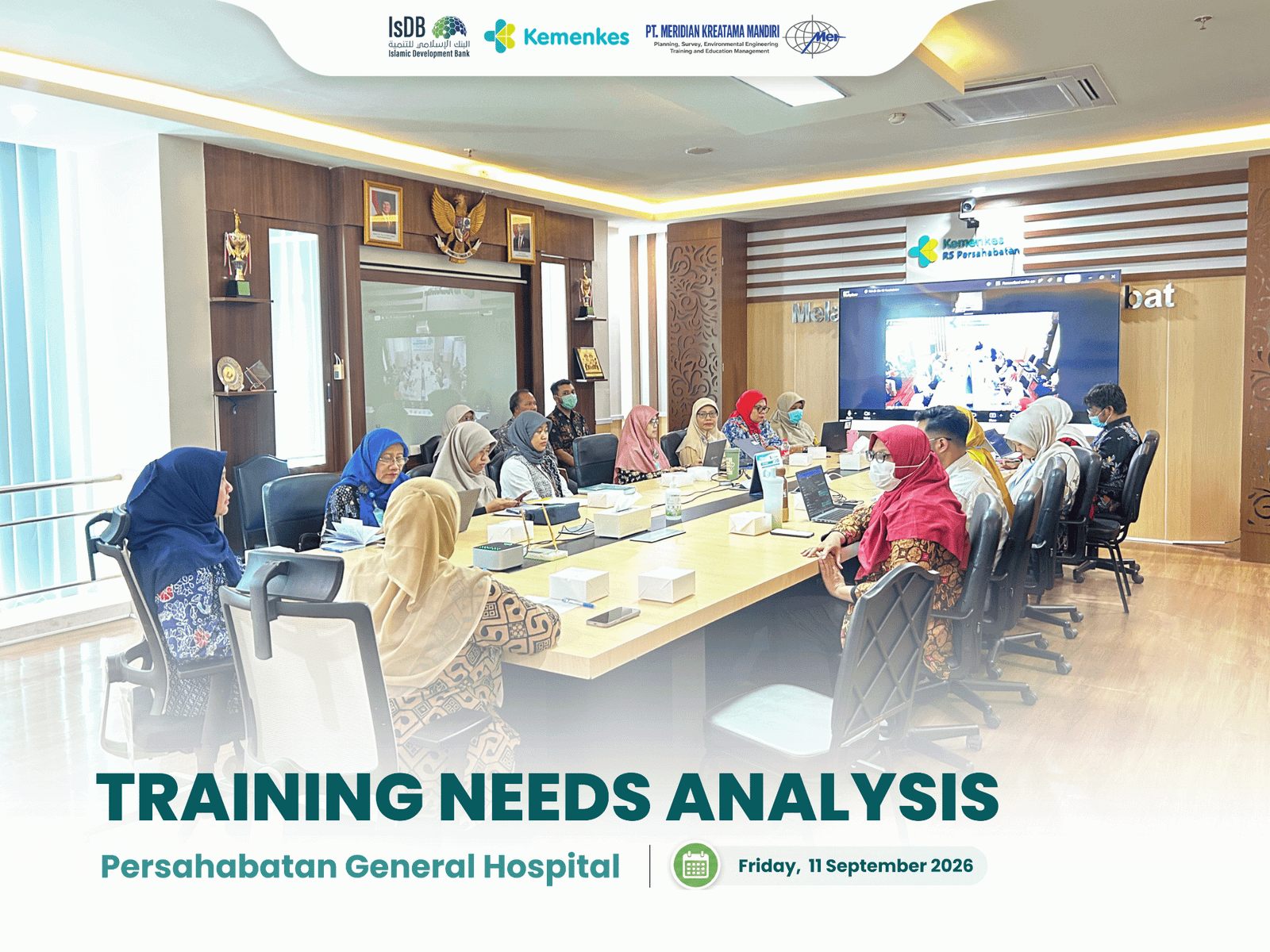
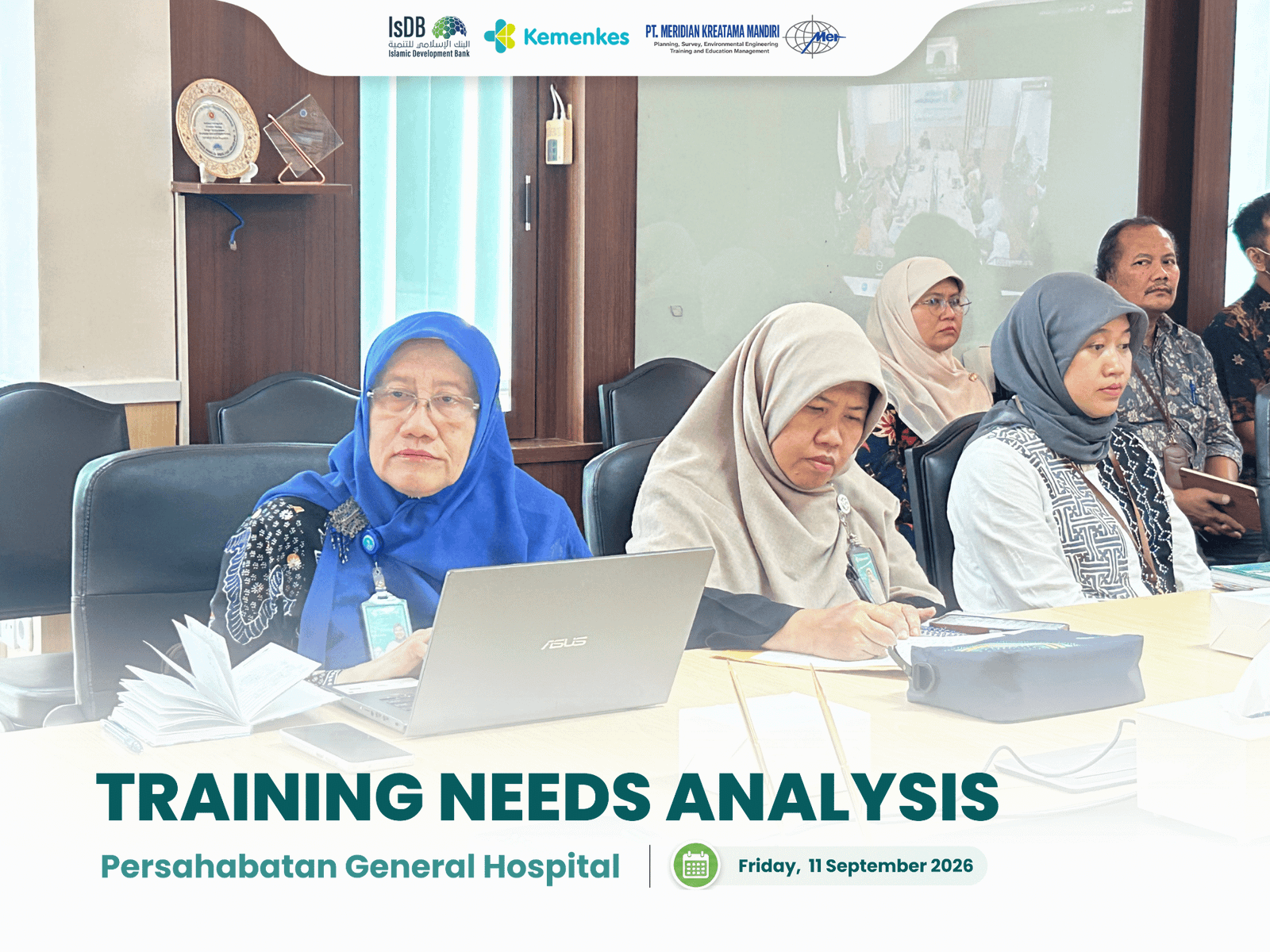
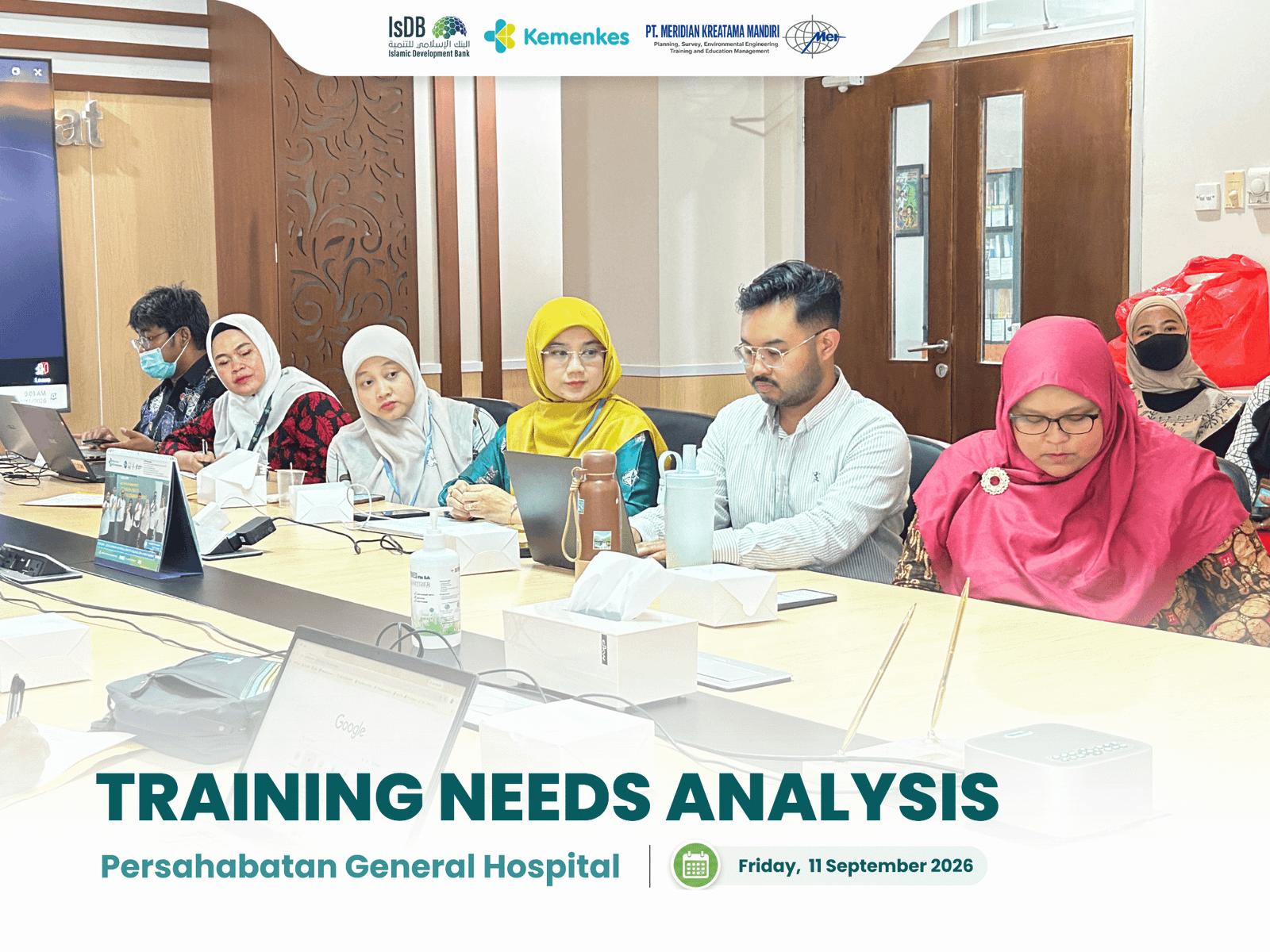
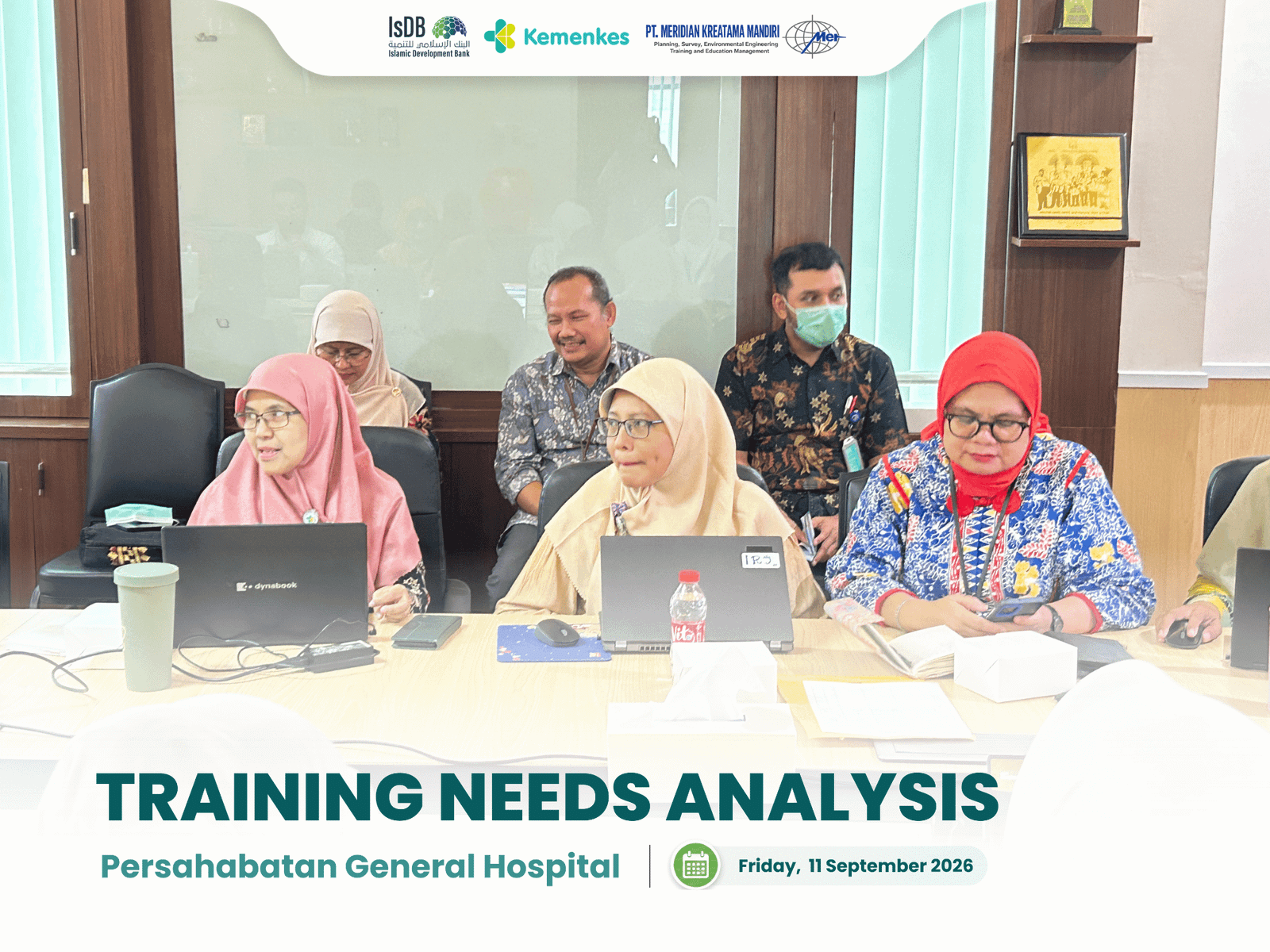
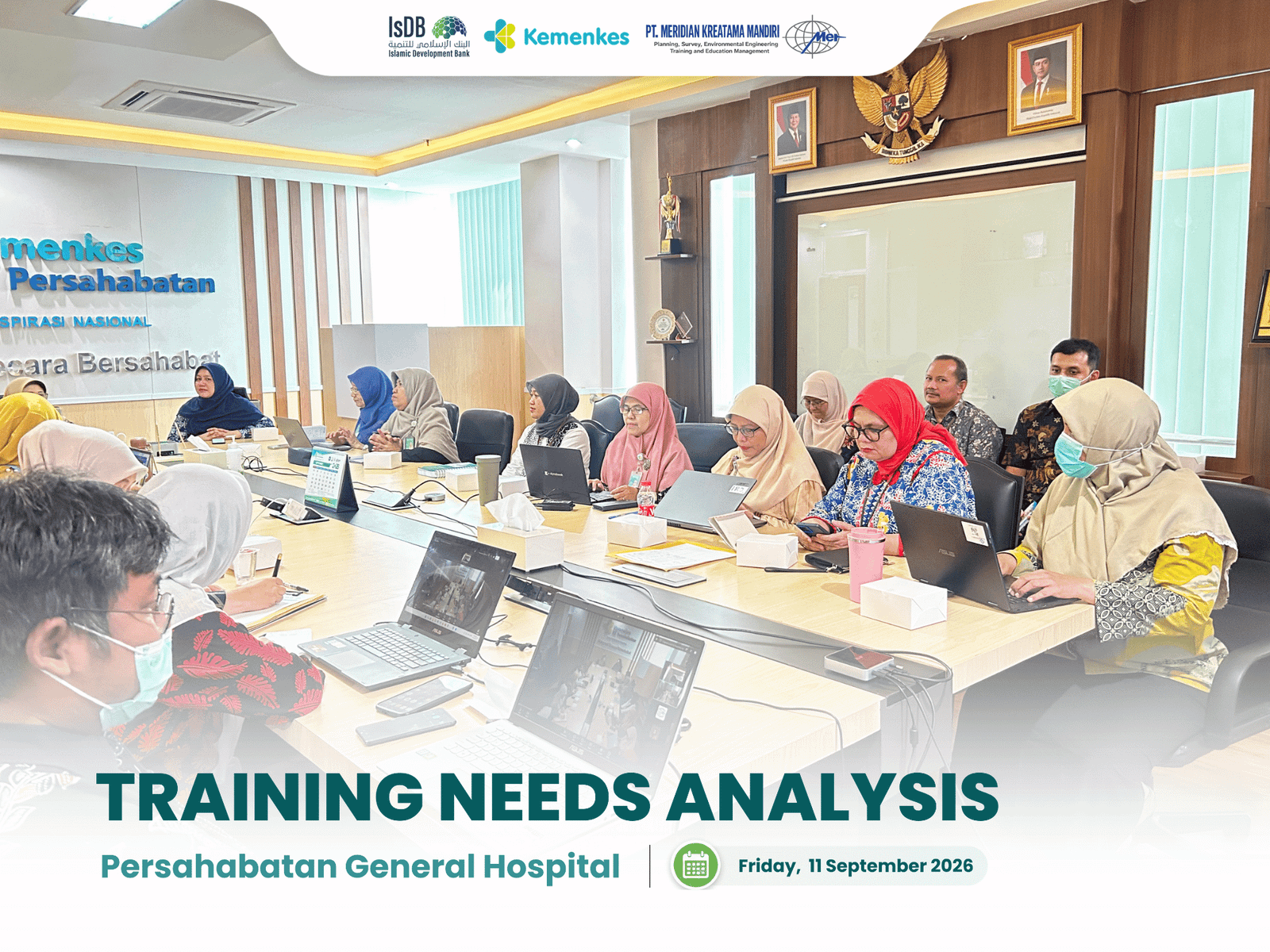
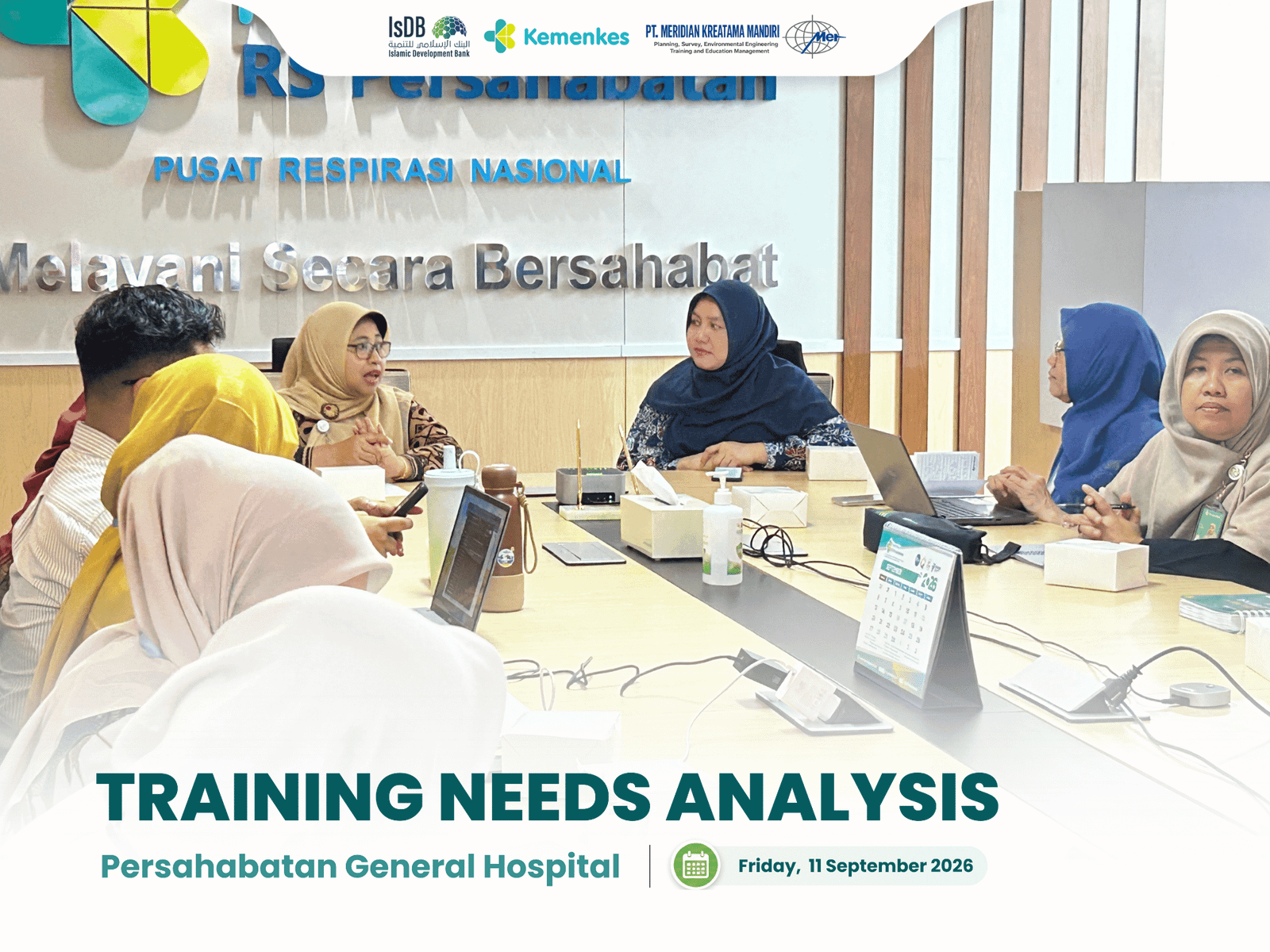
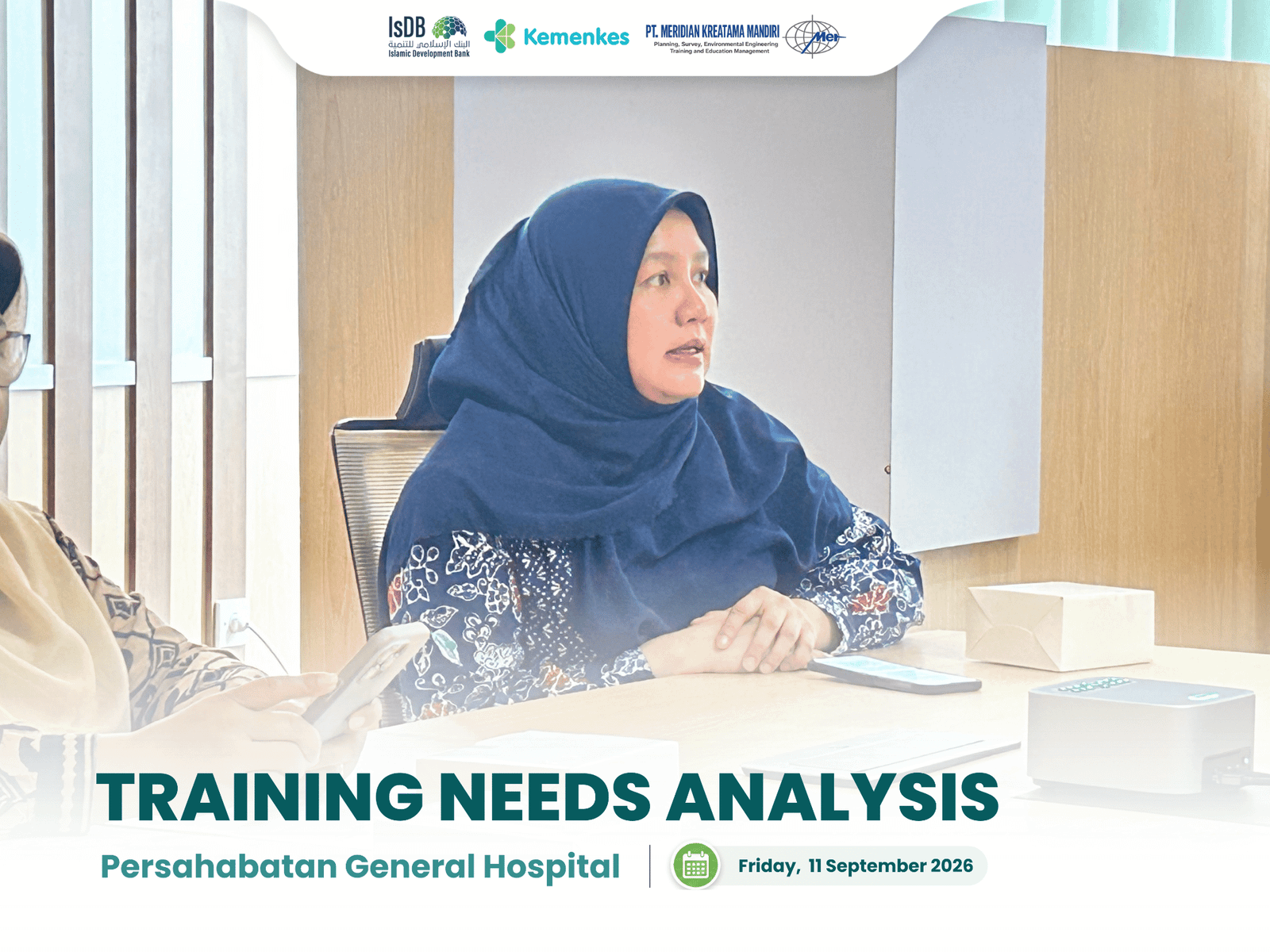
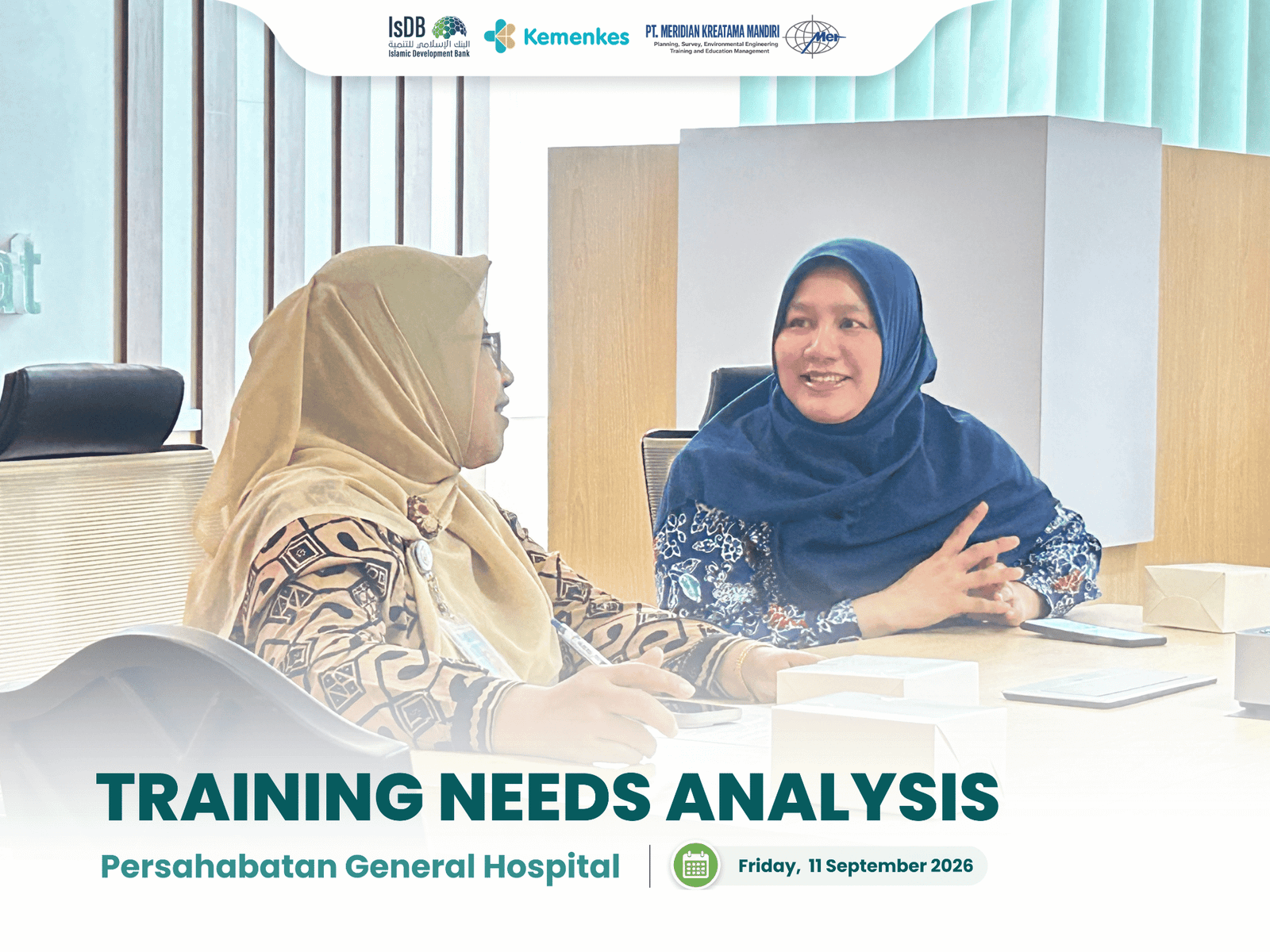
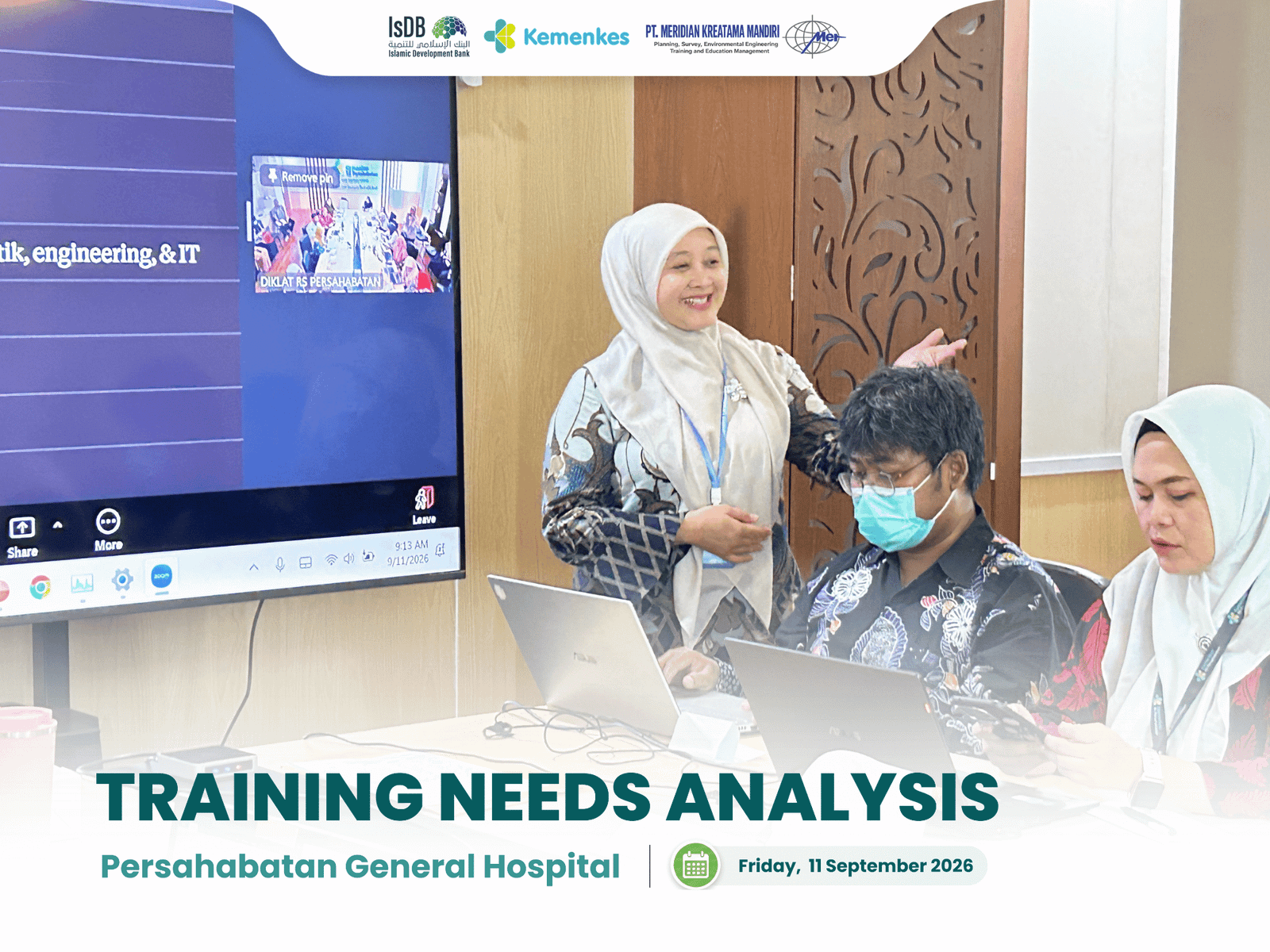
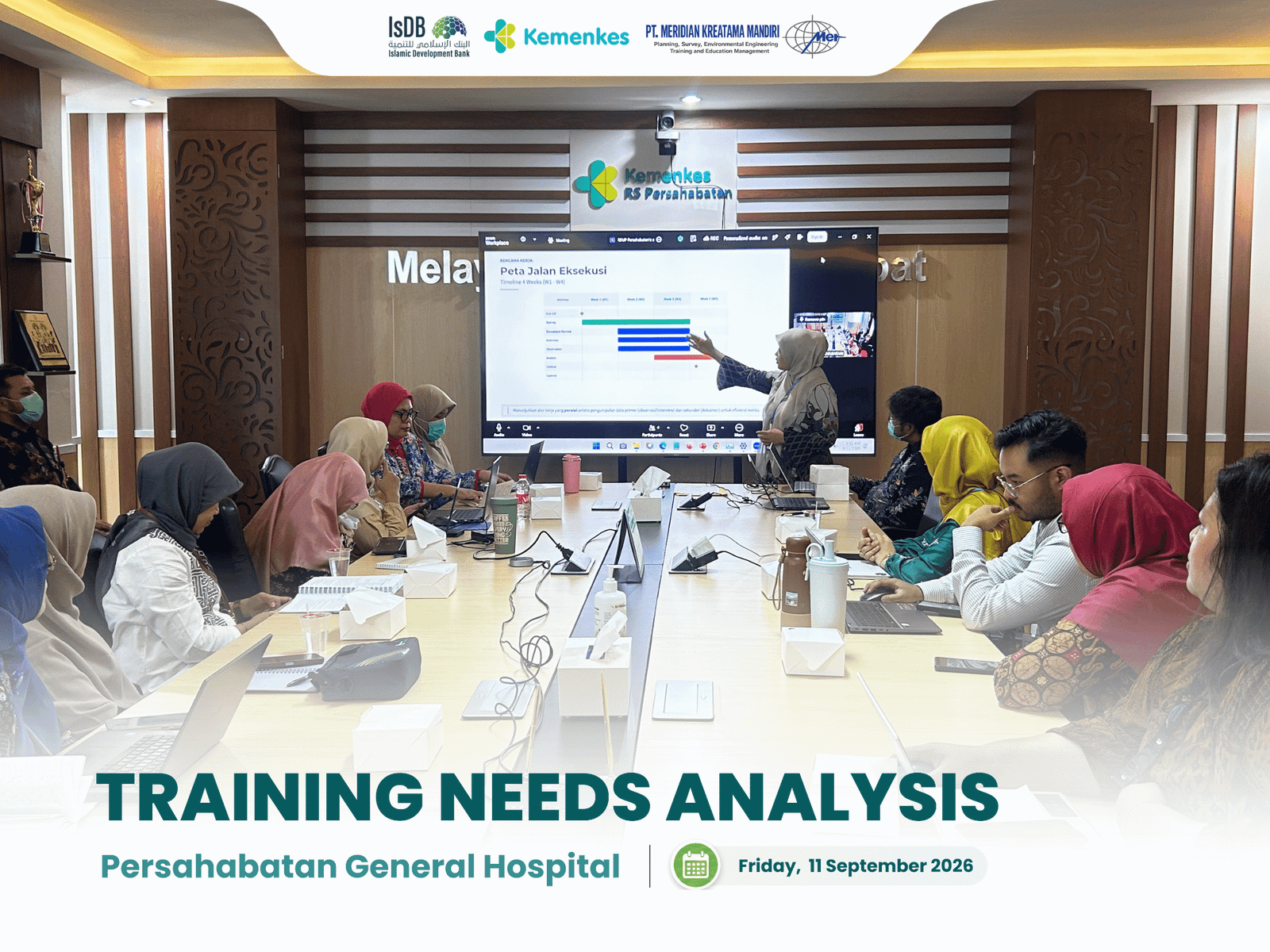
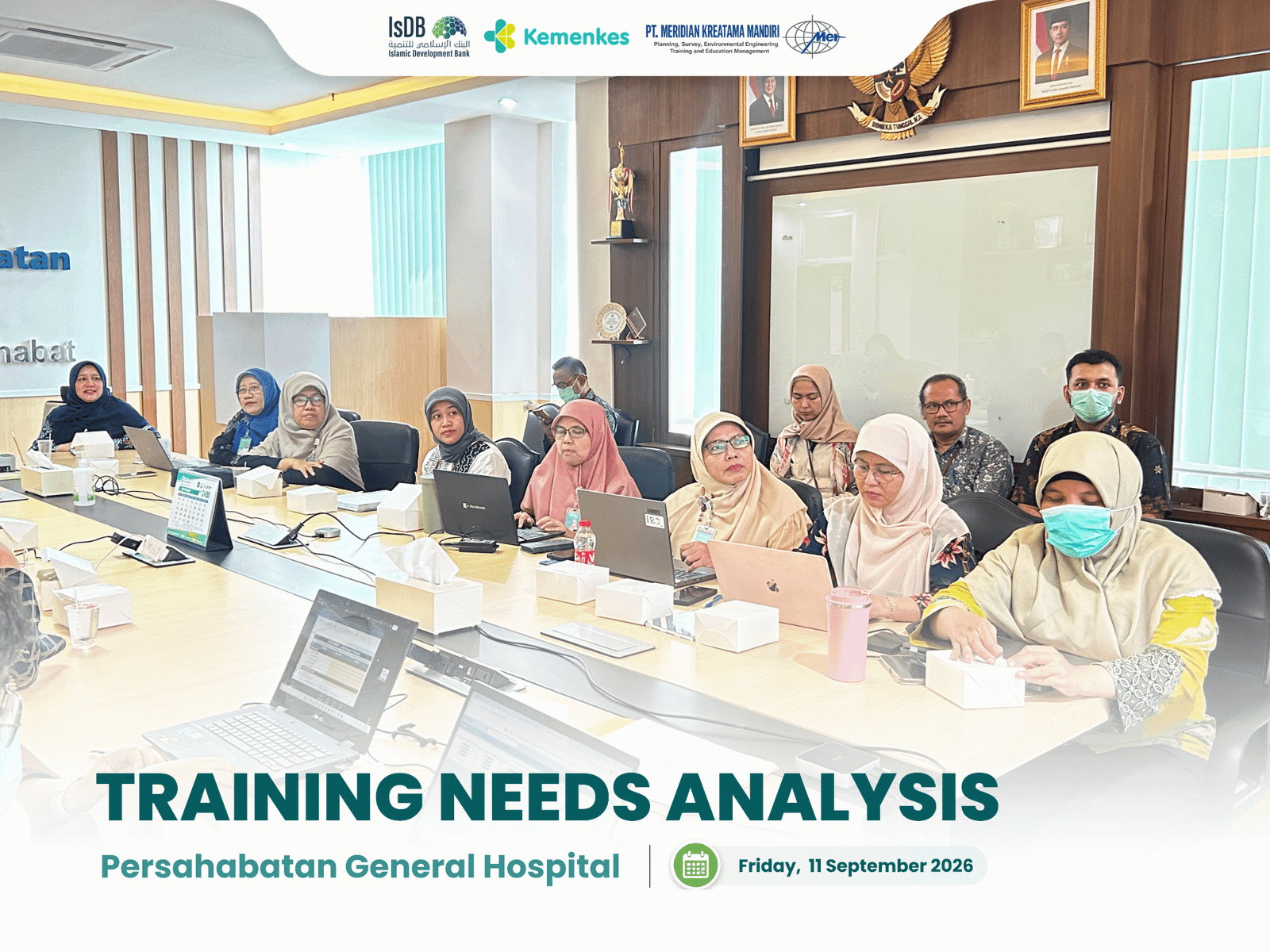
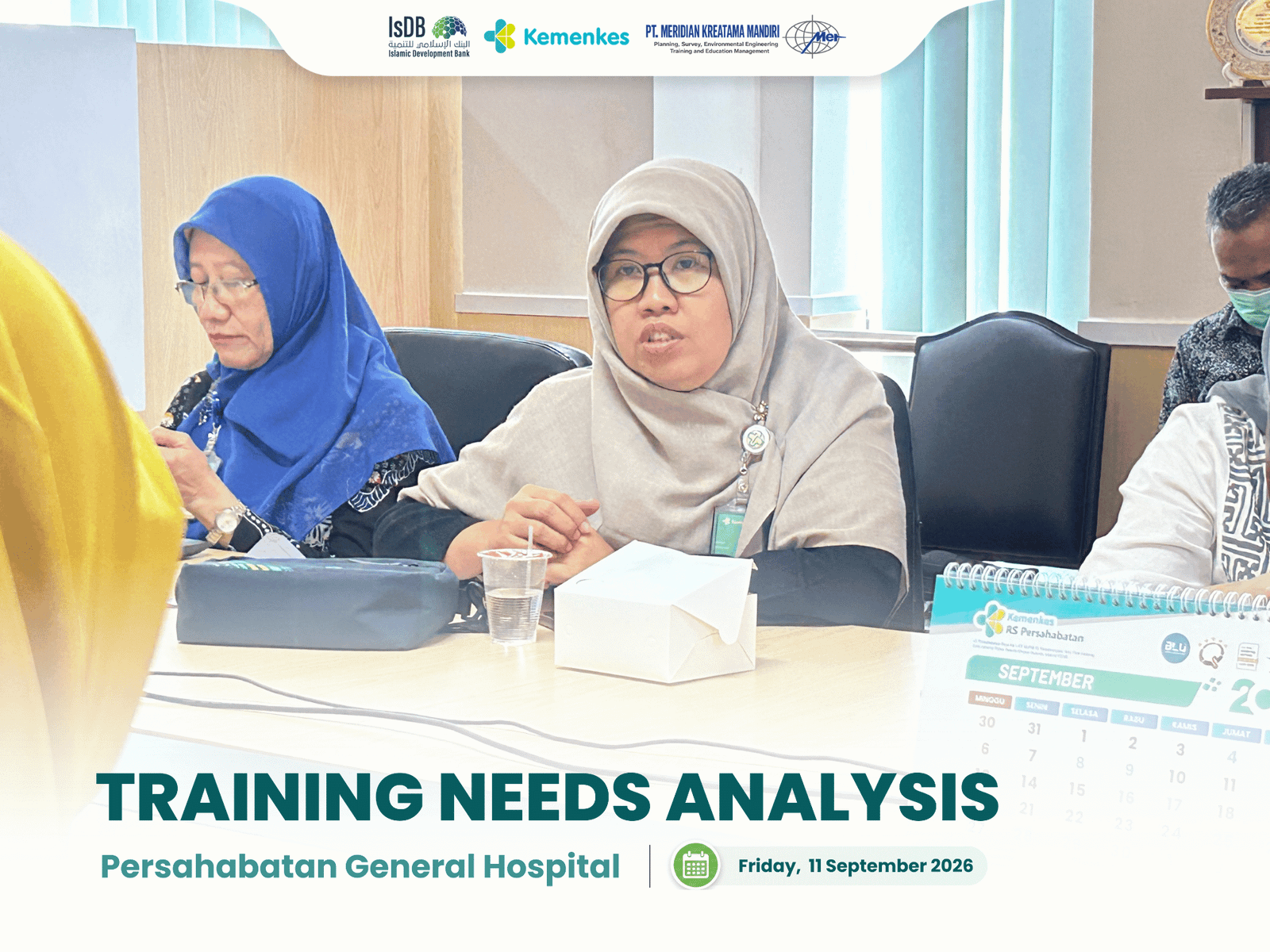
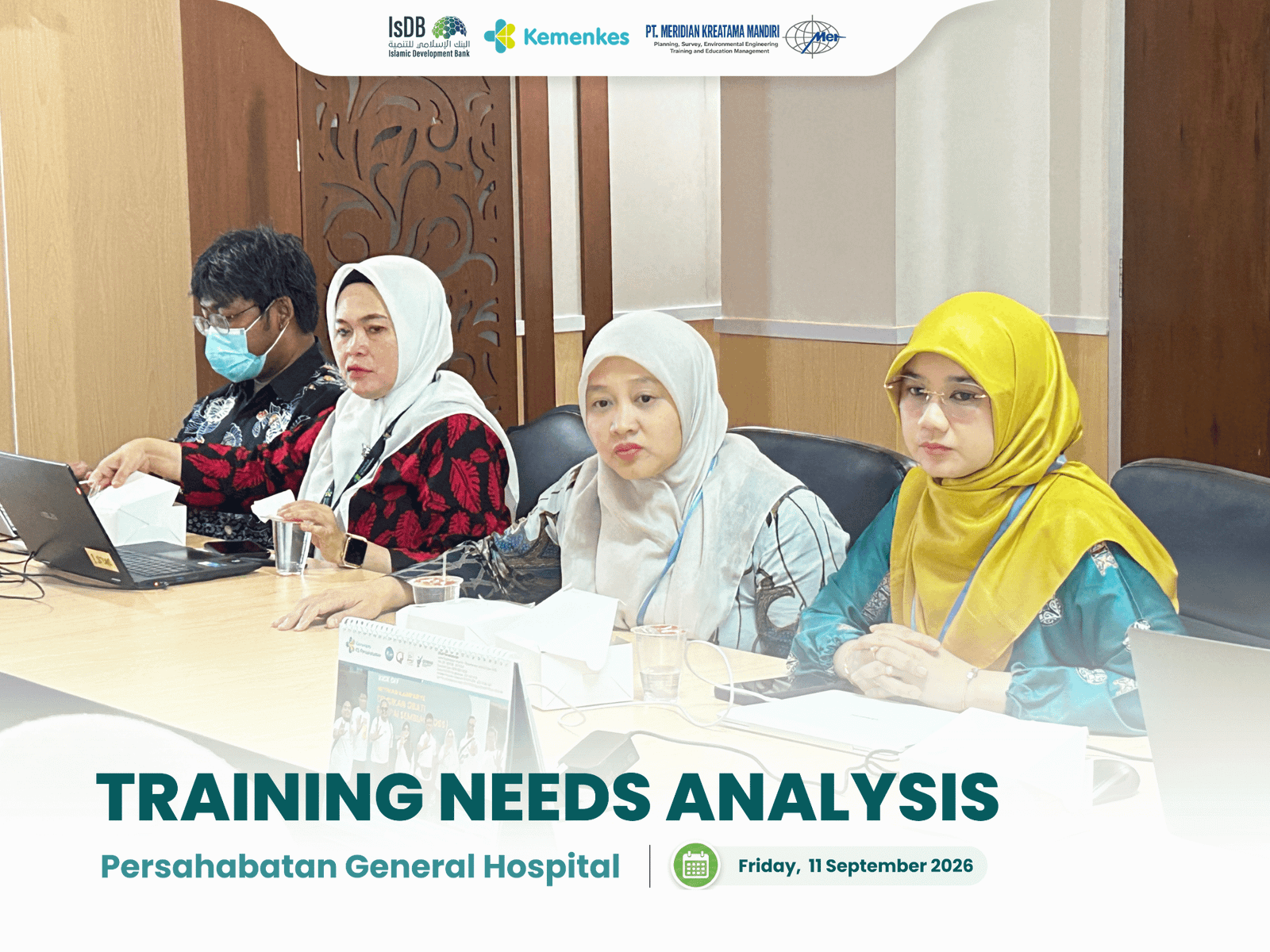
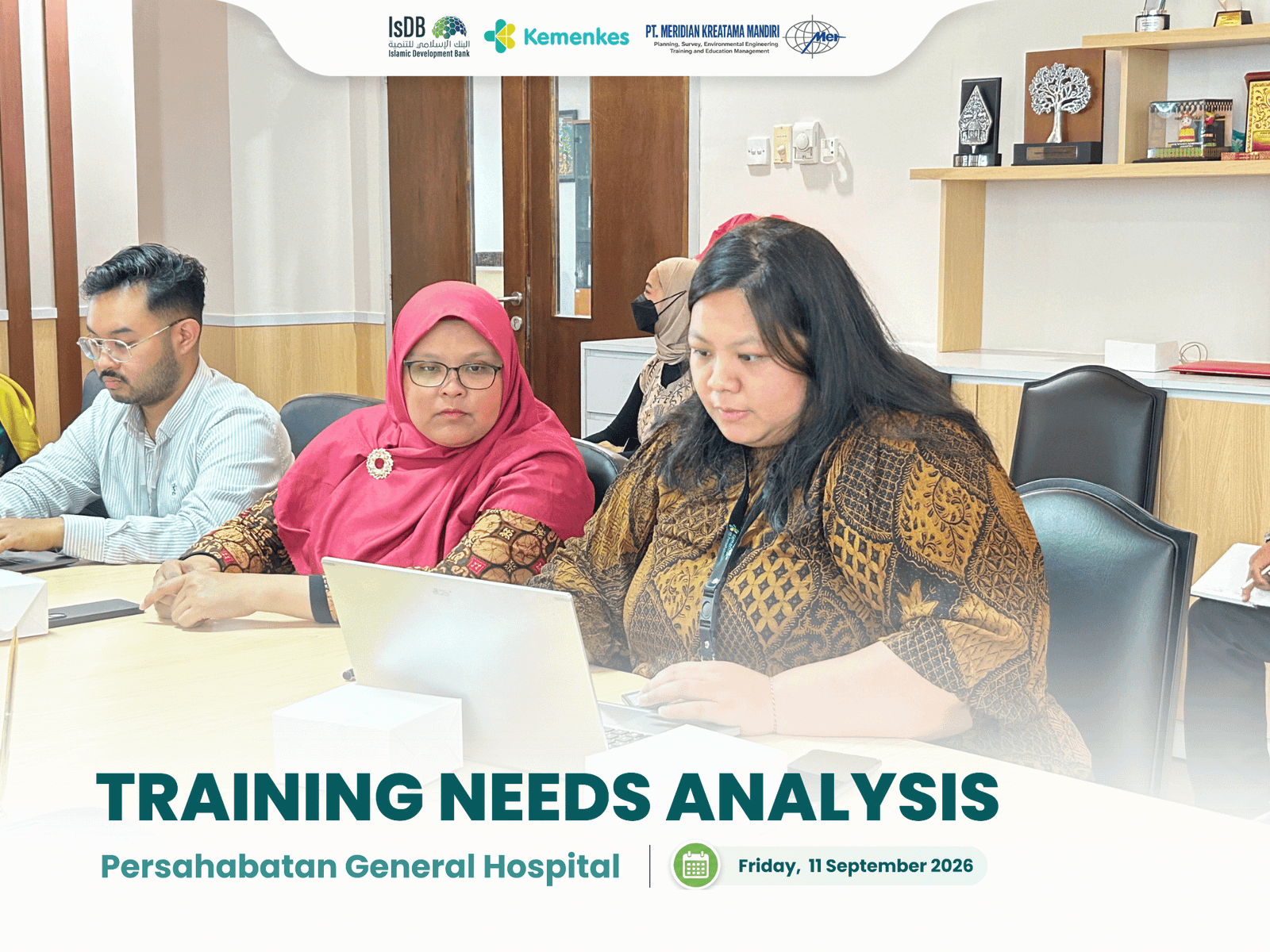
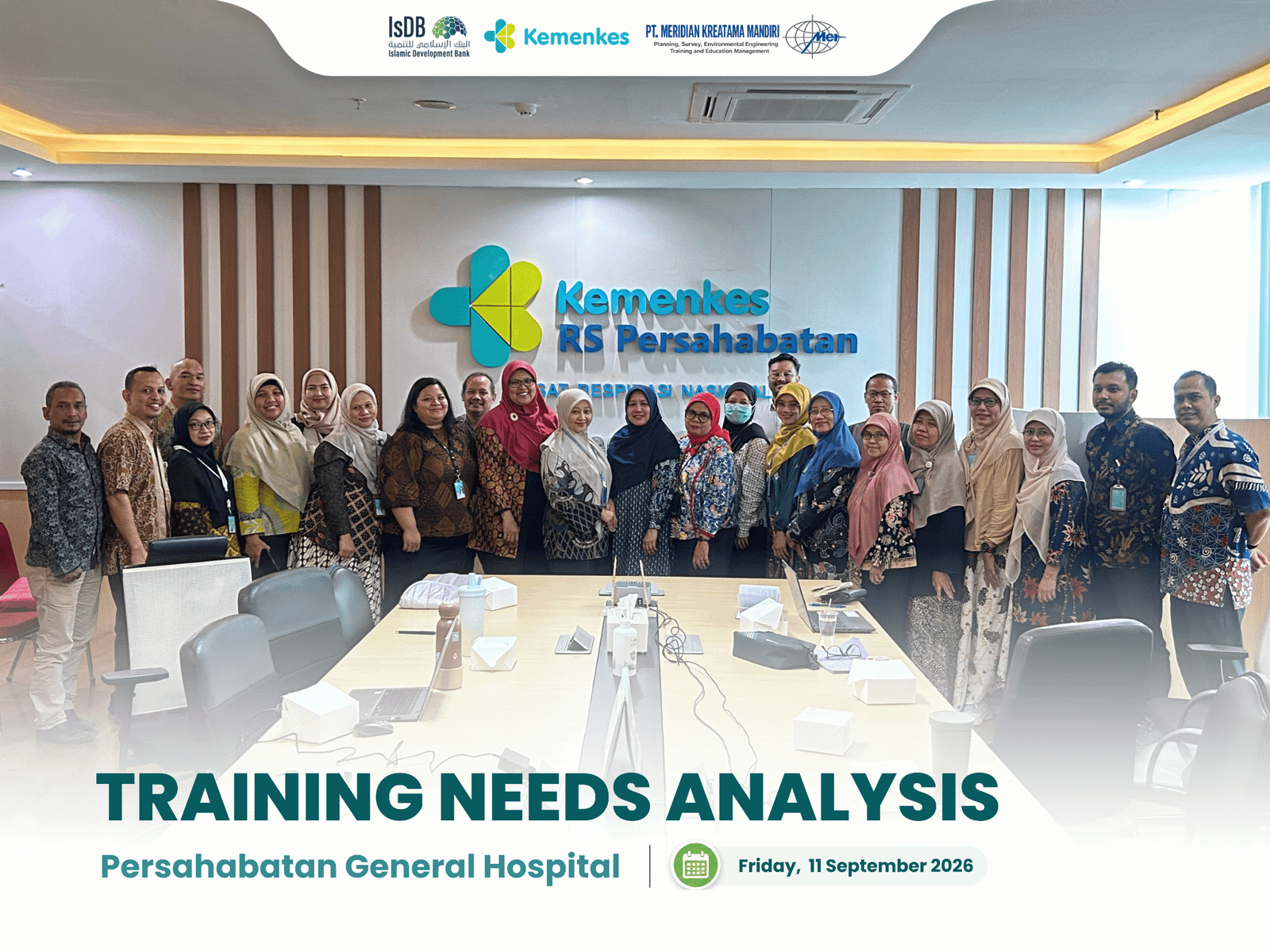
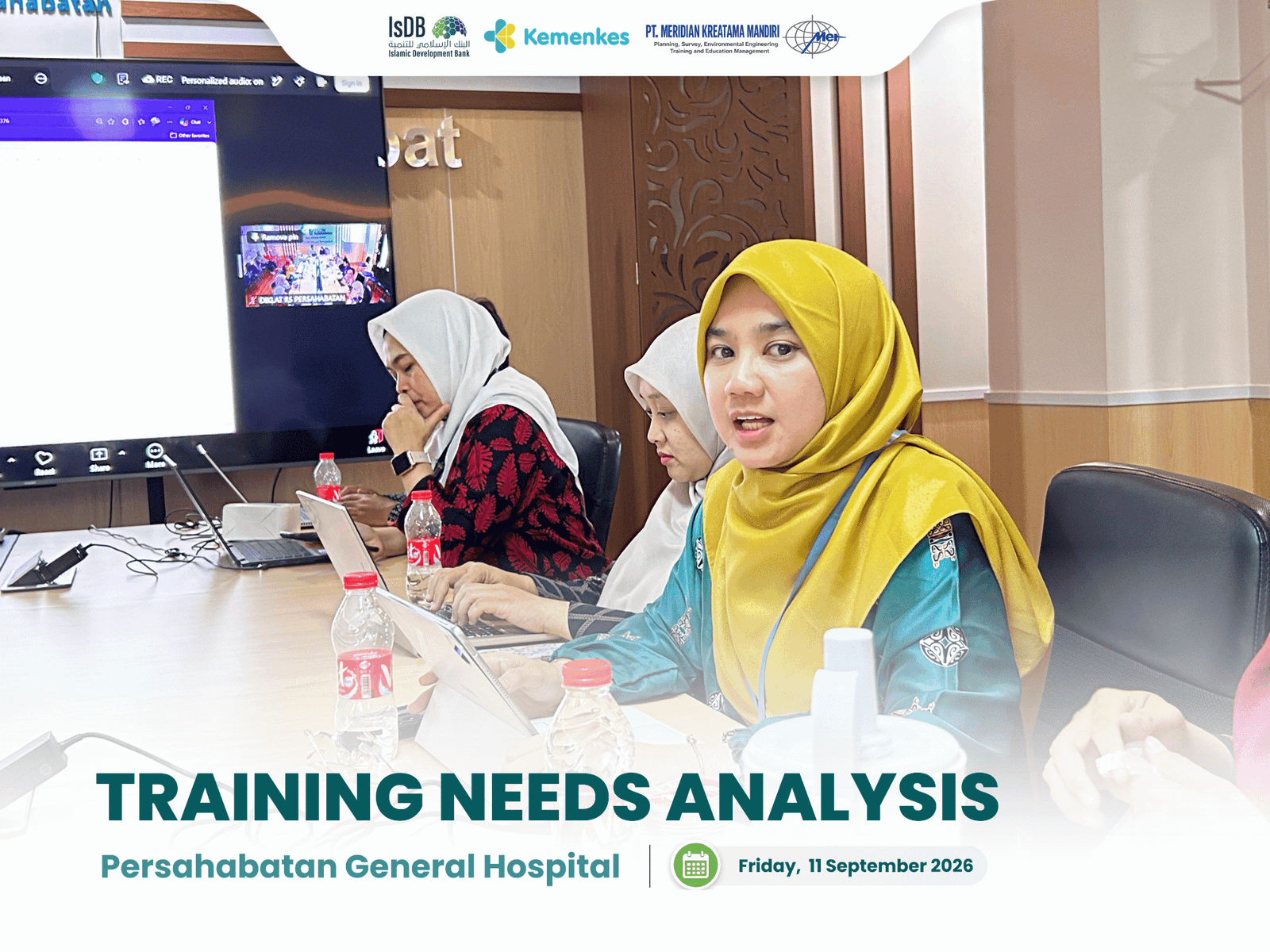
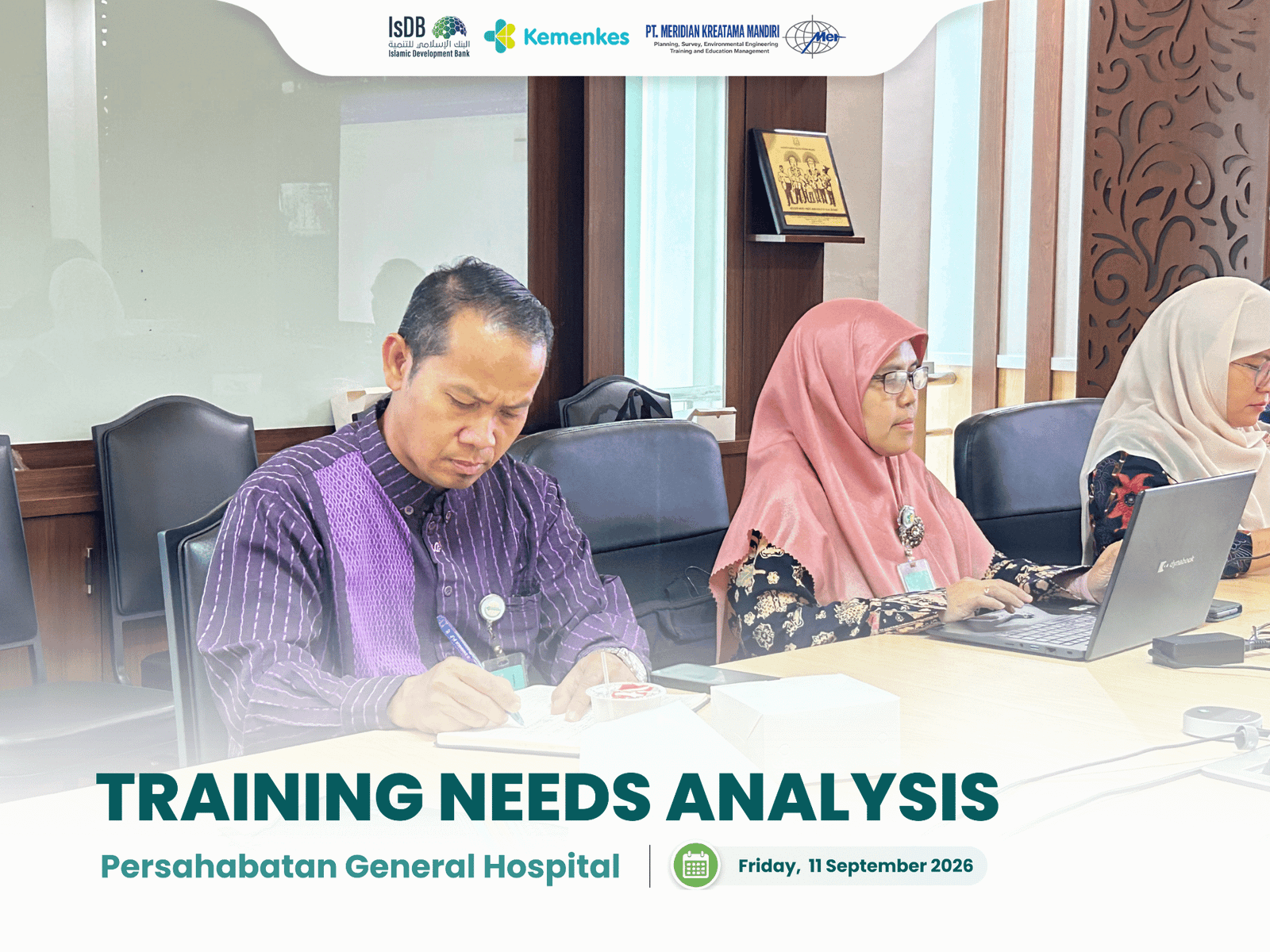
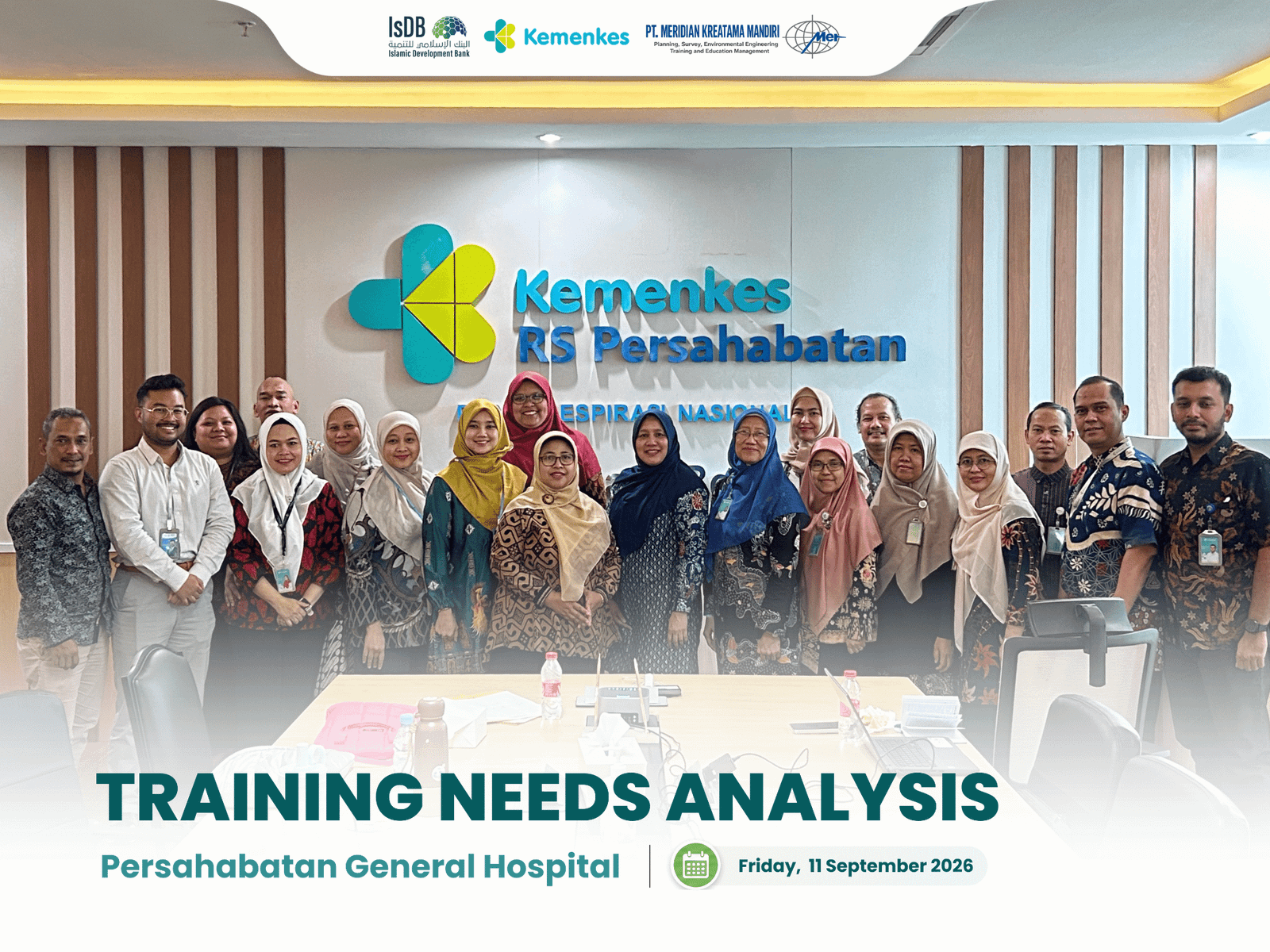
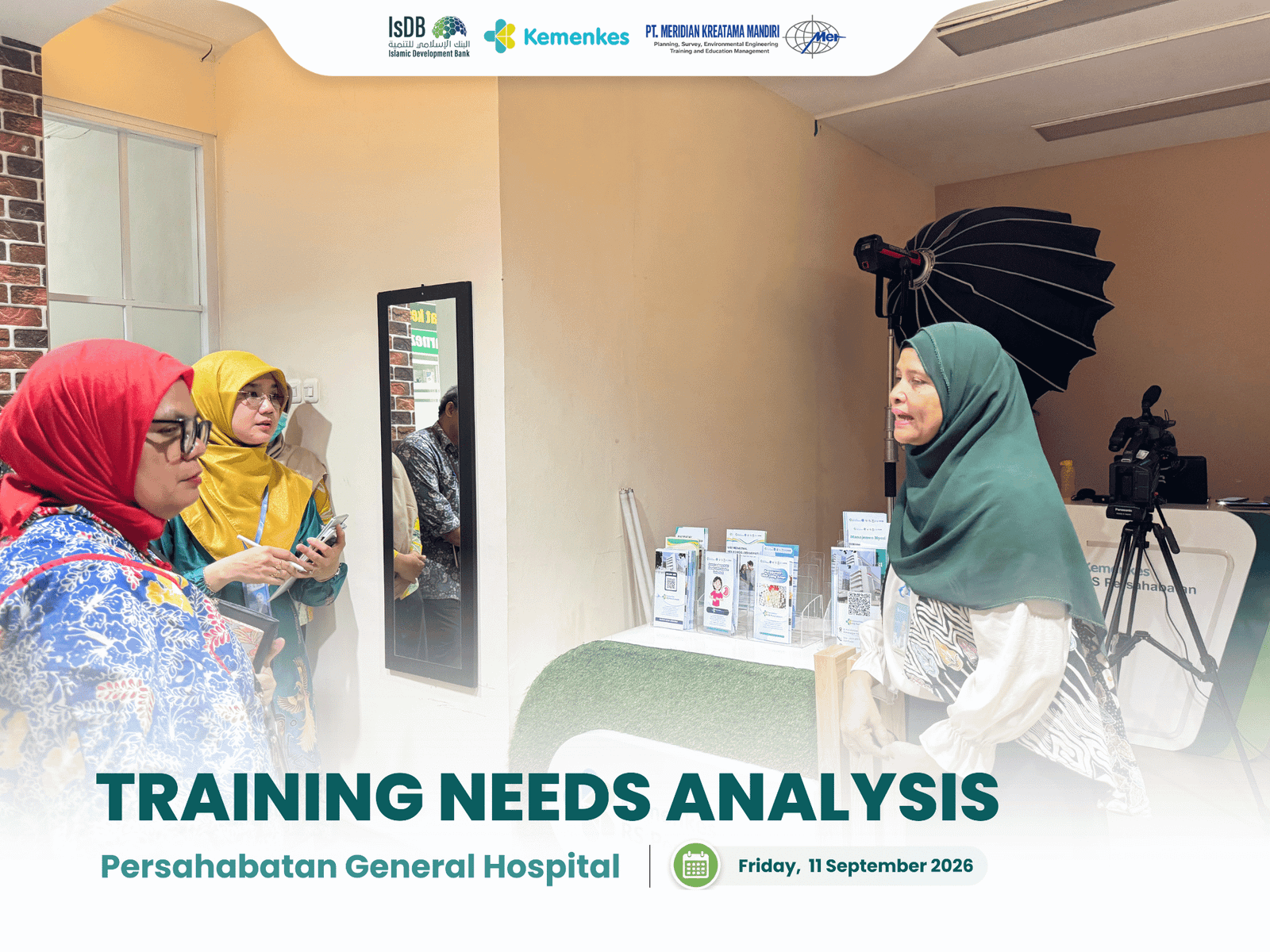
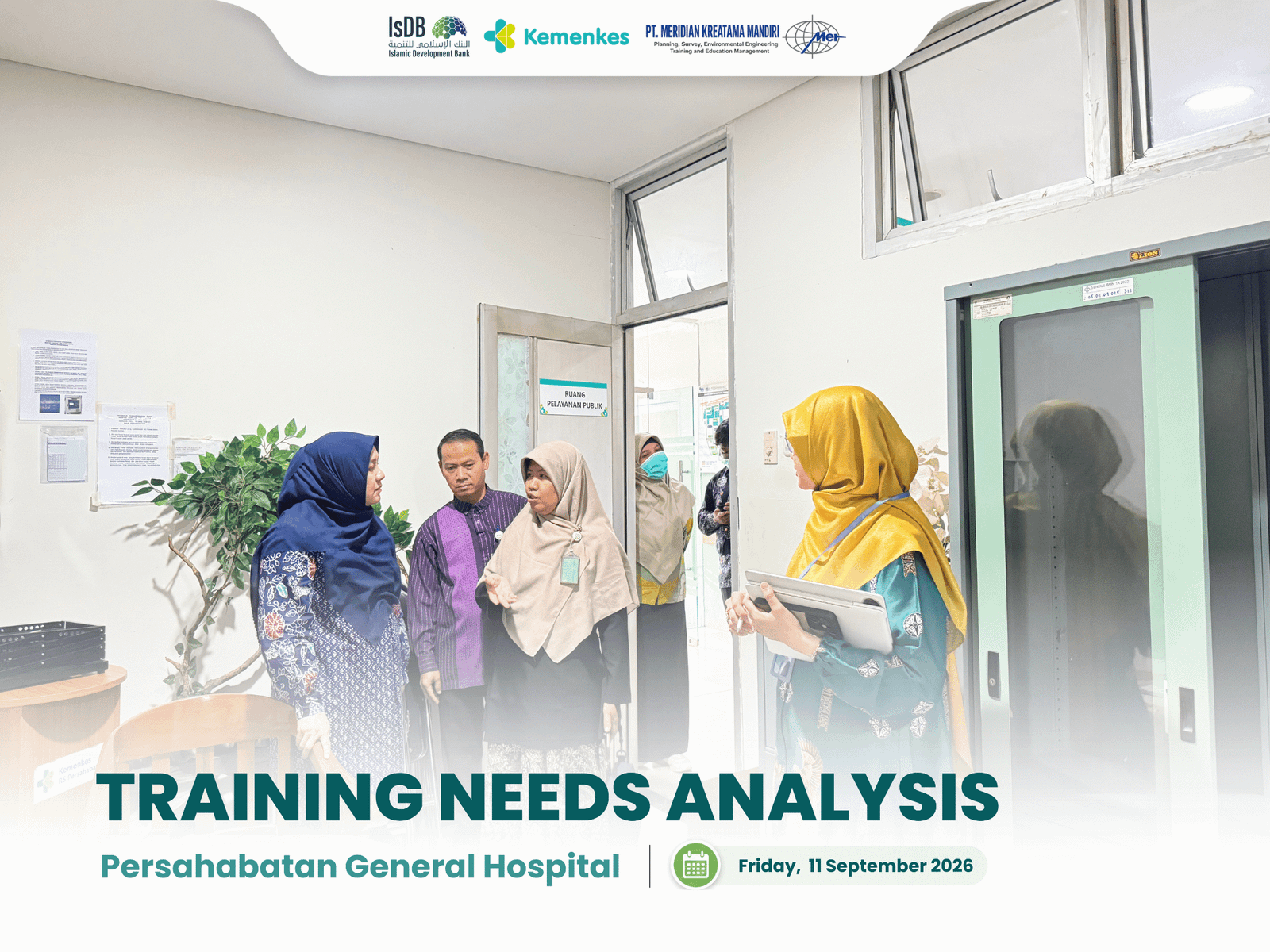
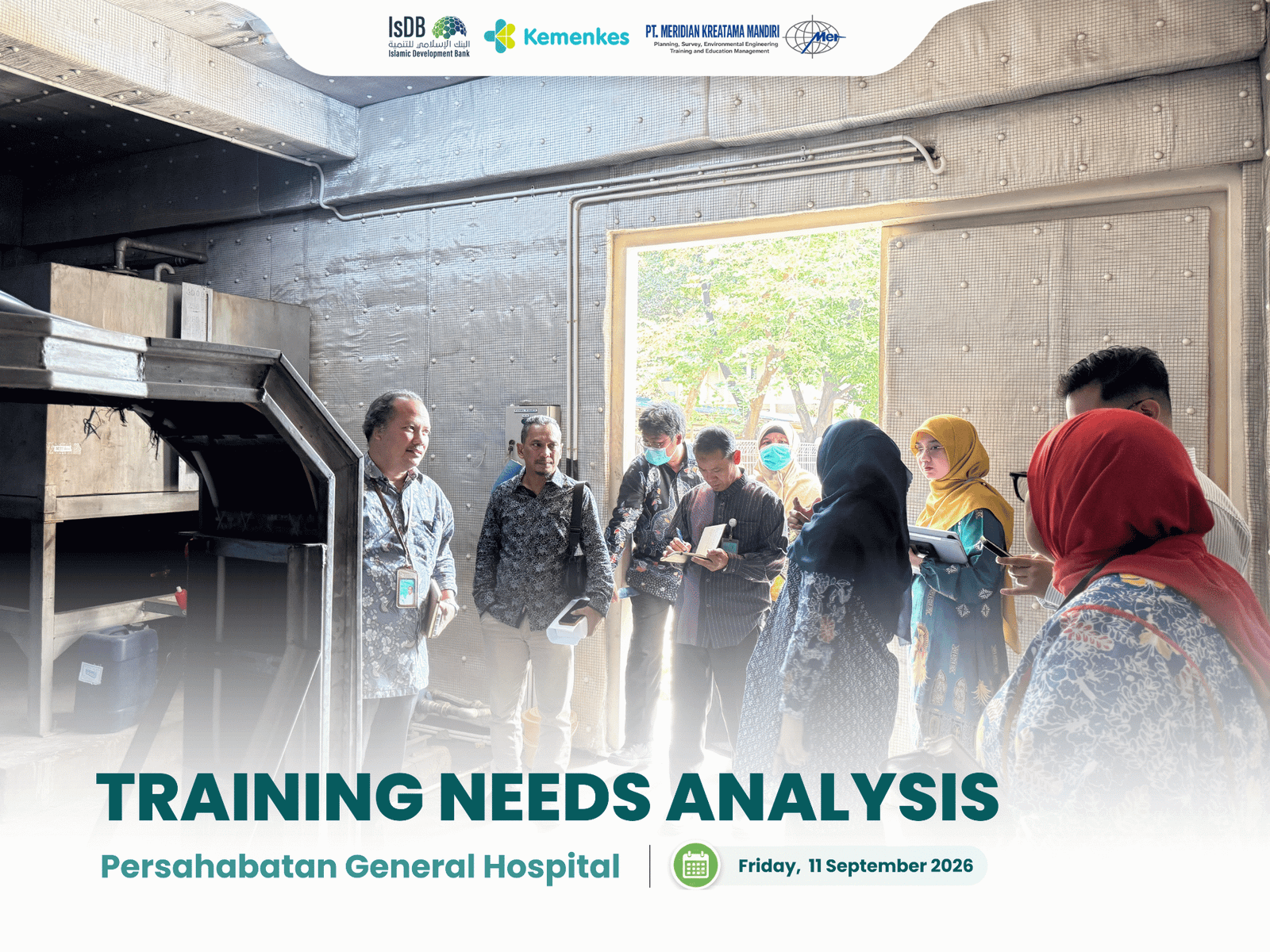
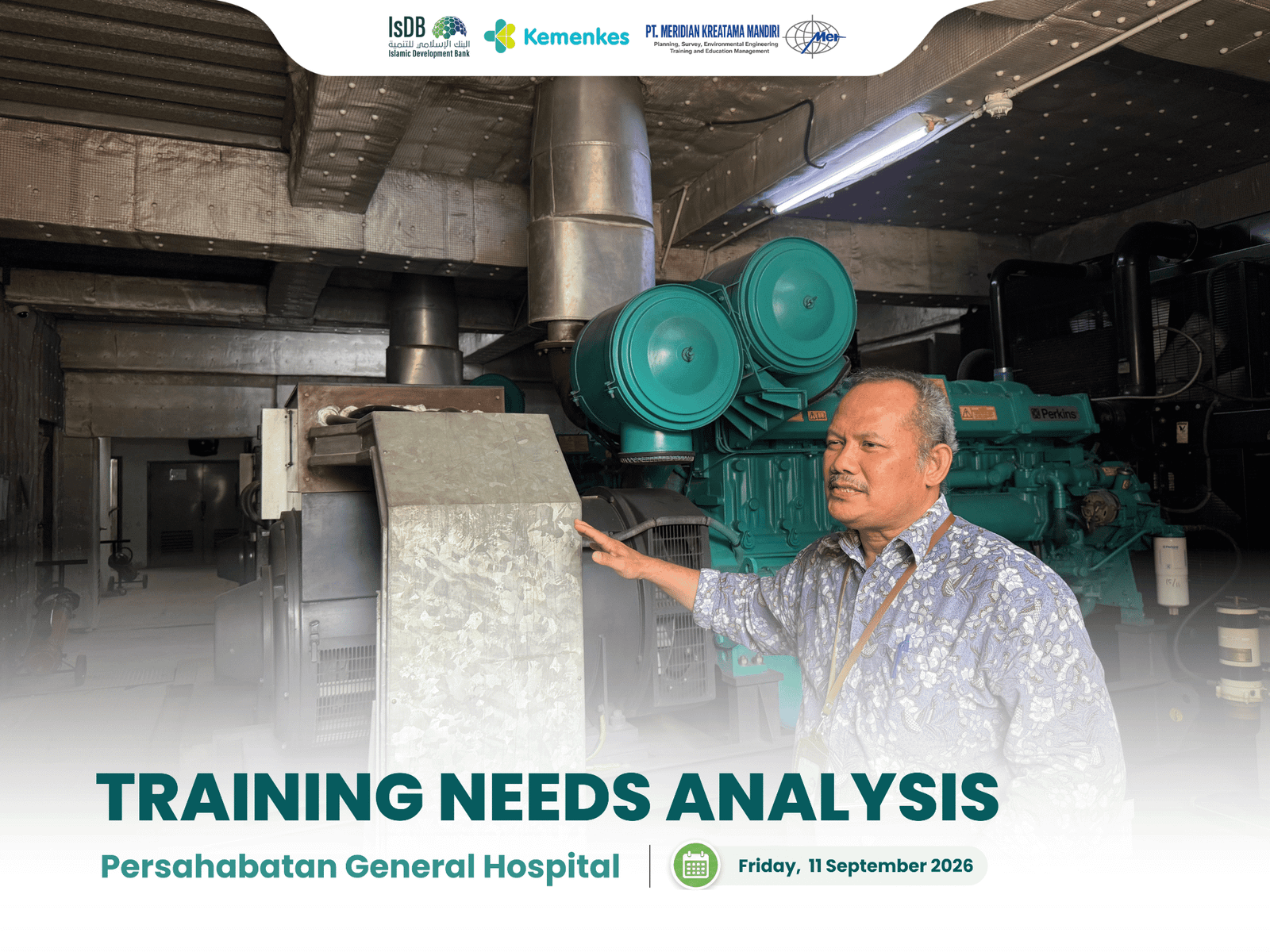
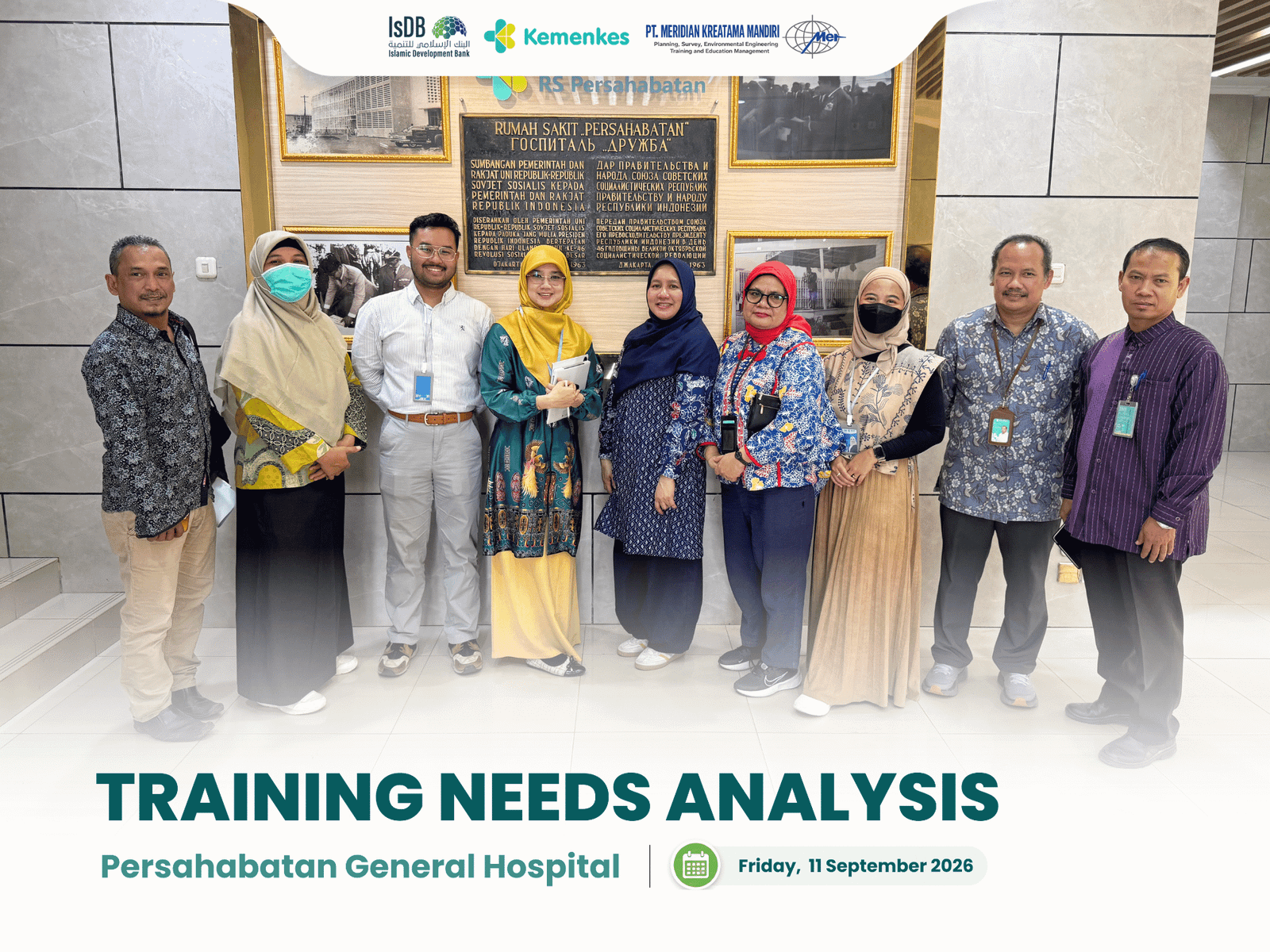
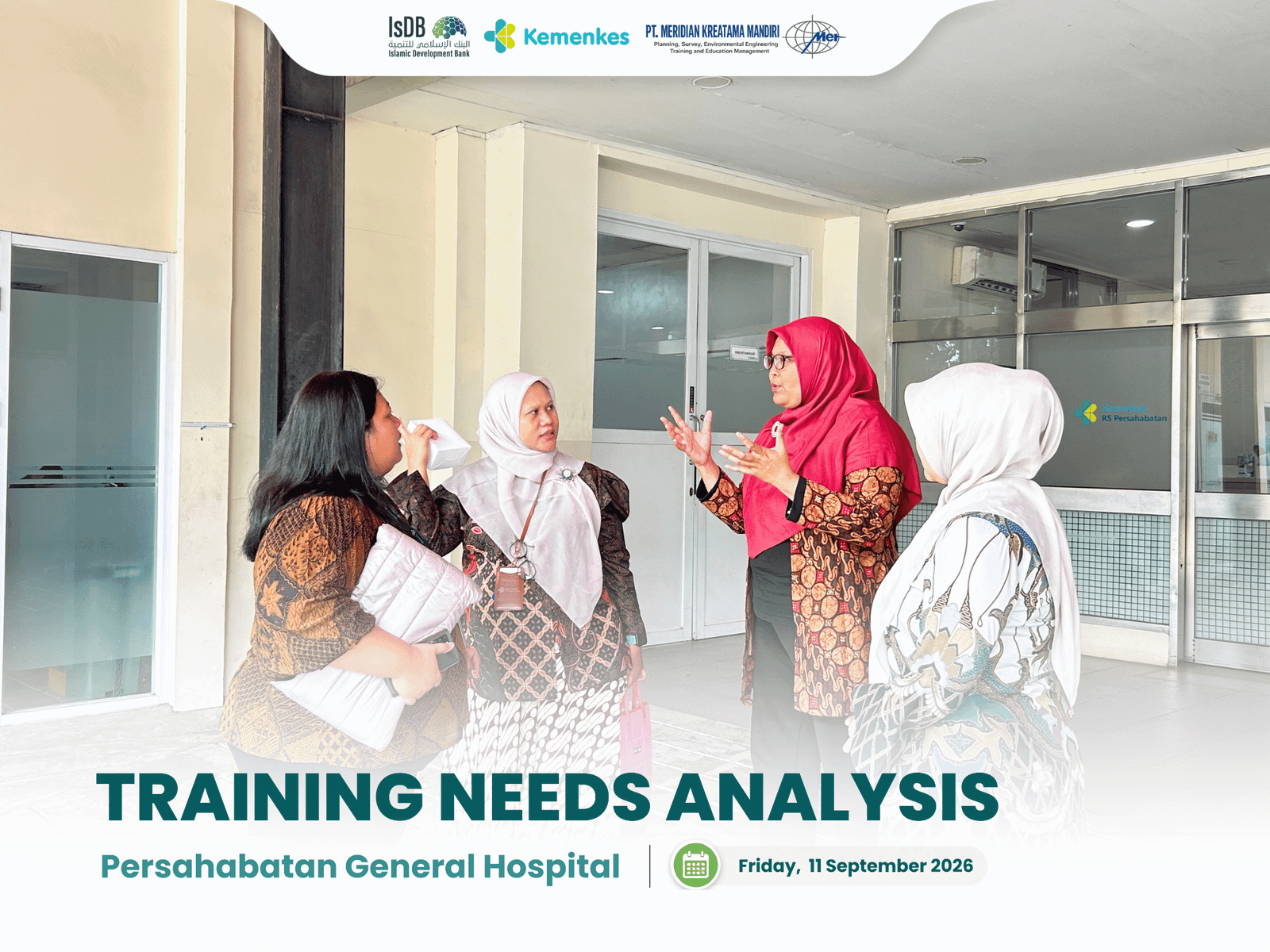
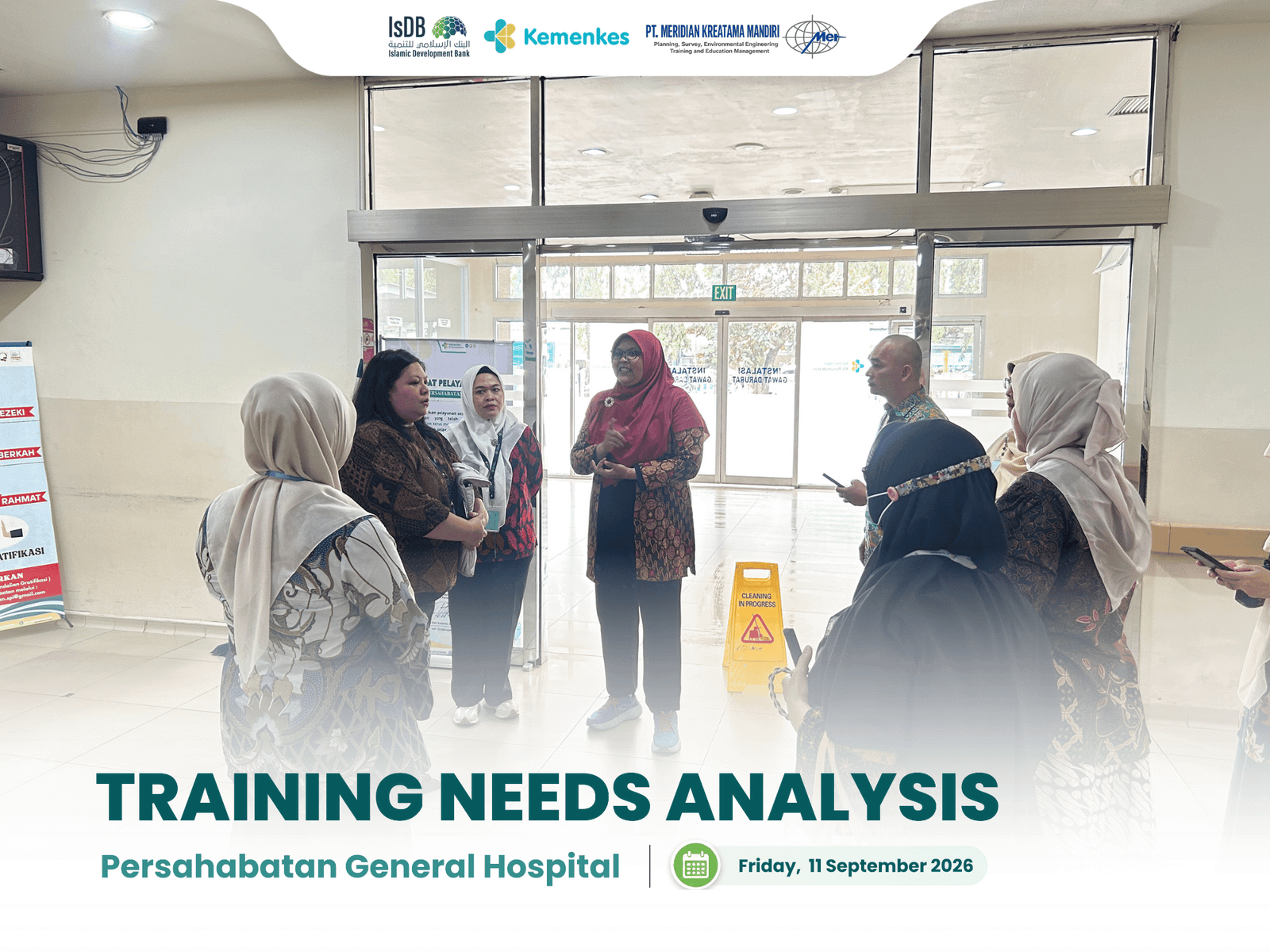
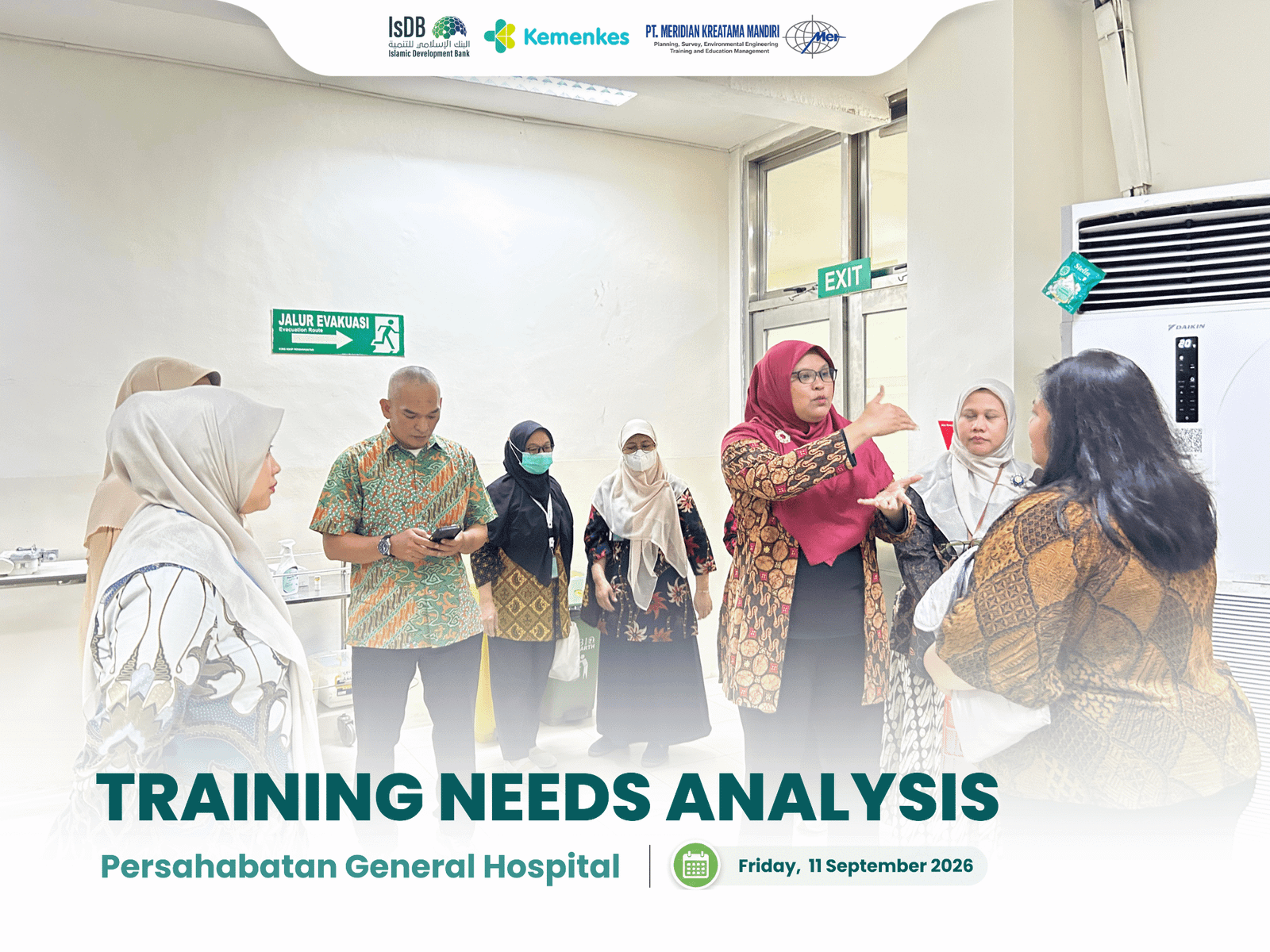
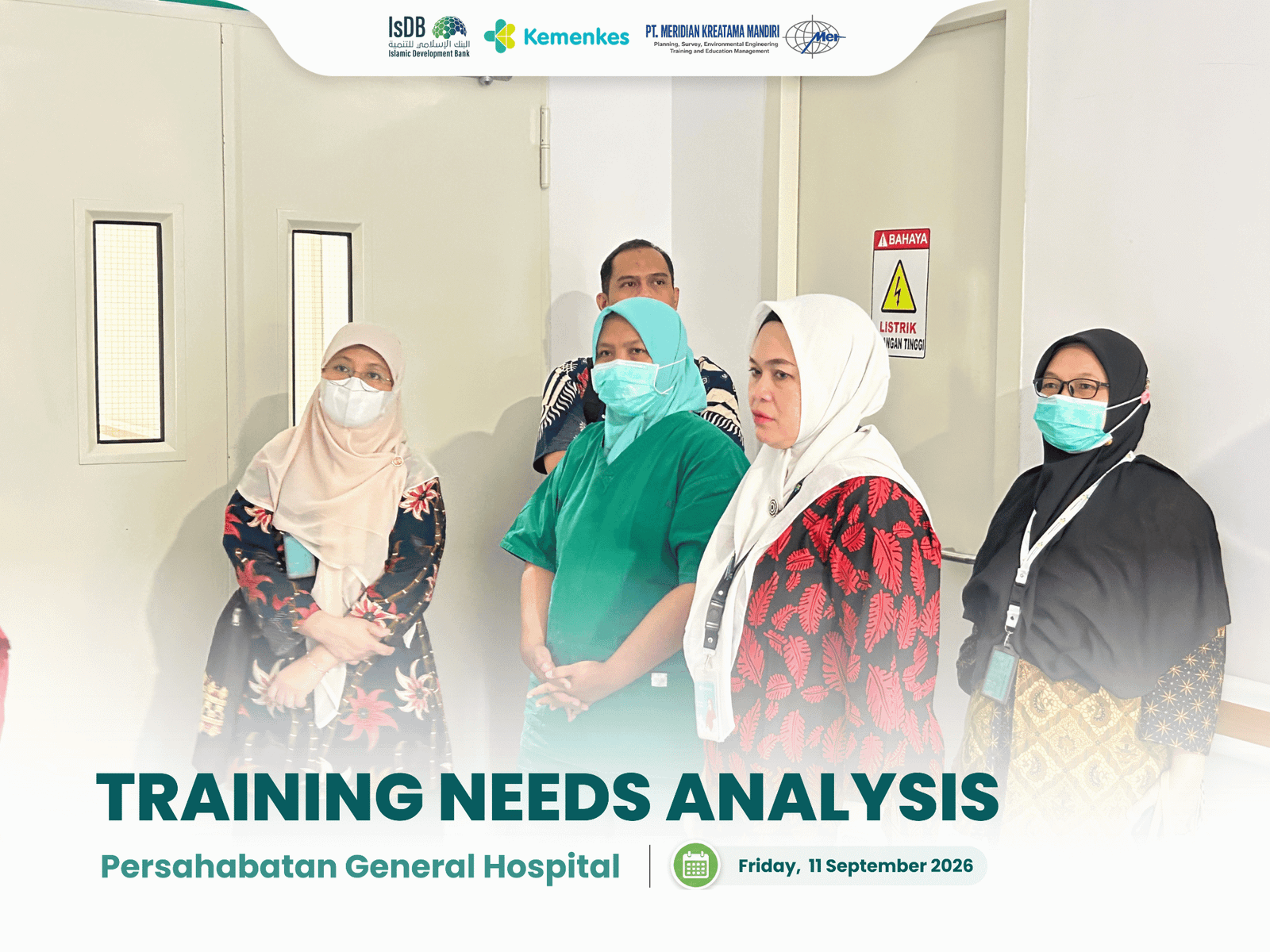
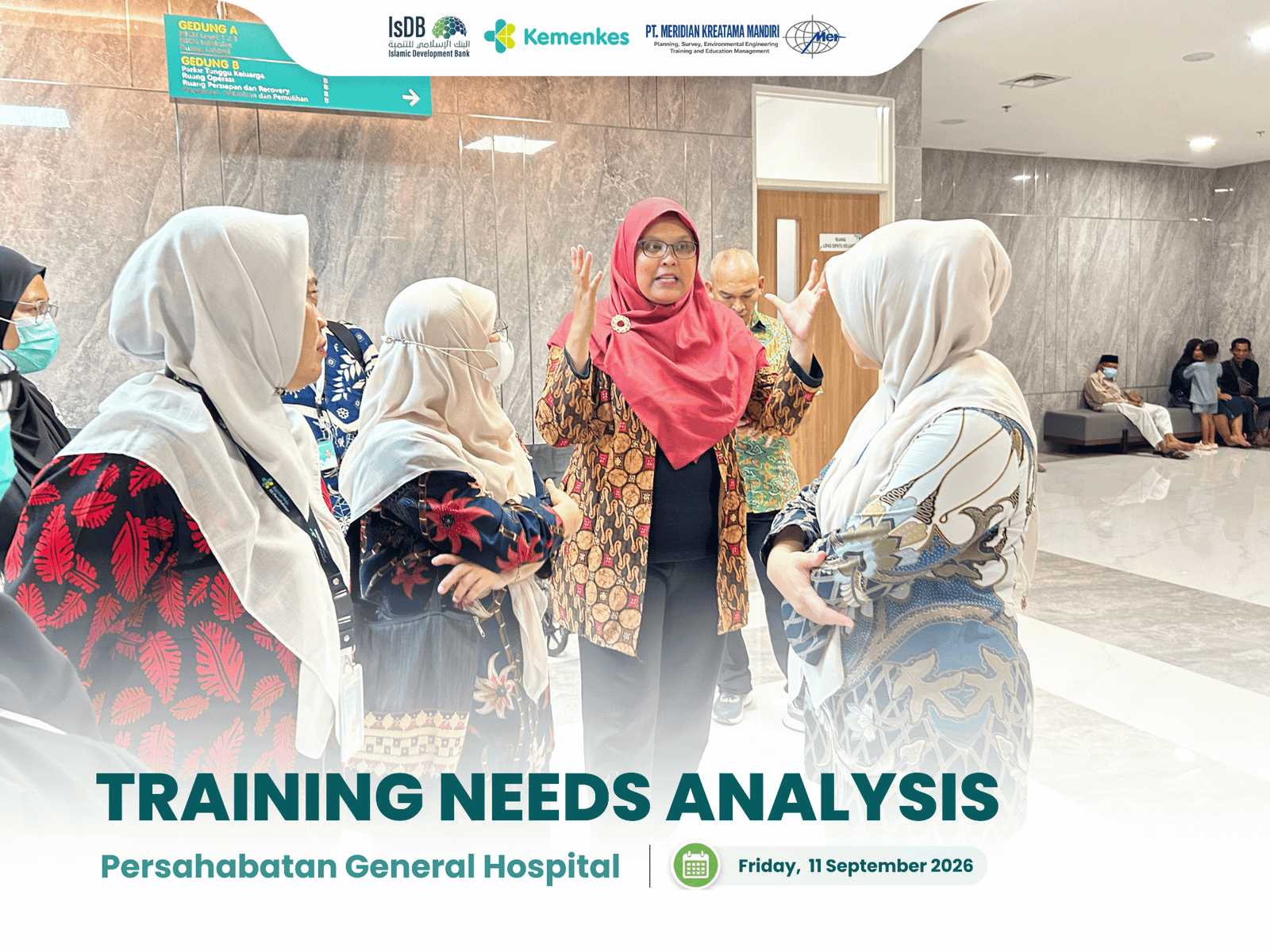
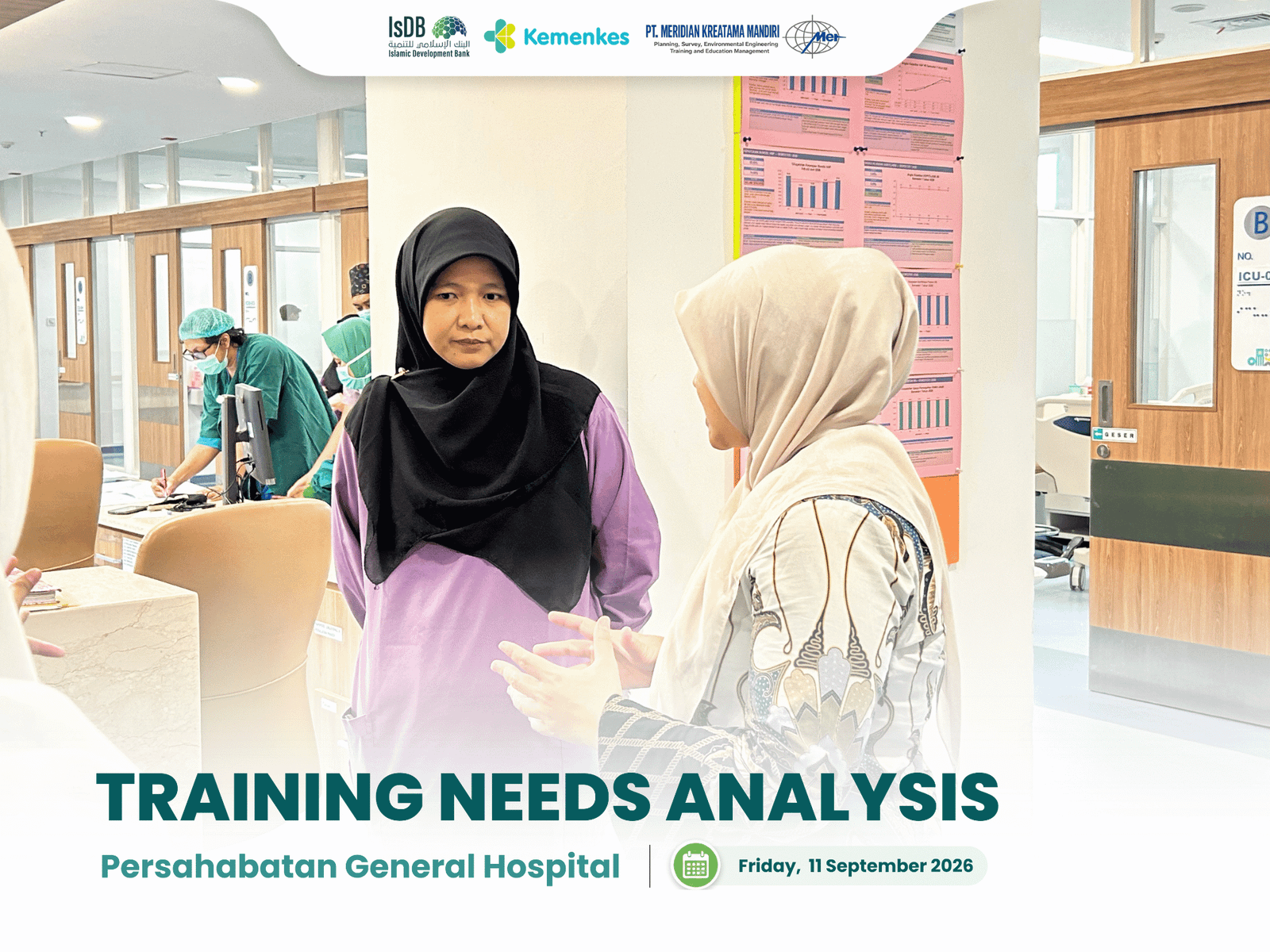
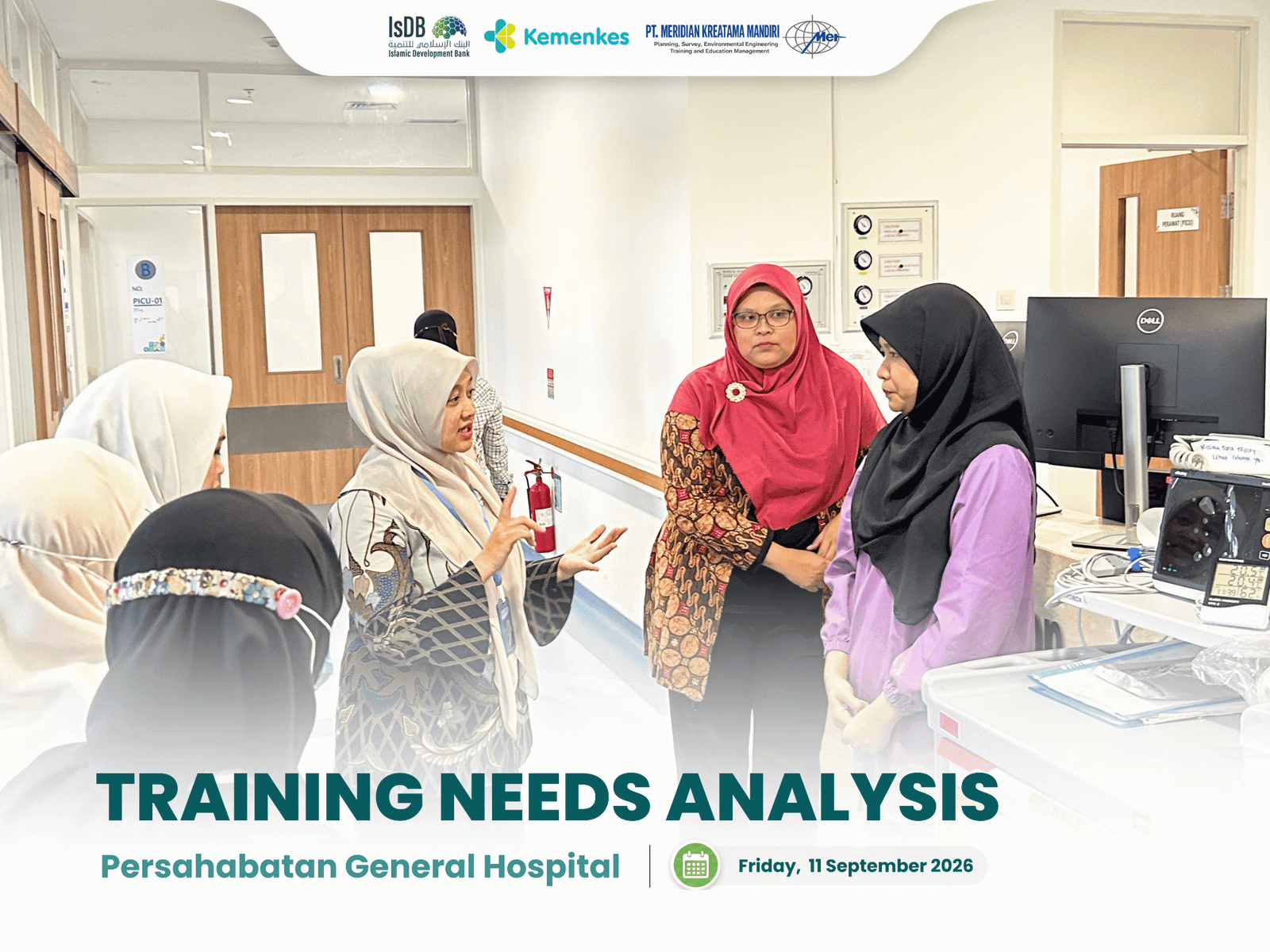
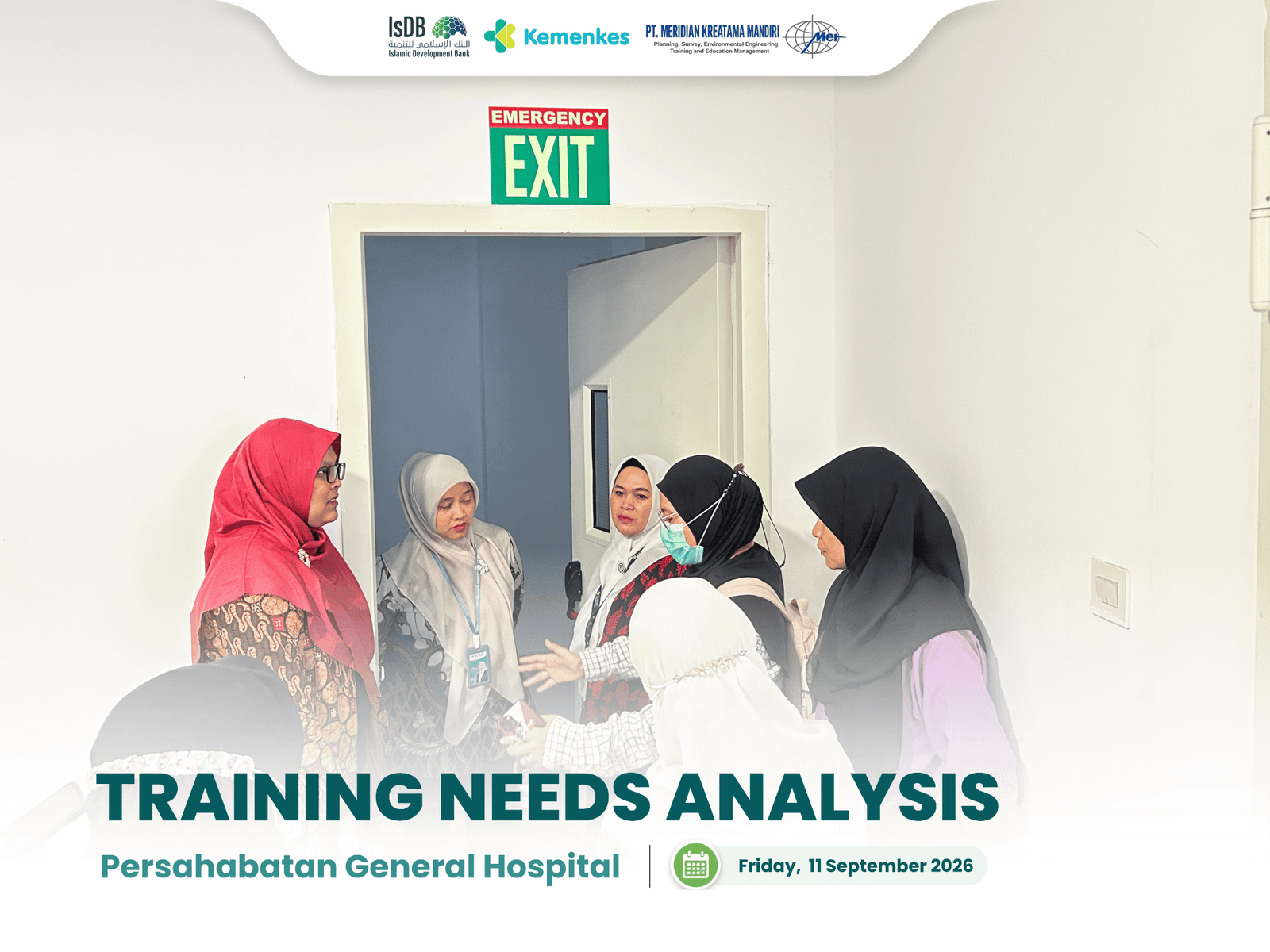
The Emergency Preparedness Consultant (EMPC) Project – IsDB IDN 1031 continued its hospital assessment activities with a Training Needs Analysis (TNA) at Persahabatan General Hospital, Jakarta, on Friday, 11 September 2026. The activity was conducted to gain a deeper understanding of the hospital’s current preparedness and to identify areas where workforce capacity and emergency response capabilities can be further strengthened.
The visit brought together the EMPC team and representatives of Persahabatan General Hospital in an interactive assessment process. The session opened with an introduction to the TNA and an explanation of the upcoming training program, allowing the hospital team to understand the objectives, scope, and expected outcomes of the assessment.
Following the introductory session, the EMPC team conducted interviews and focused discussions with hospital representatives. The conversations explored the hospital’s existing preparedness practices, organizational roles, operational challenges, and the competencies required by personnel when dealing with emergency and disaster situations. The discussions also provided an opportunity for the hospital team to share their experiences and perspectives regarding areas that could benefit from further training and development.
The assessment was subsequently extended to the hospital environment through direct observation of selected facilities and operational areas. During the field visit, the EMPC team interacted with healthcare as well as non-healthcare personnel to better understand their respective functions and contributions to hospital preparedness. These interactions helped connect the information gathered during the discussions with the realities of day-to-day hospital operations.
The combination of stakeholder engagement and field observation allowed the TNA team to capture both organizational and practical perspectives. The information gathered provided valuable insight into the hospital’s existing strengths, operational considerations, and potential areas for capacity development.
The results of the assessment will support the preparation of the next stages of the EMPC Project, particularly in developing training activities that respond to the identified needs of Persahabatan General Hospital. Through this process, the TNA contributes to the broader goal of building a more prepared, coordinated, and resilient hospital workforce capable of responding effectively to future emergencies and disaster situations.
11 September 2026













TRAINING NEEDS ANALYSIS
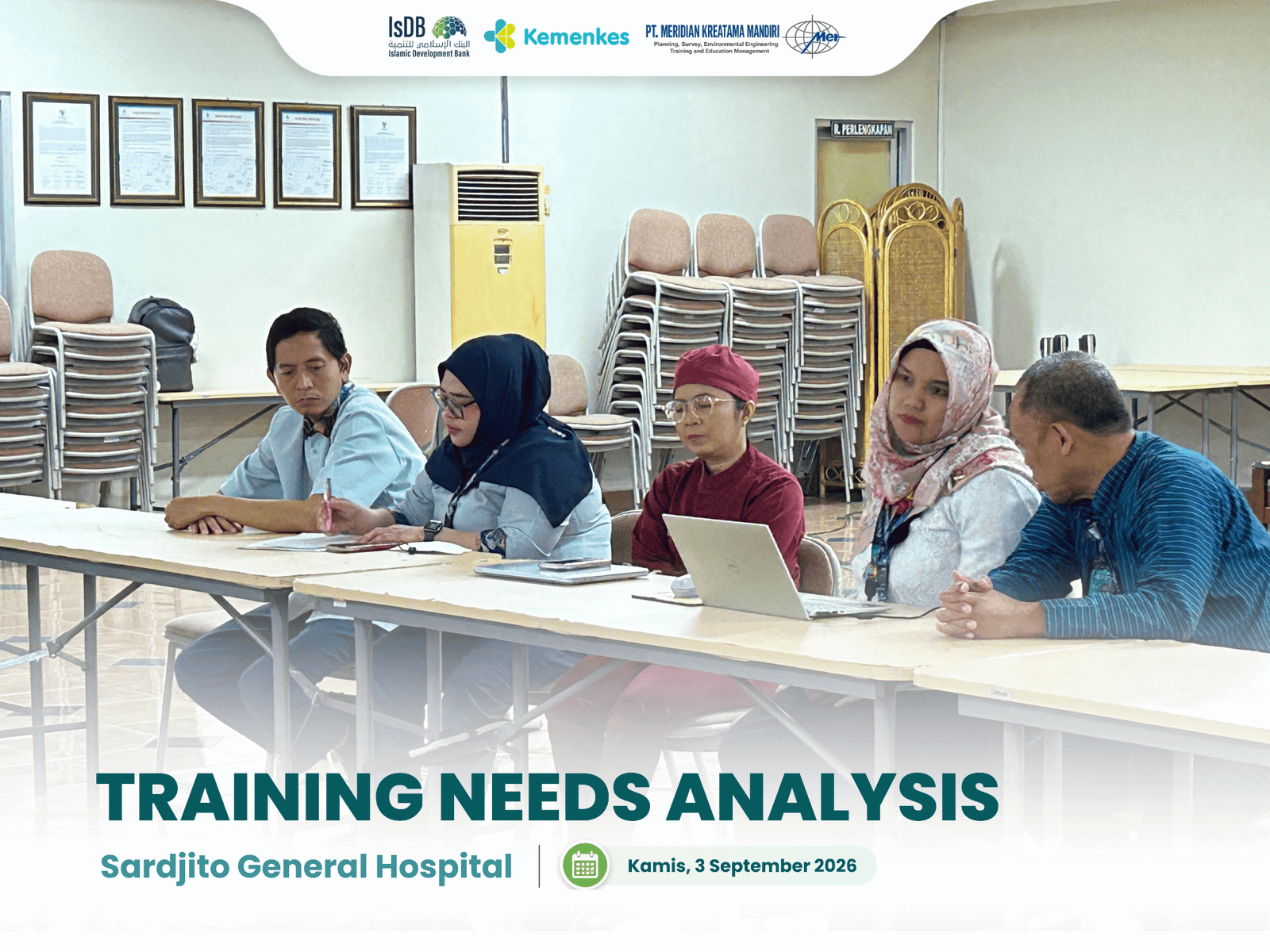
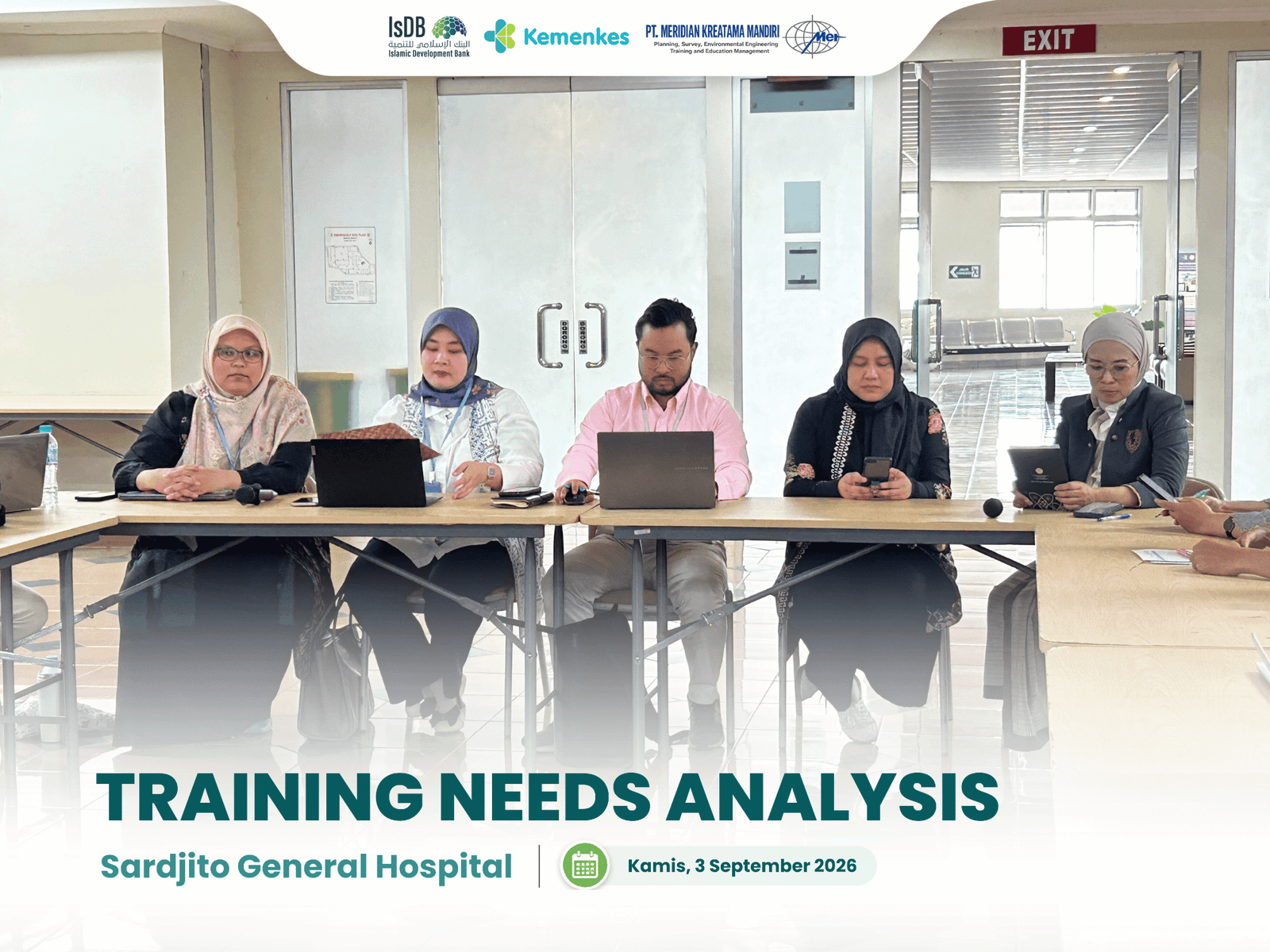
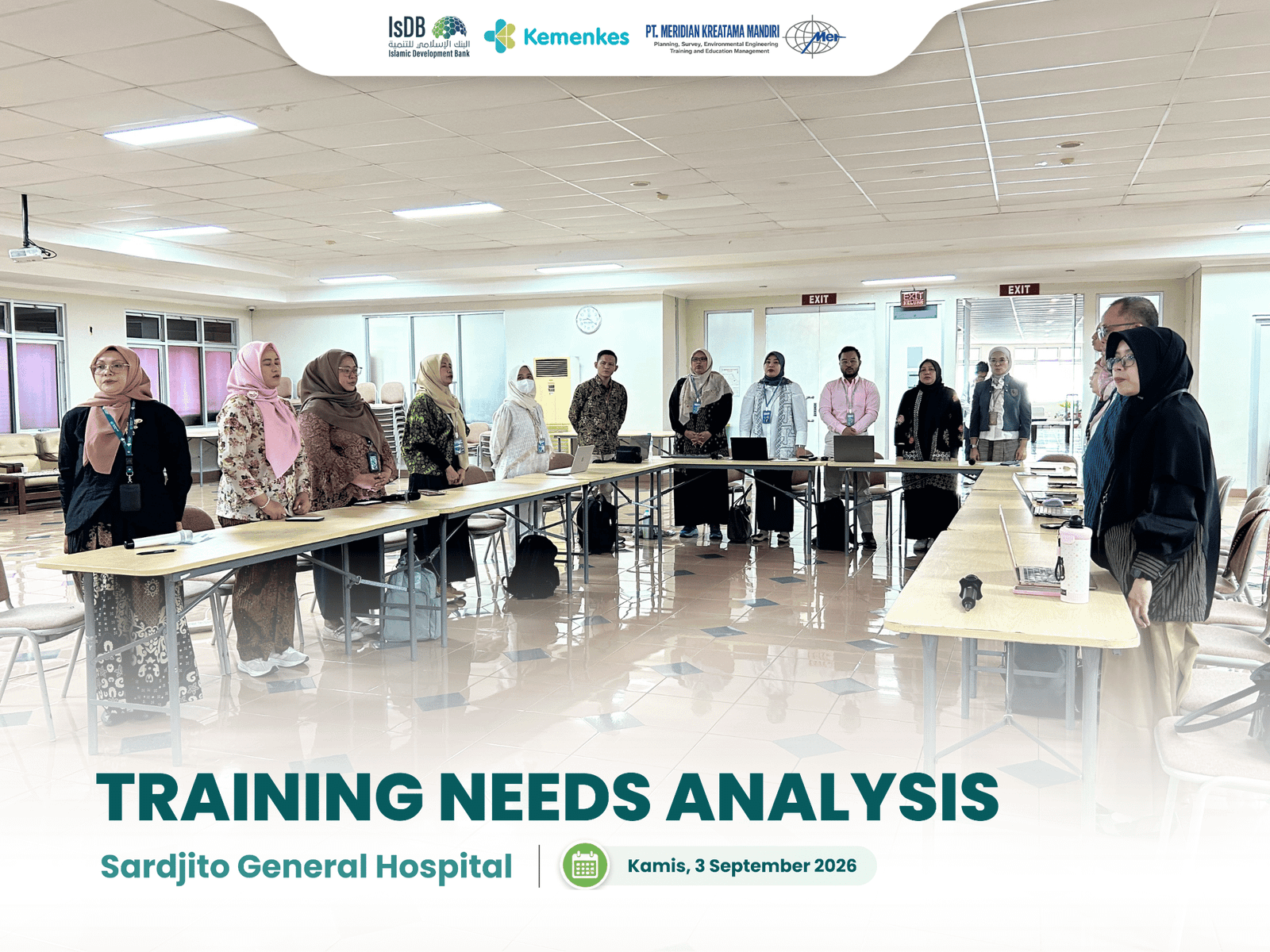
Dr. Sardjito
General Hospital
Dr. Sardjito General Hospital, Yogyakarta
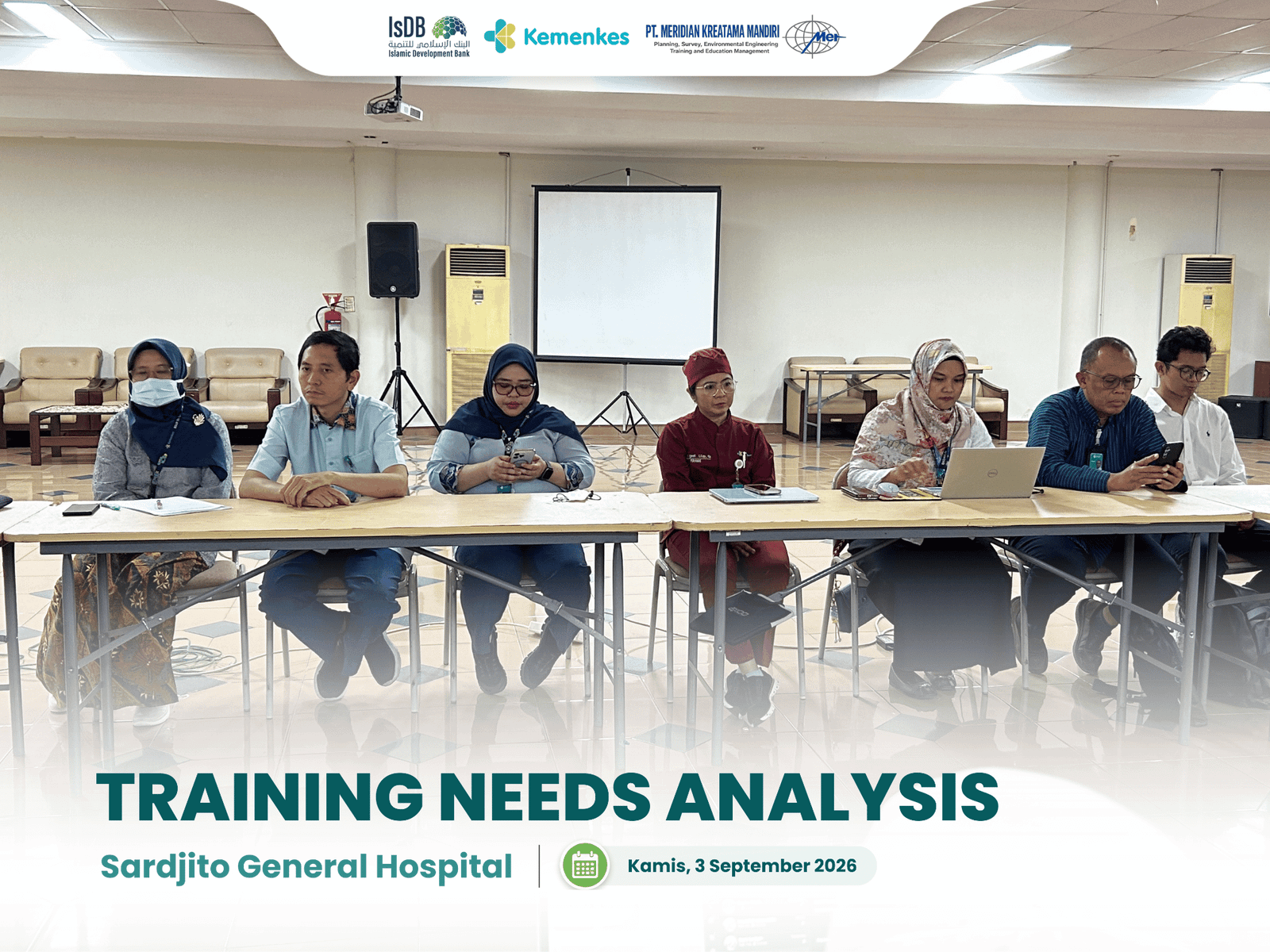
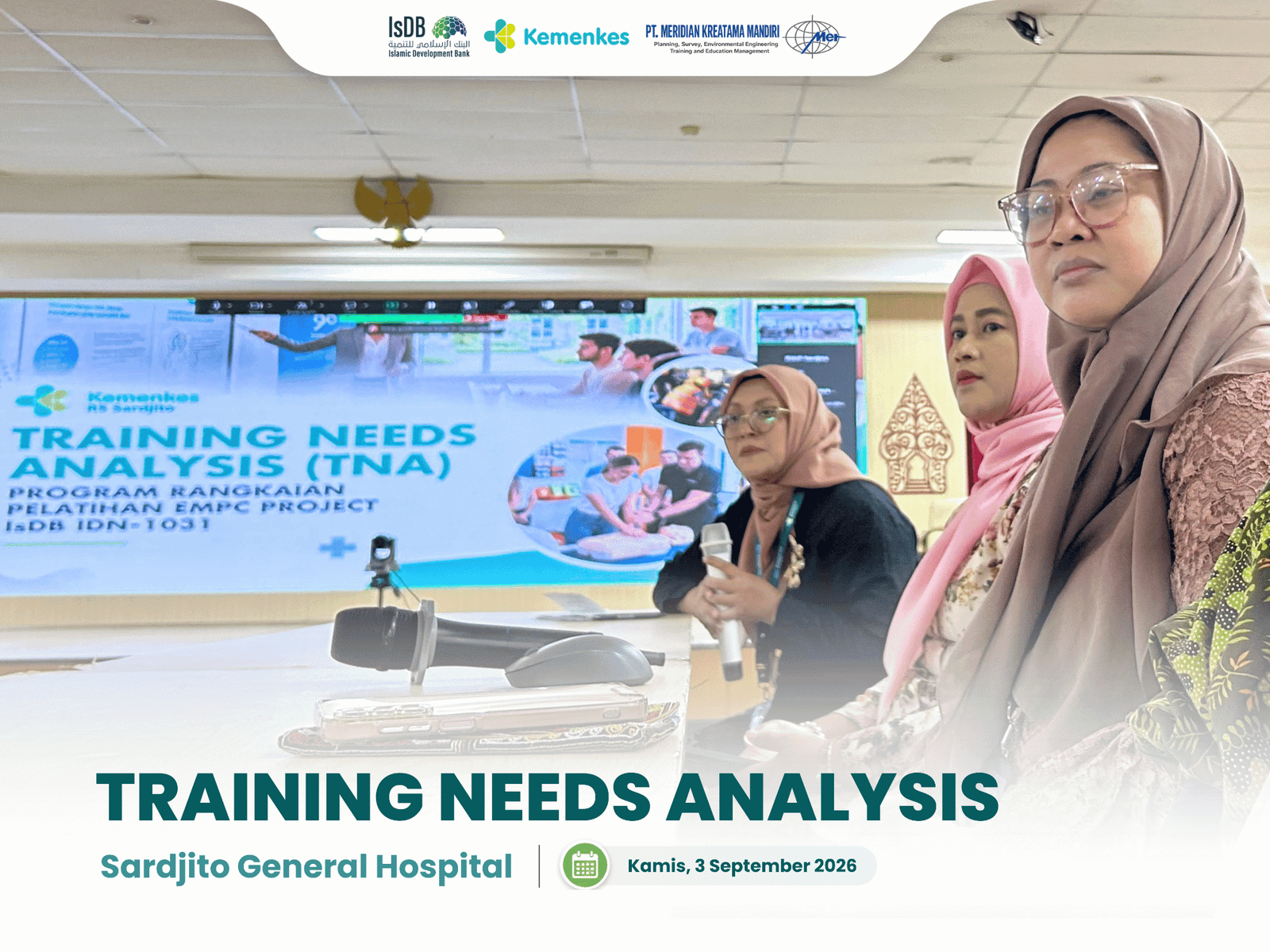
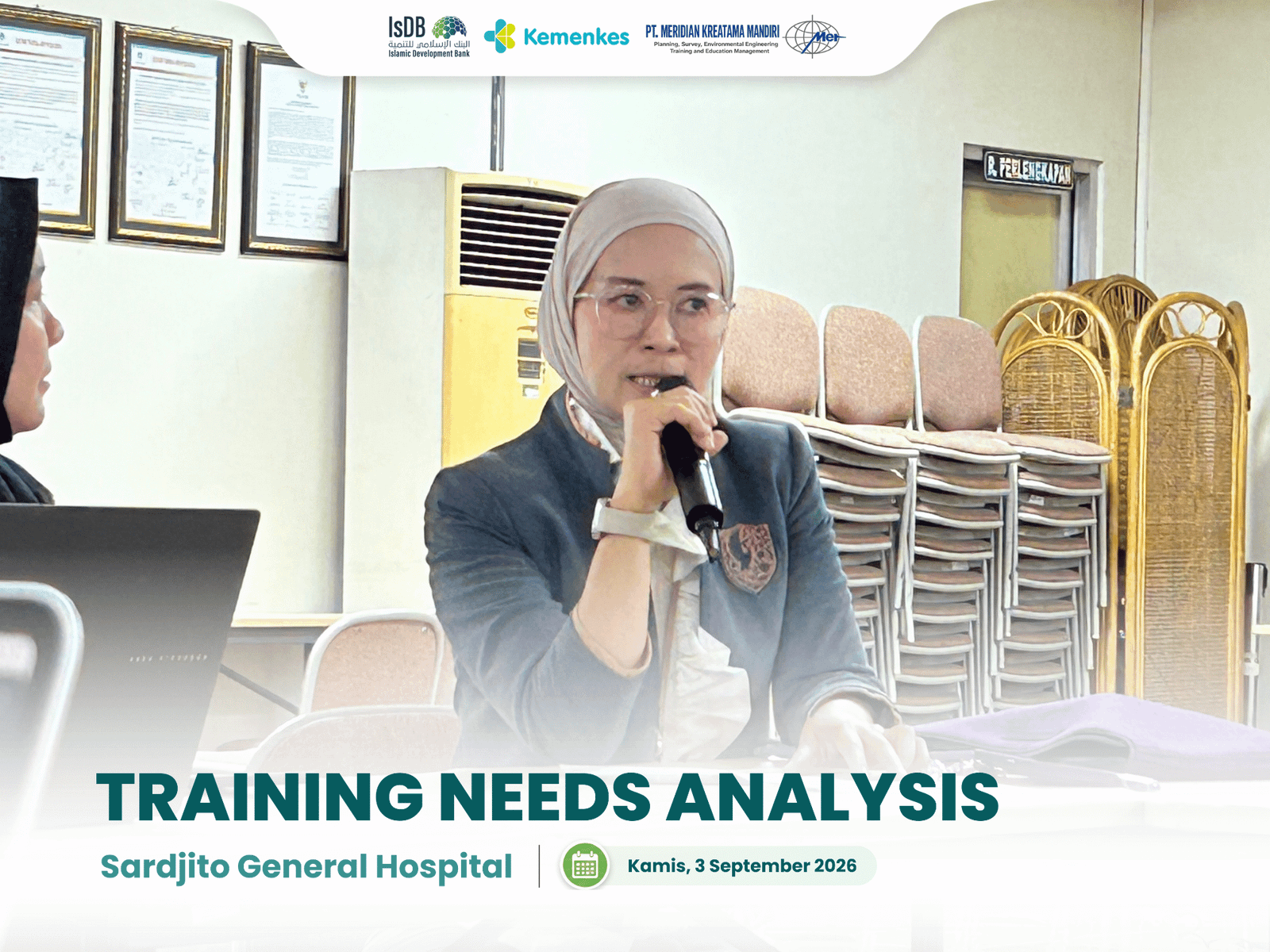
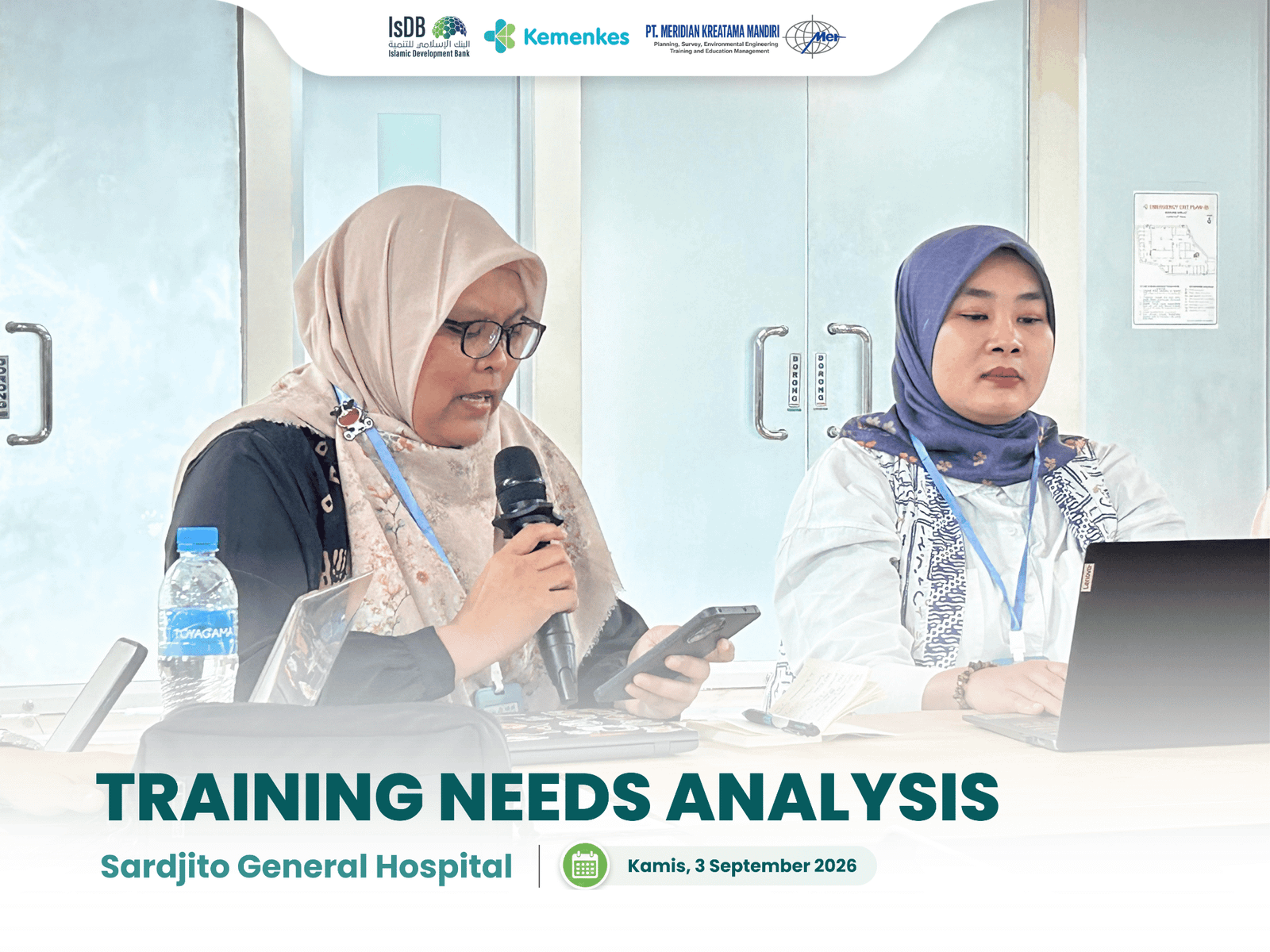
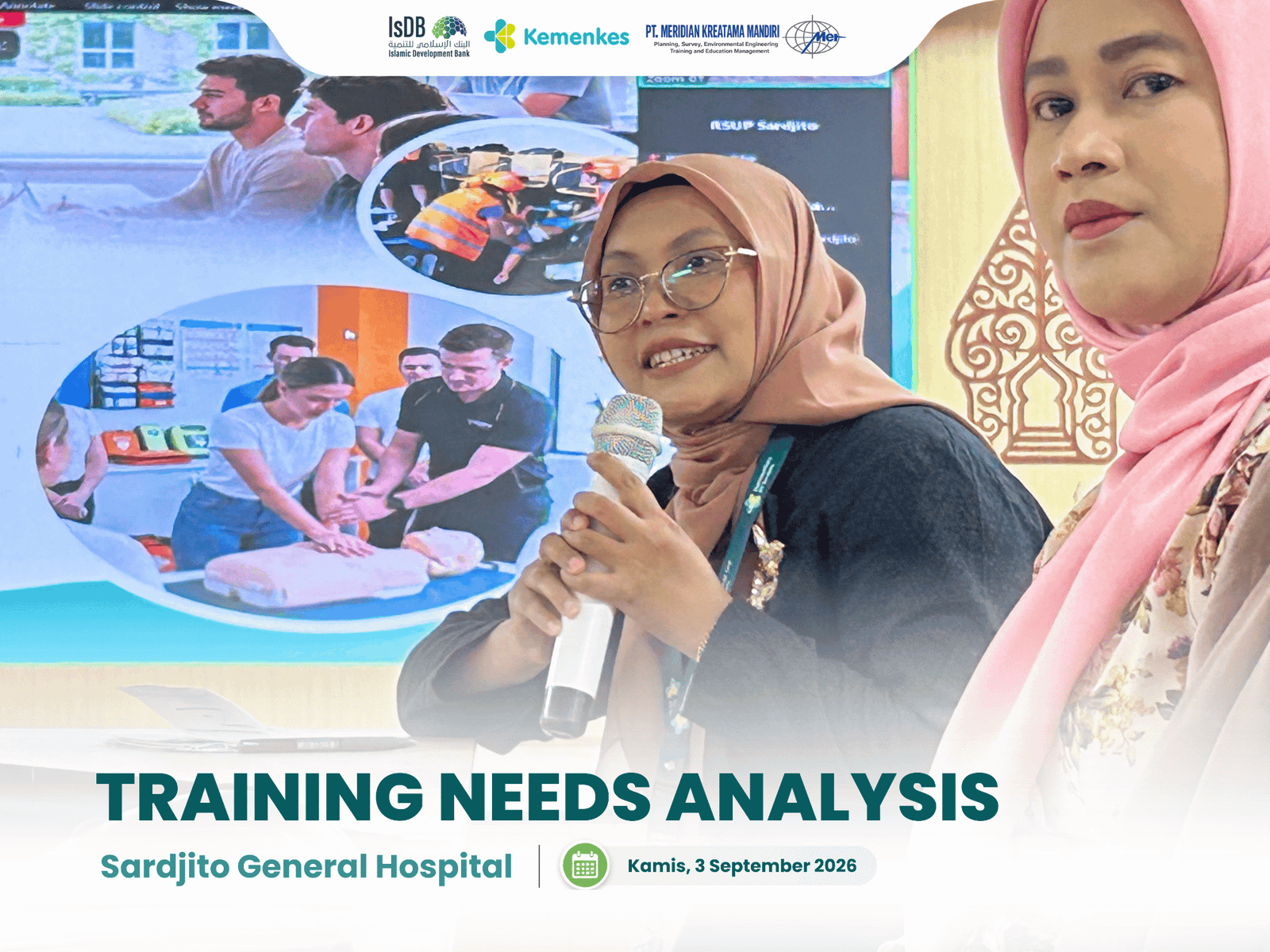
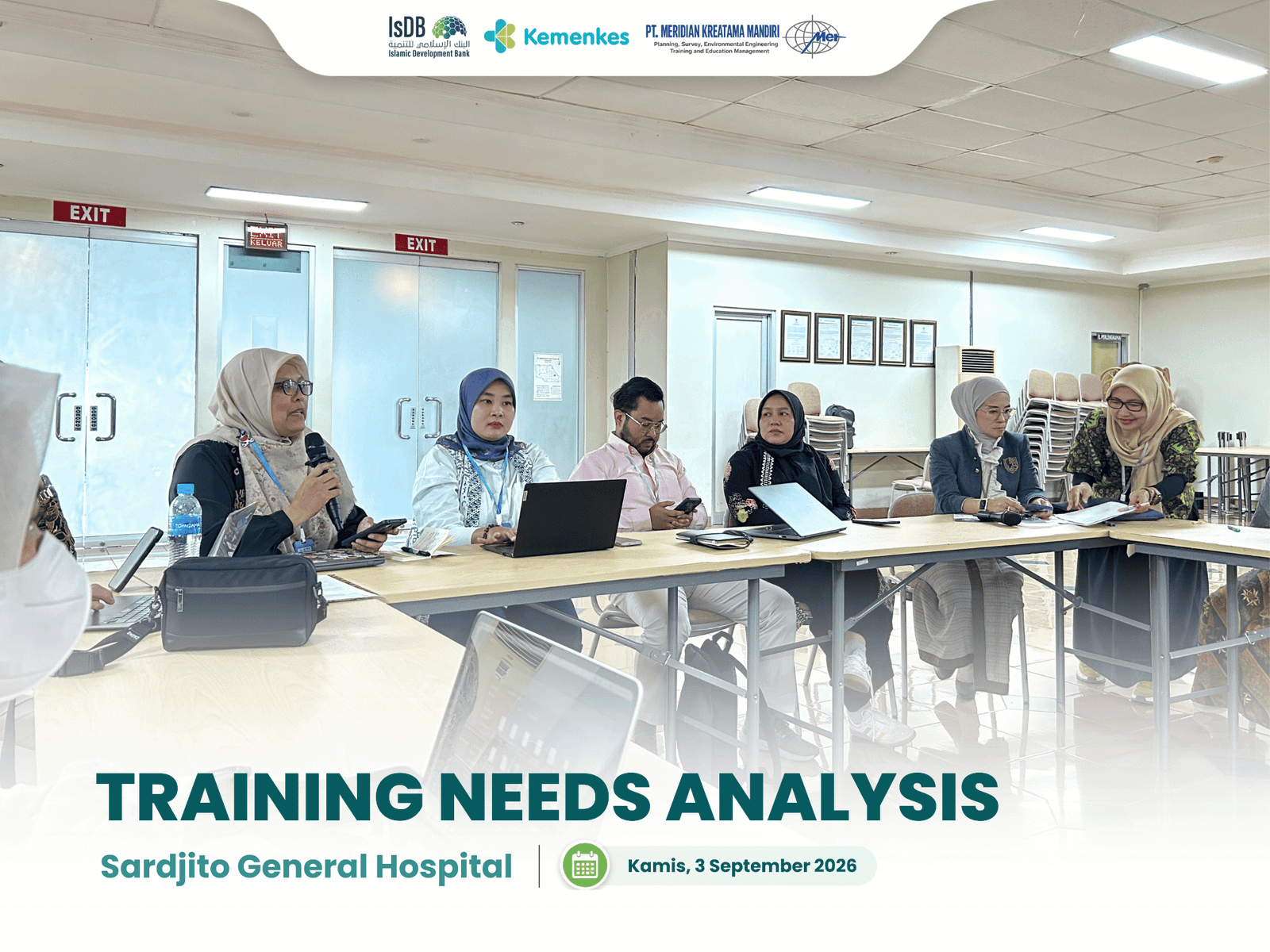
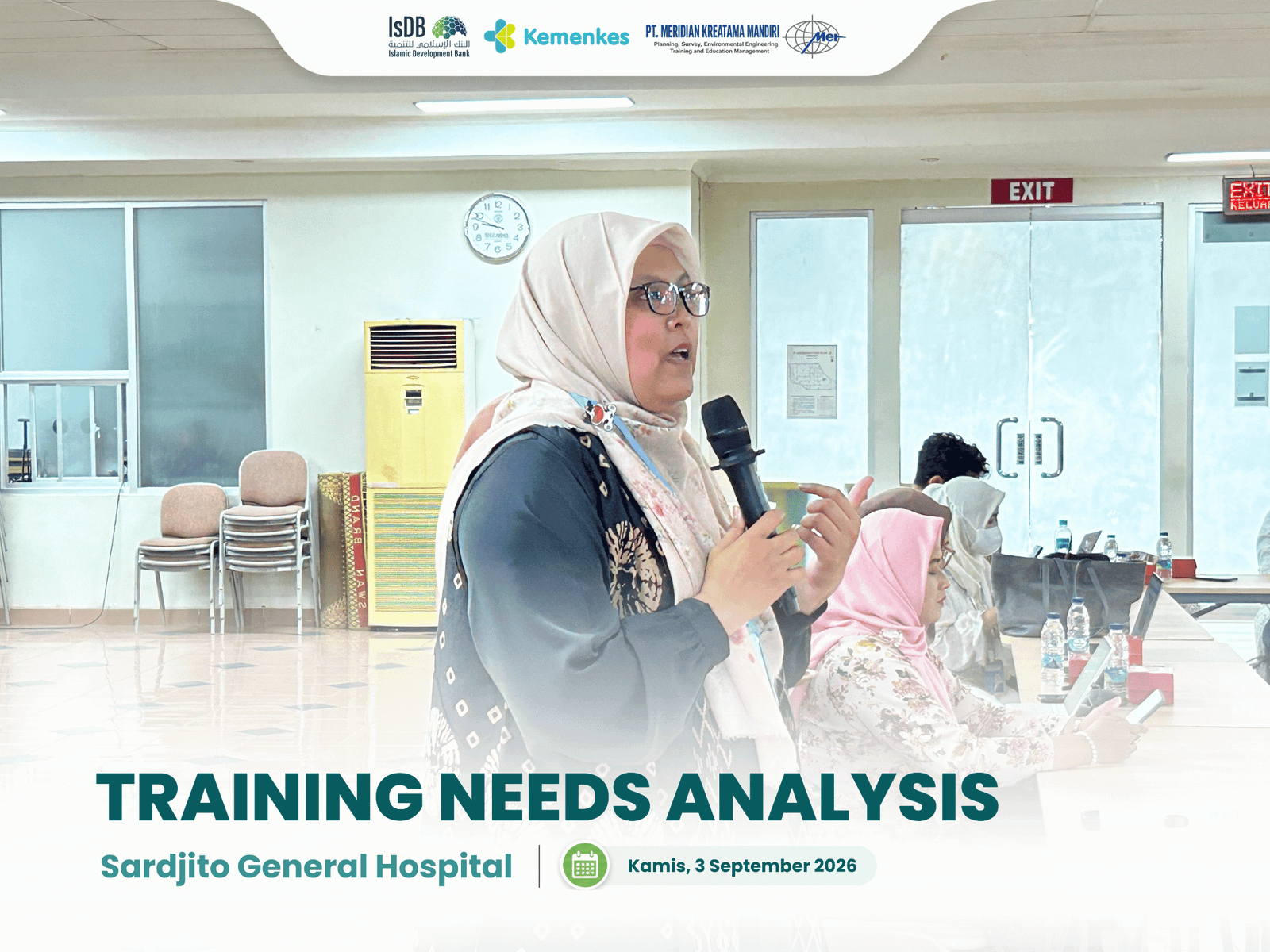
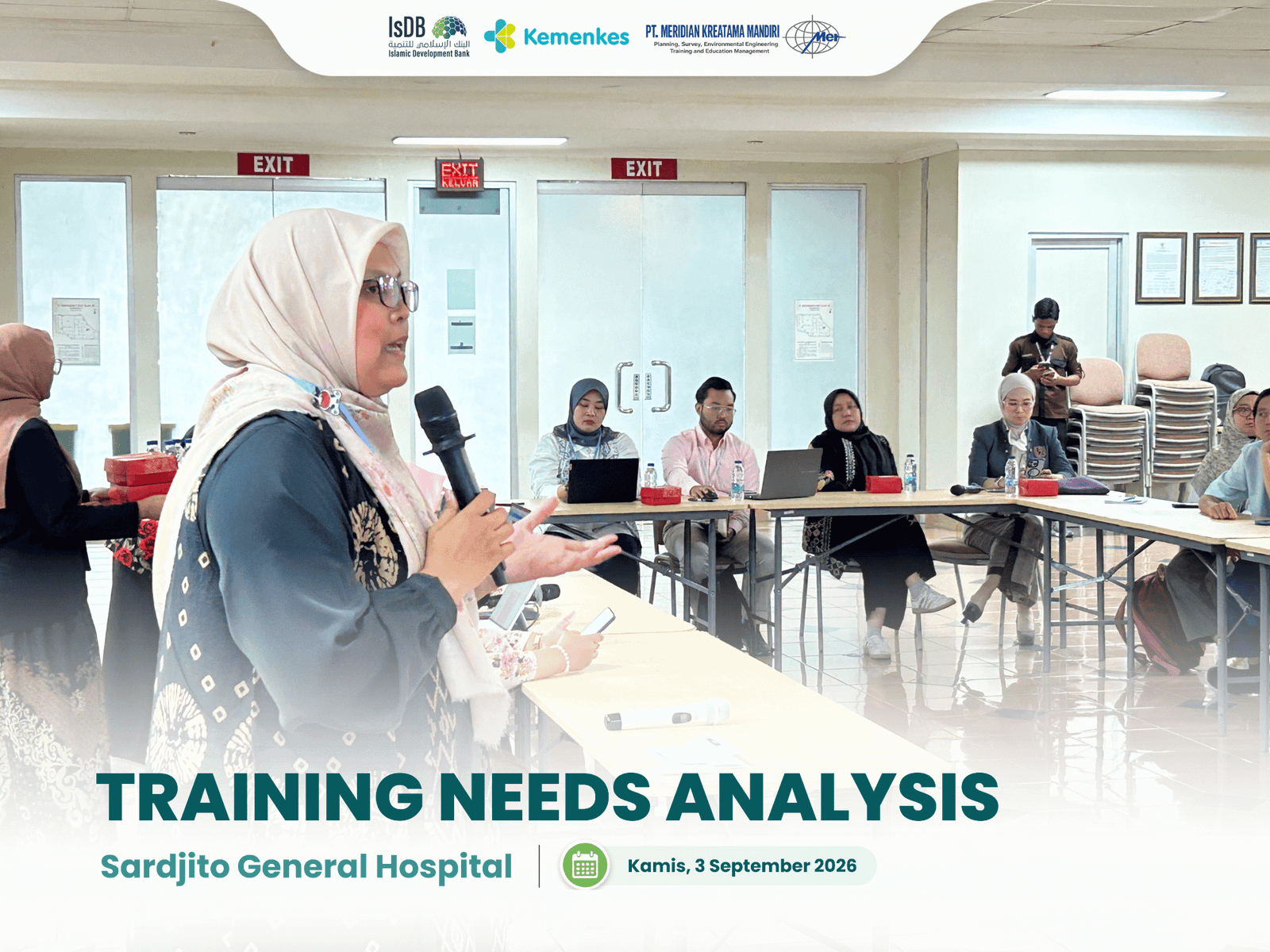
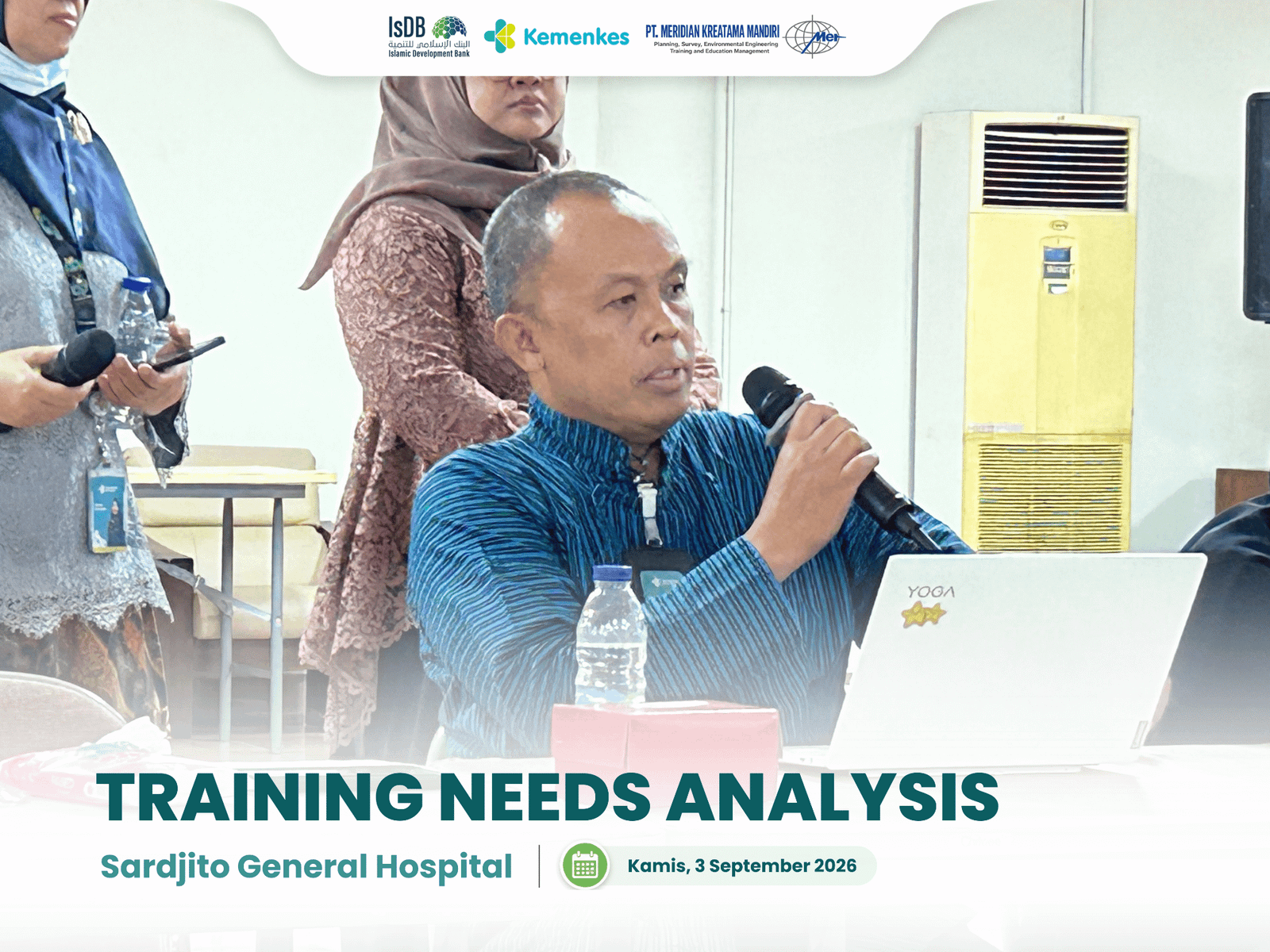
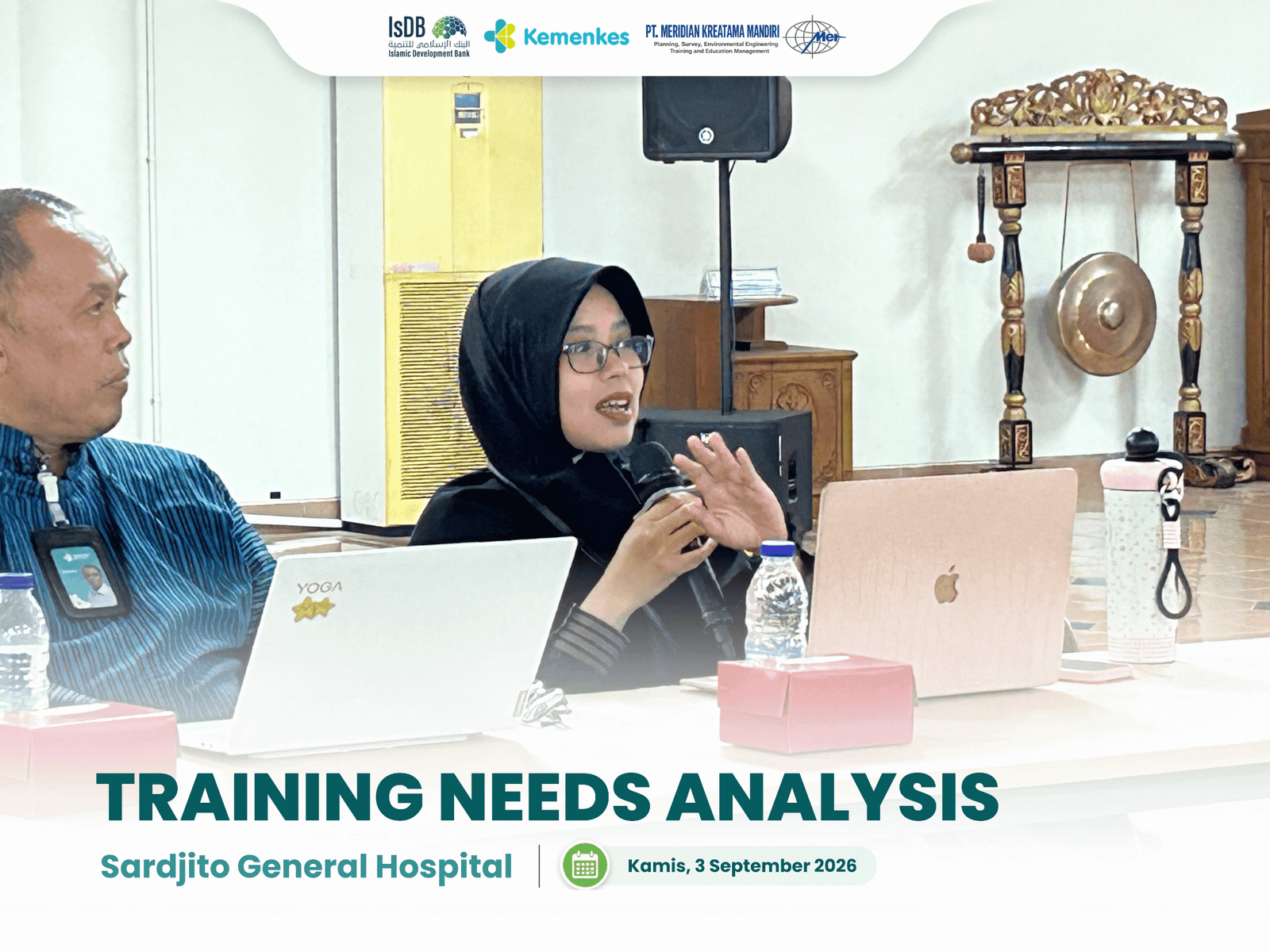
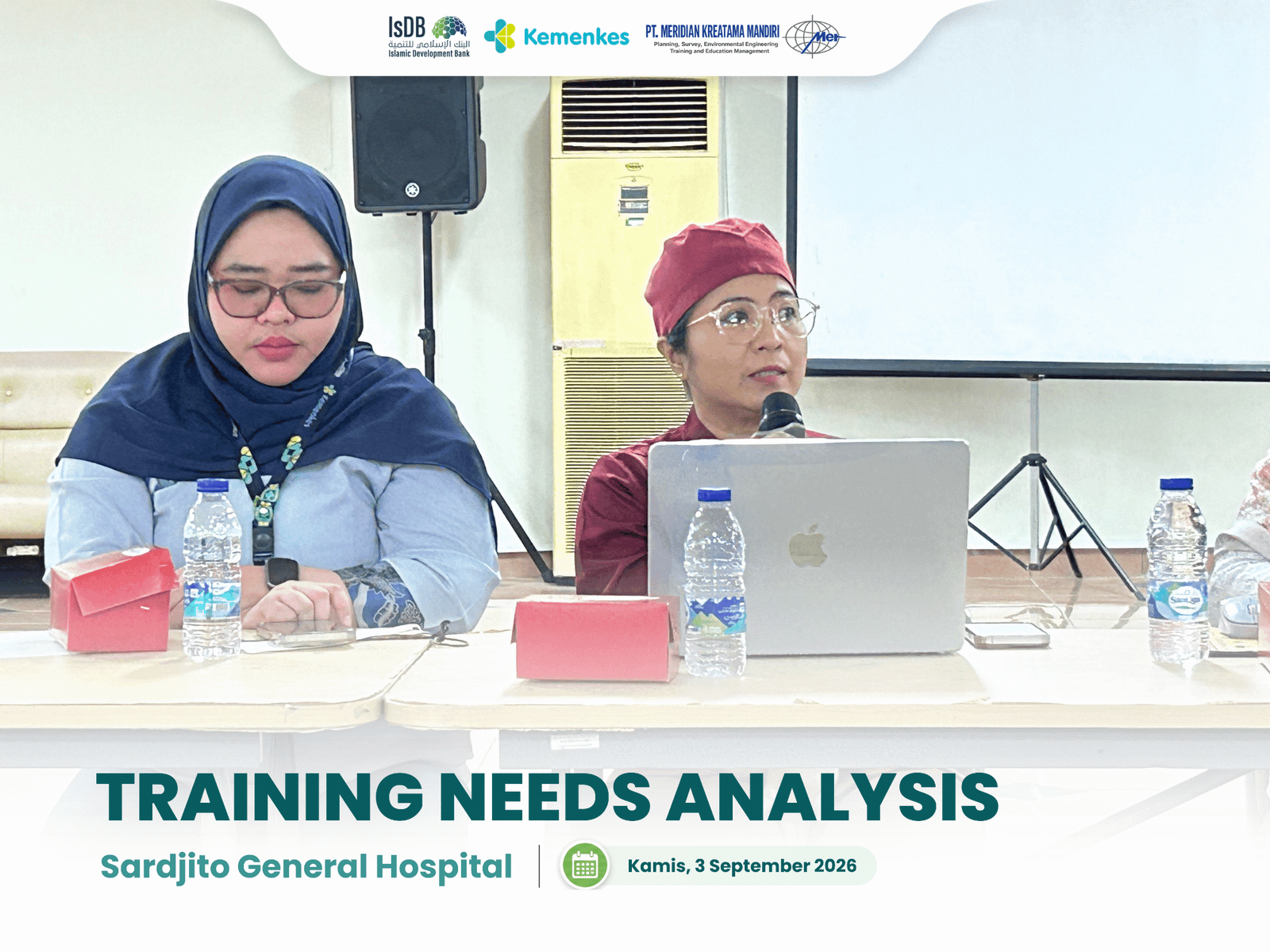
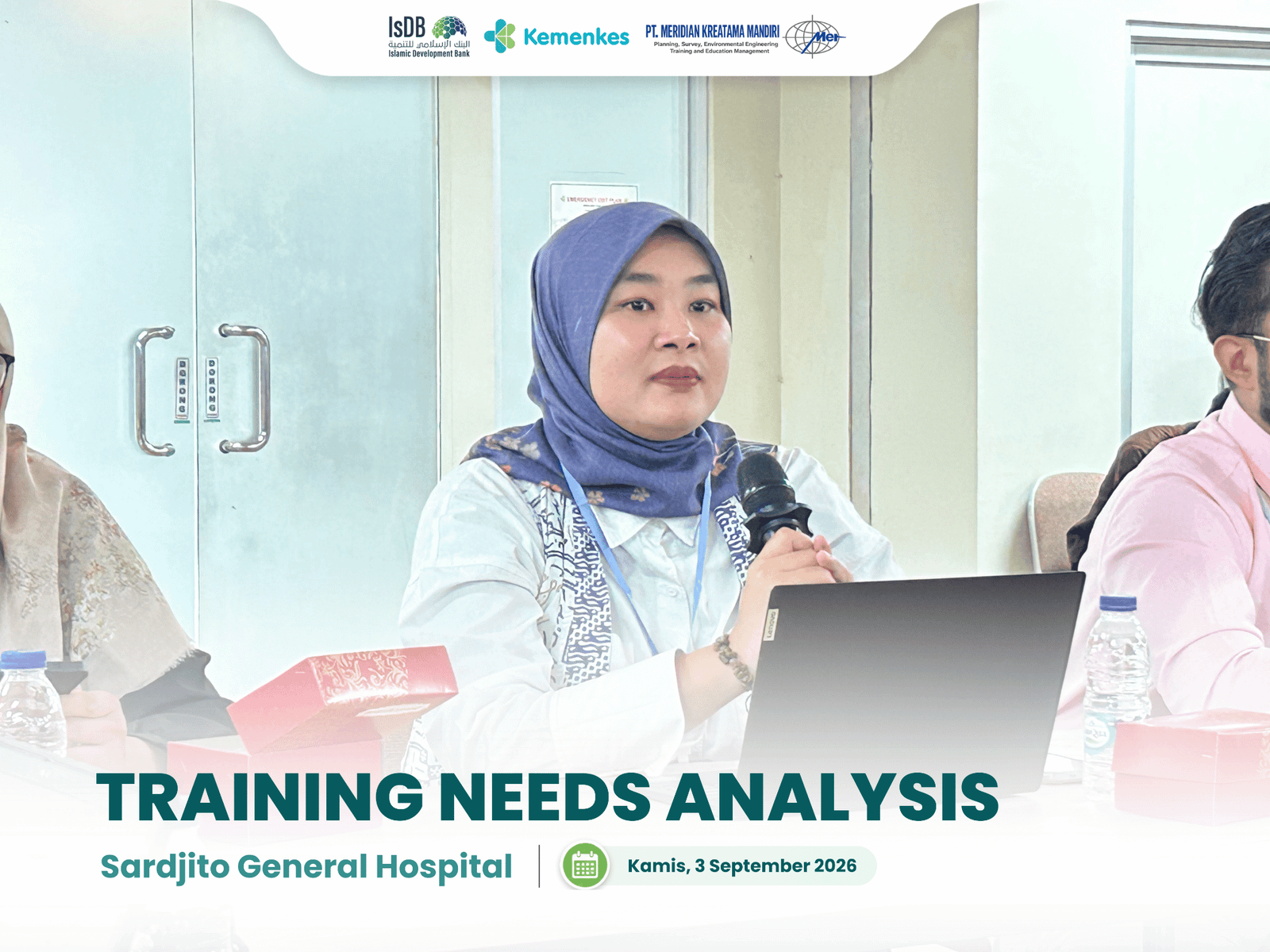
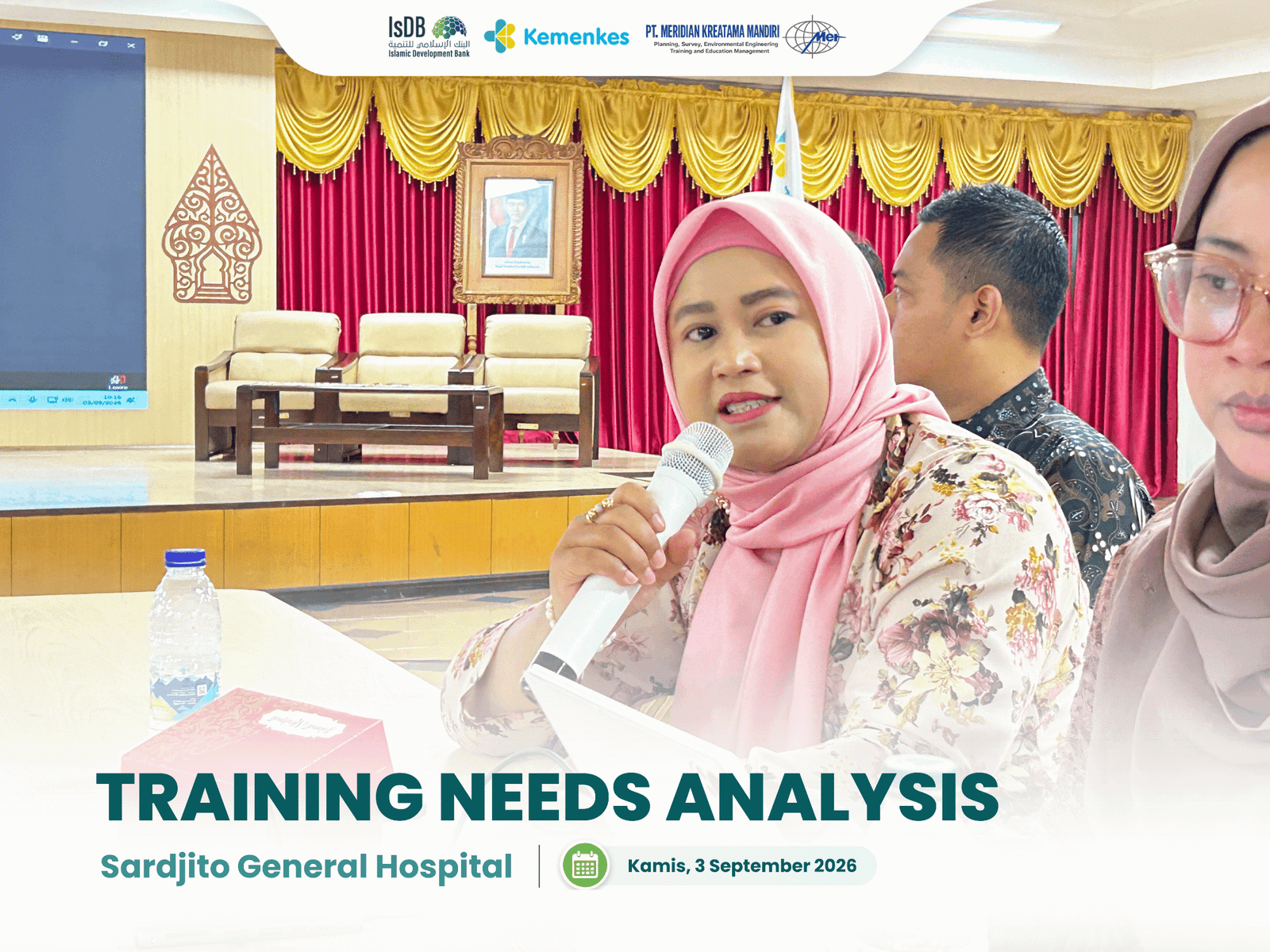
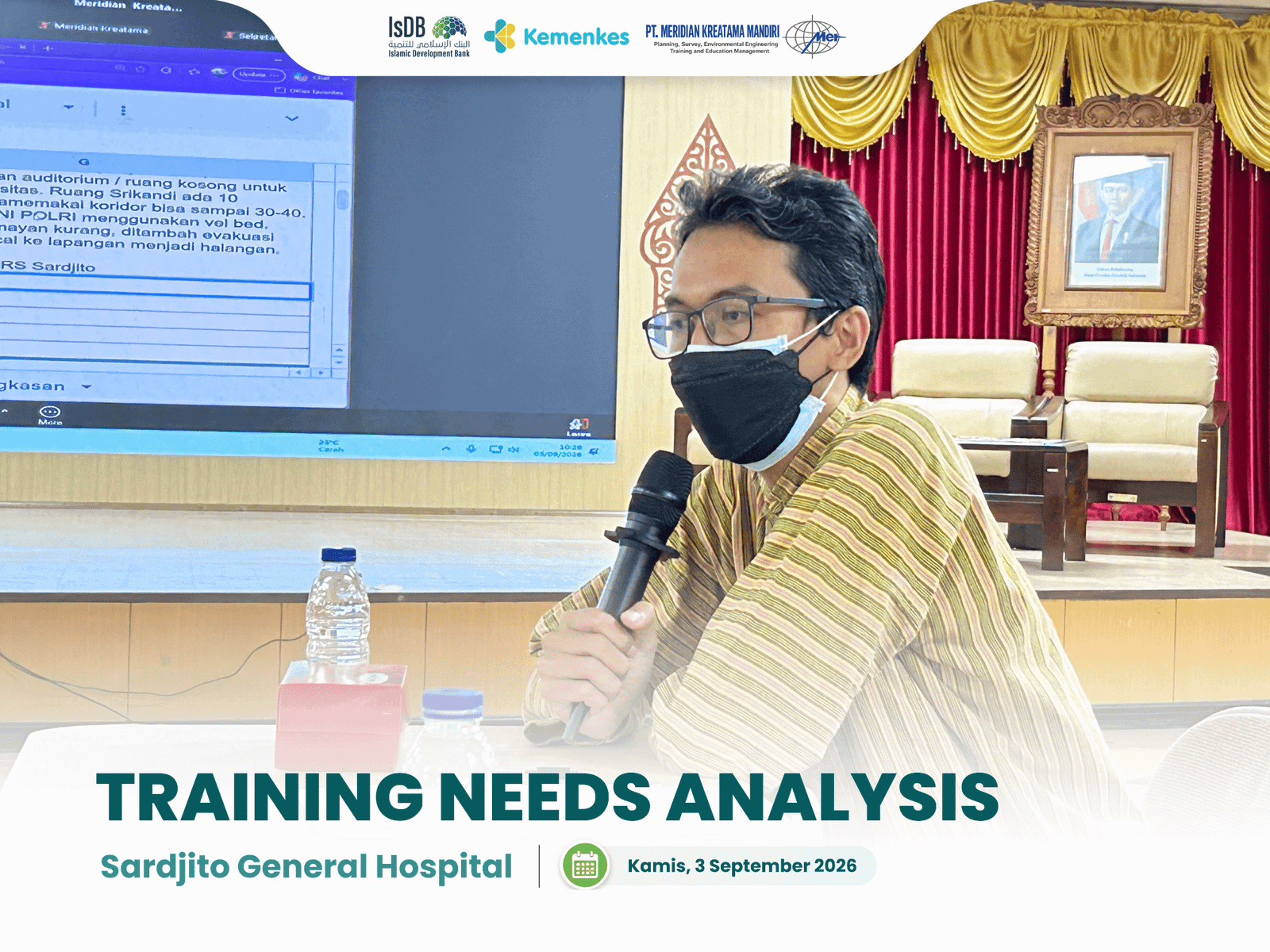
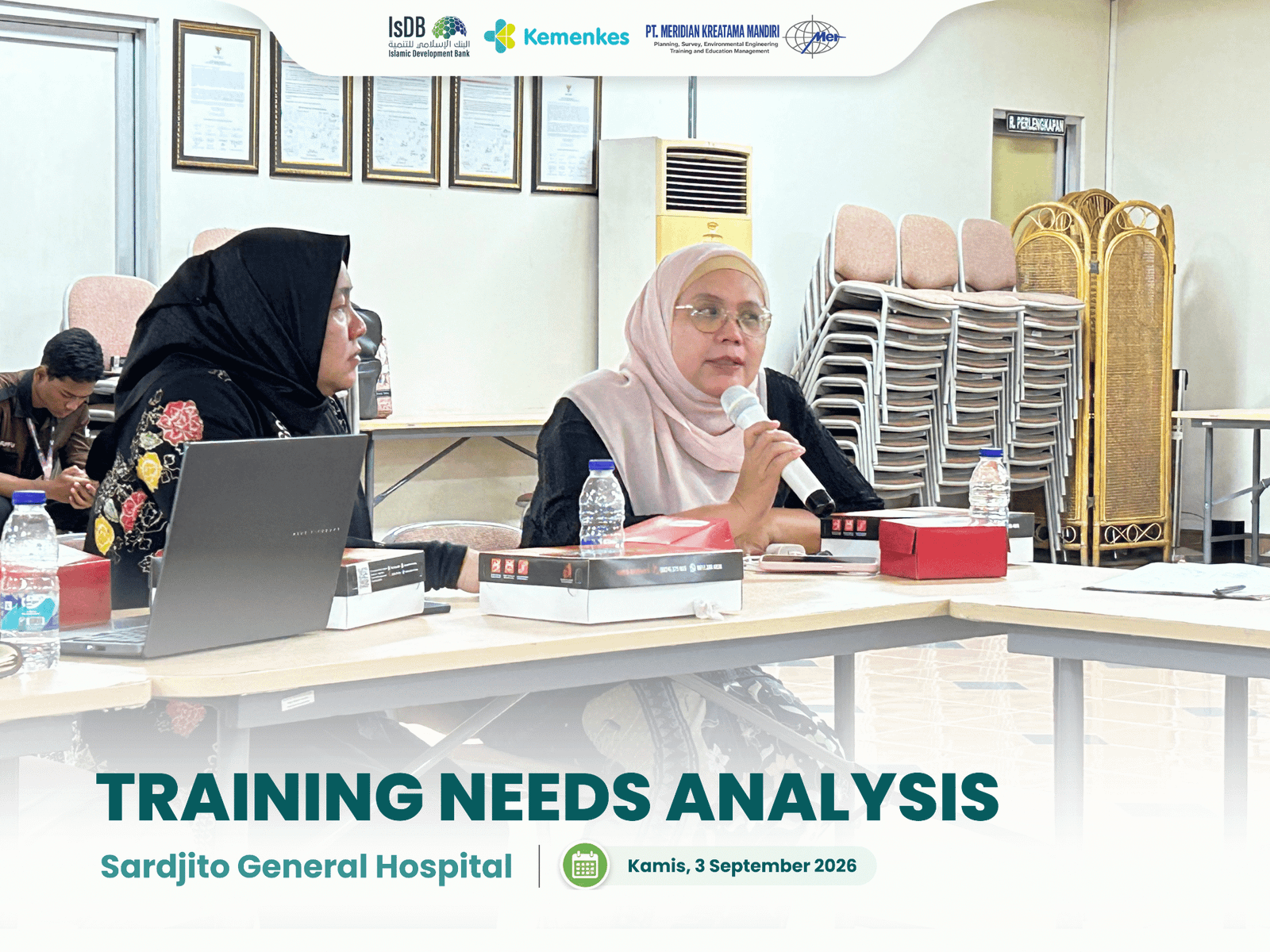
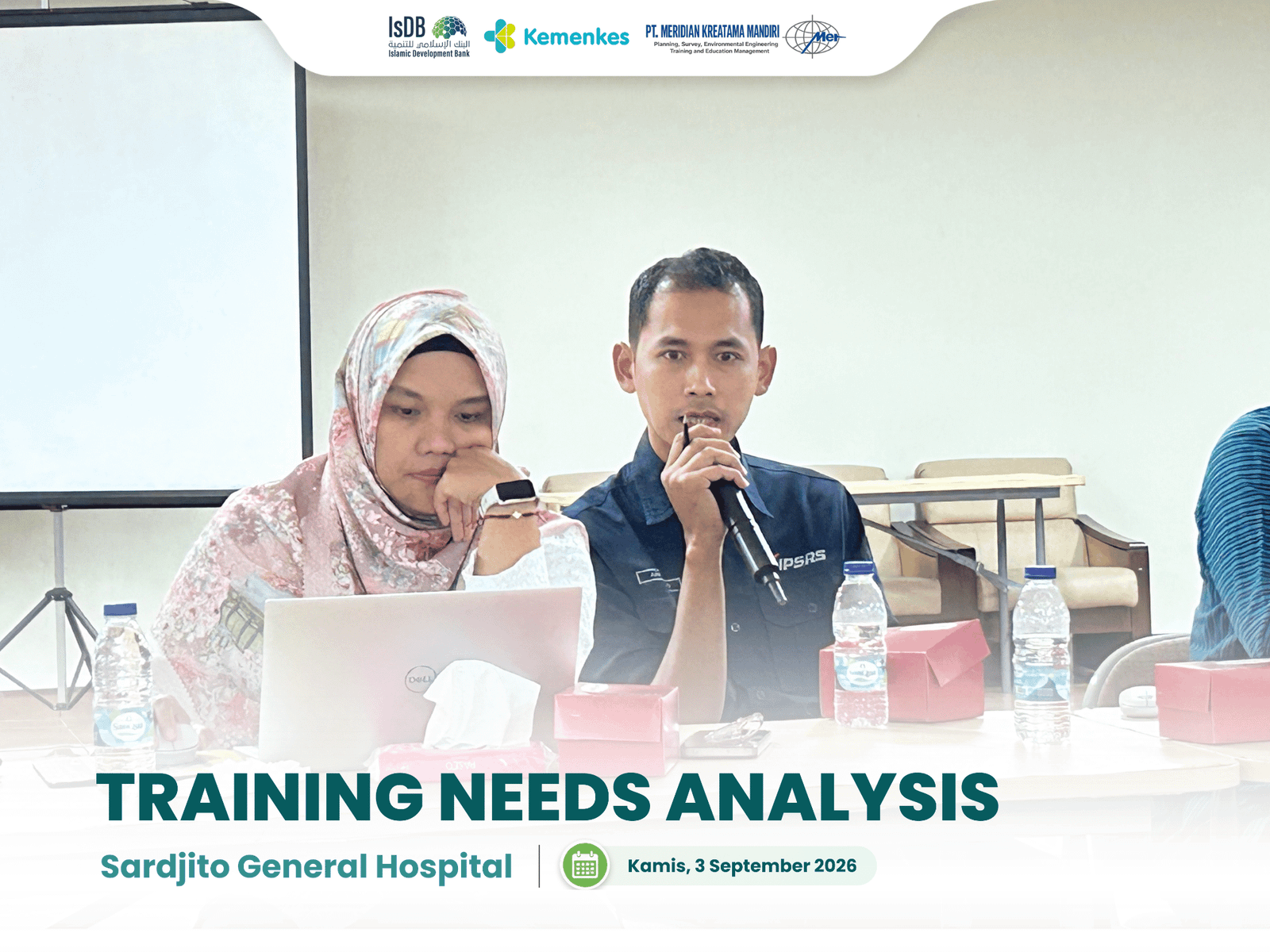
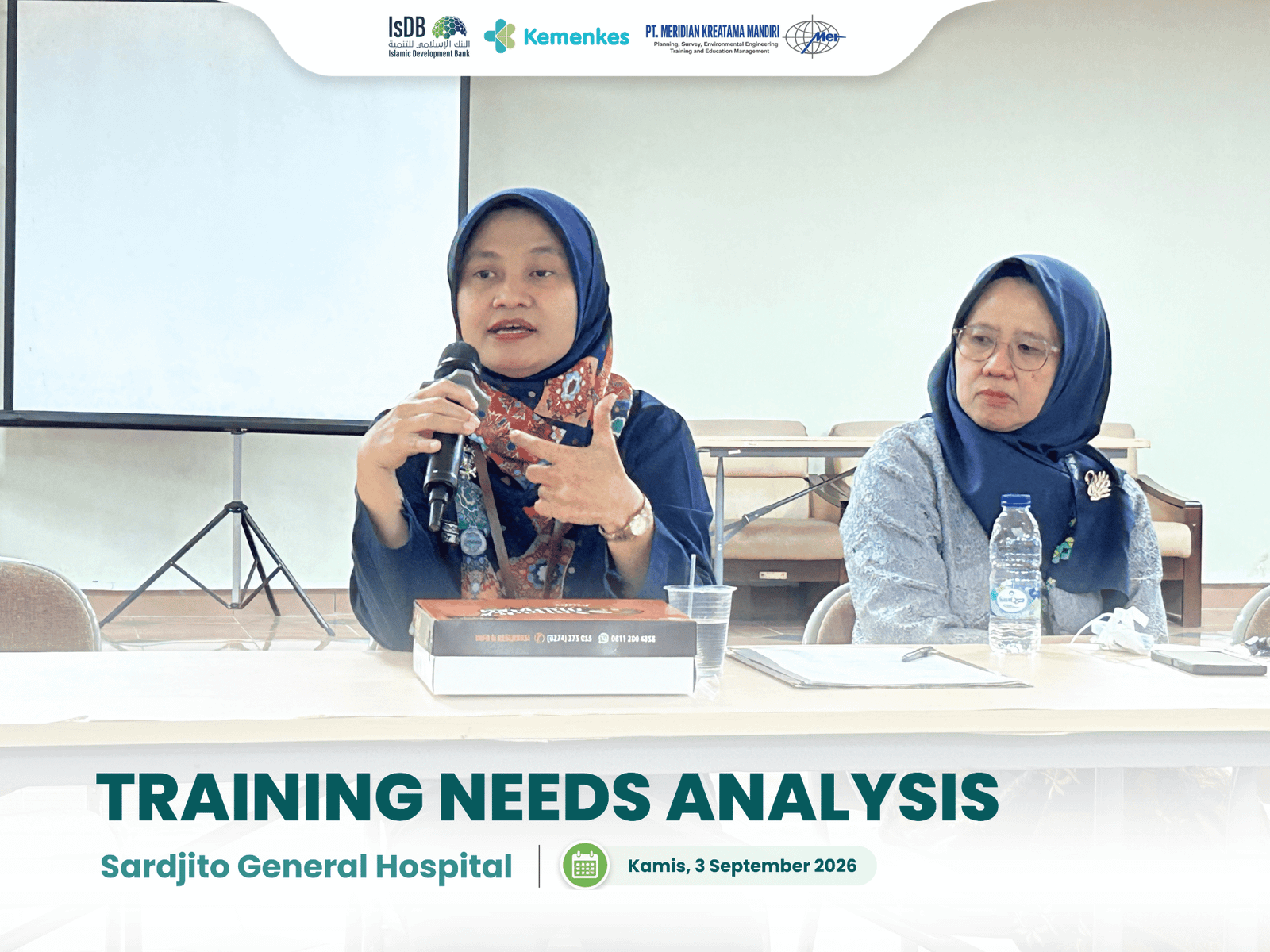
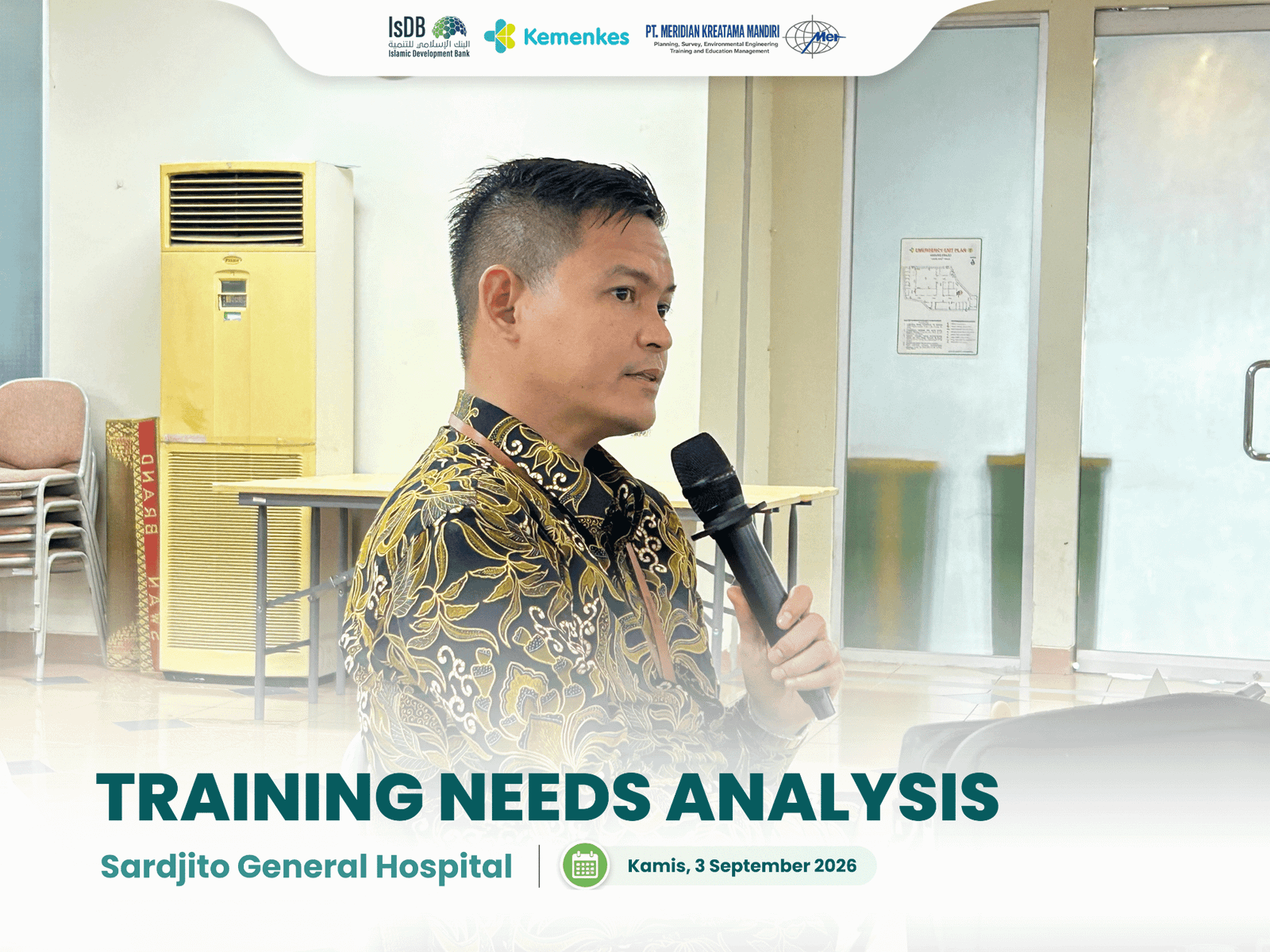
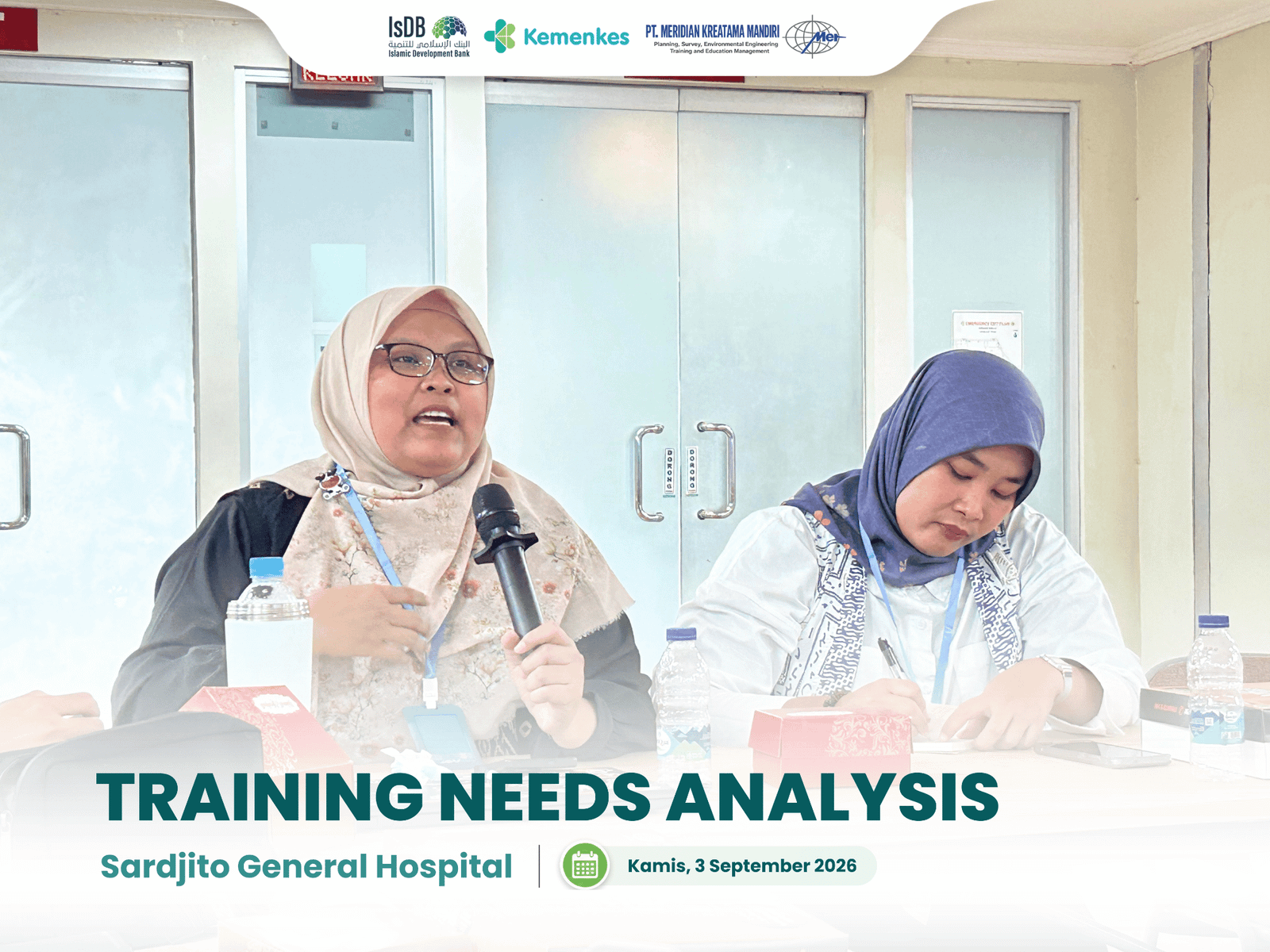
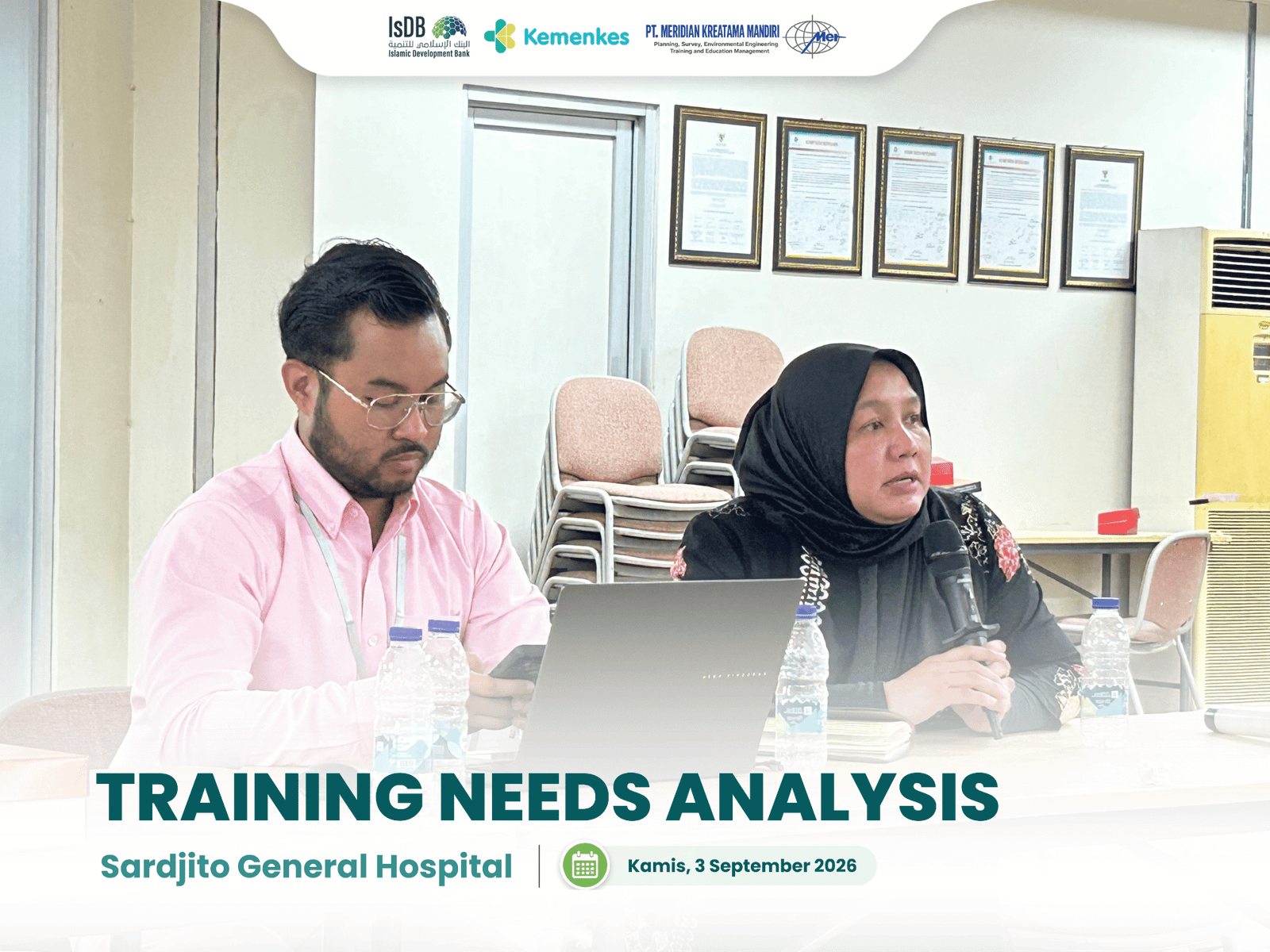
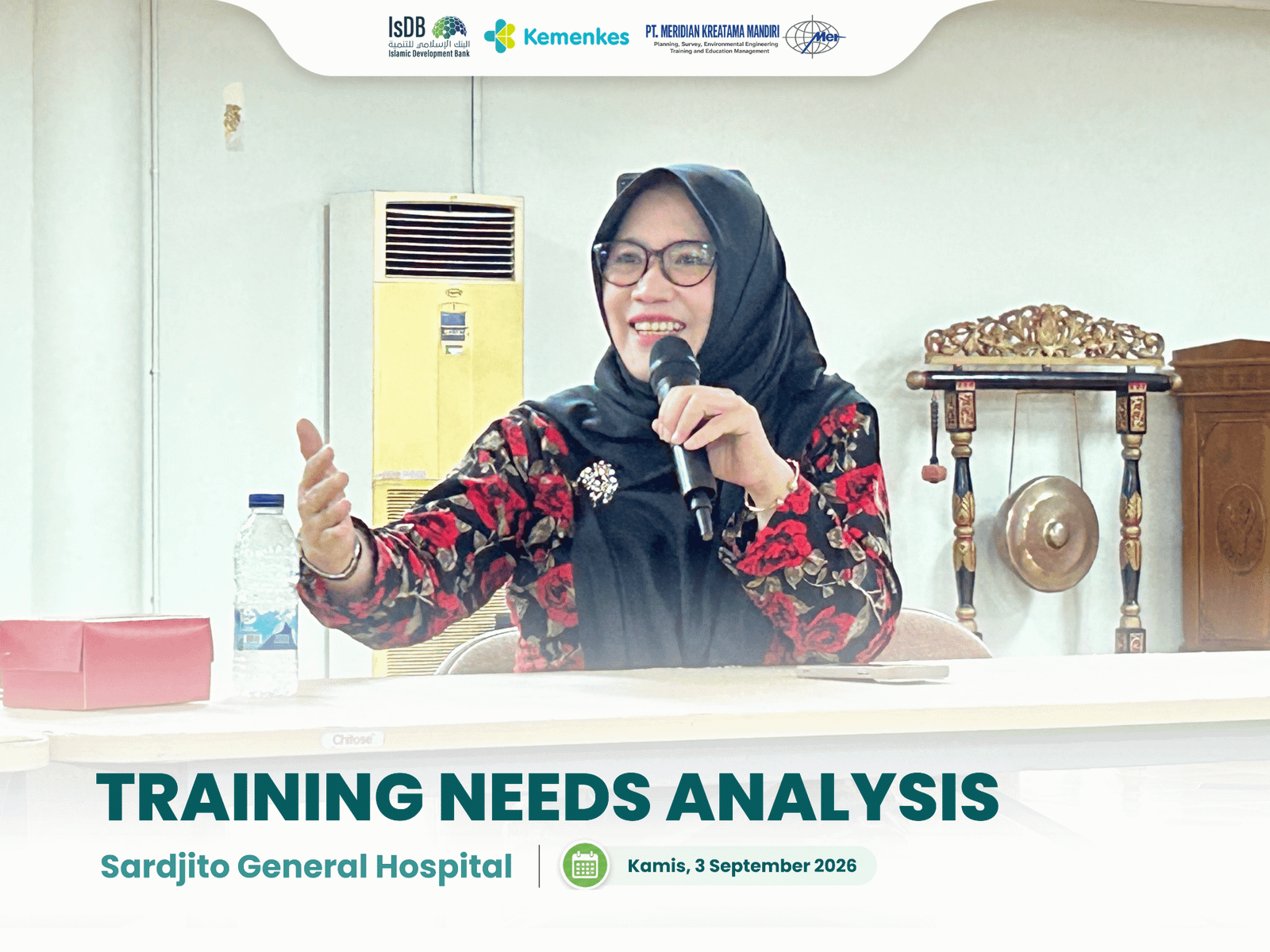
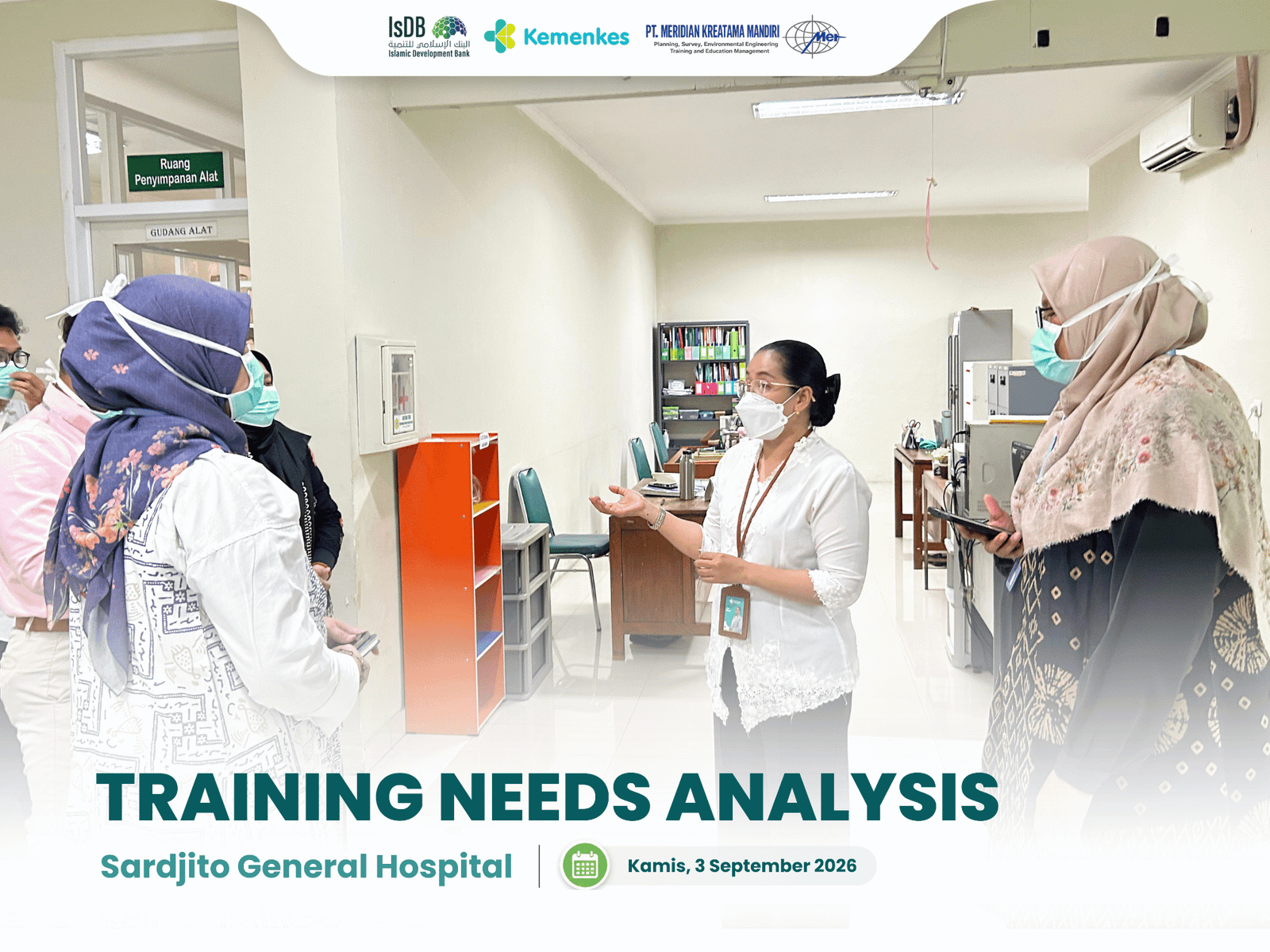
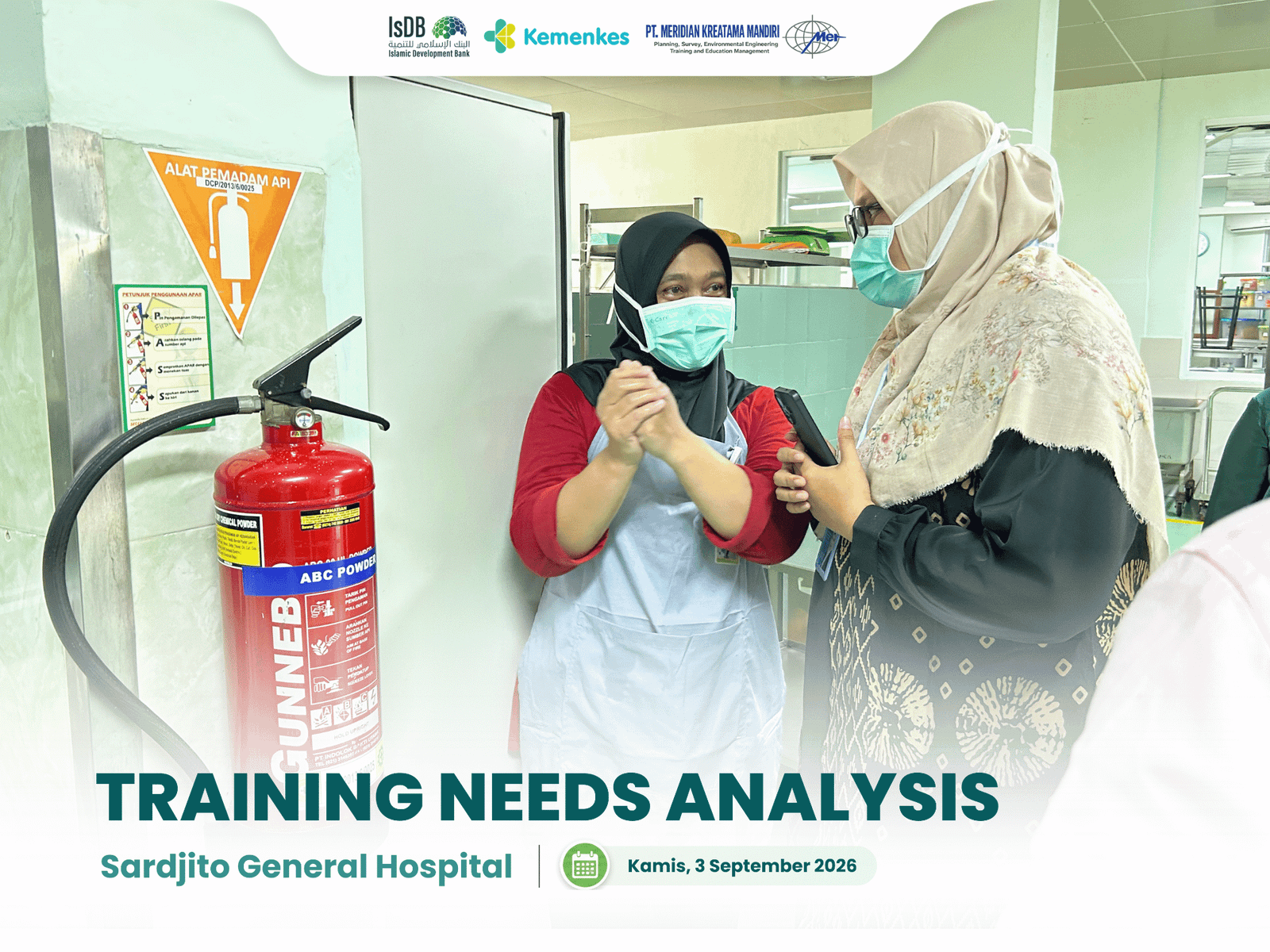
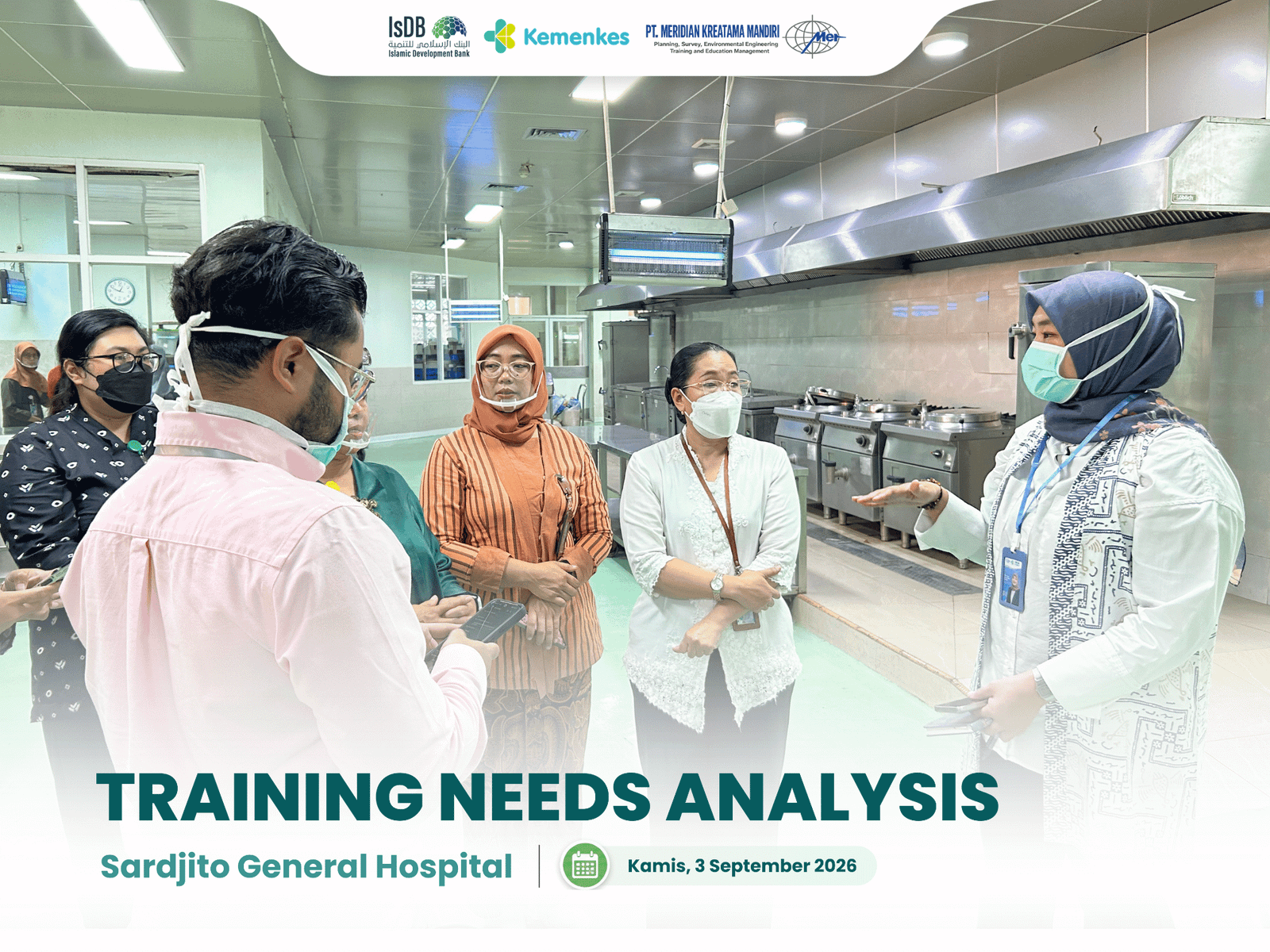
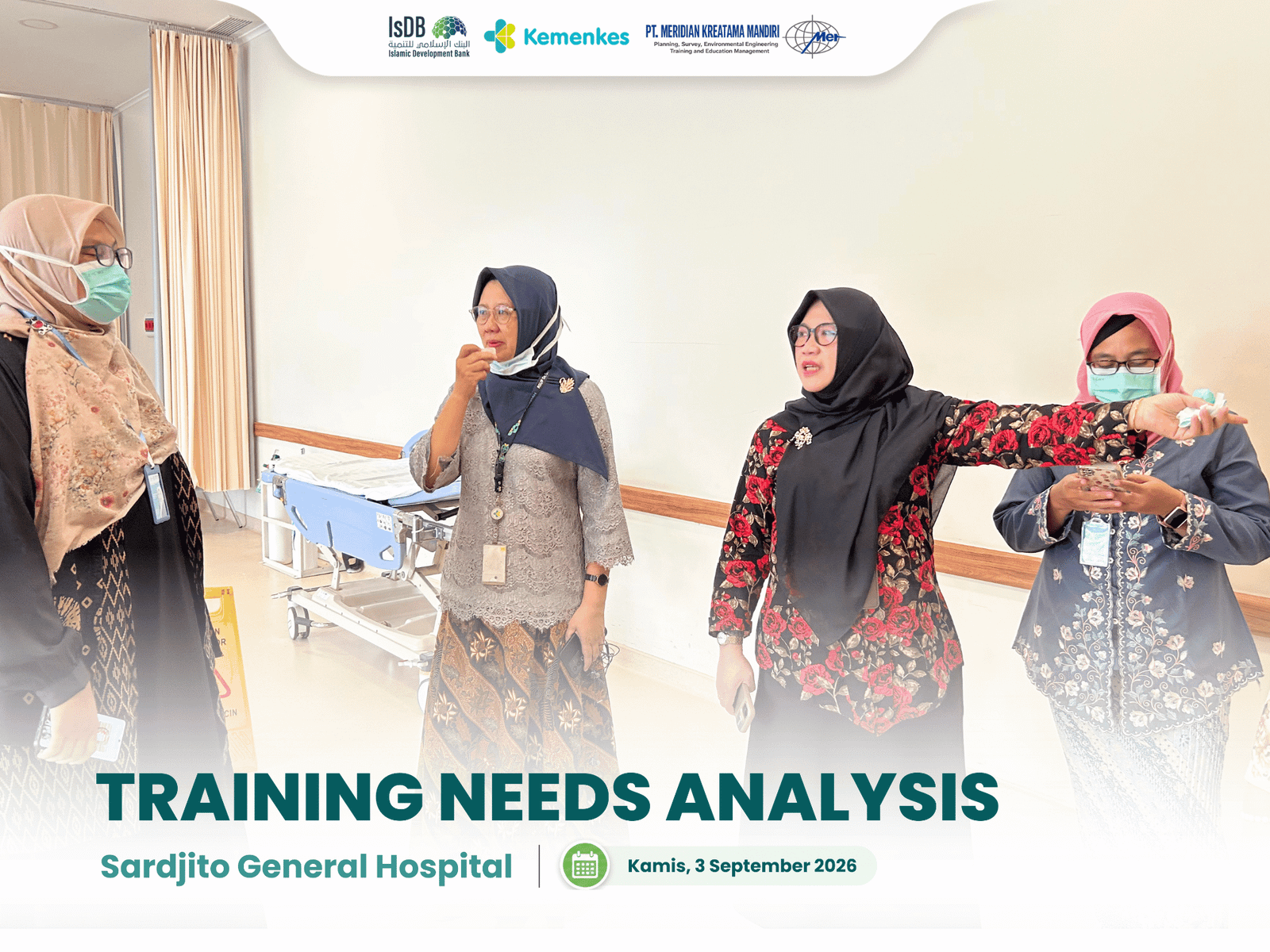
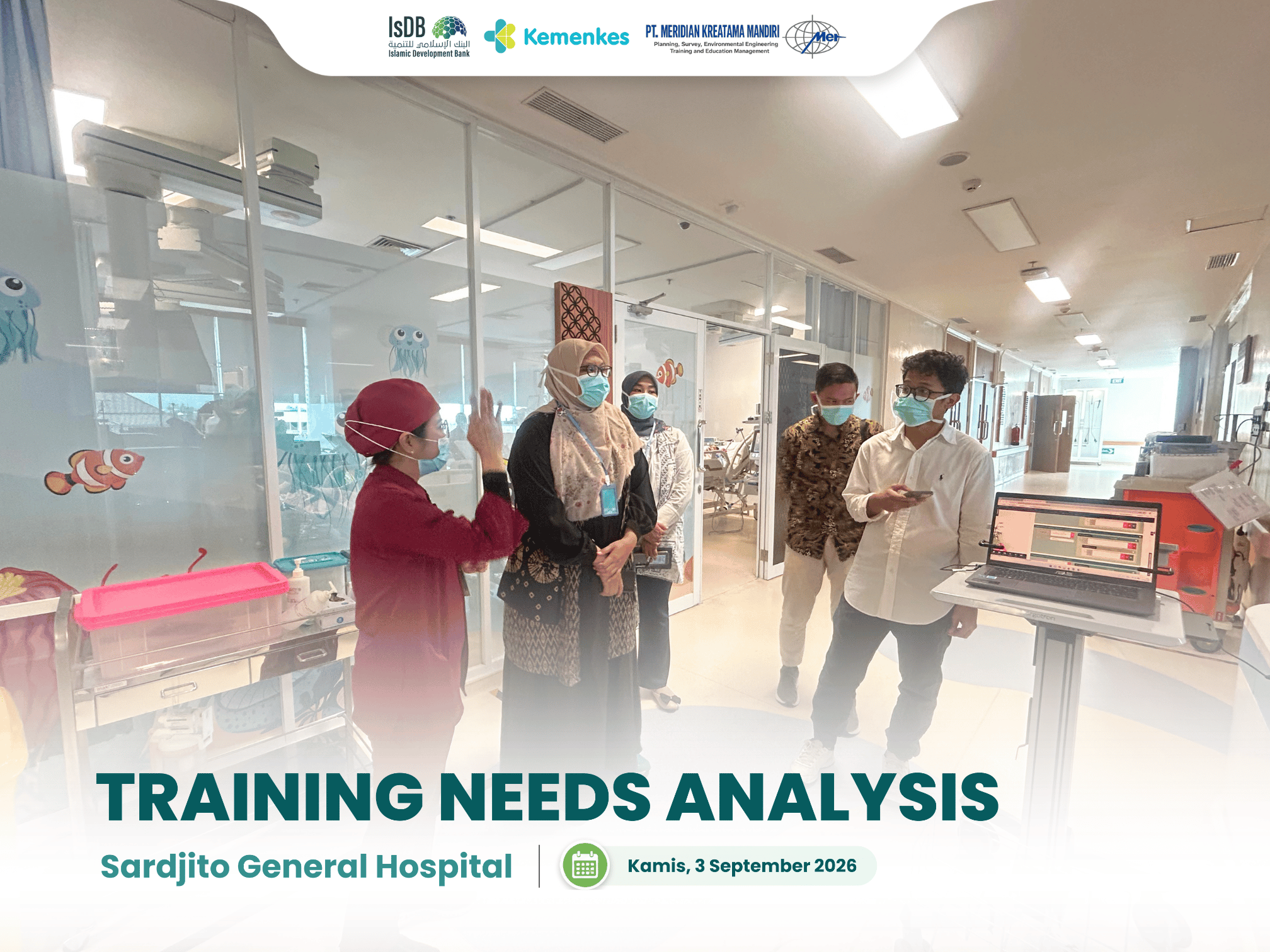
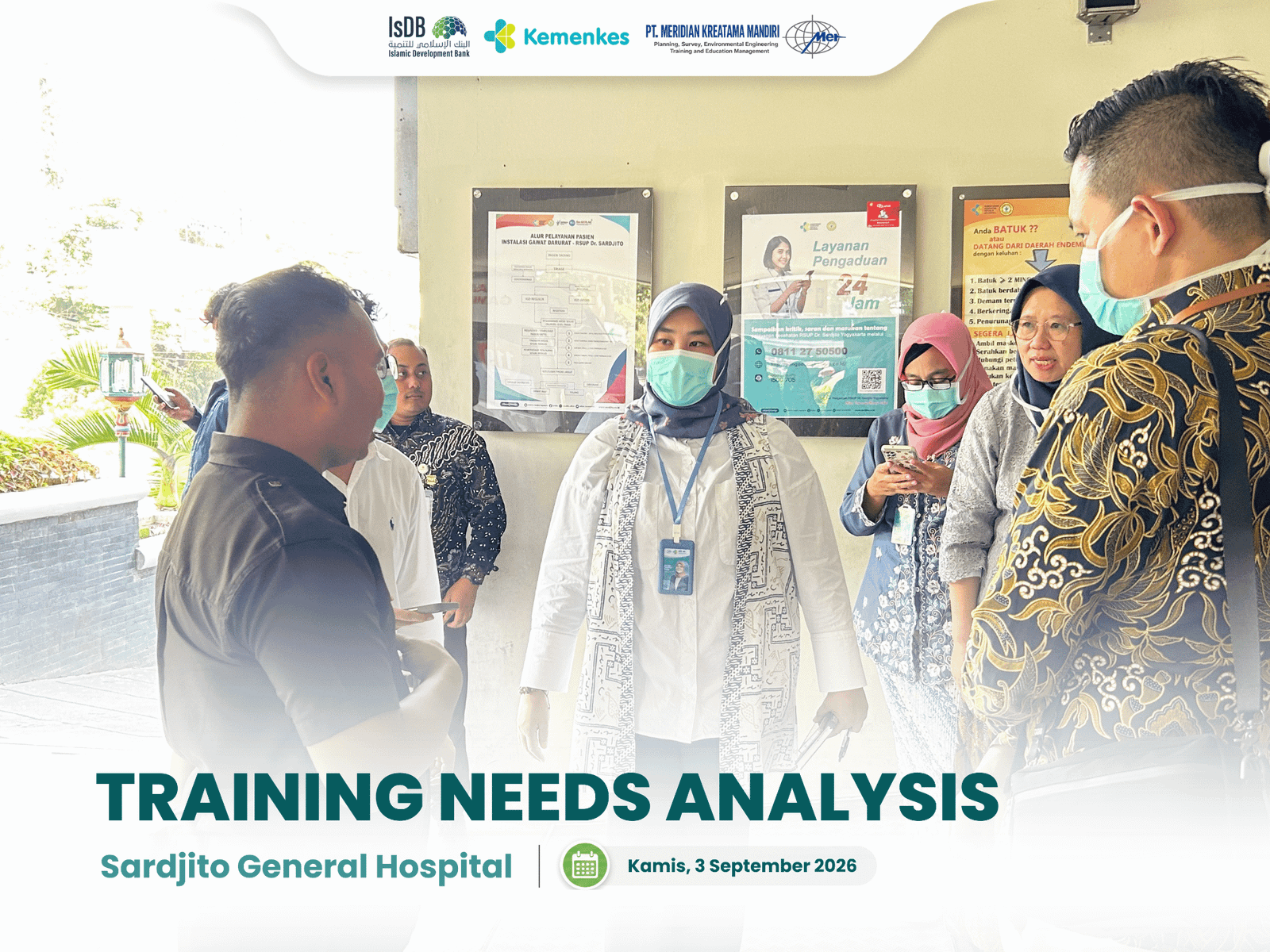
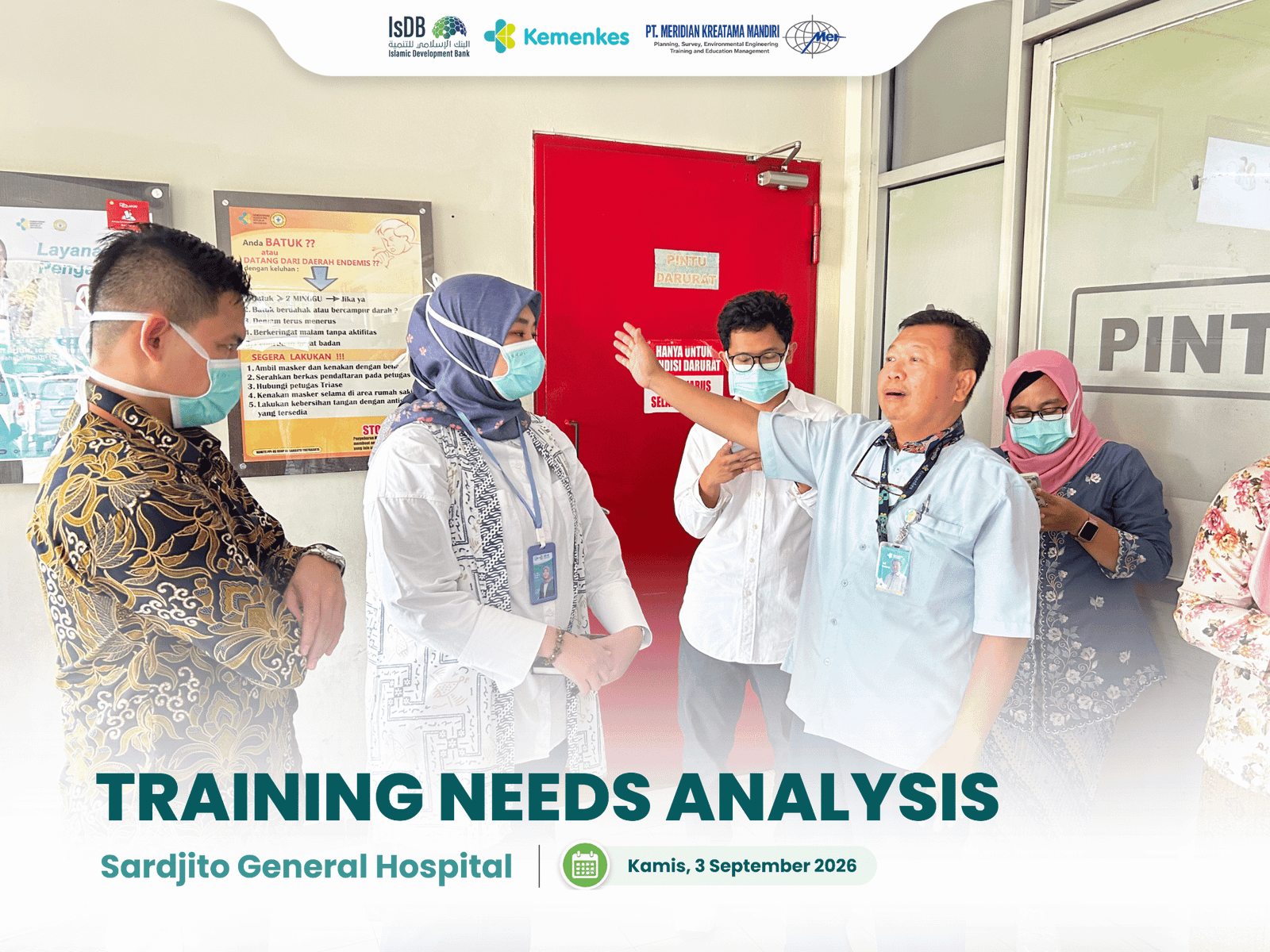
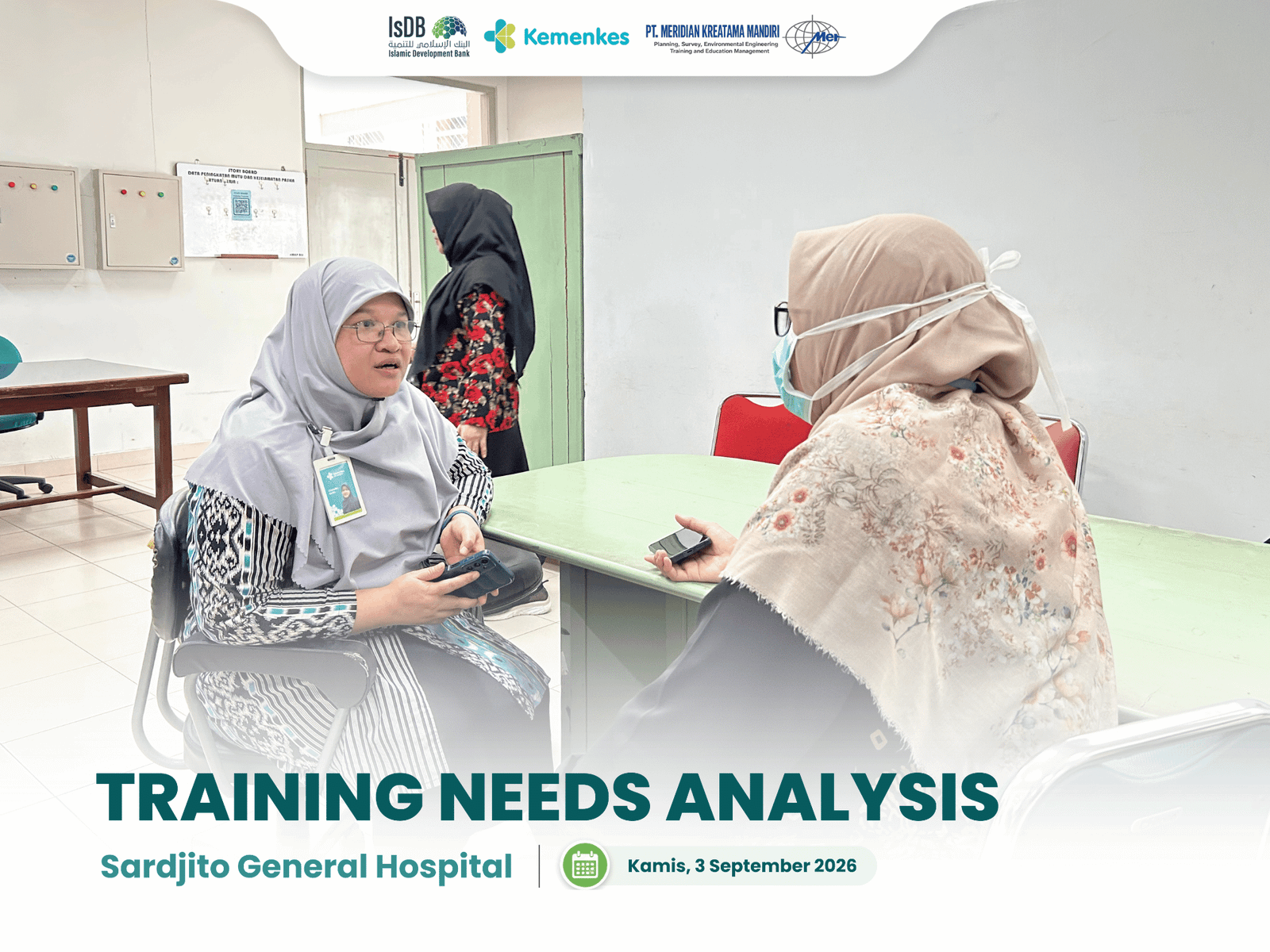
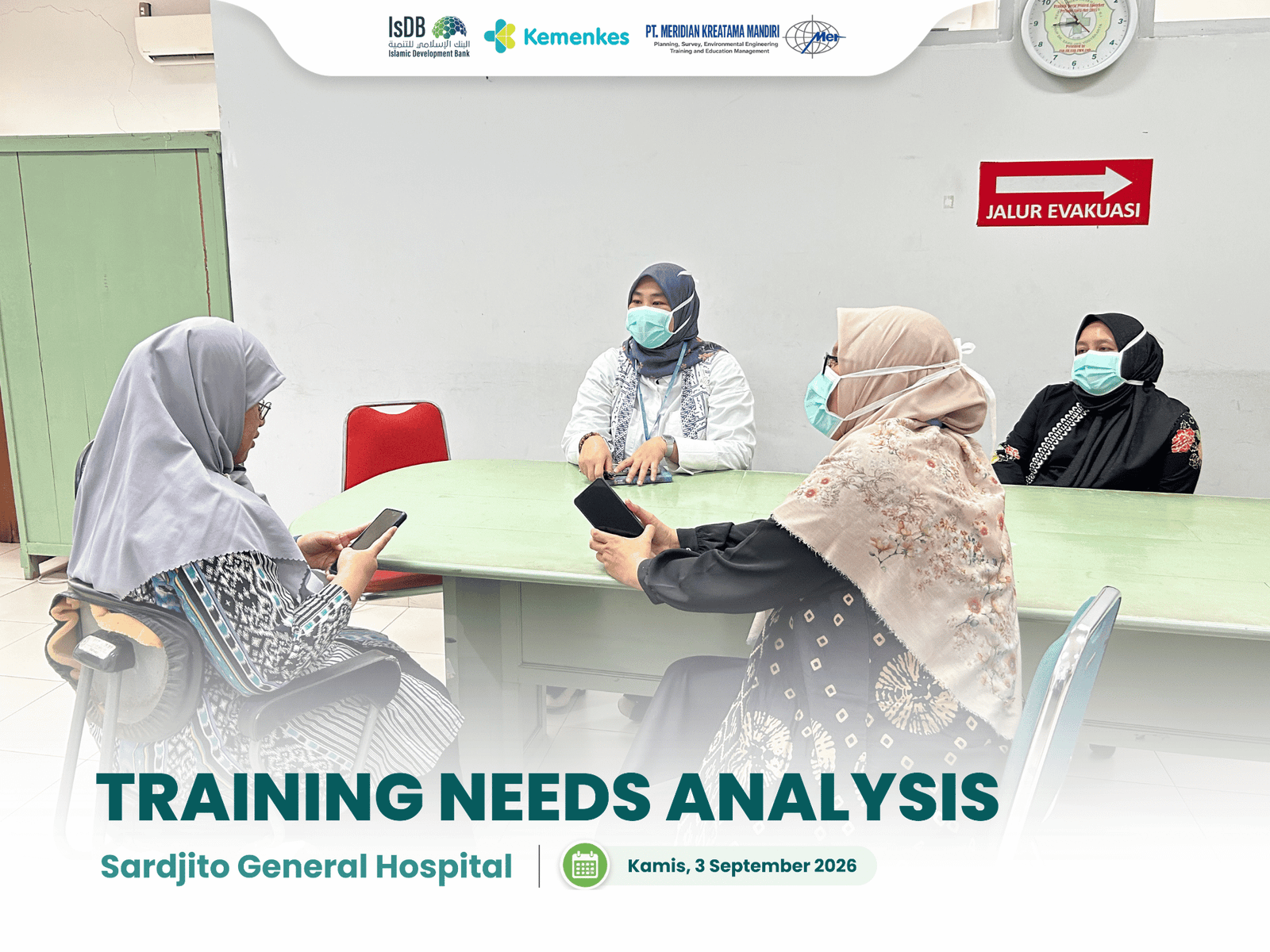
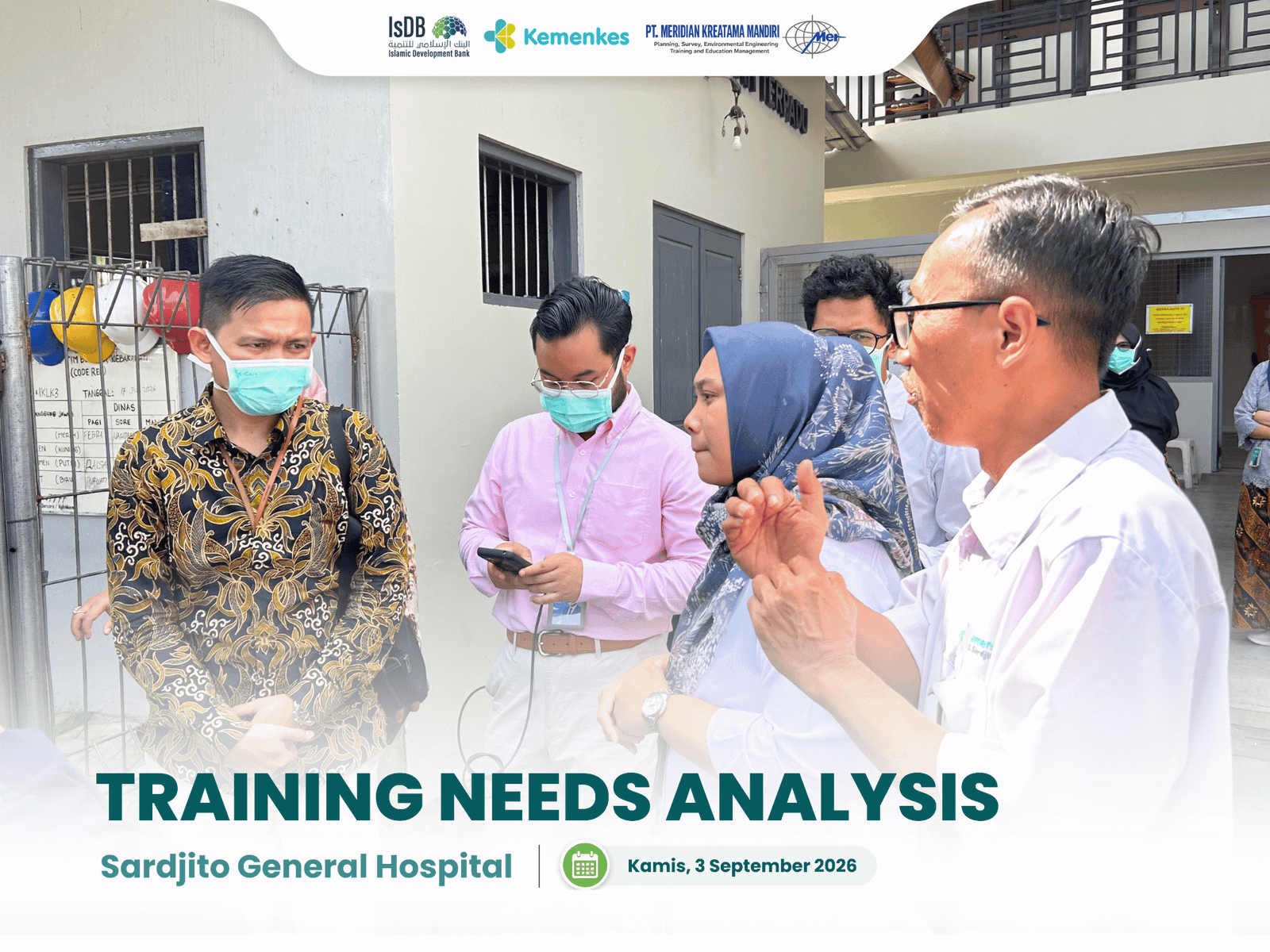
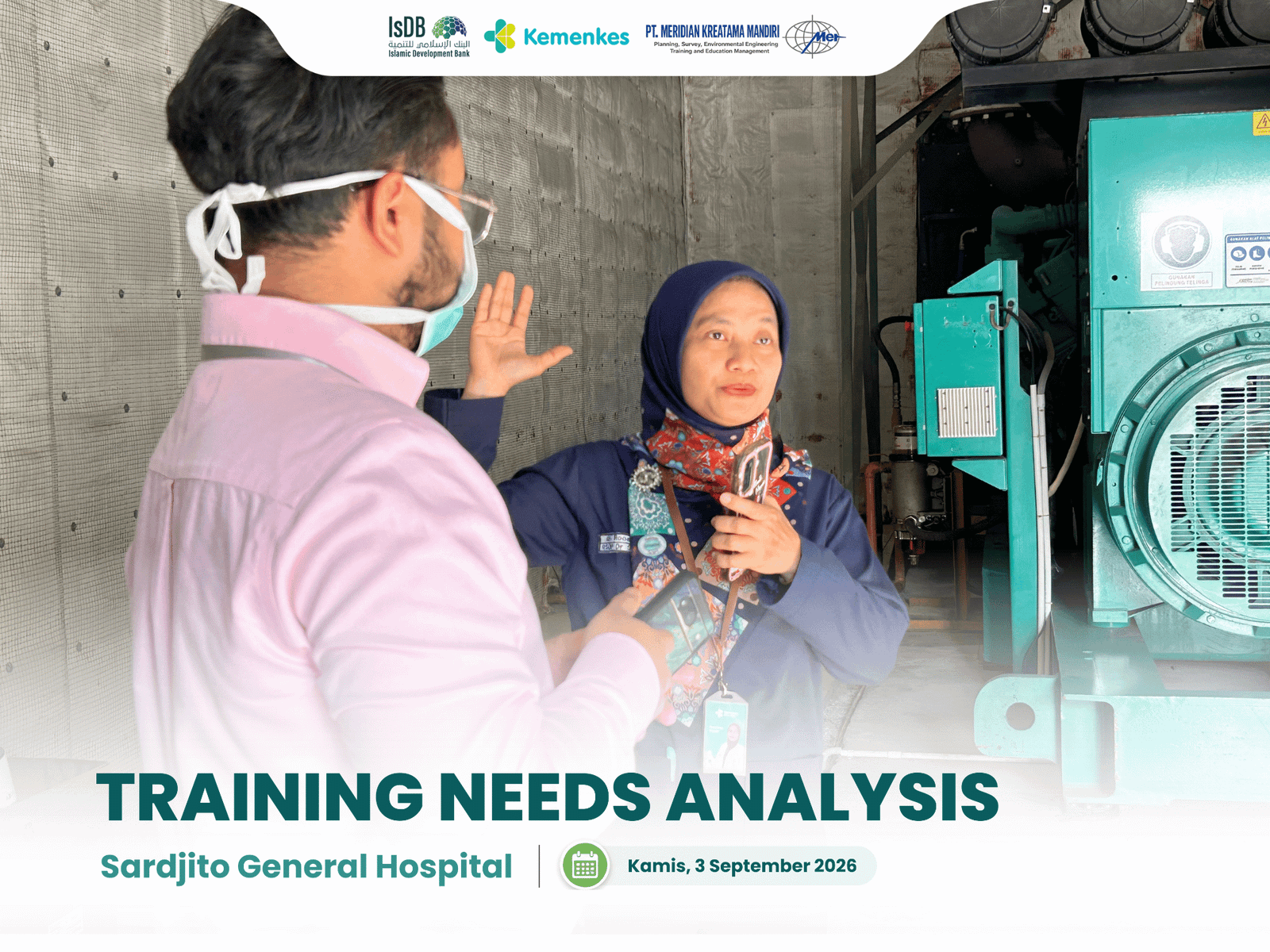
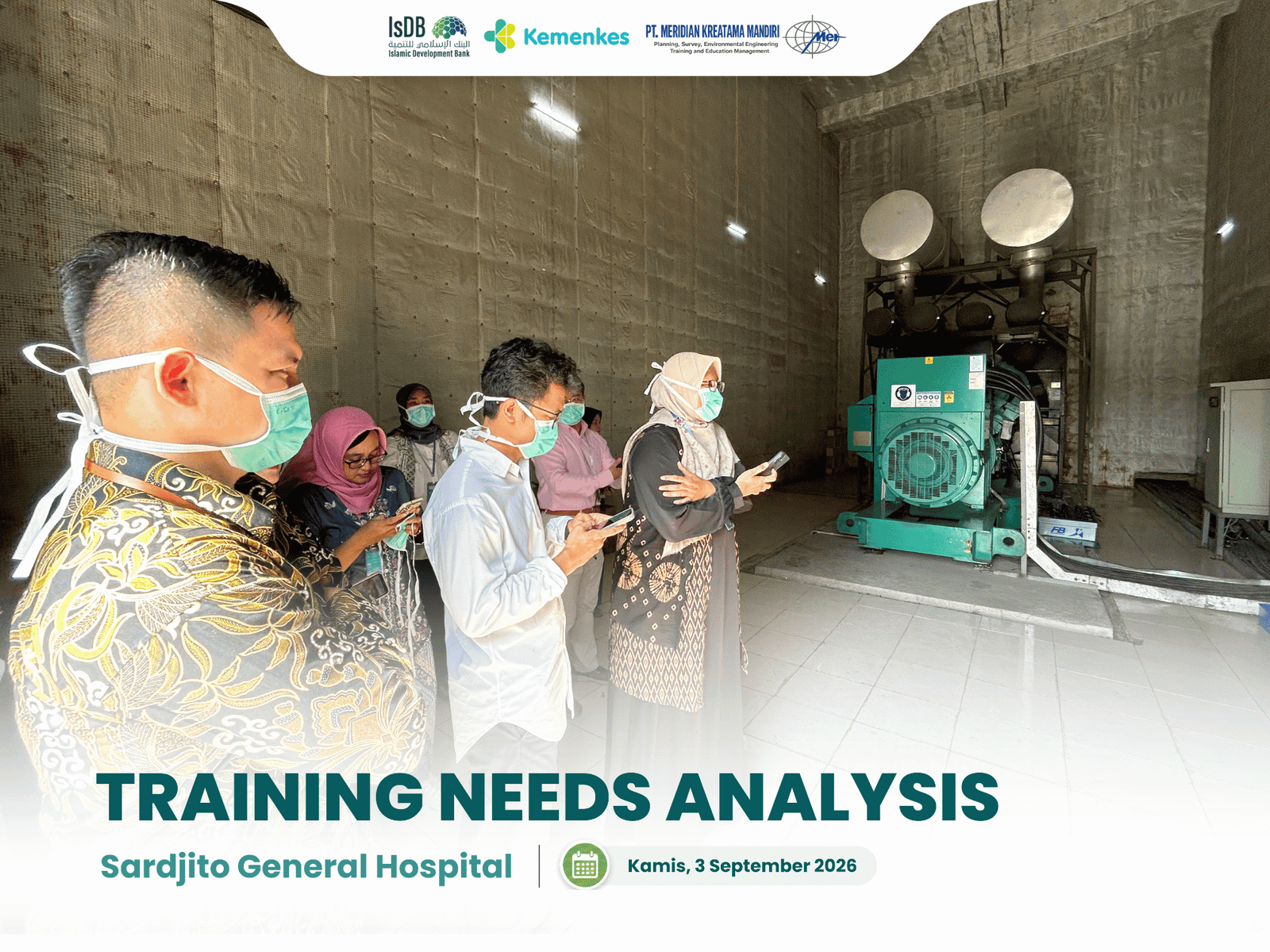
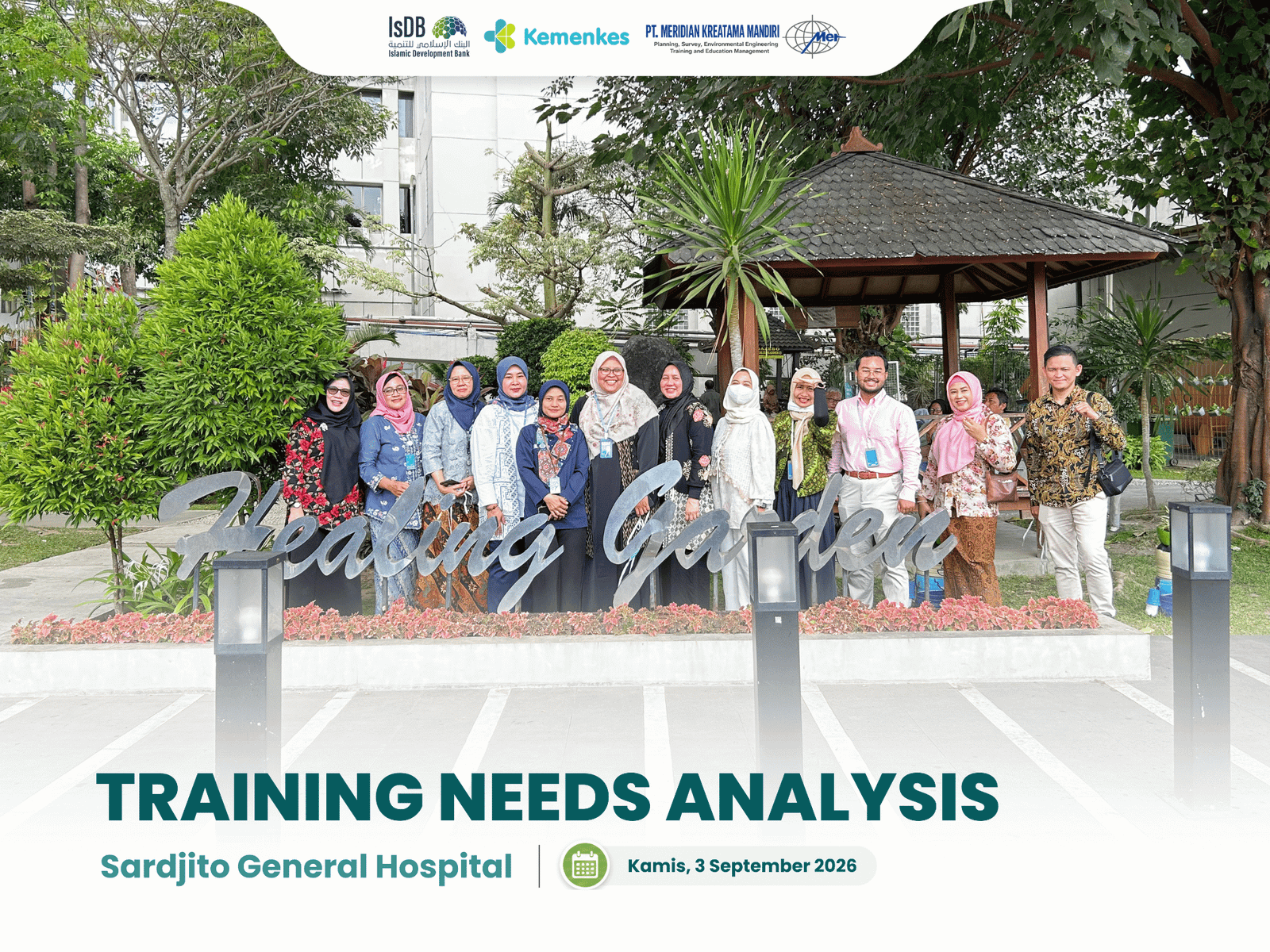
The Emergency Preparedness Consultant (EMPC) Project – IsDB IDN 1031 carried out a Training Needs Analysis (TNA) at Dr. Sardjito General Hospital, Yogyakarta, on Thursday, 3 September 2026, as part of its ongoing efforts to strengthen hospital preparedness for emergency and disaster situations.
The onsite activity served as a platform for the EMPC team and the hospital to exchange information and perspectives regarding the hospital’s existing preparedness and future training requirements. The session began with an introduction to the TNA process and an overview of the training activities planned under the EMPC Project, providing the hospital team with a clear understanding of the objectives and direction of the program.
The assessment then moved beyond the presentation session through a combination of interviews, discussions, and direct field observations. The EMPC team engaged with hospital representatives to explore existing procedures, workforce readiness, operational practices, and challenges that may influence the hospital’s ability to respond effectively during emergency situations.
The team also visited selected areas within the hospital to observe facilities and operational activities firsthand. During the field visit, the assessment team interacted with both healthcare and non-healthcare personnel, gaining insights into their respective roles, responsibilities, and experiences in supporting hospital operations and emergency preparedness.
By combining stakeholder discussions with observations of the hospital’s working environment, the TNA provided a broader perspective on the hospital’s current capabilities and development priorities. The direct engagement with personnel from different areas also helped capture practical insights that can support a more contextual assessment of the hospital’s training needs.
The information gathered throughout the visit will contribute to the next phase of the EMPC Project, particularly in shaping training interventions that are relevant to the hospital’s needs and operational context. The assessment is expected to support continued efforts to strengthen the preparedness, coordination, and emergency response capabilities of Dr. Sardjito General Hospital and its workforce.
3 September 2026












EMPC Progress Report Meeting
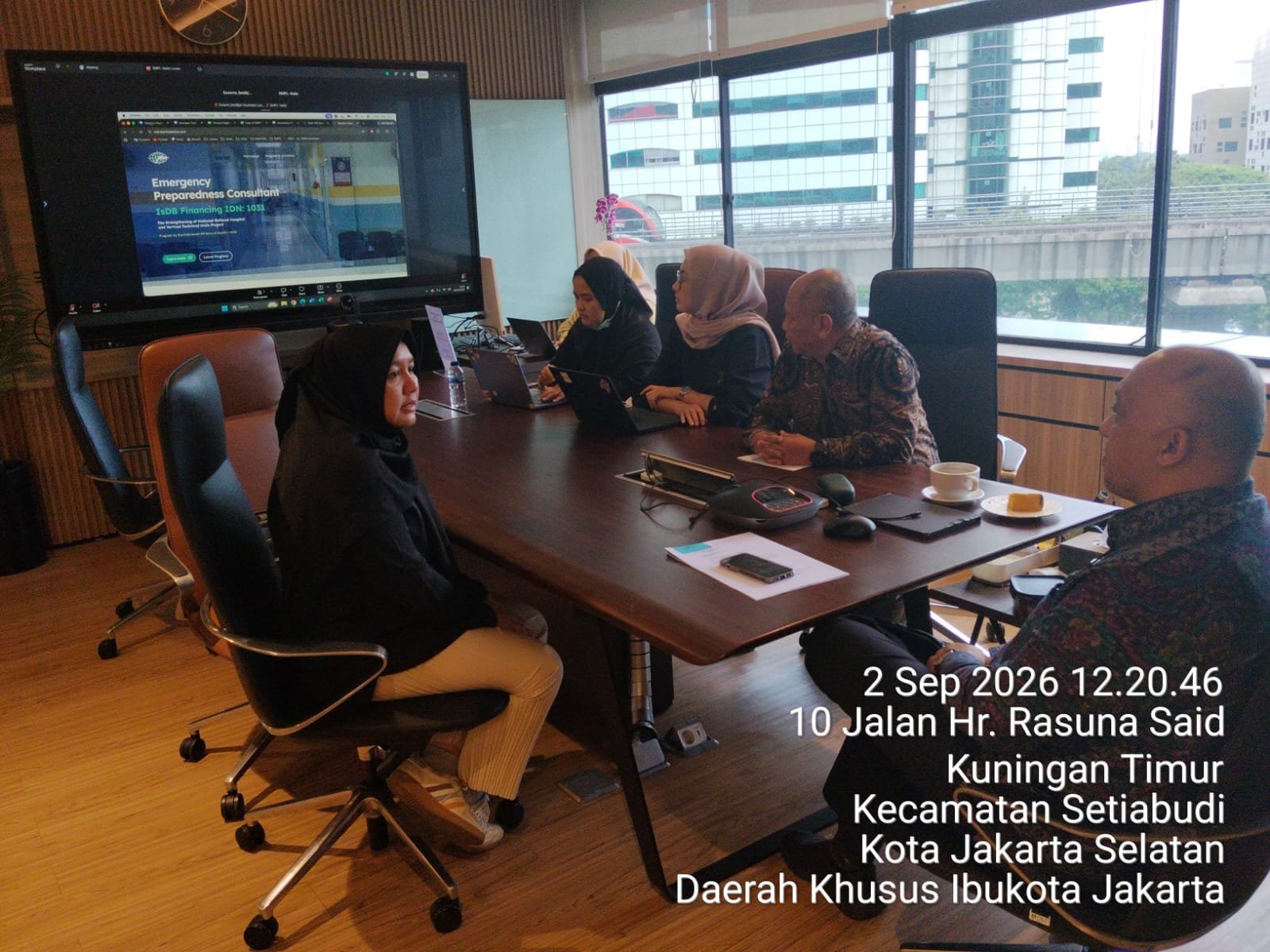
On 2 September 2026, an EMPC Progress Report Meeting was held with Dr. Sunarto, M.Kes., Secretary of the Directorate General of Advanced Health Services at the Ministry of Health of the Republic of Indonesia.
The meeting focused on presenting and reviewing the progress of the EMPC program, including updates on ongoing activities, implementation progress, and key developments. The discussion also provided an opportunity to receive input and direction regarding the implementation of the program and to ensure that the activities remain aligned with the project objectives and planned targets.
The meeting concluded with discussions on follow-up actions and coordination required to support the continued implementation of the EMPC program.
2 September 2026


TRAINING NEEDS ANALYSIS
Hasan Sadikin General Hospital
Hasan Sadikin General Hospital, Bandung
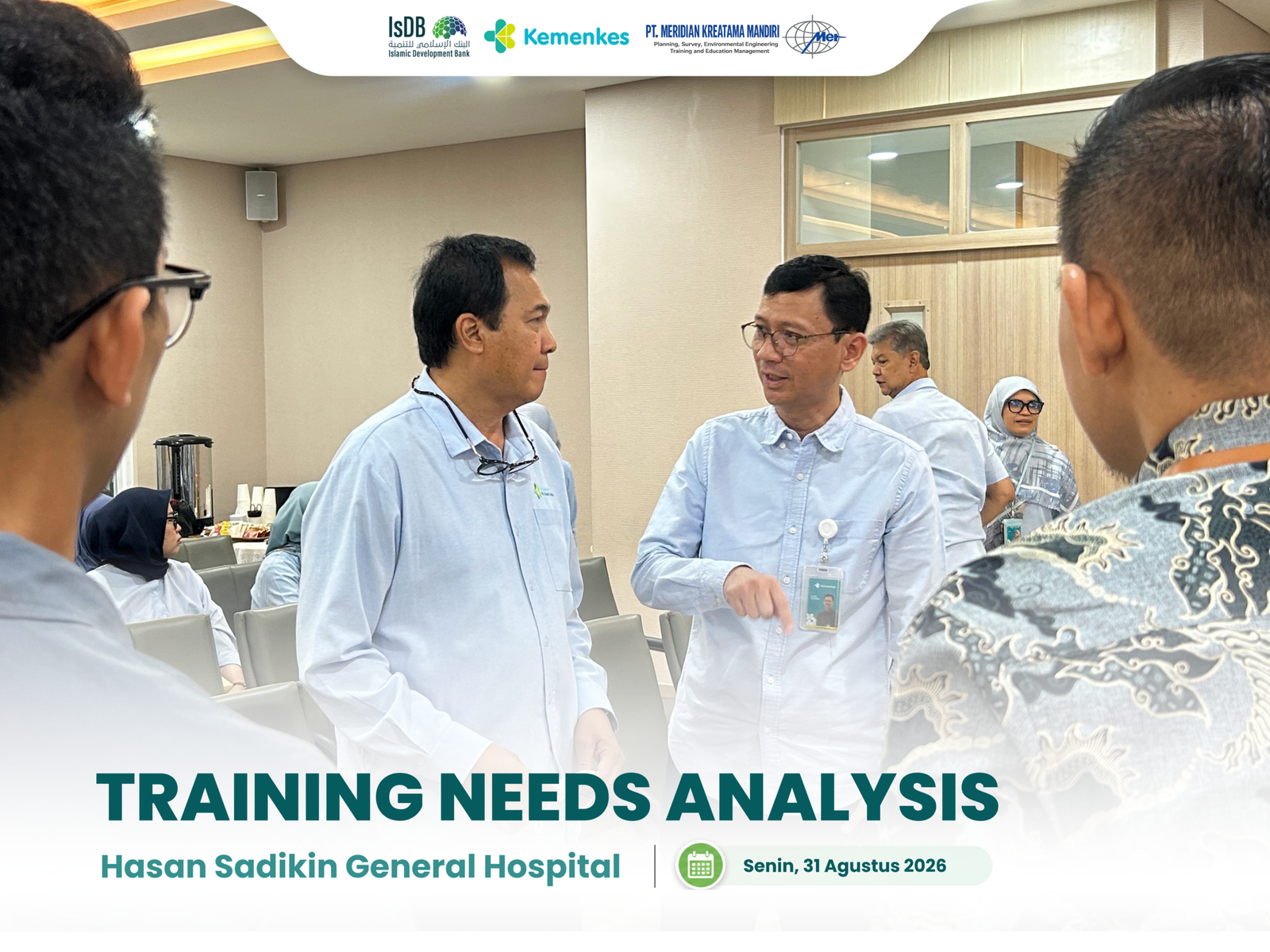
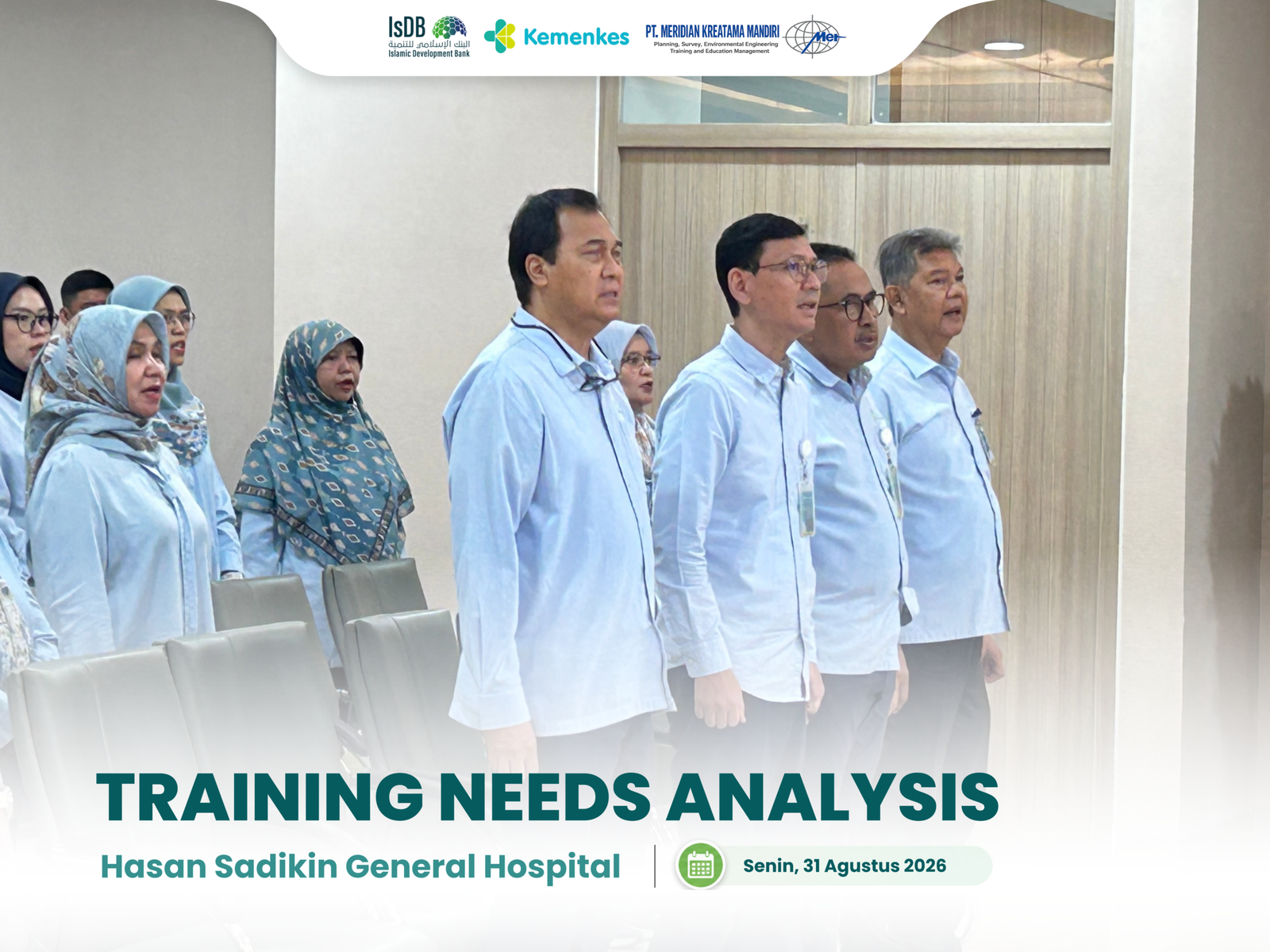
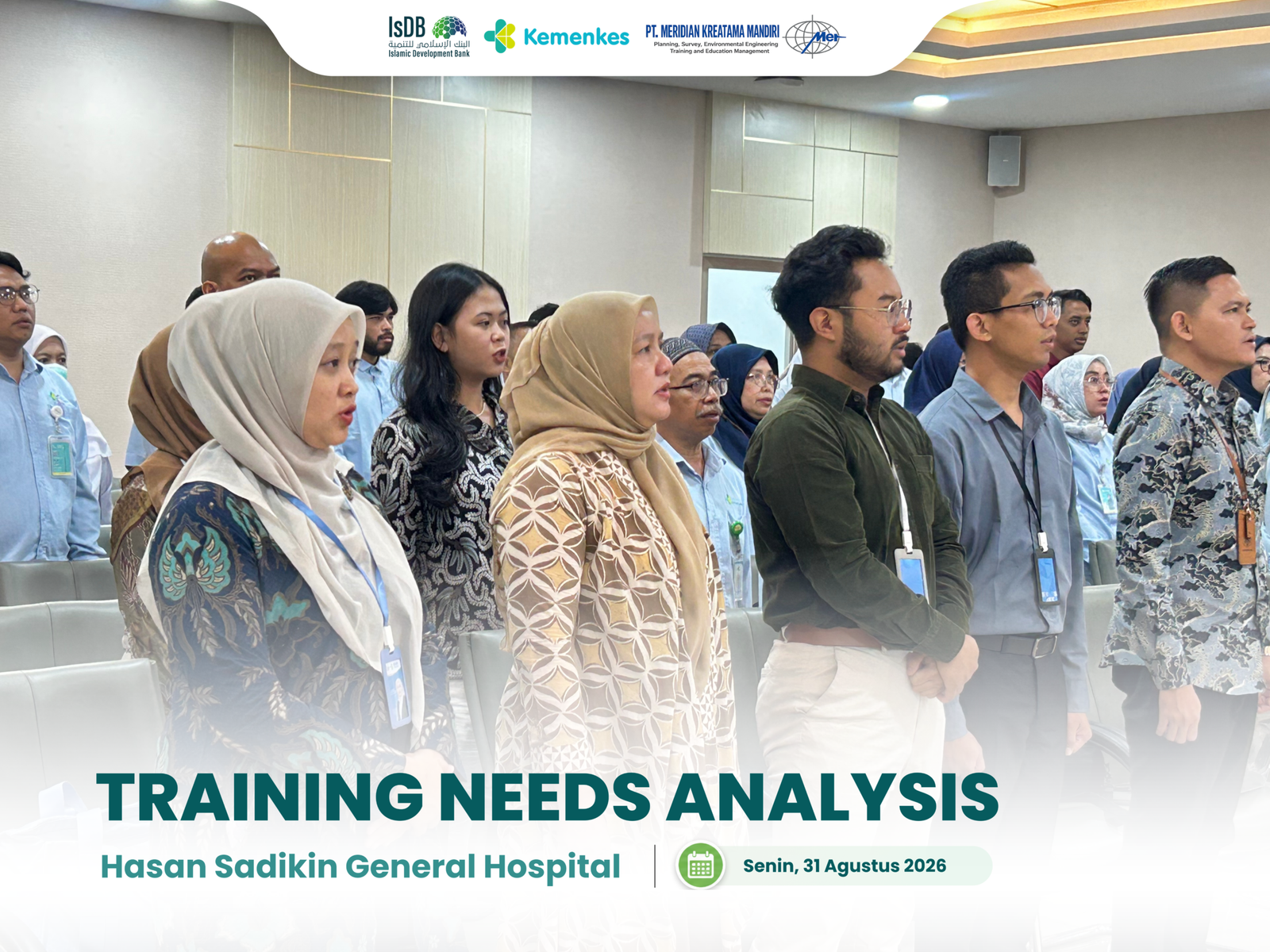
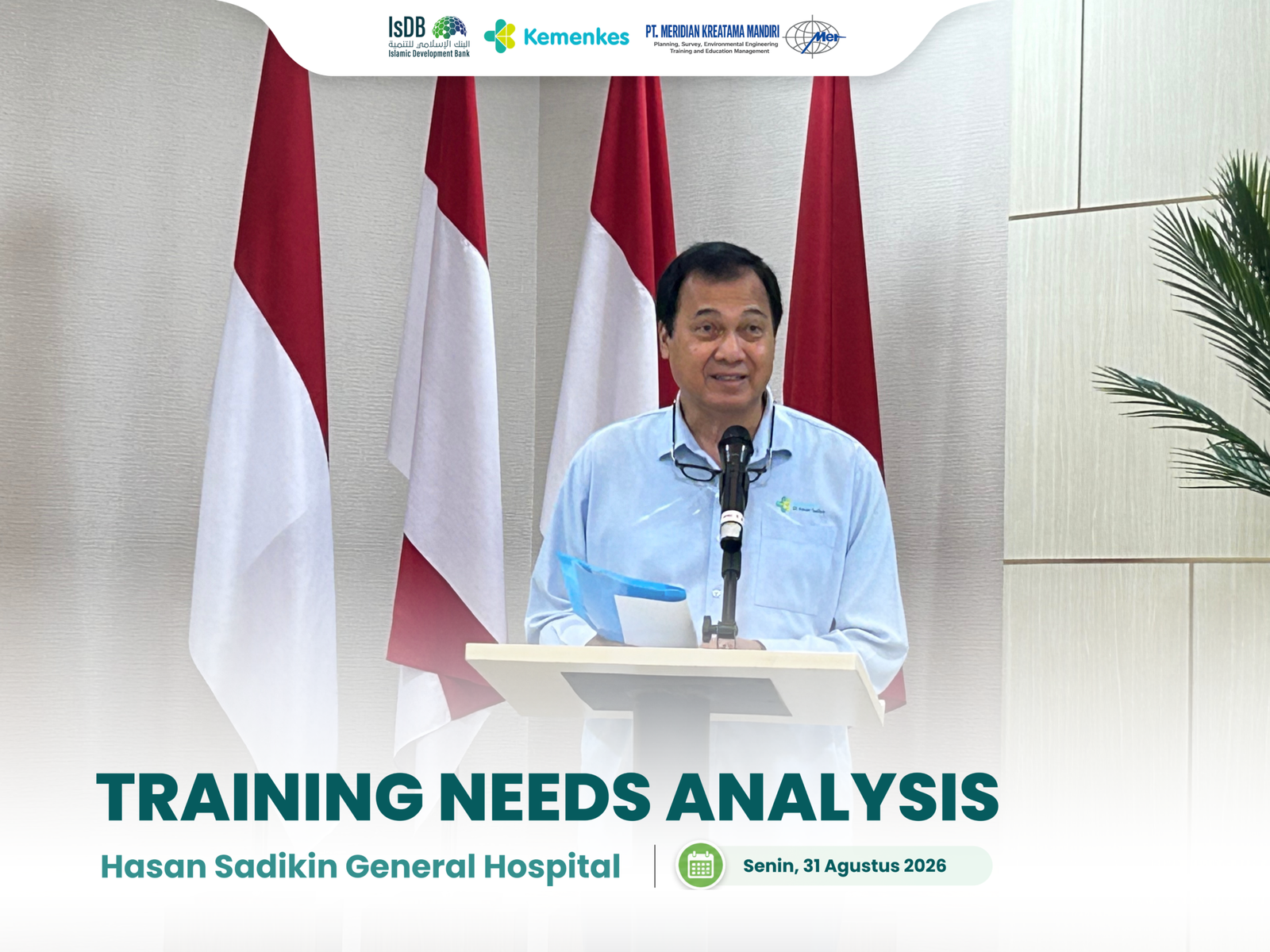
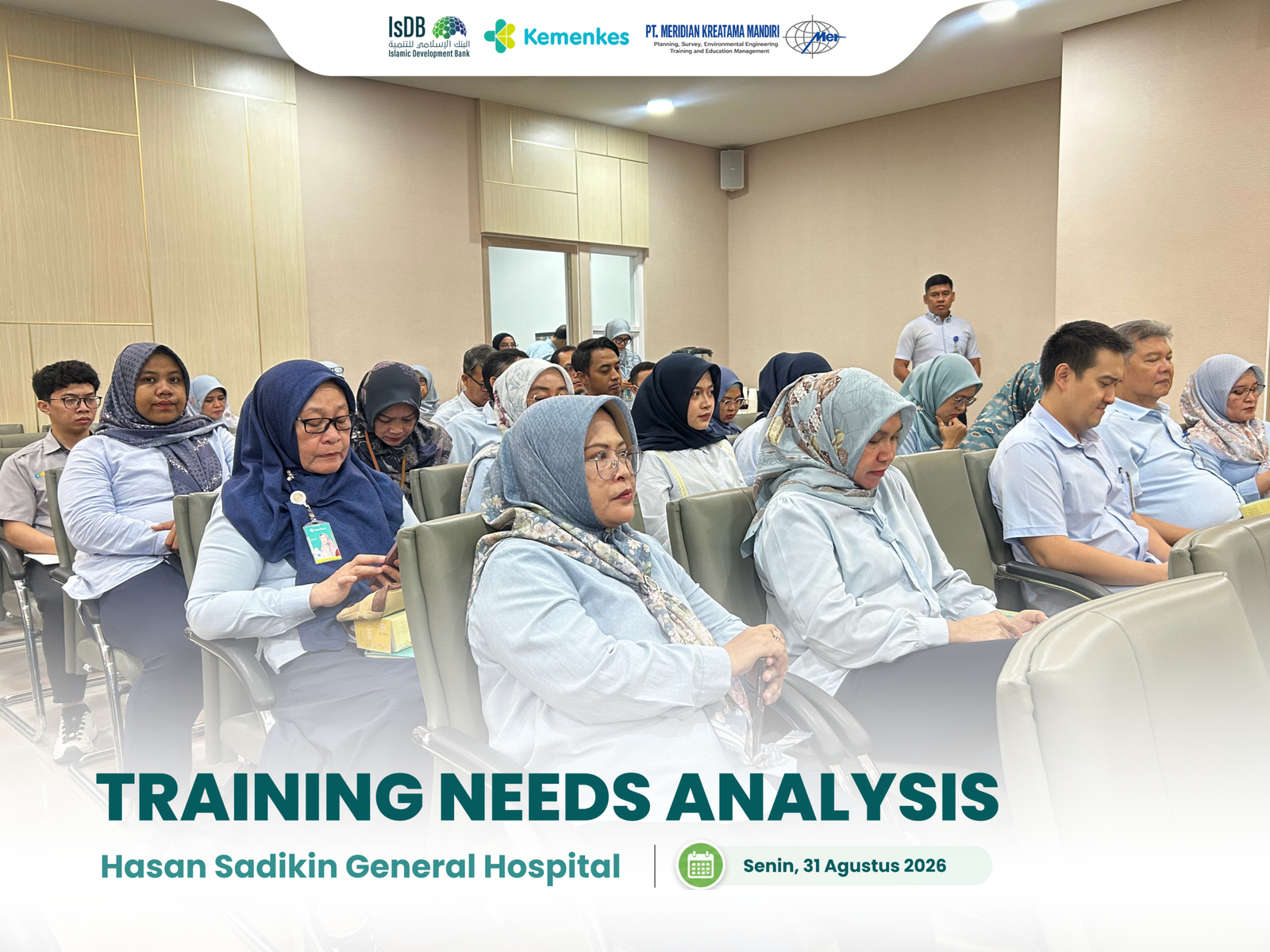
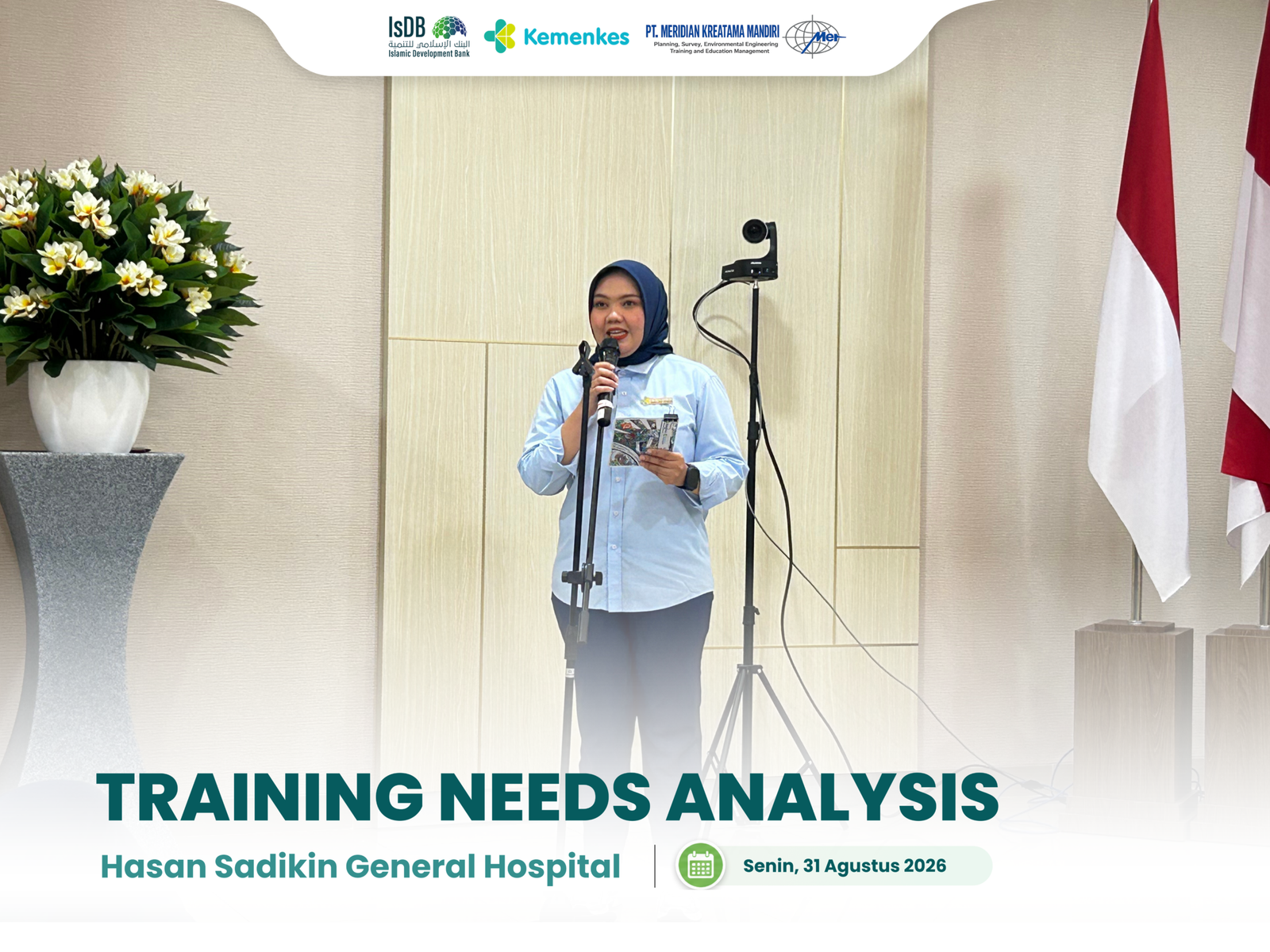
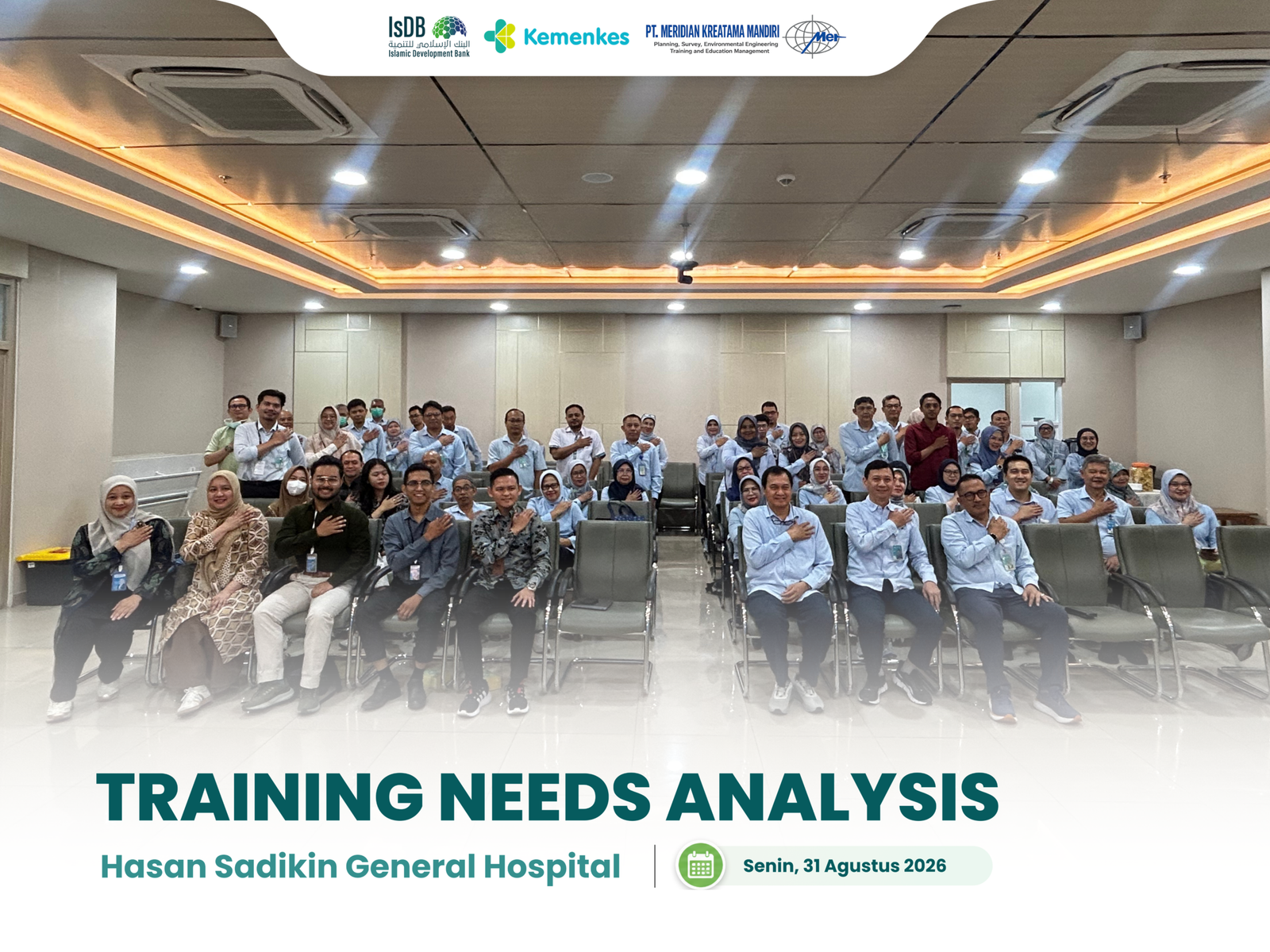
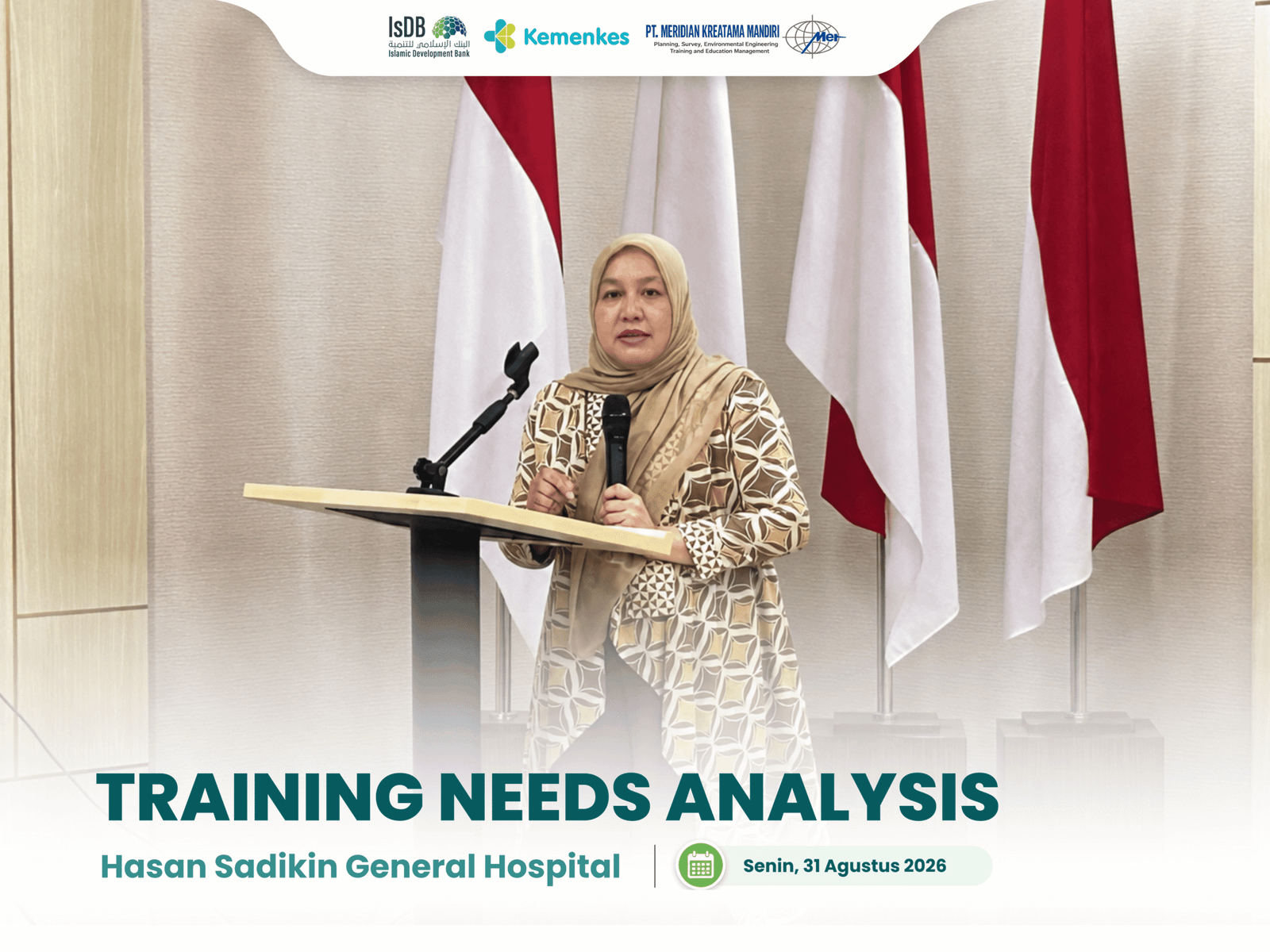
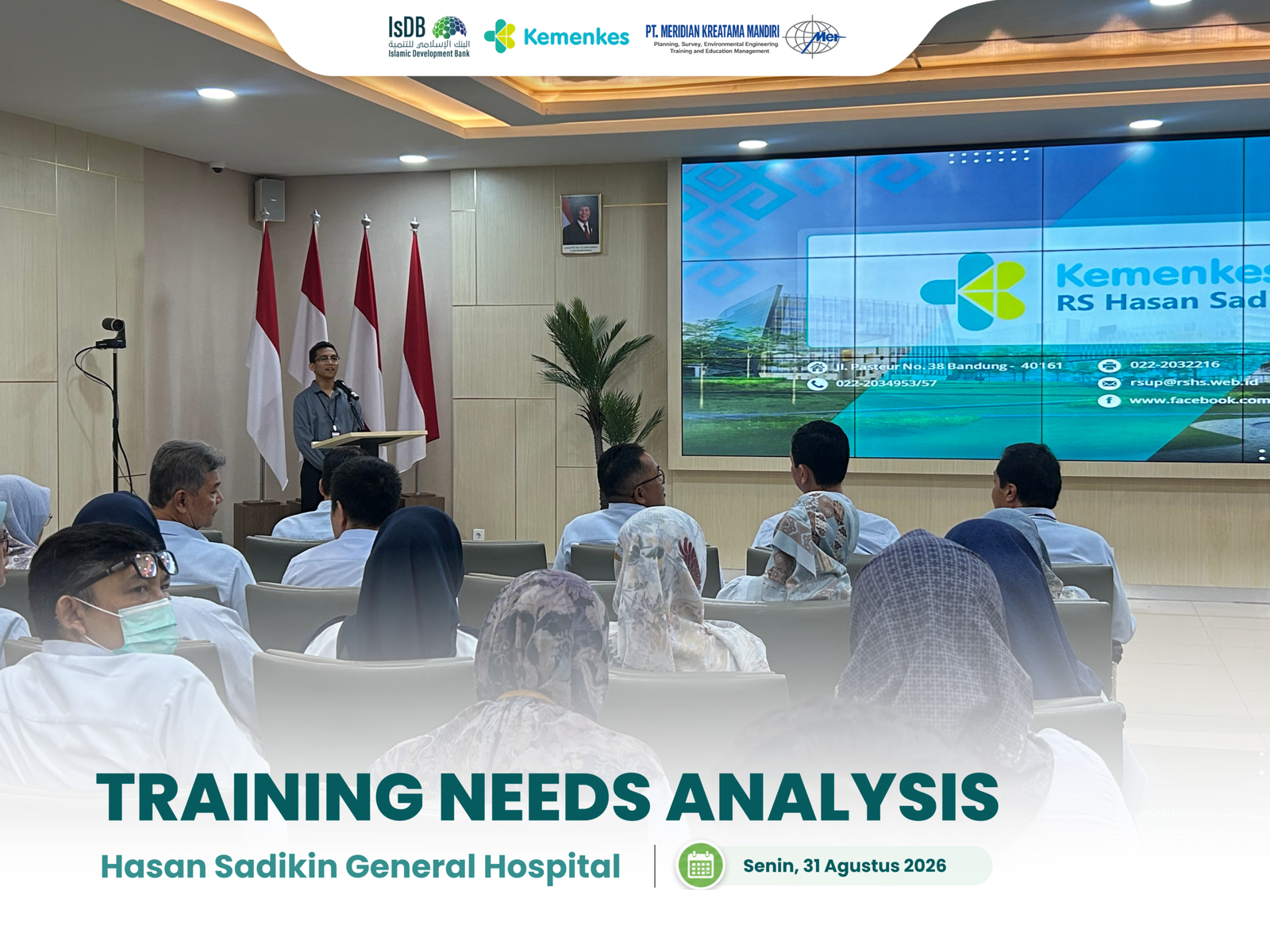
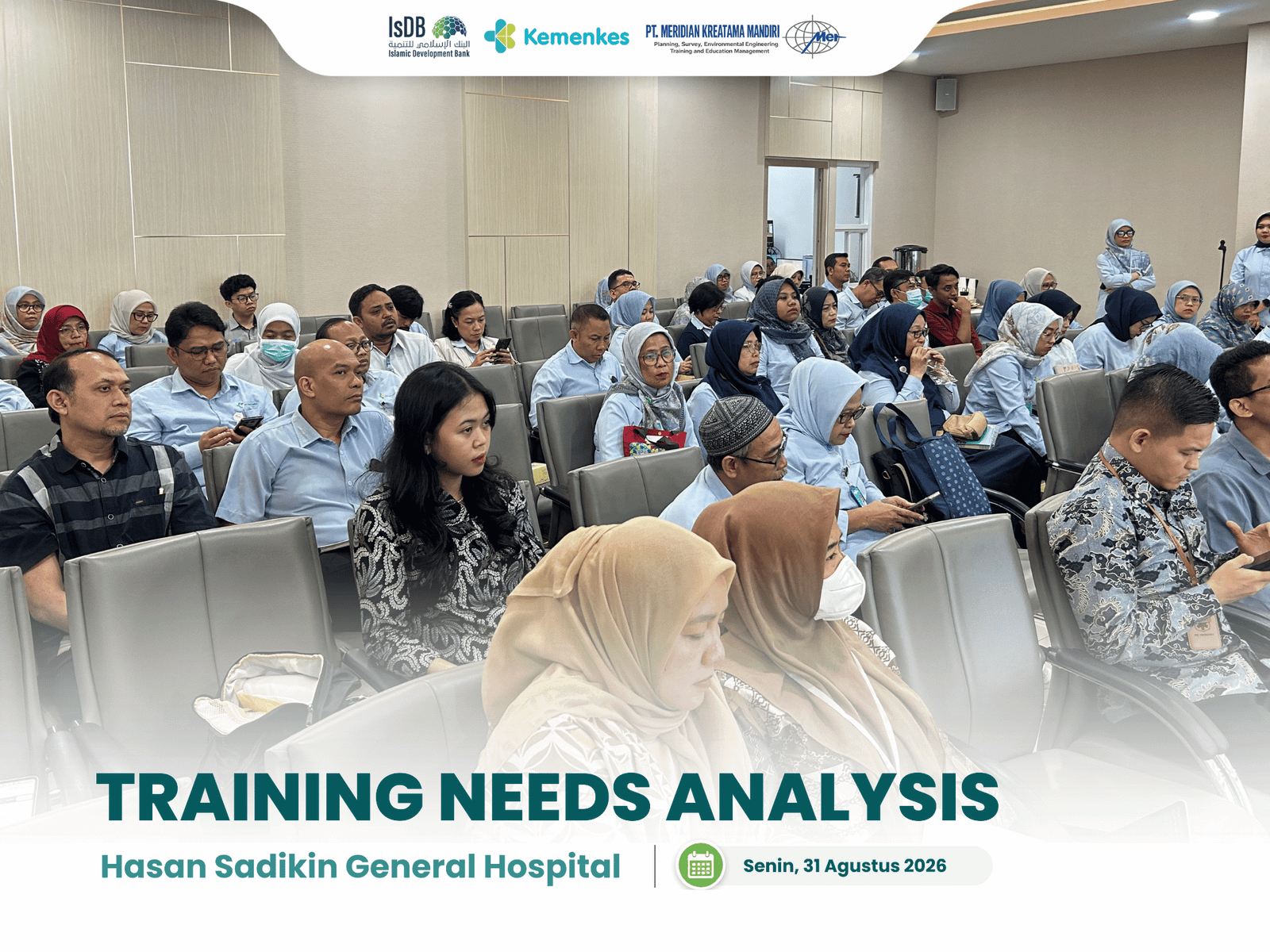
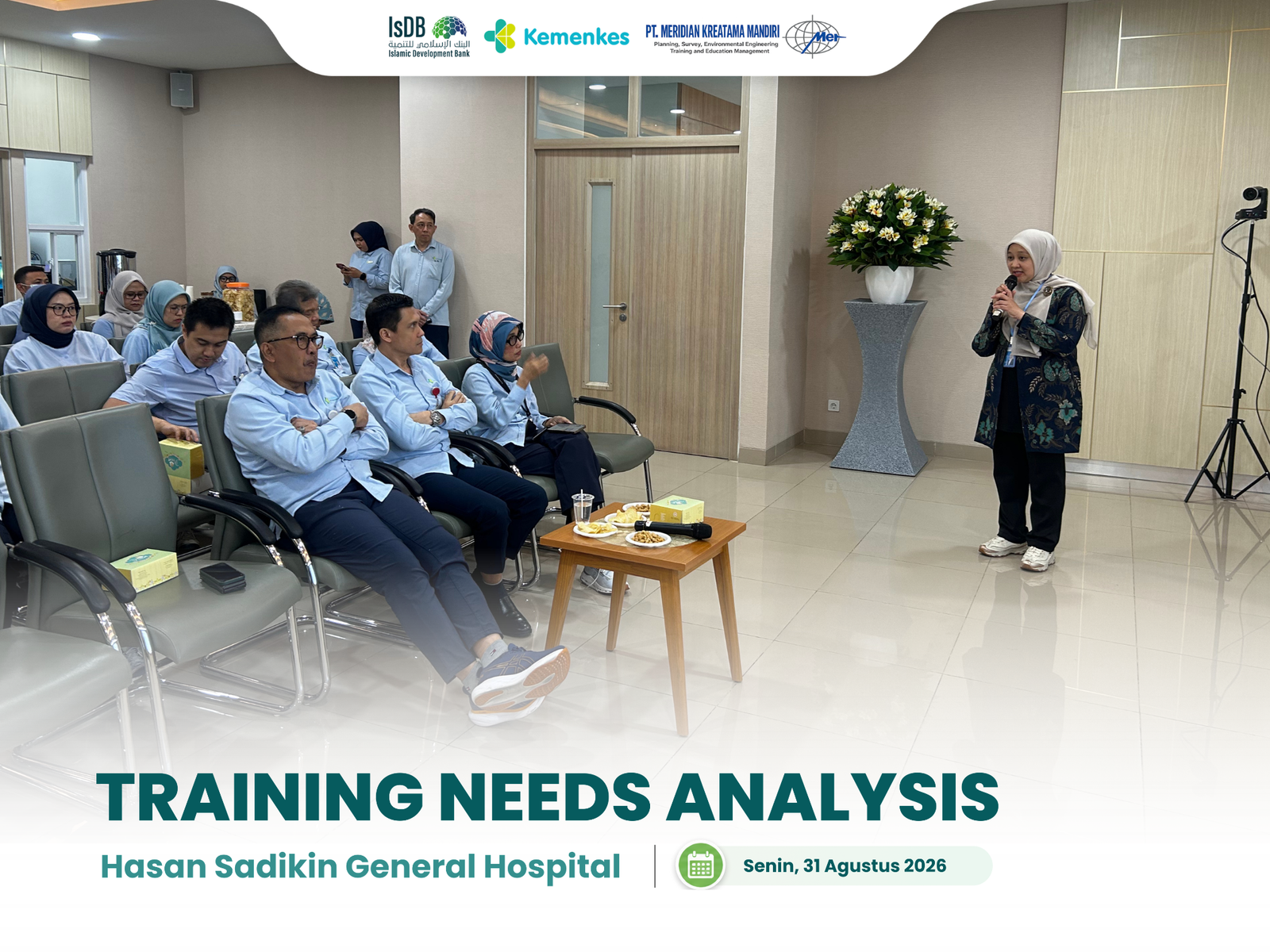
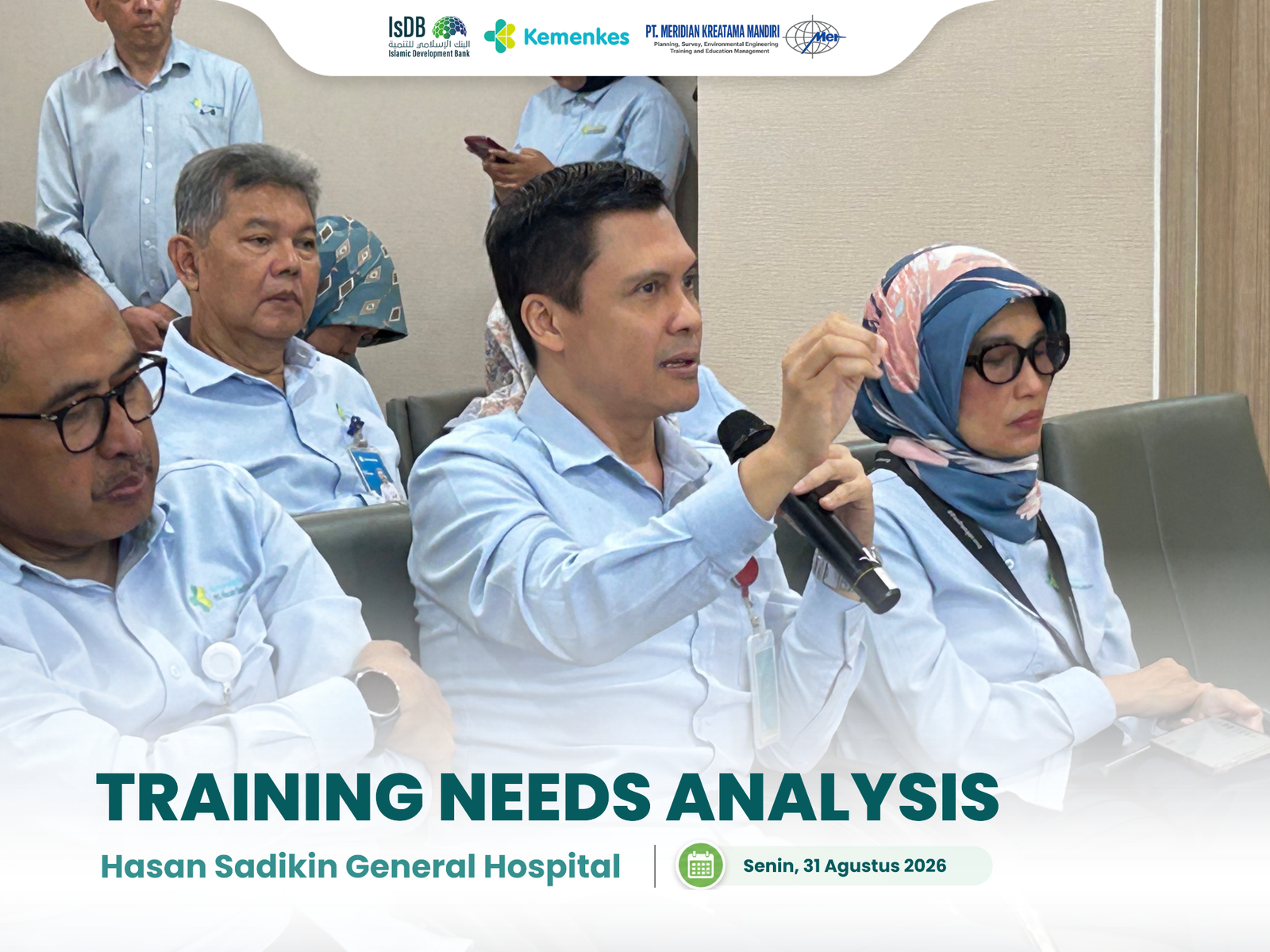
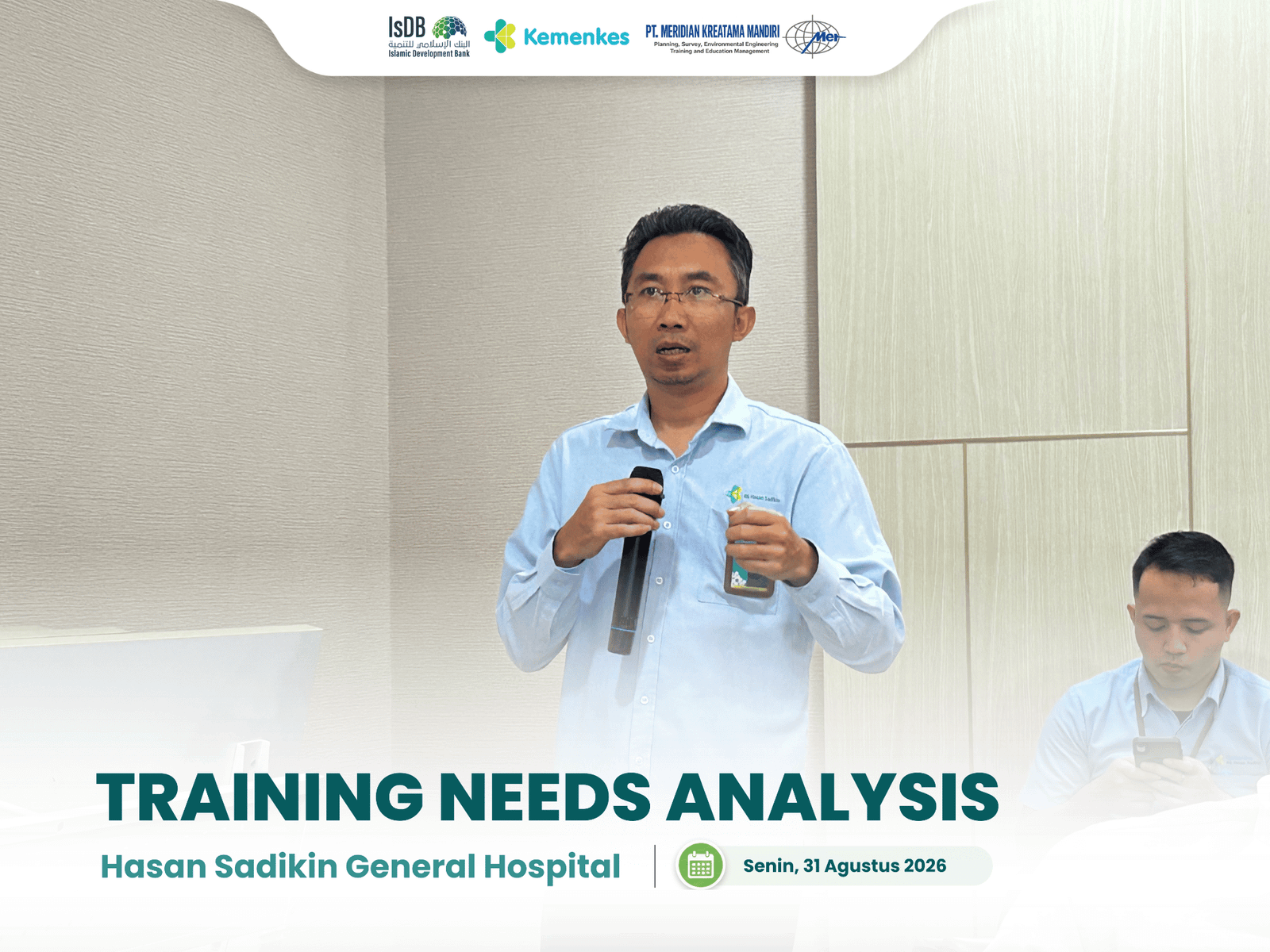
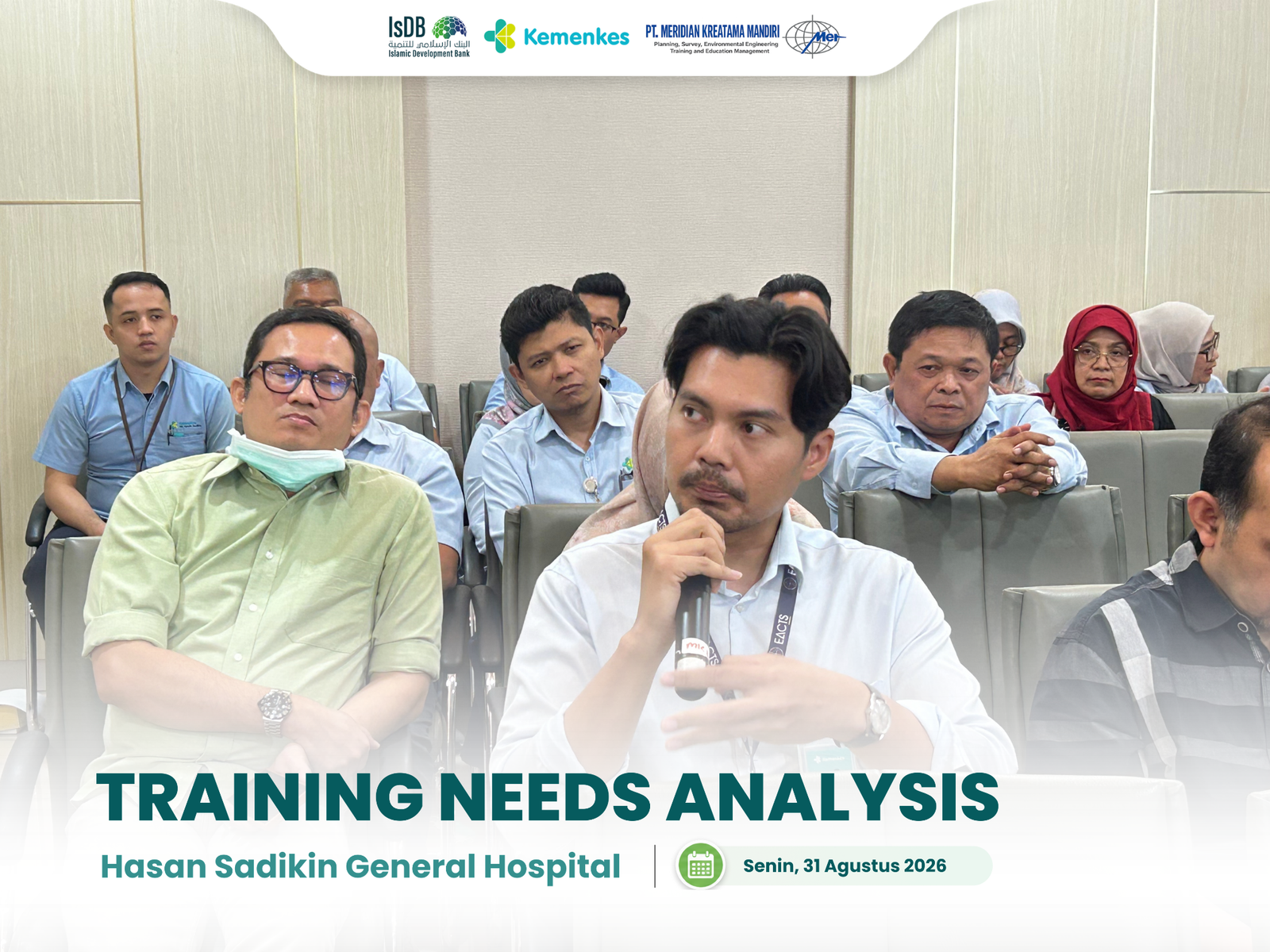
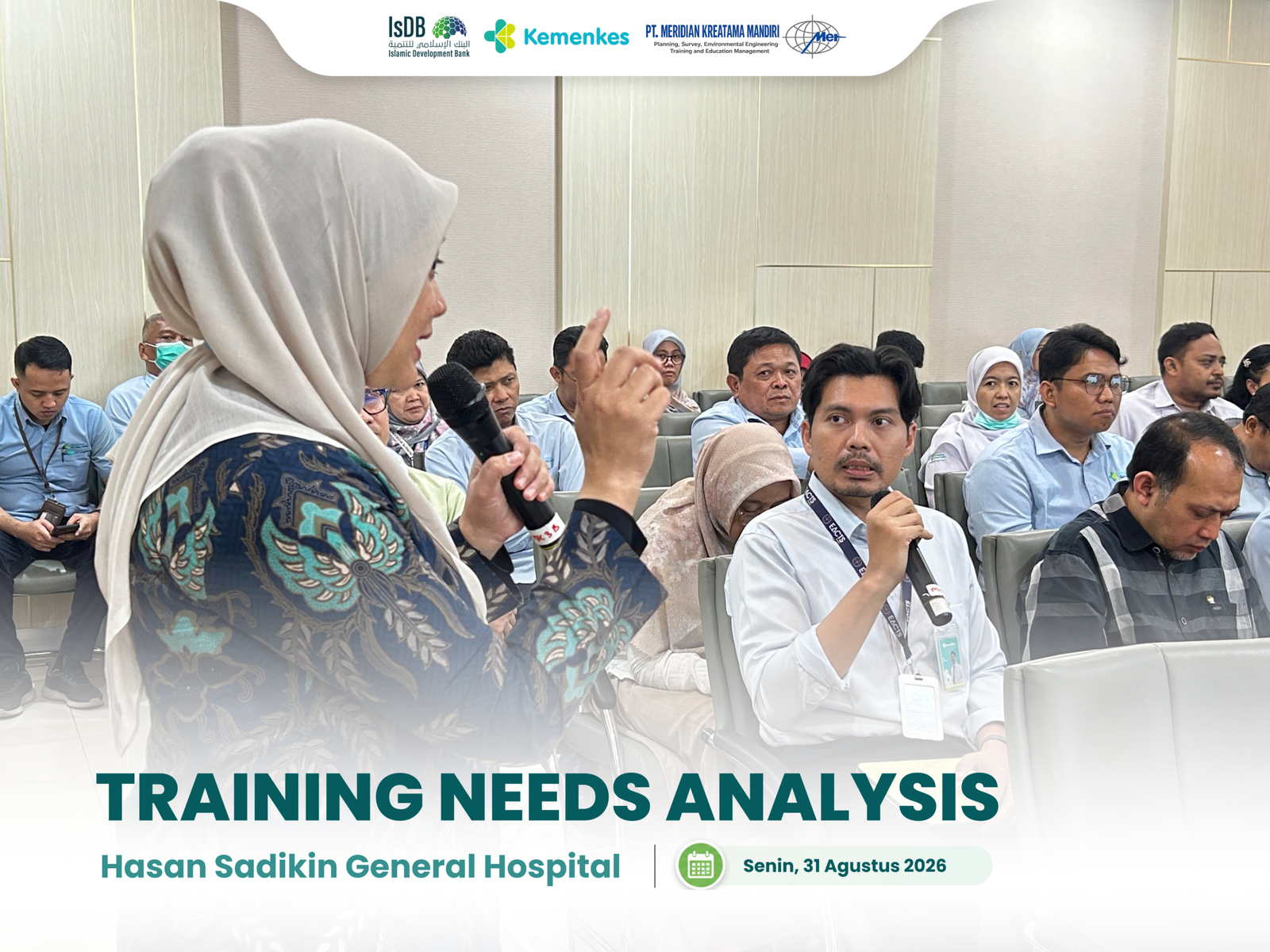
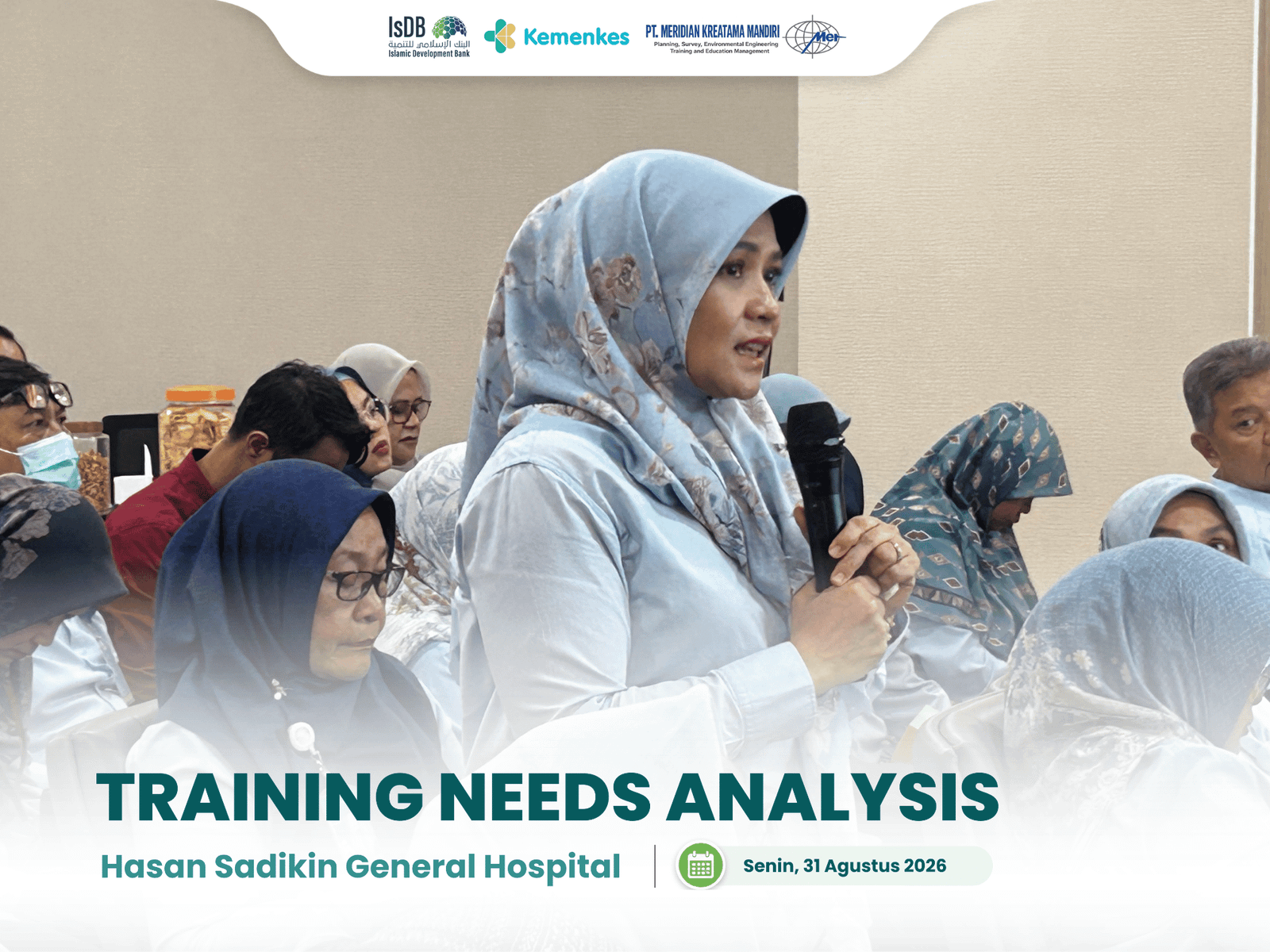
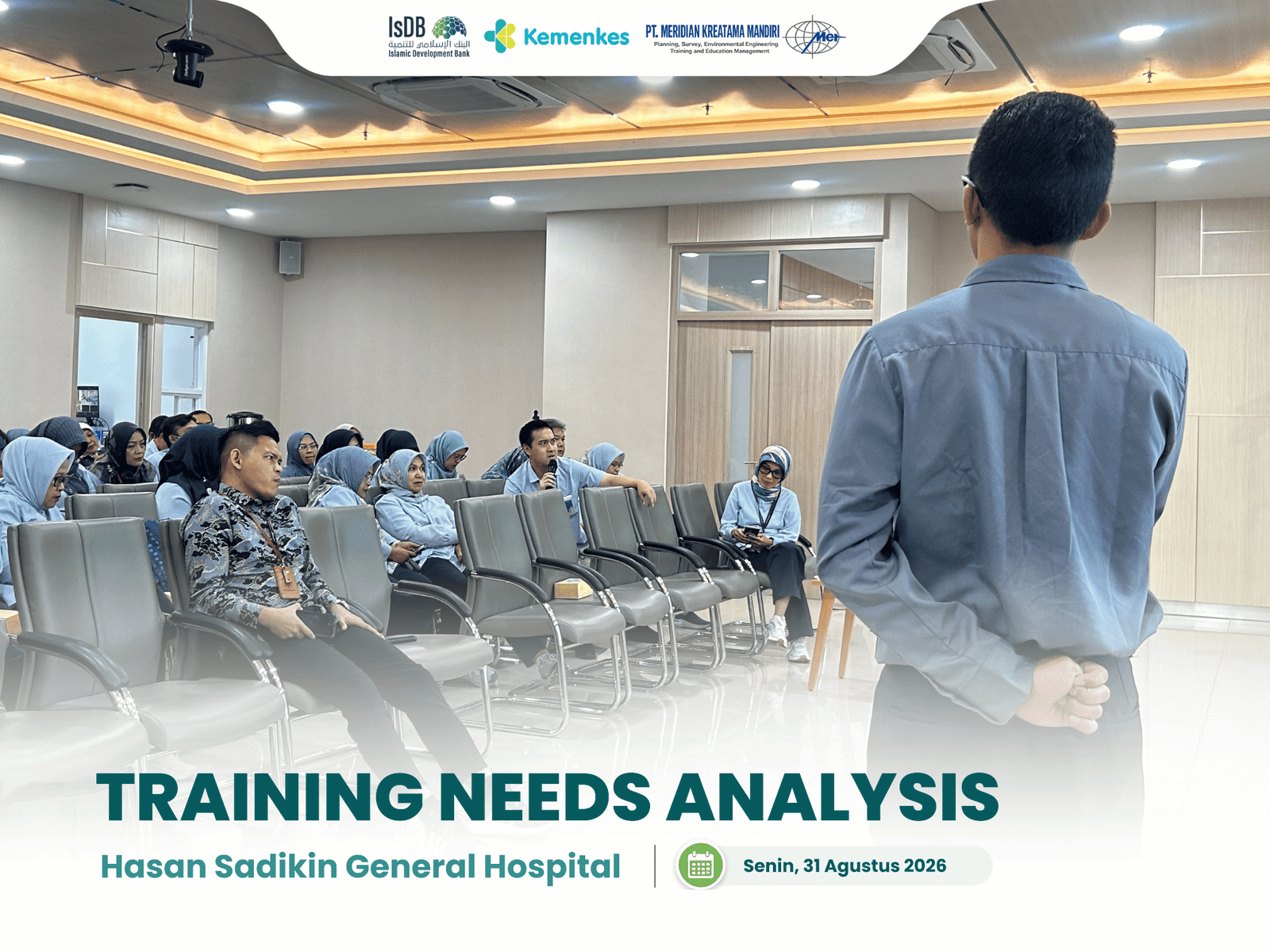
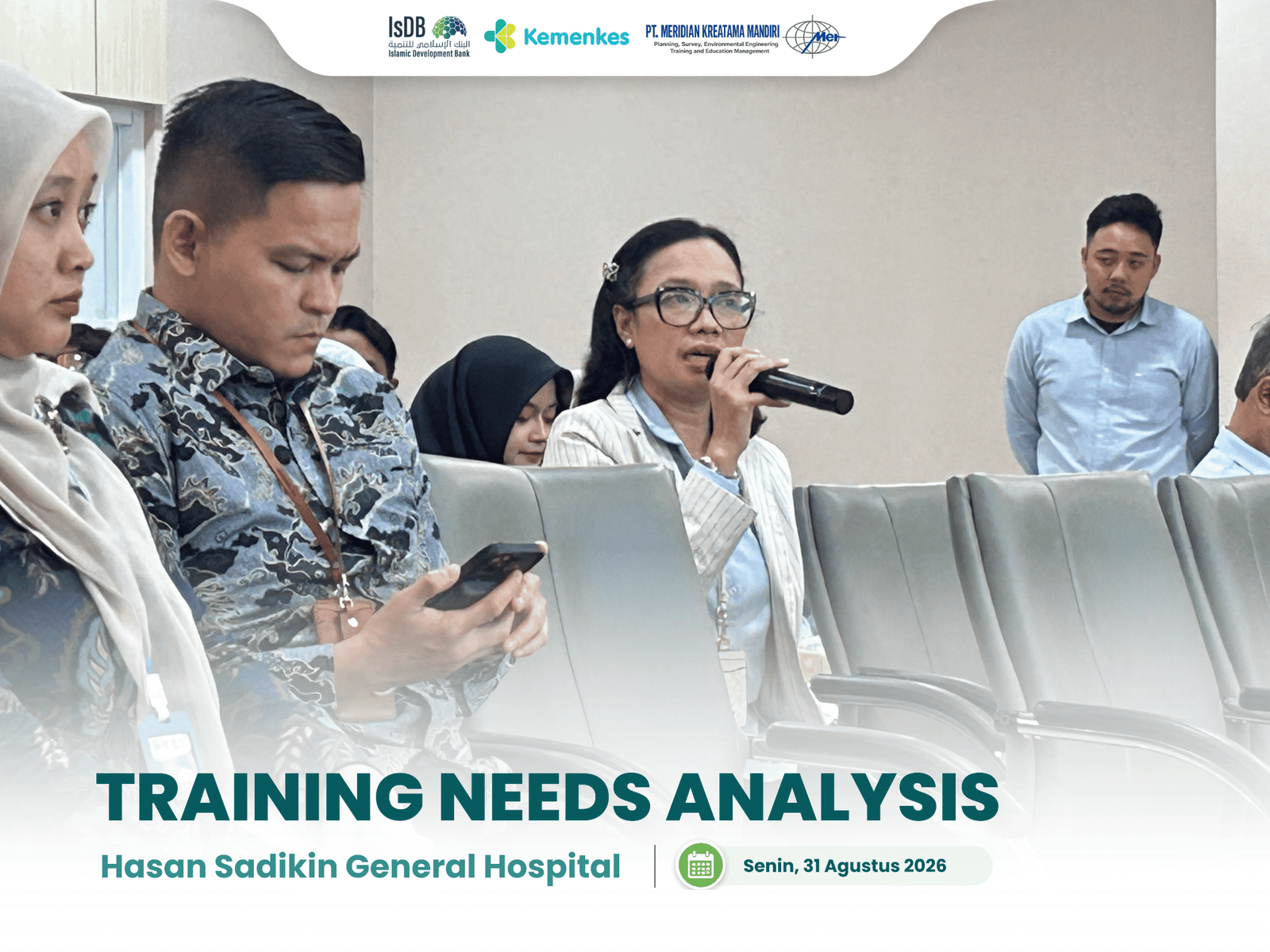
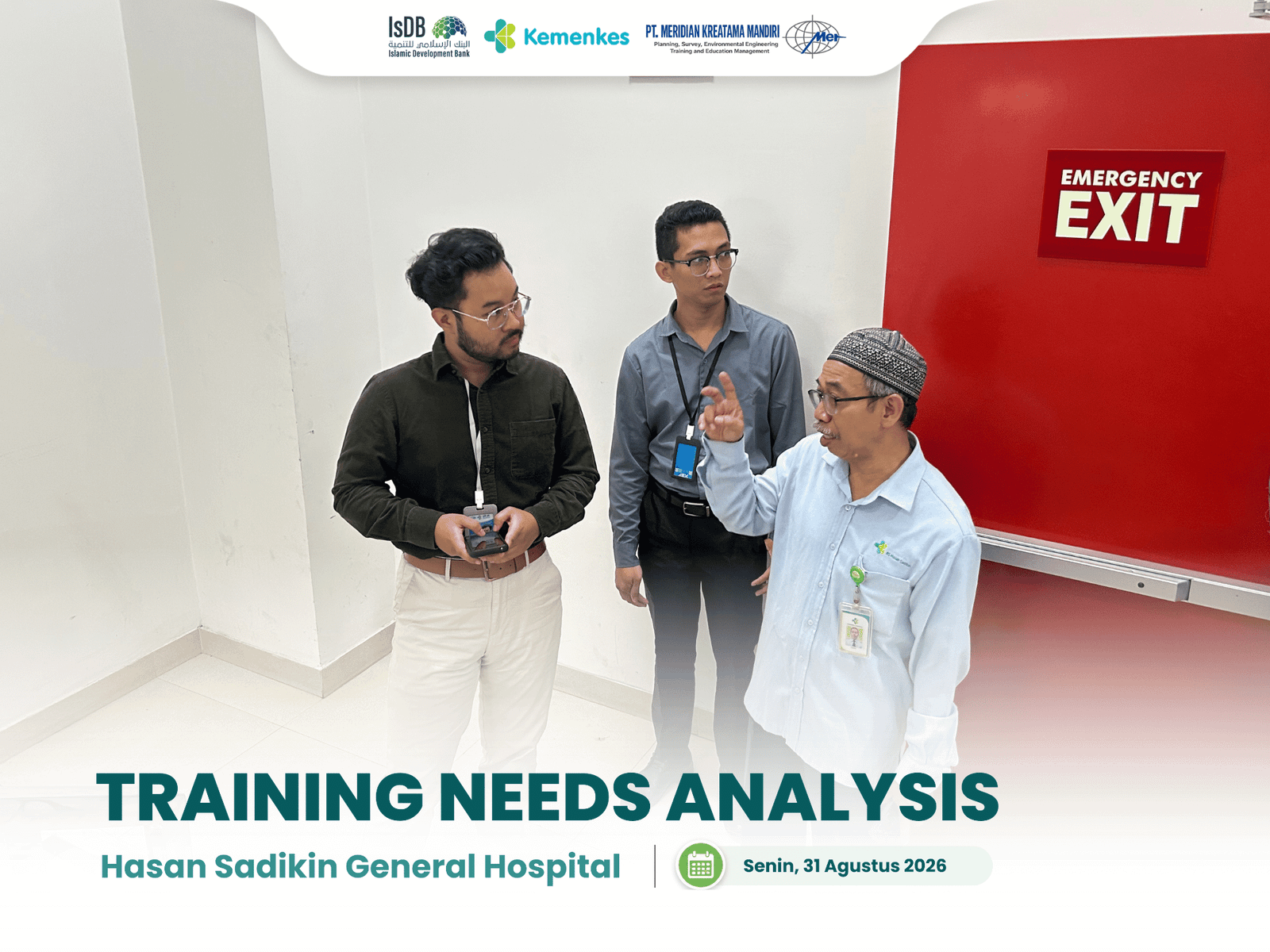
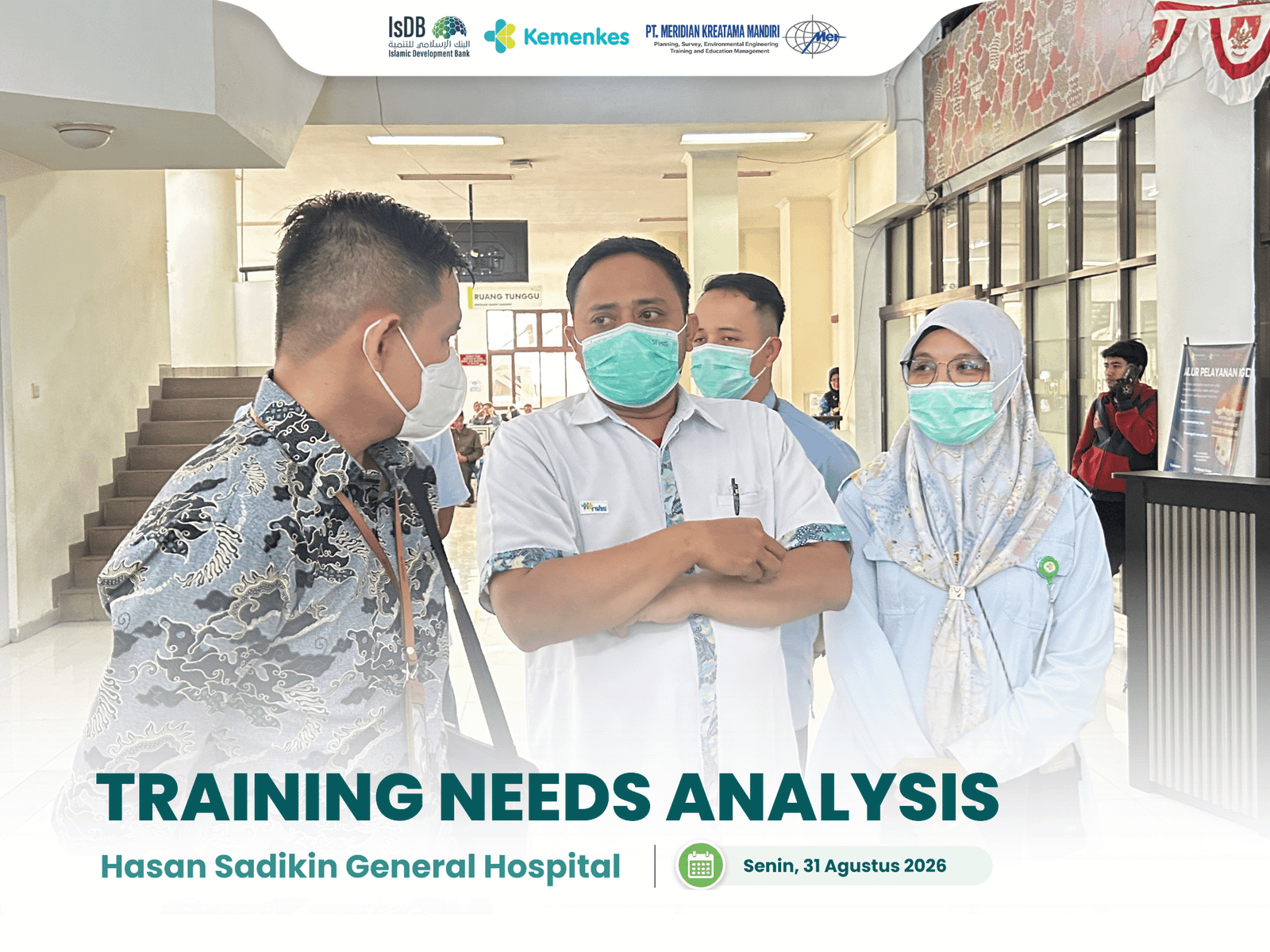
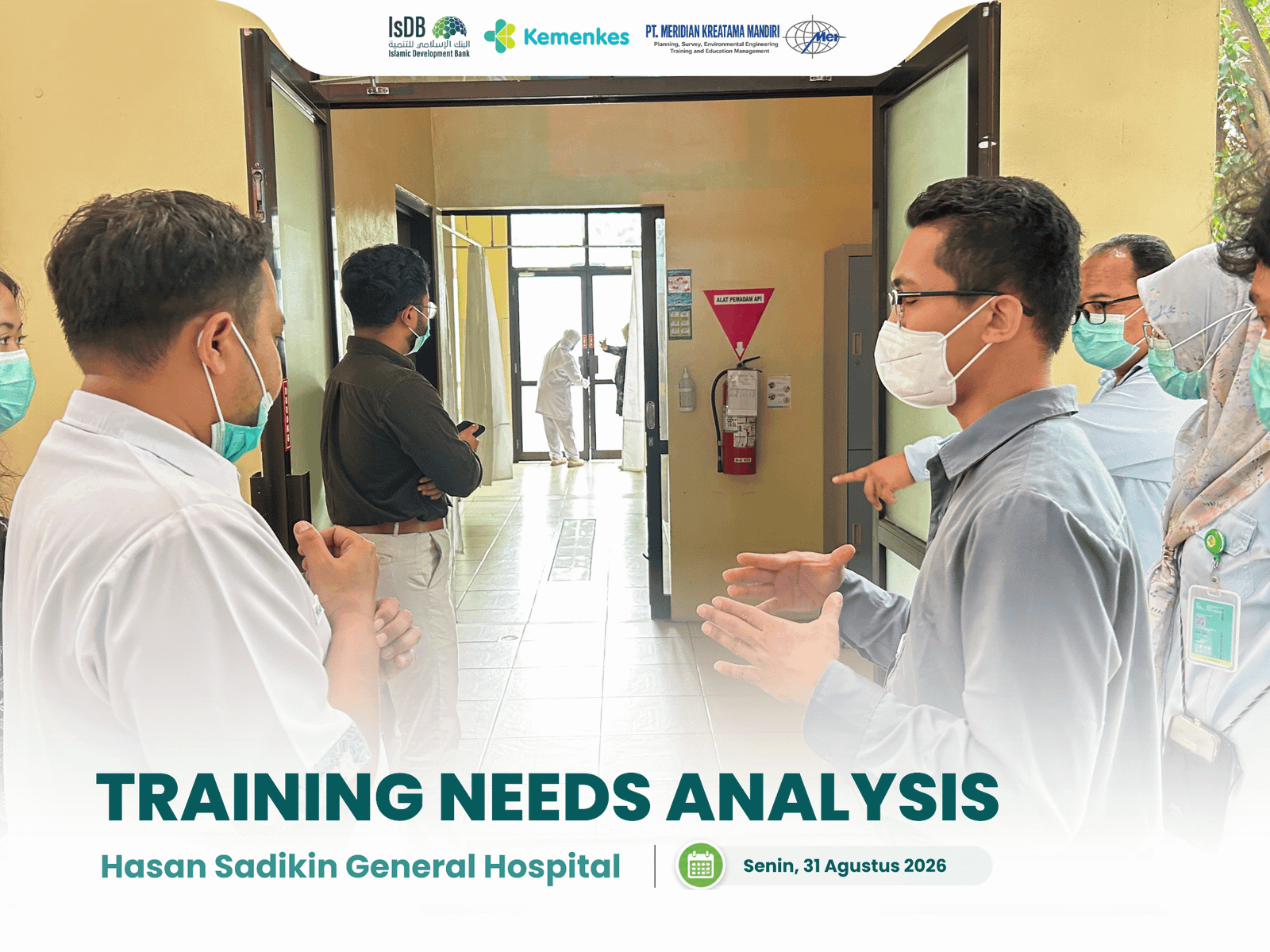
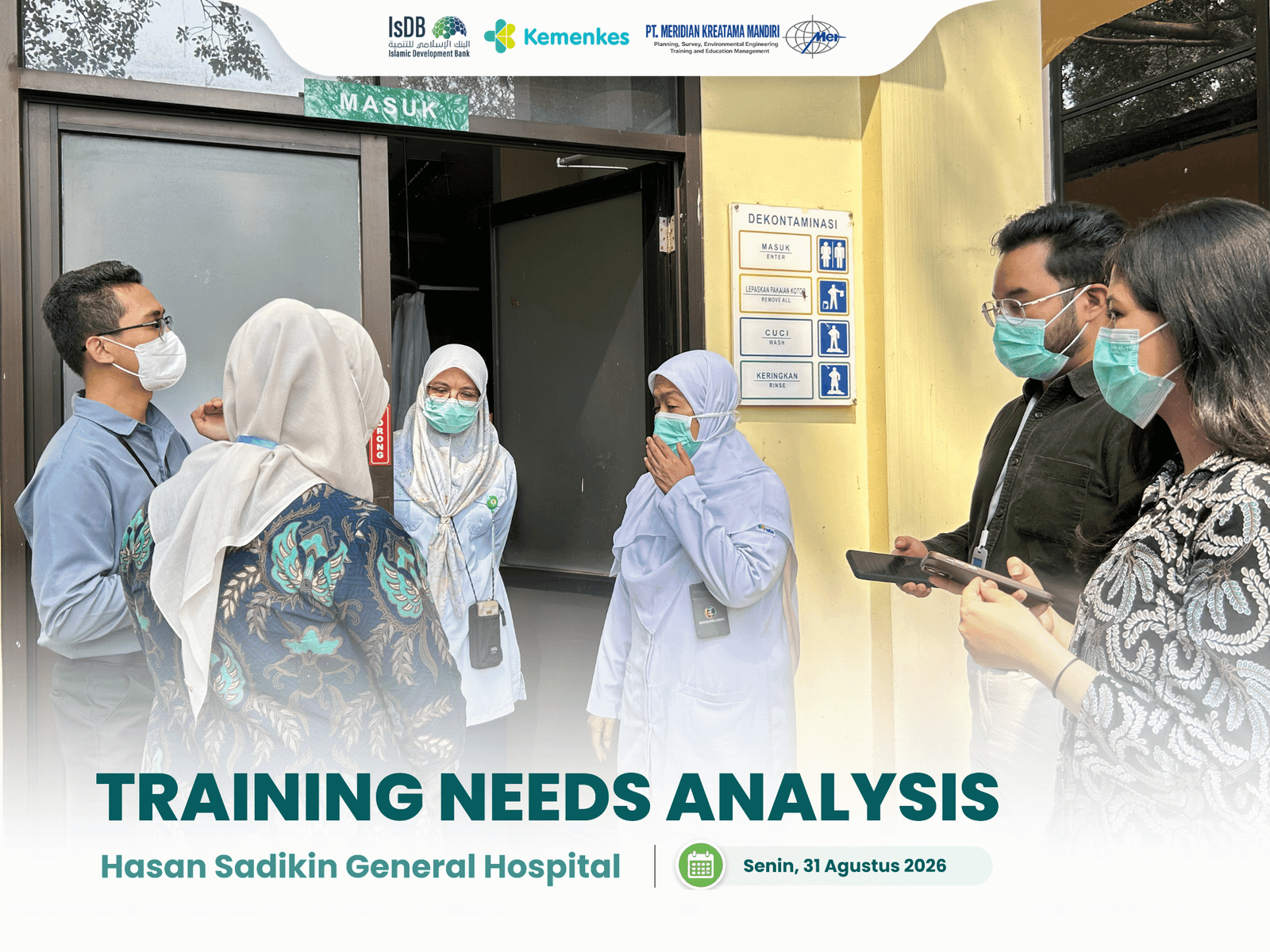
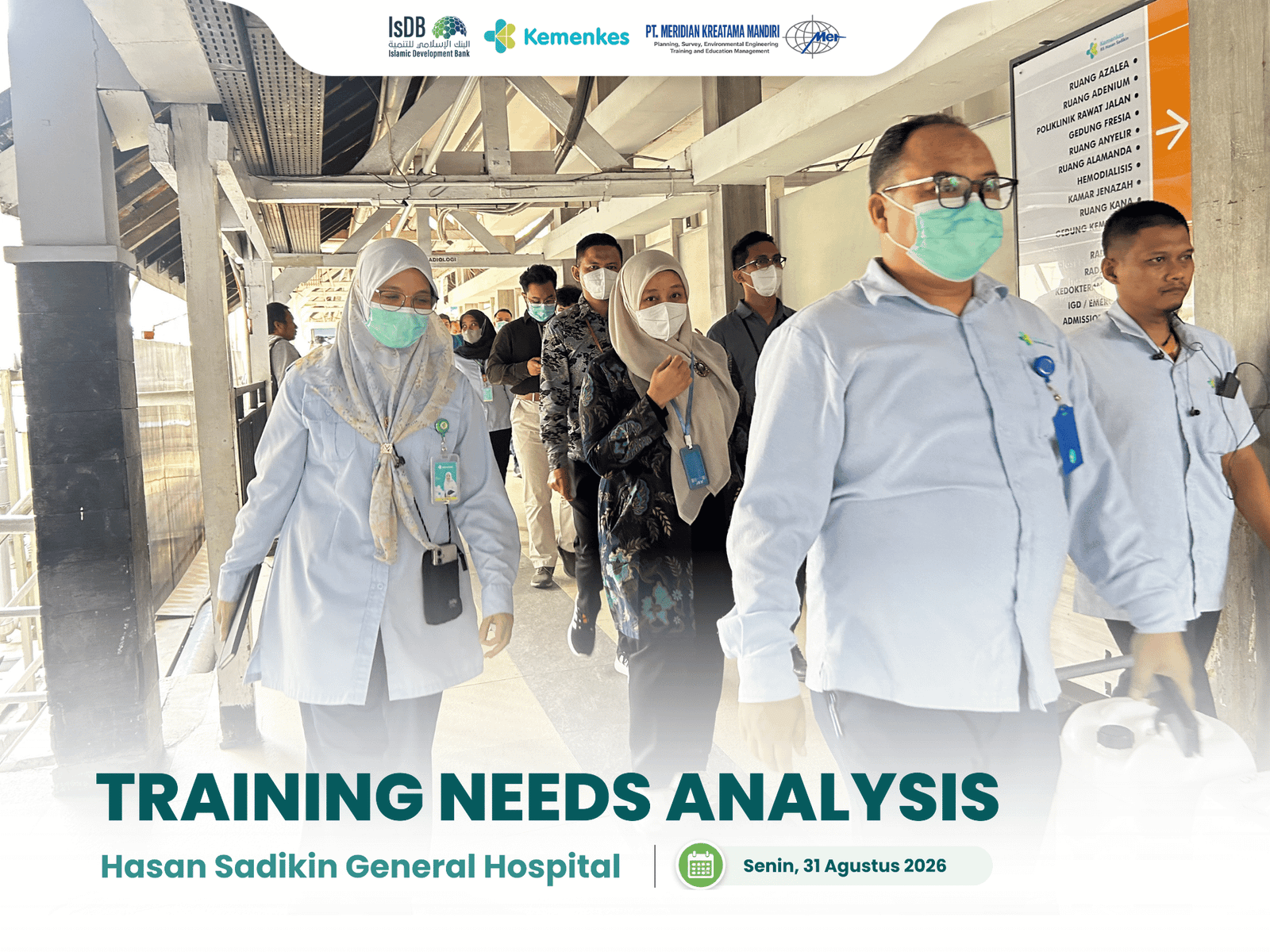
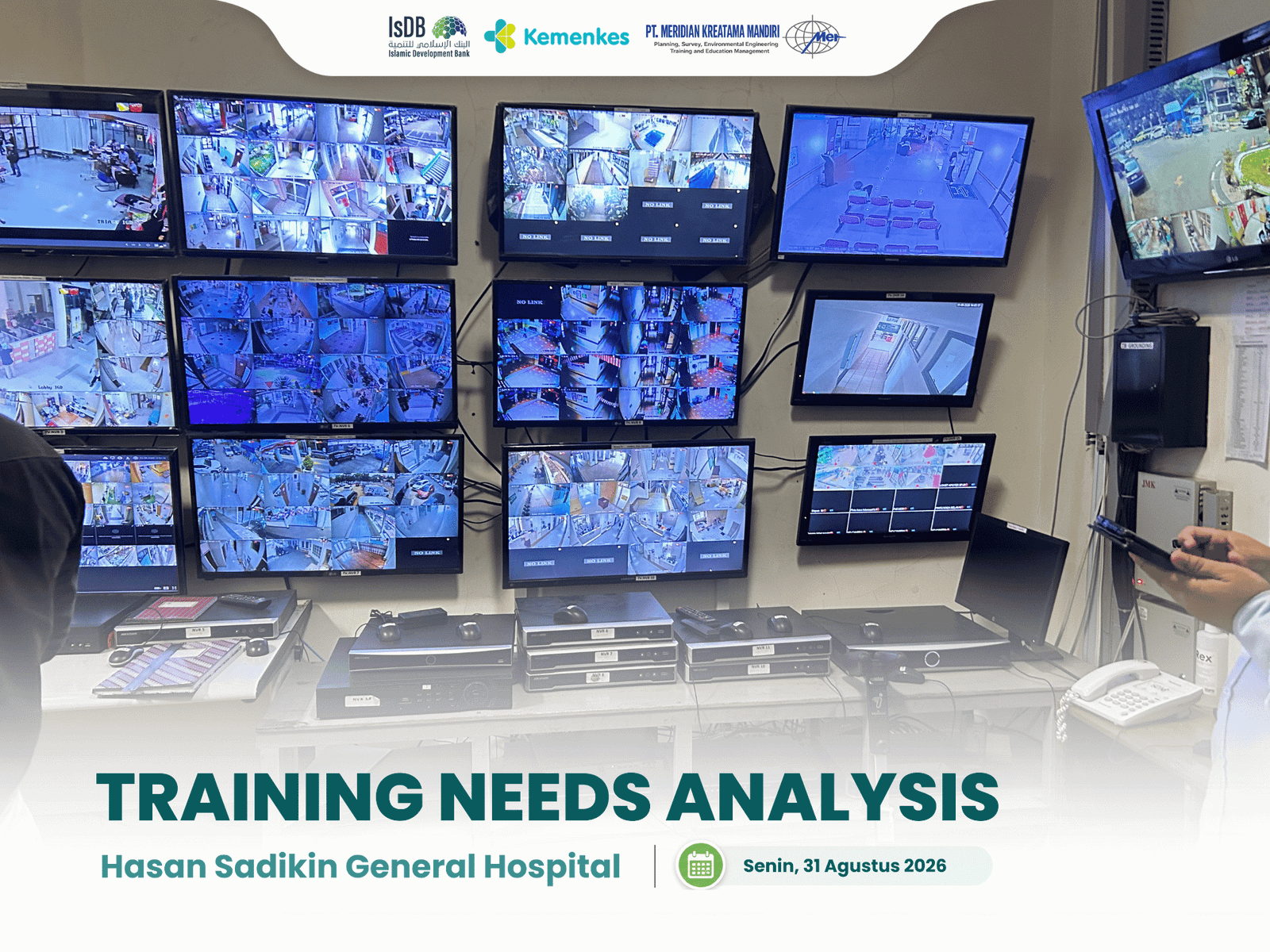
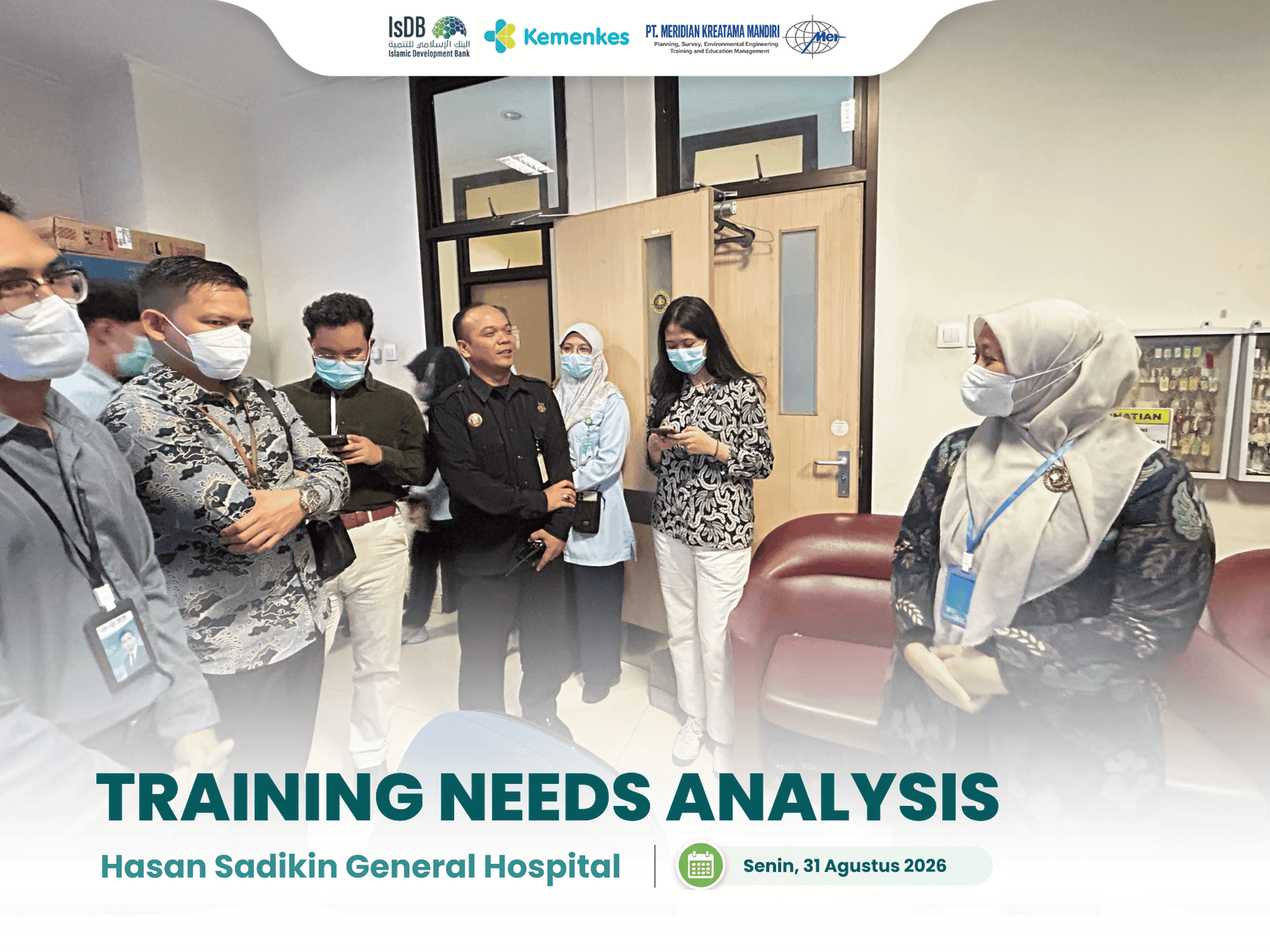
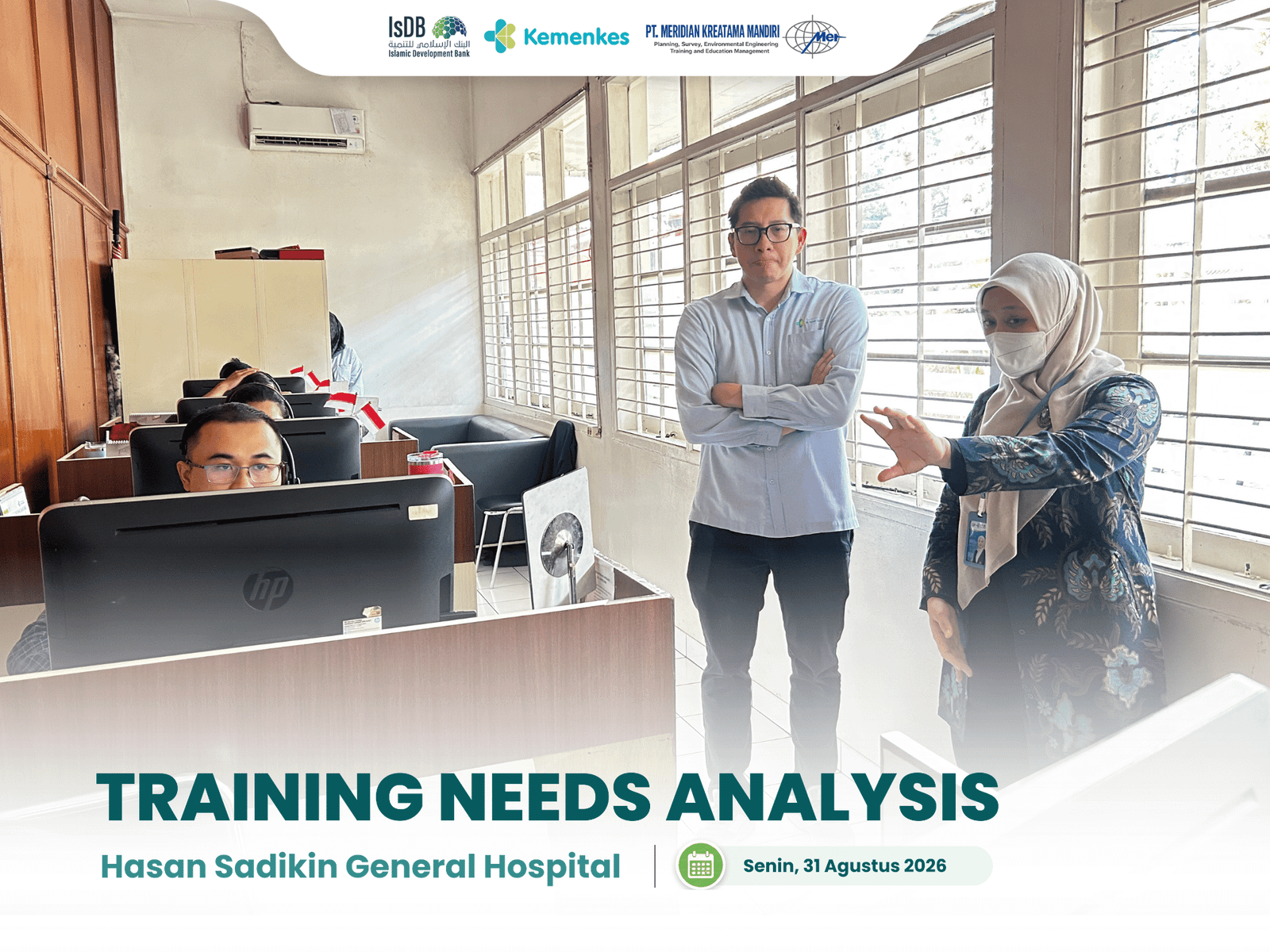
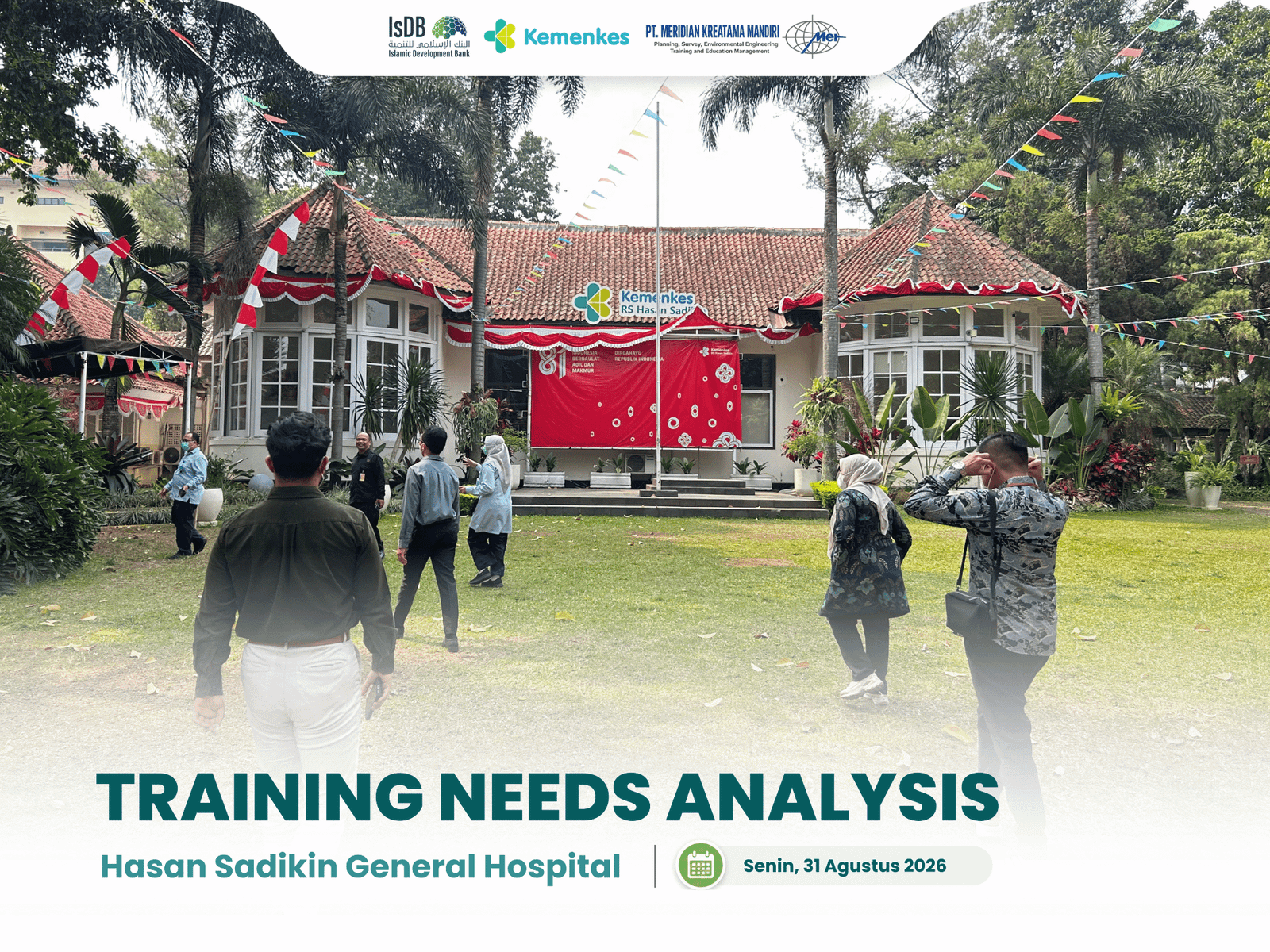
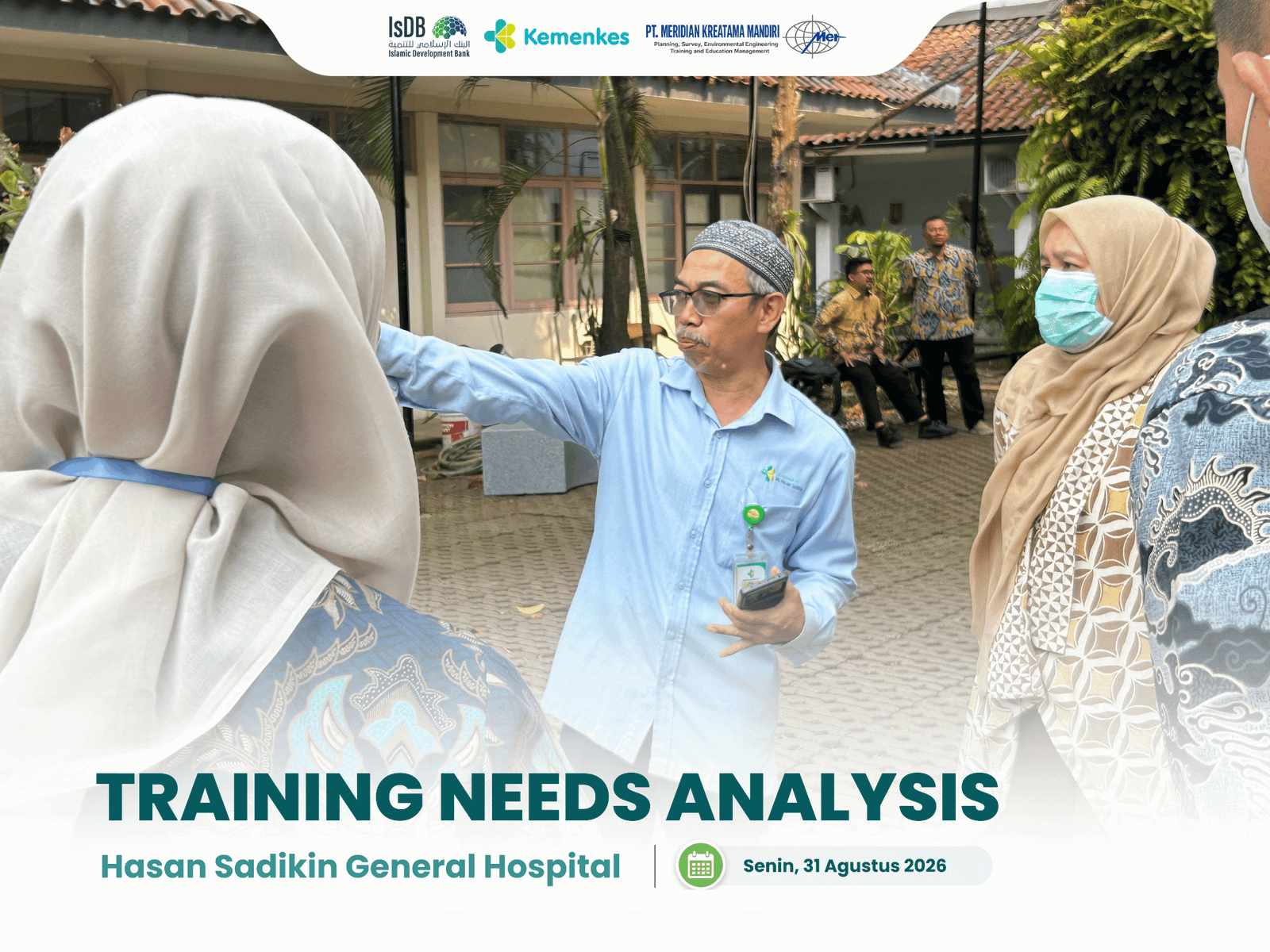
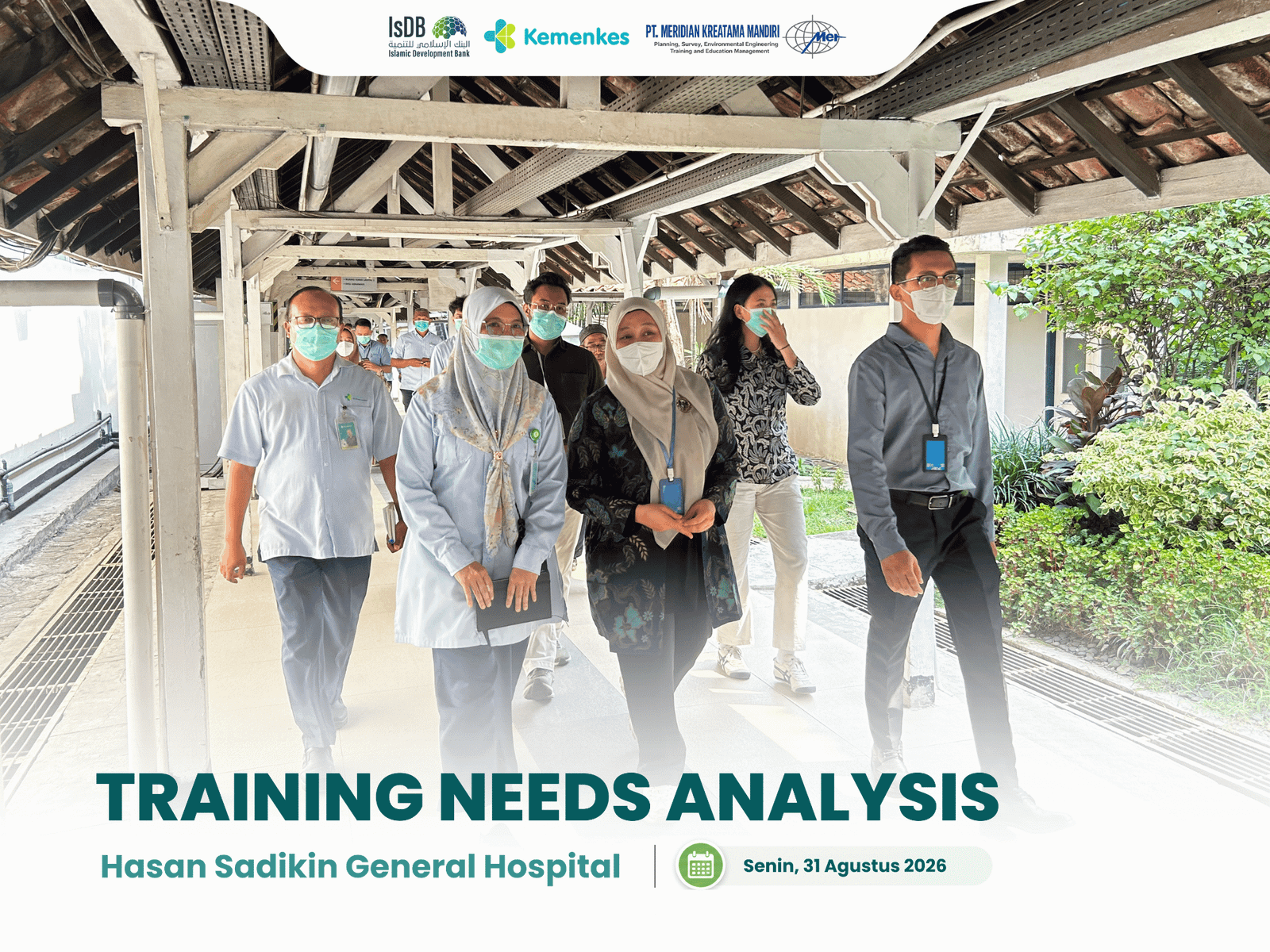
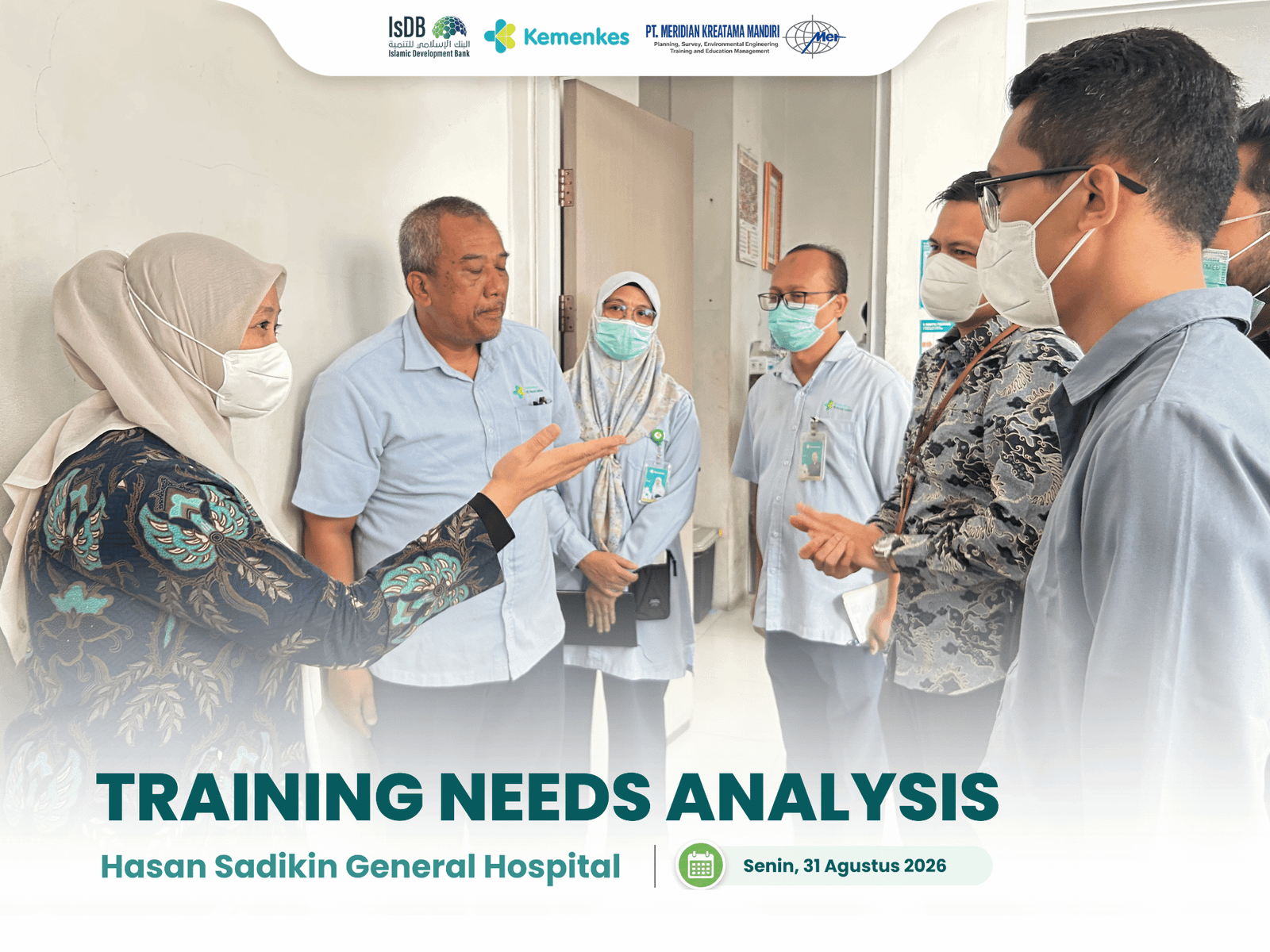
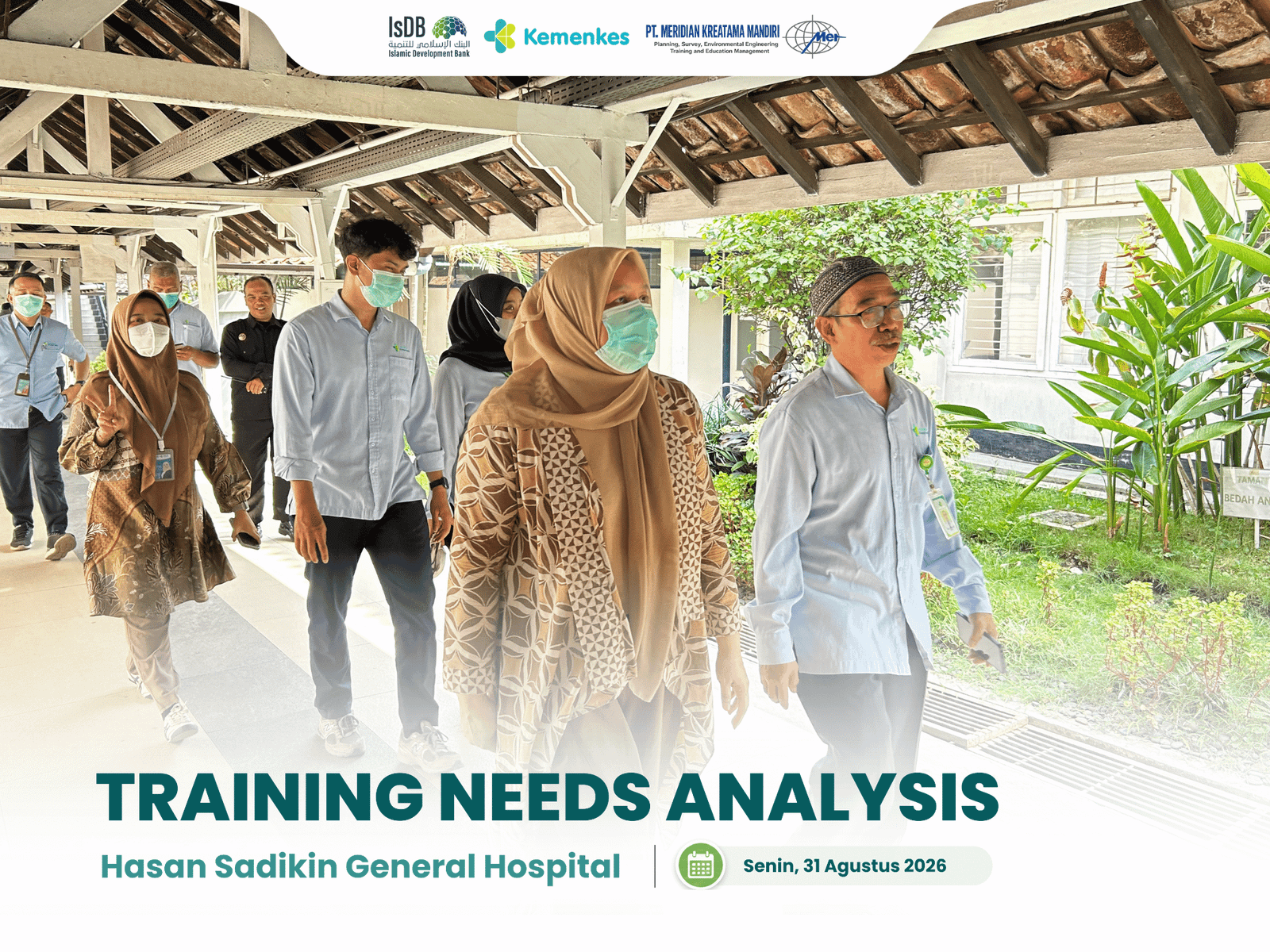
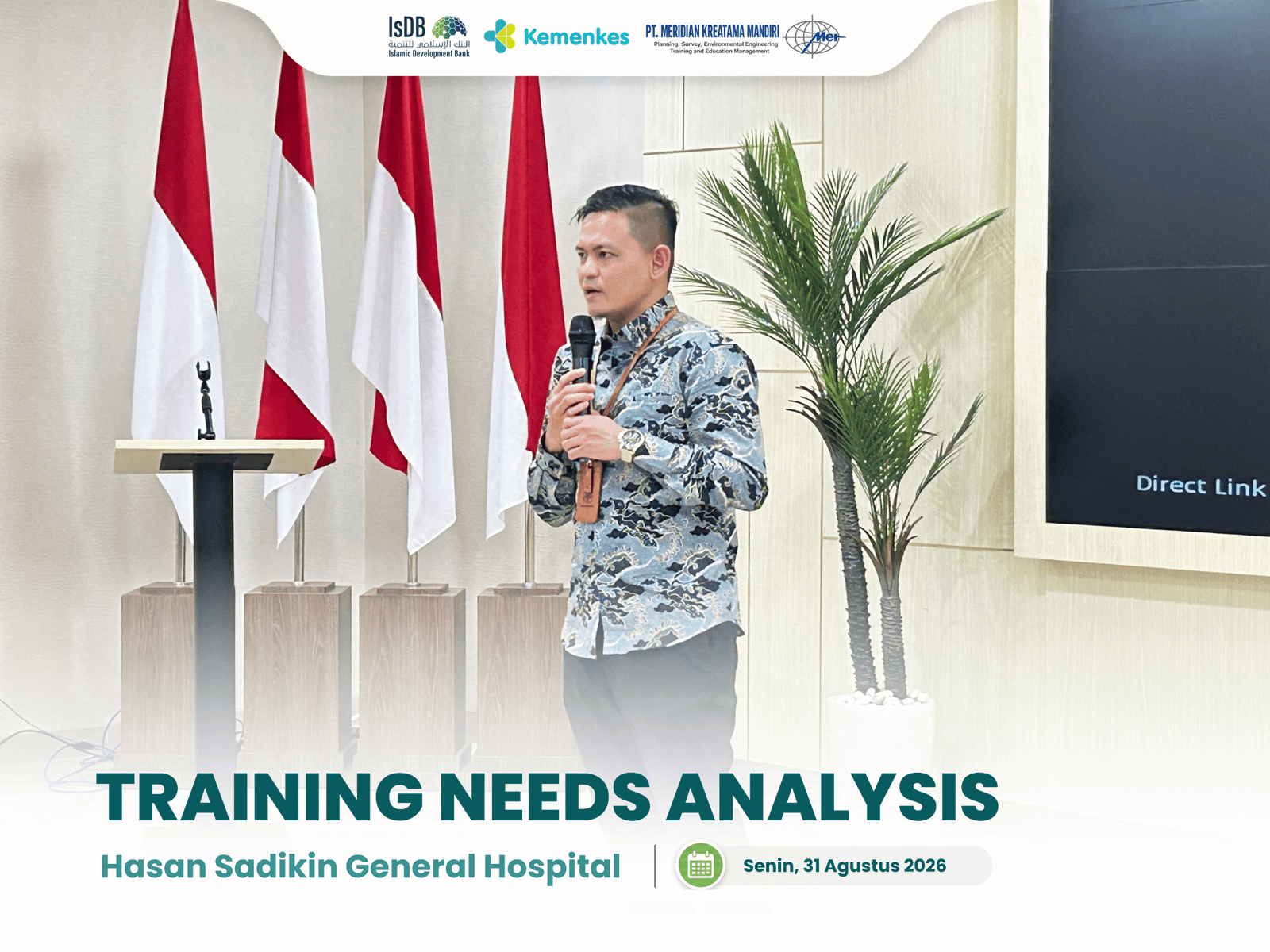
The Emergency Preparedness Consultant (EMPC) Project, IsDB IDN 1031 continued its series of hospital assessments through an onsite Training Needs Analysis (TNA) at Hasan Sadikin General Hospital, Bandung, on Monday, 31 August 2026.
The visit brought the EMPC team together with hospital representatives to explore the current state of emergency preparedness and better understand the competencies and support required by the hospital workforce. Rather than focusing only on existing documents, the assessment placed strong emphasis on discussions and observations within the hospital’s operational environment.
Throughout the session, the EMPC team introduced the objectives of the TNA and discussed the upcoming training activities with the hospital team. This was followed by direct conversations with relevant hospital personnel, allowing the team to gather perspectives on current practices, responsibilities, challenges, and expectations related to emergency and disaster preparedness.
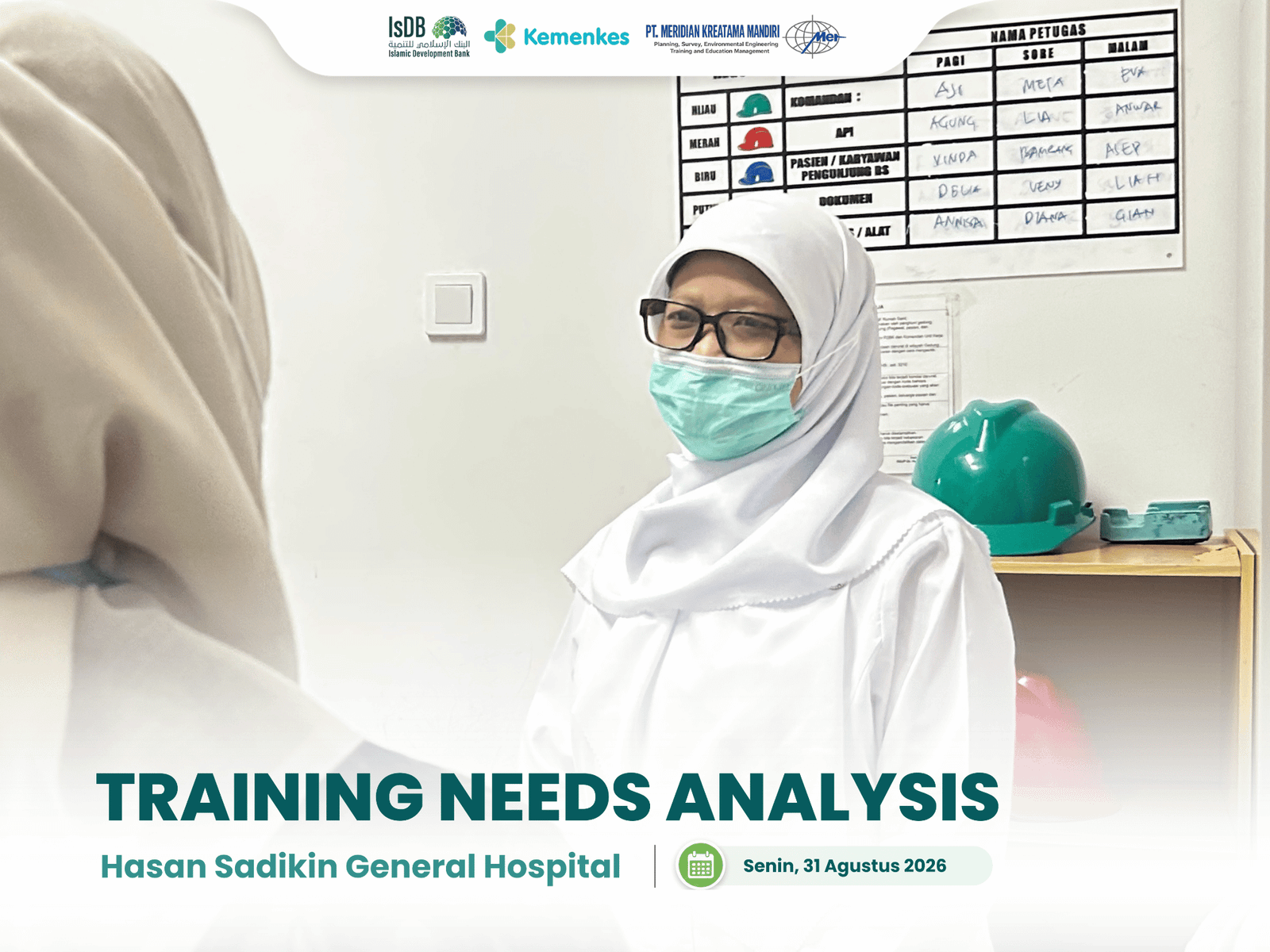
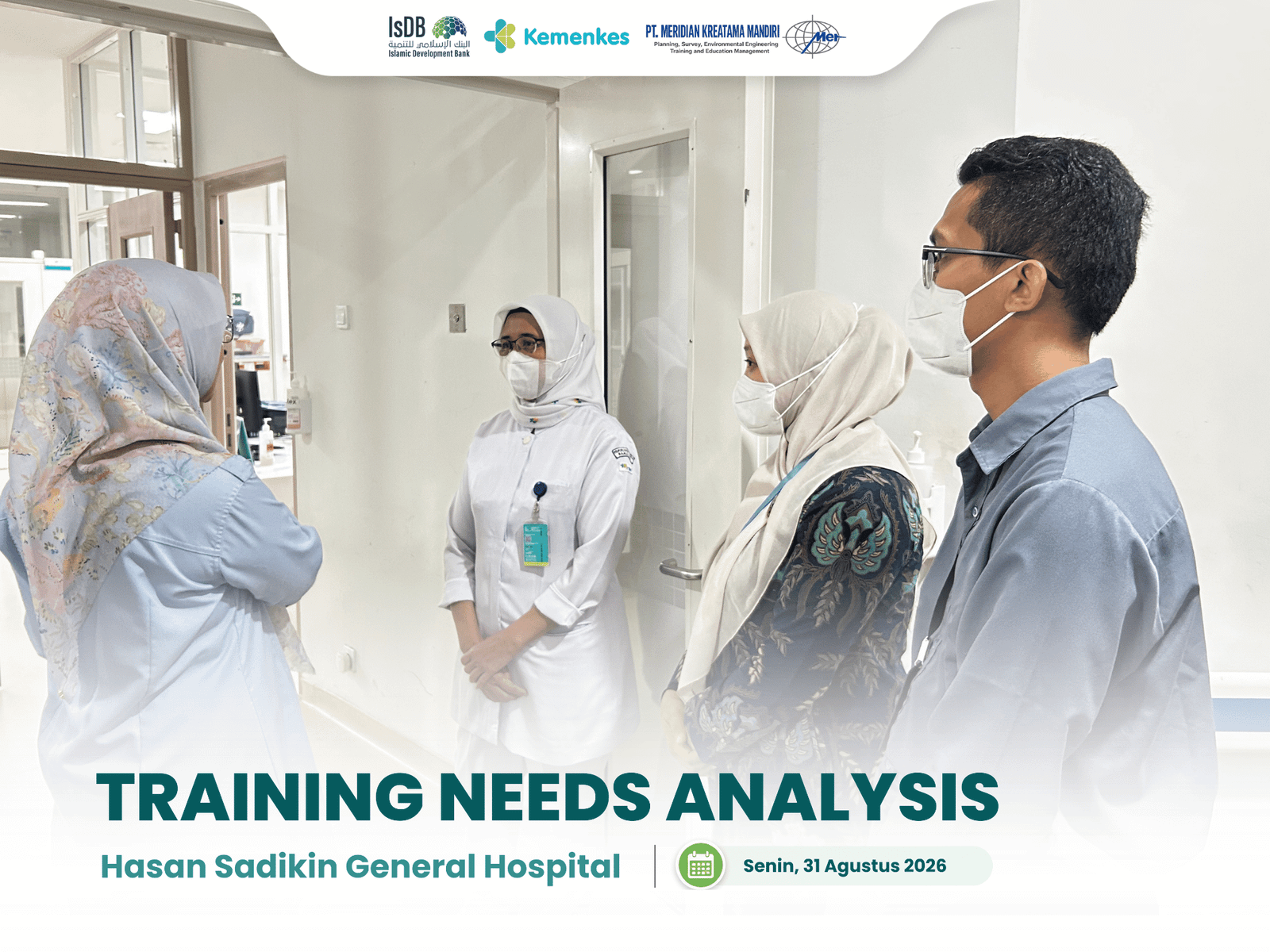
An important component of the visit was the field assessment, during which the team explored selected areas of the hospital and interacted with both healthcare and non-healthcare personnel. Observing the hospital in its actual working environment enabled the team to gain practical insights into how different units operate, communicate, and contribute to overall hospital preparedness.
The exchange with hospital staff also became an important part of the assessment process. Through direct interaction, the team was able to identify perspectives and experiences that may not be fully reflected in formal policies or documentation. These insights will help provide a more contextual understanding of the hospital’s existing strengths as well as areas where additional capacity development may be beneficial.
The findings collected during the TNA will contribute to the preparation of the EMPC training program, ensuring that future learning activities are aligned with the realities and priorities of Hasan Sadikin General Hospital. The assessment therefore serves not only as a needs-mapping exercise, but also as an opportunity to strengthen collaboration and establish a shared understanding of the hospital’s preparedness development journey.
31 Agustus 2026












TRAINING NEEDS ANALYSIS
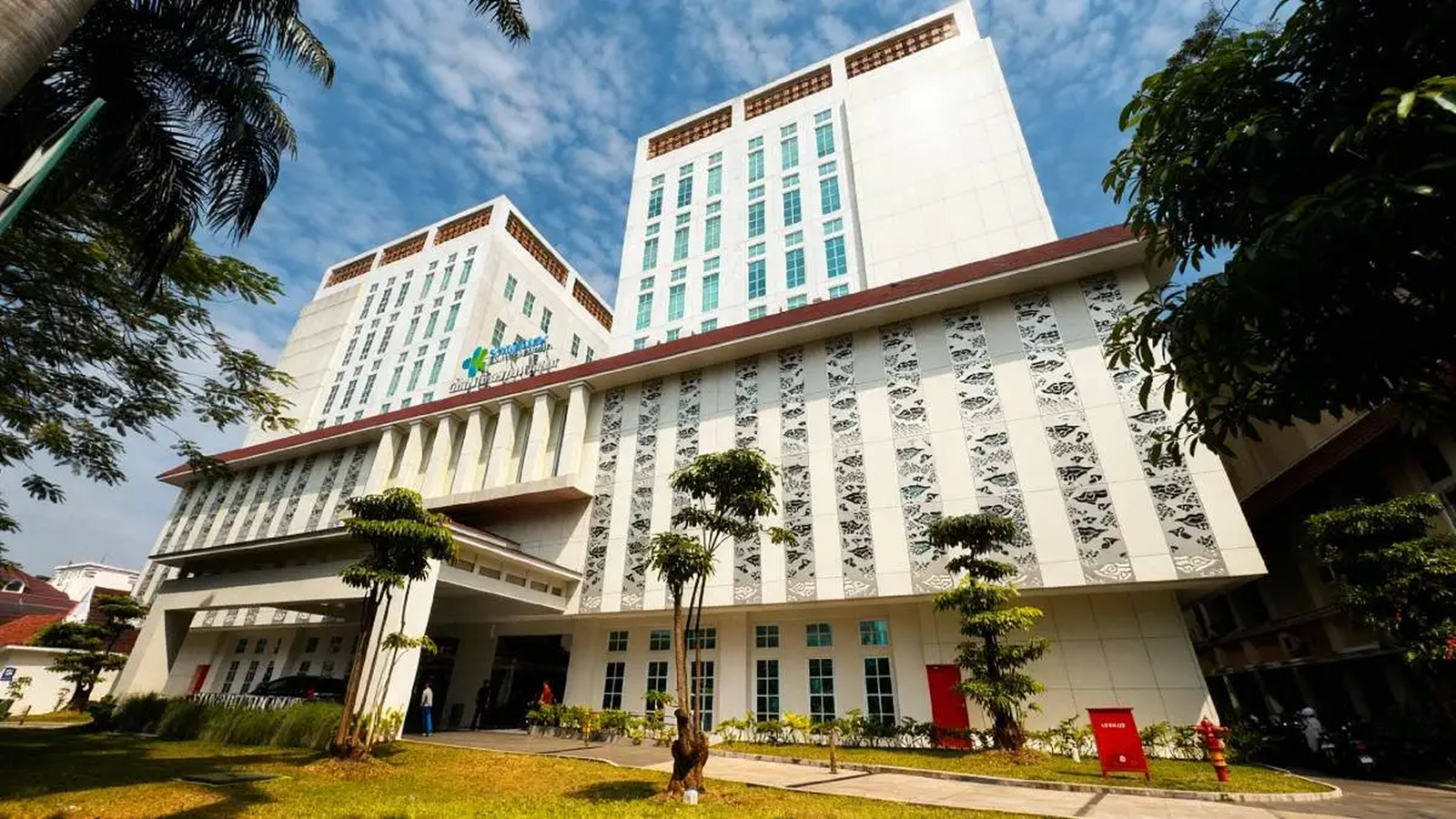
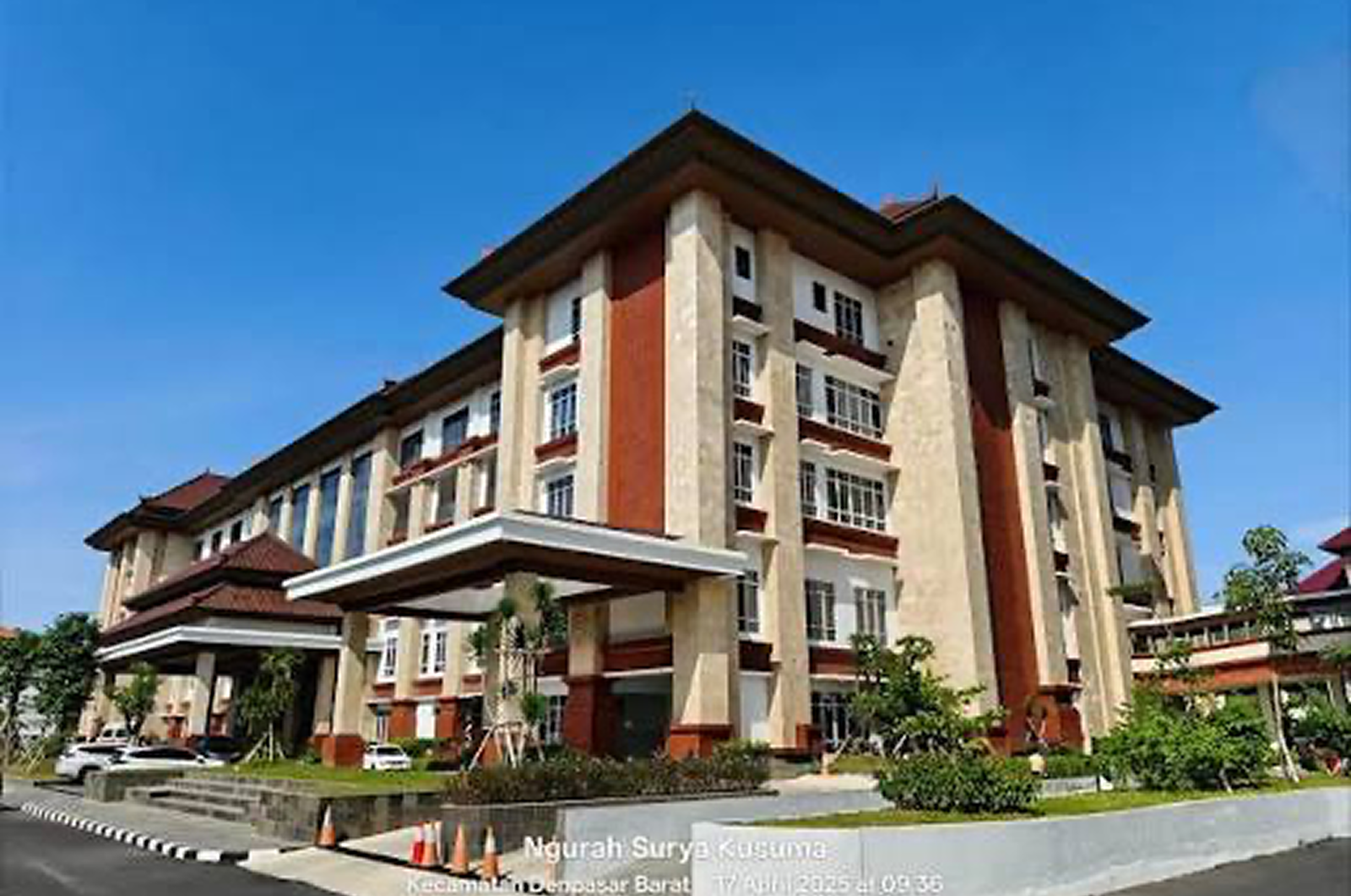
Prof. dr. I.G.N.G. Ngoerah General Hospital
Prof. dr. I.G.N.G. Ngoerah General Hospital, Denpasar Bali
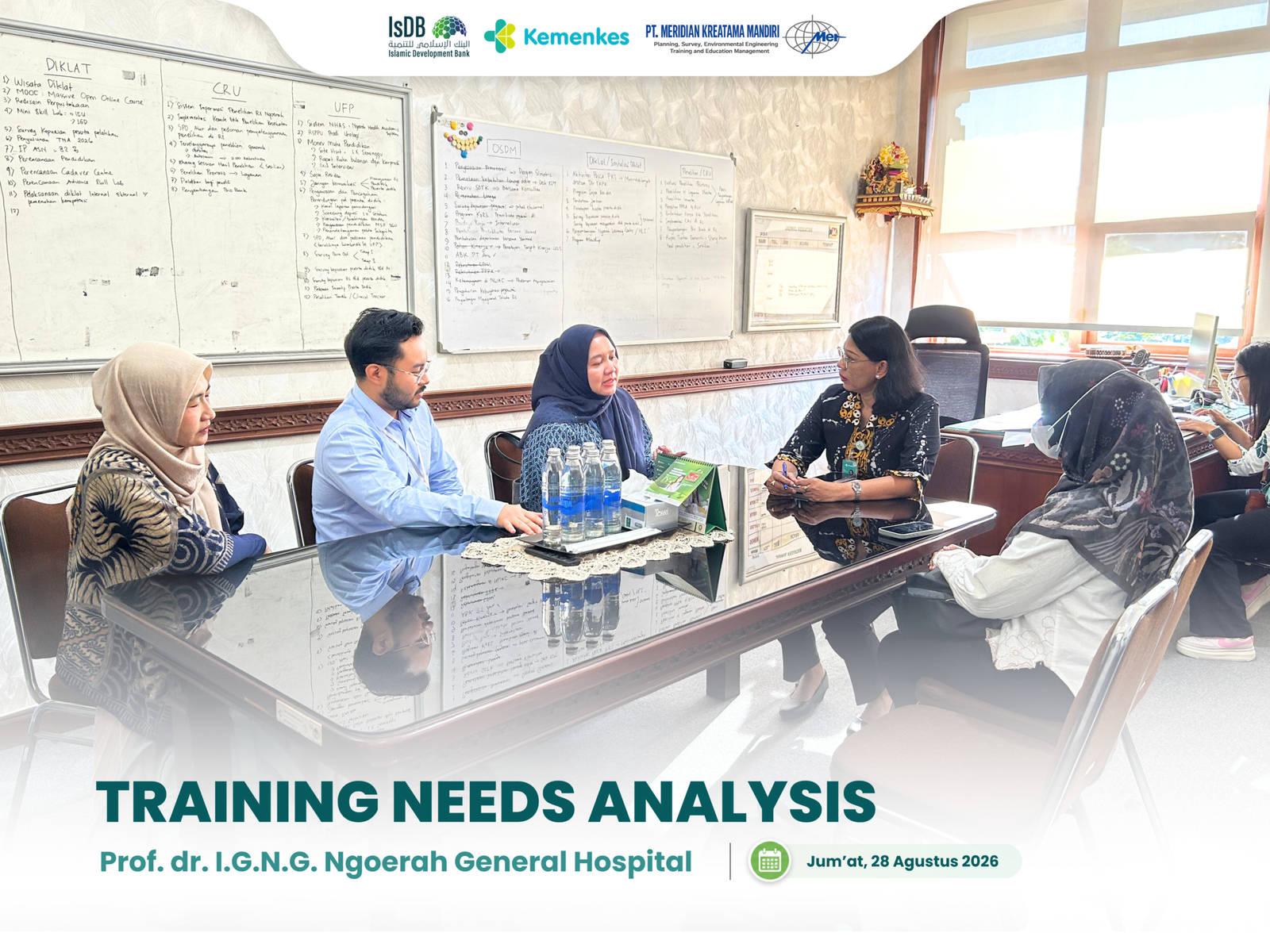
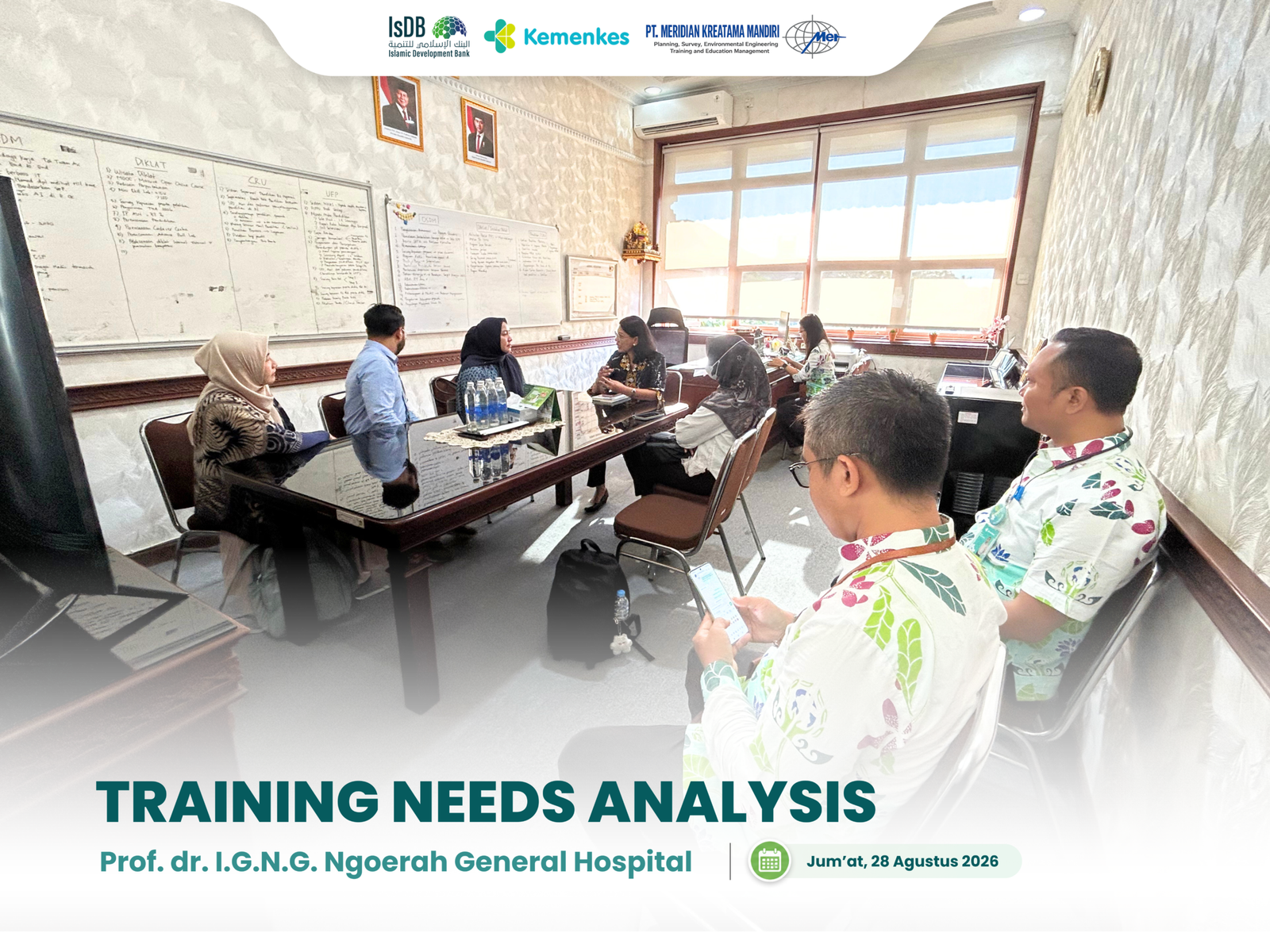
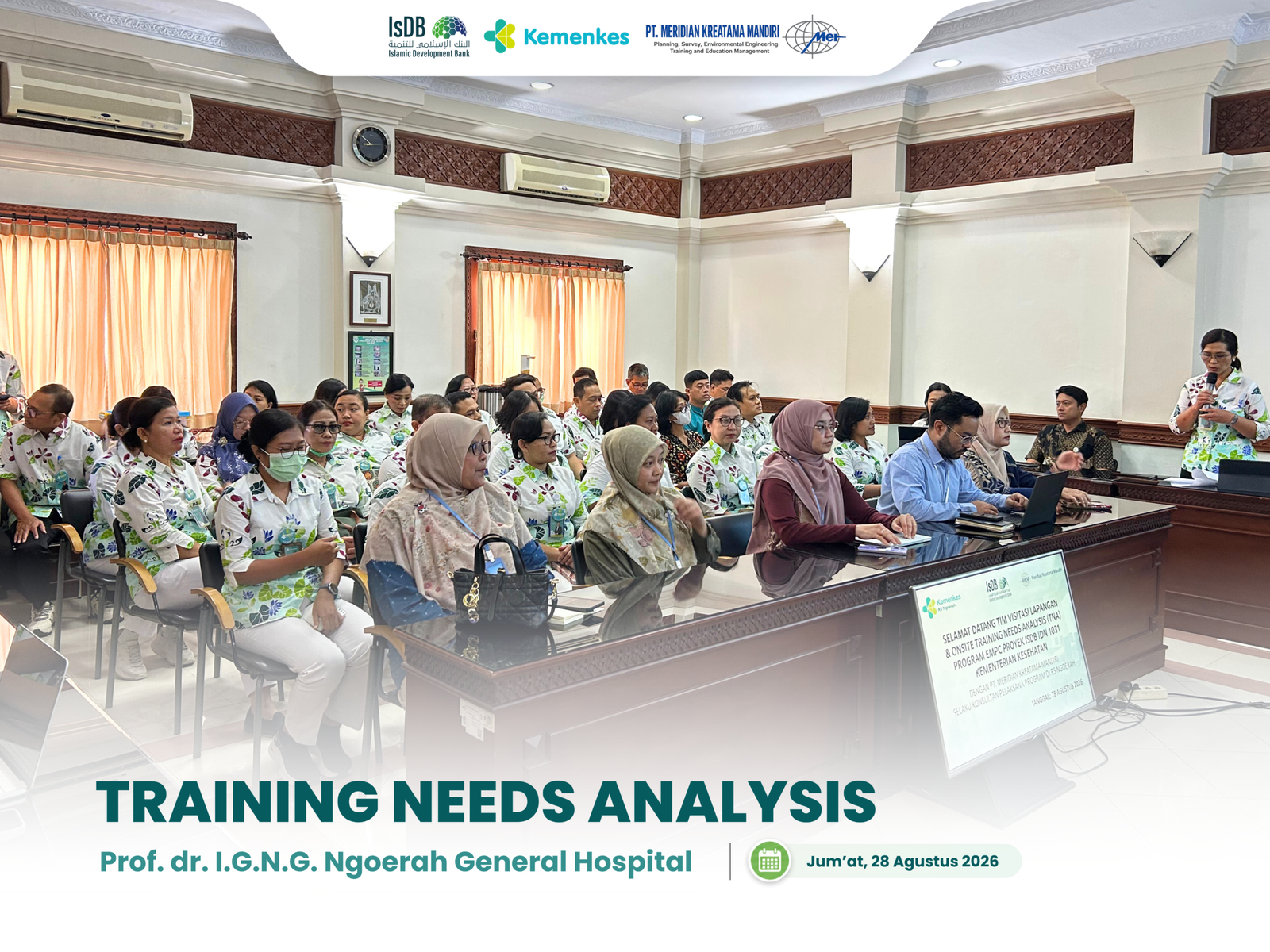
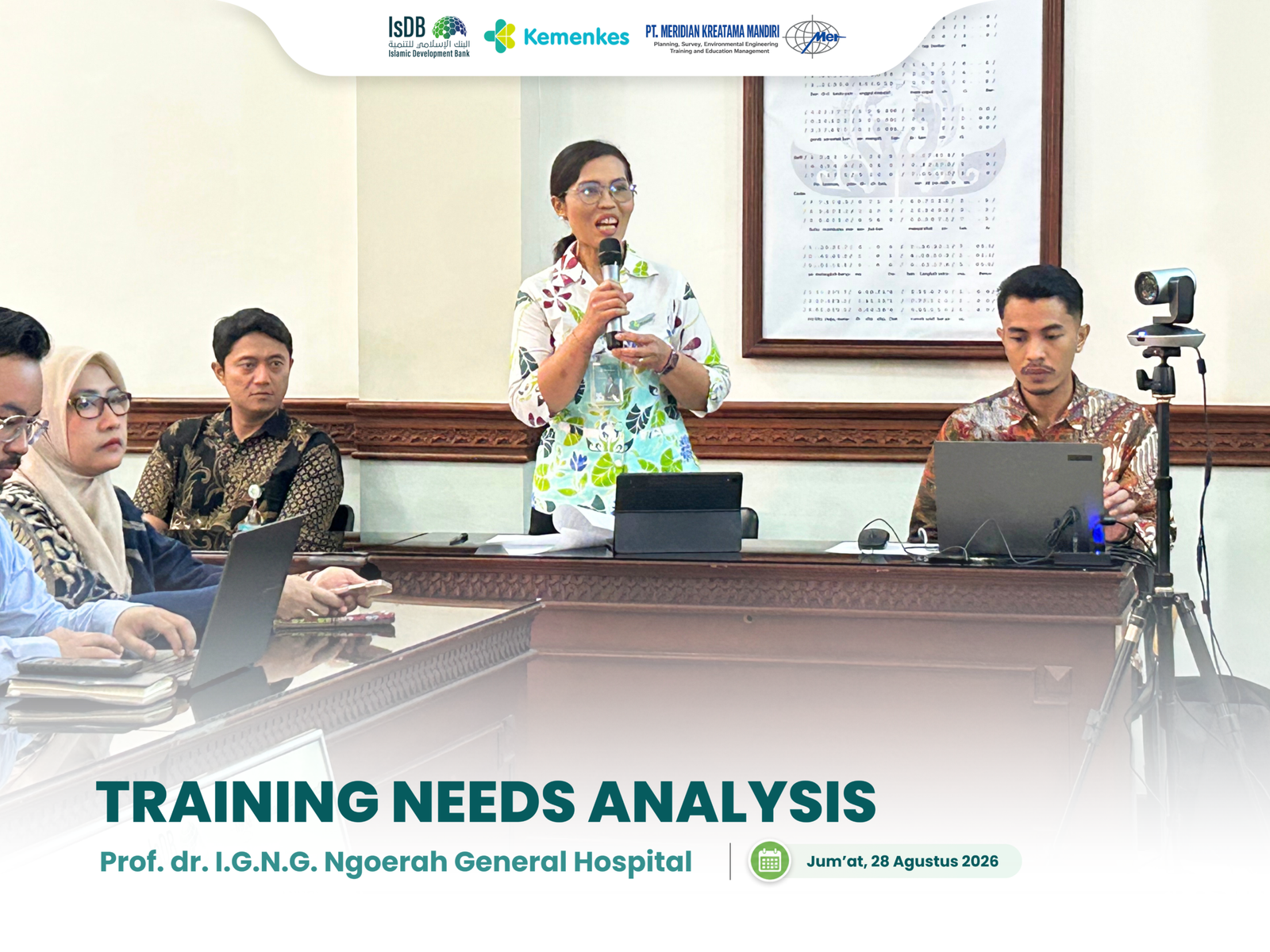
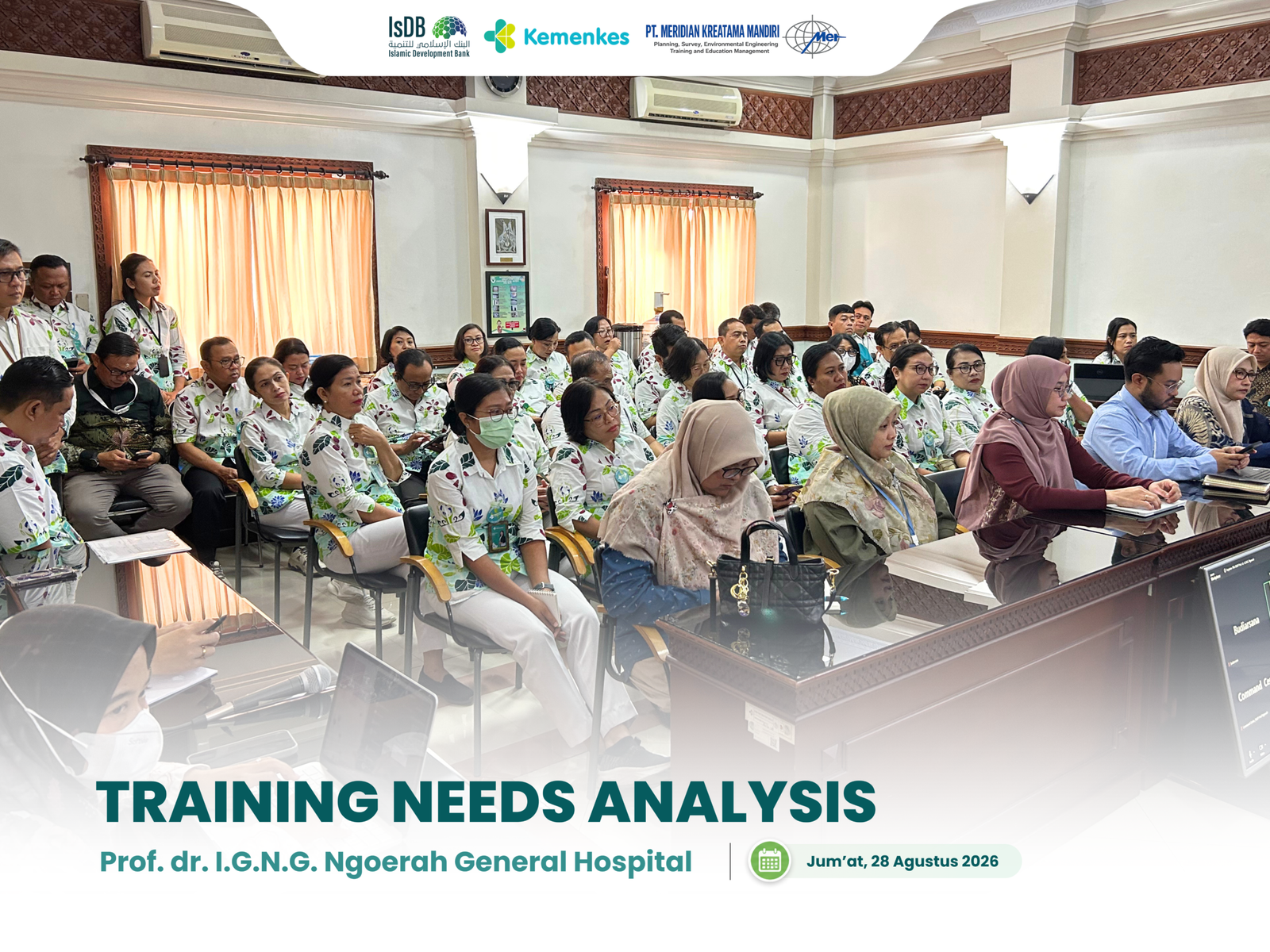
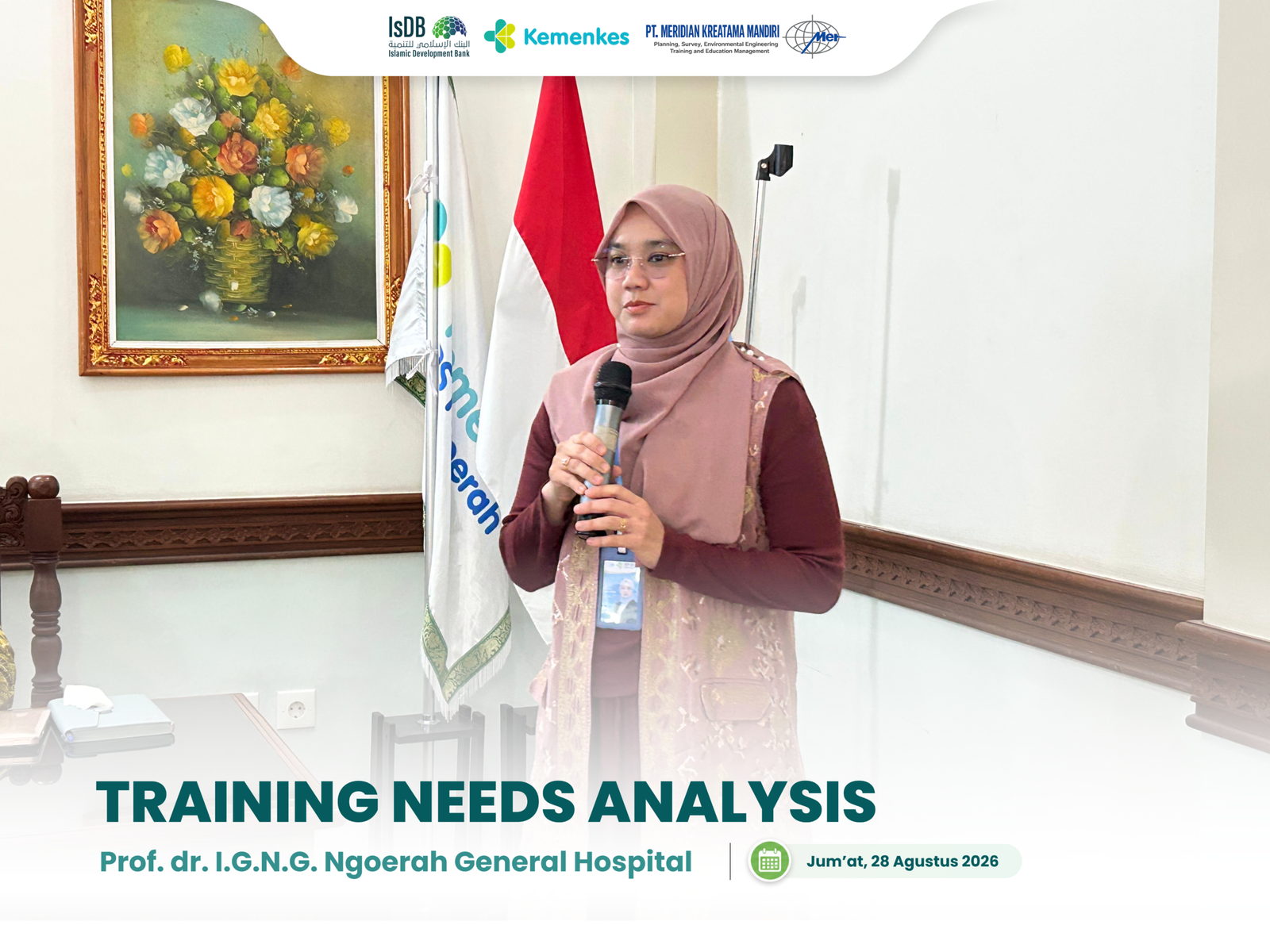
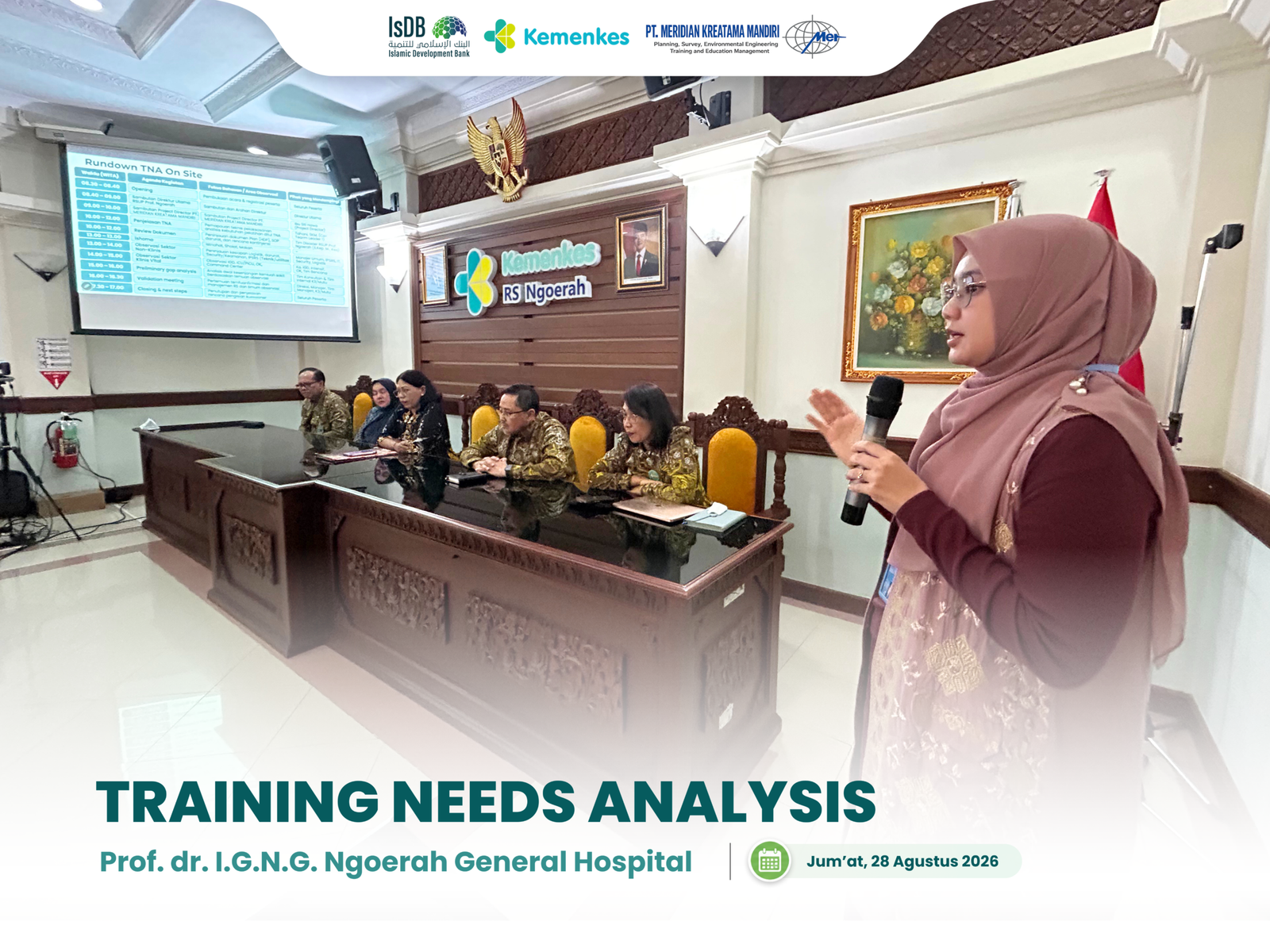
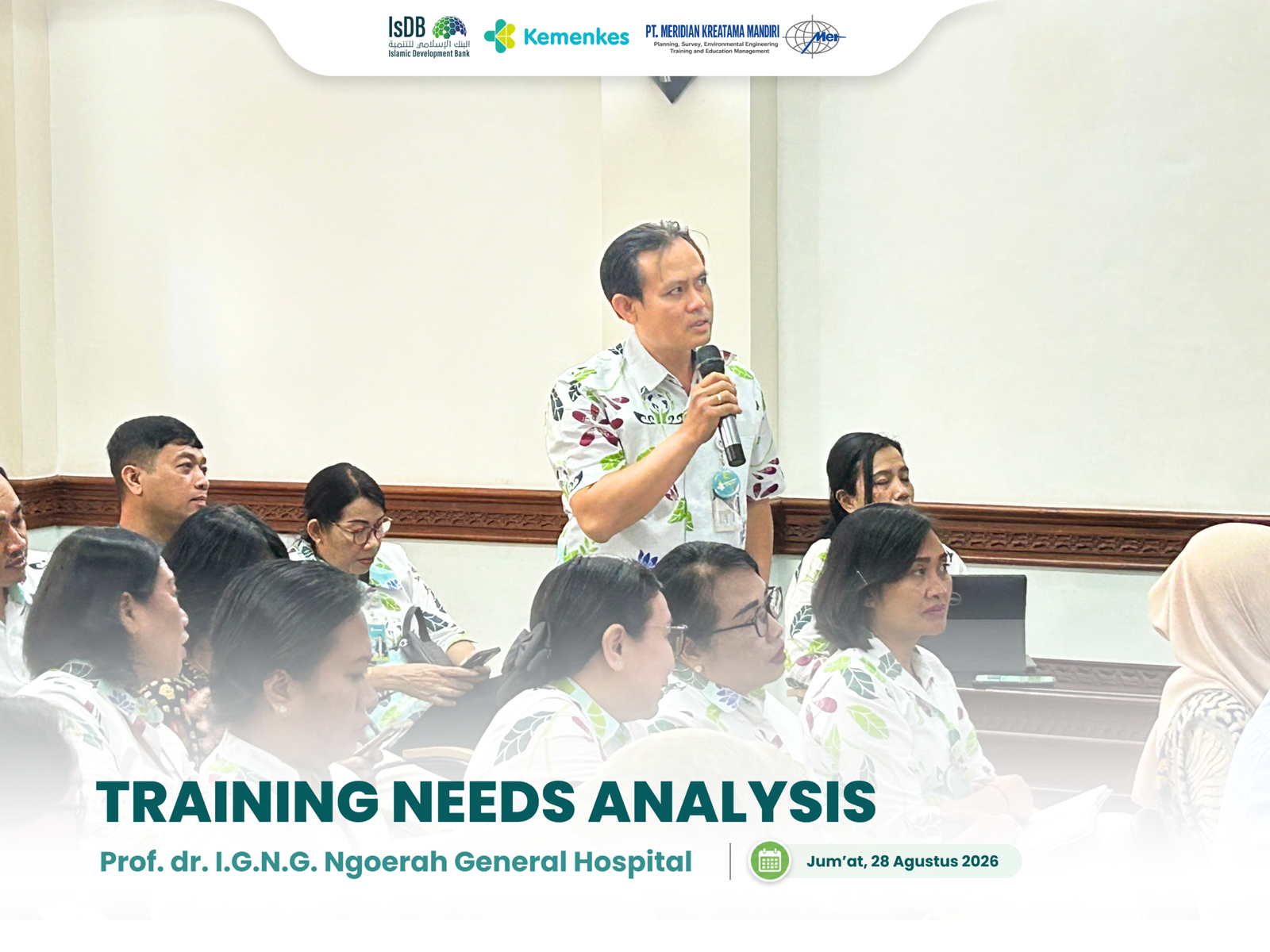
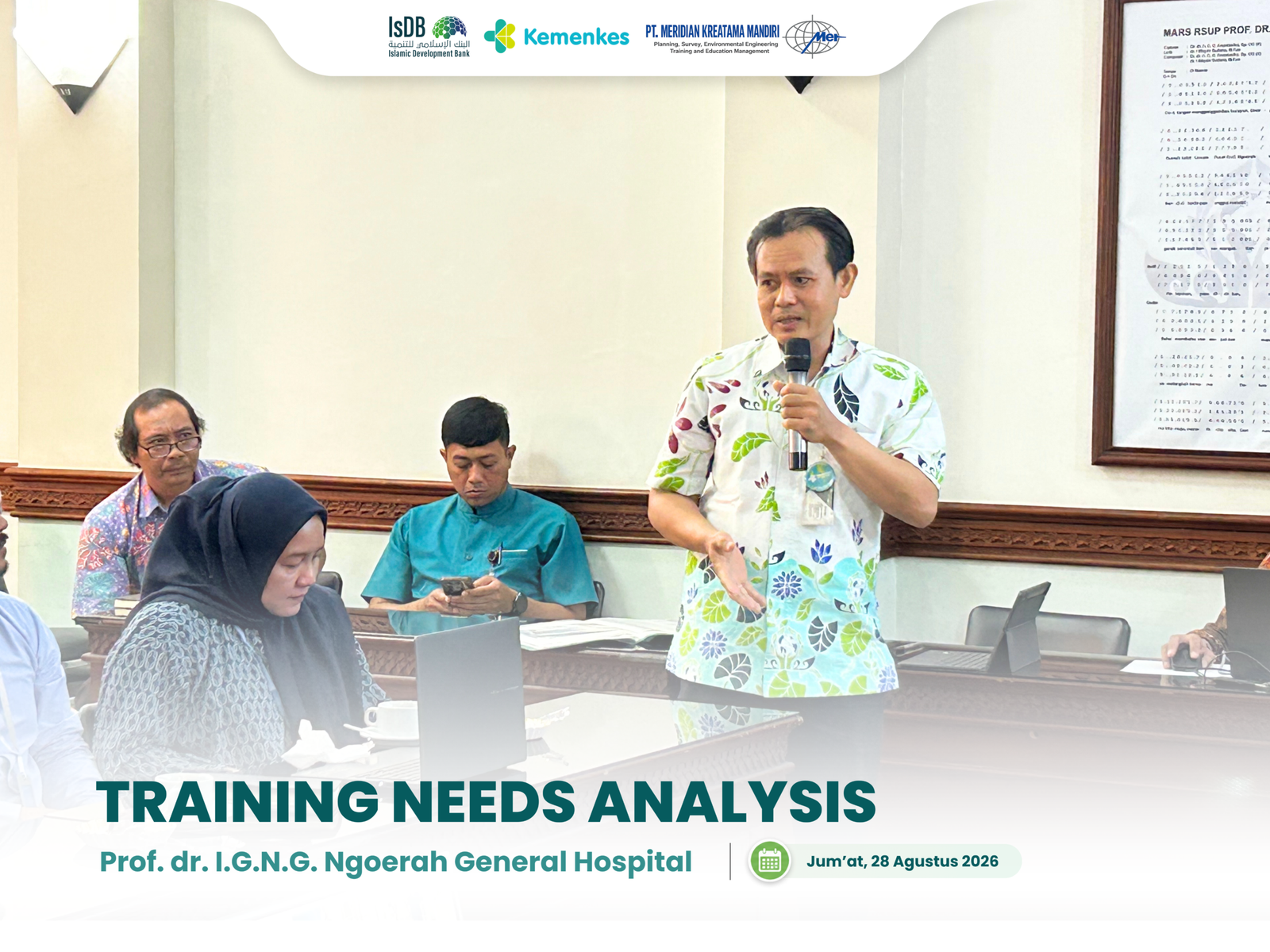
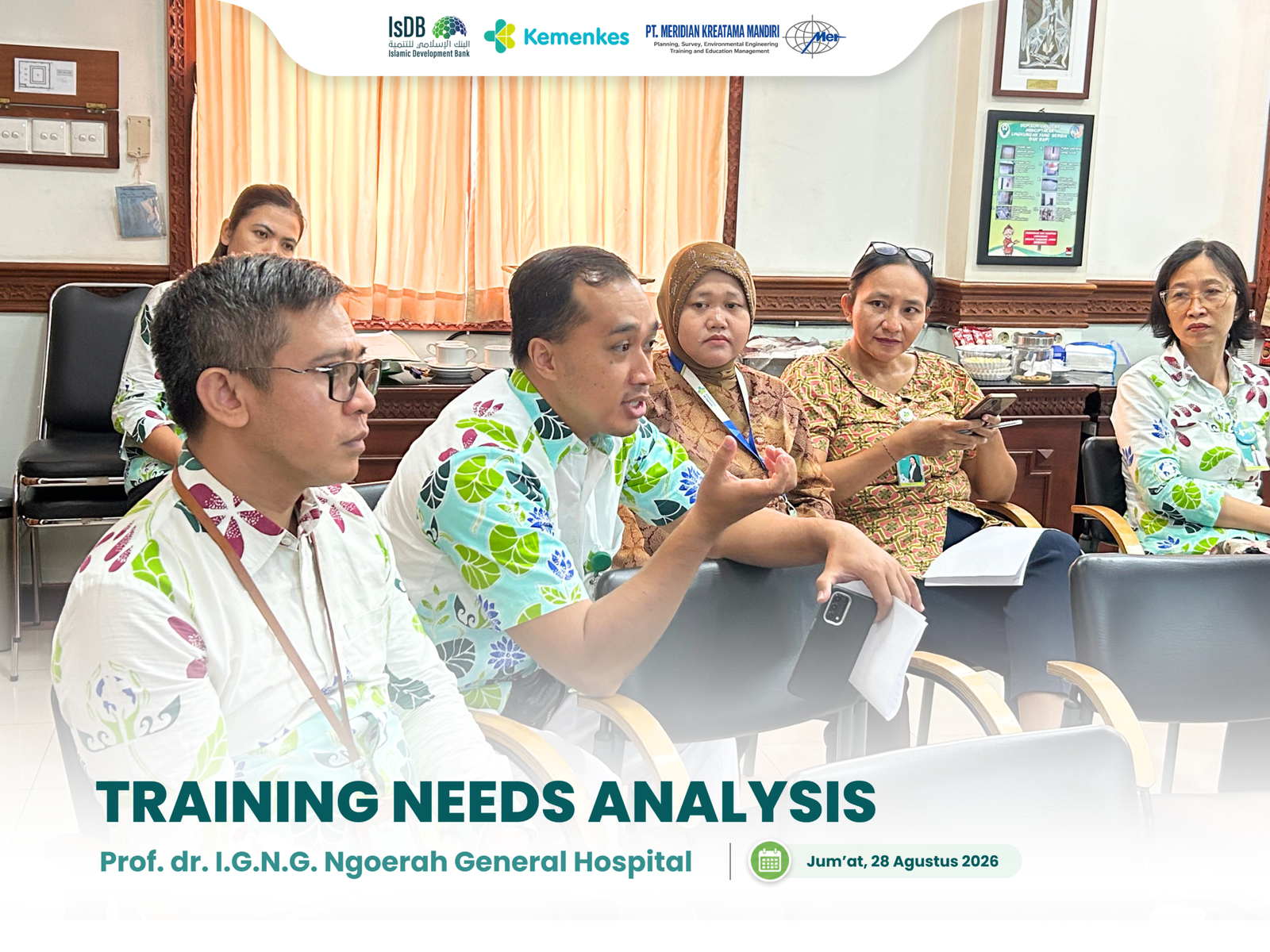
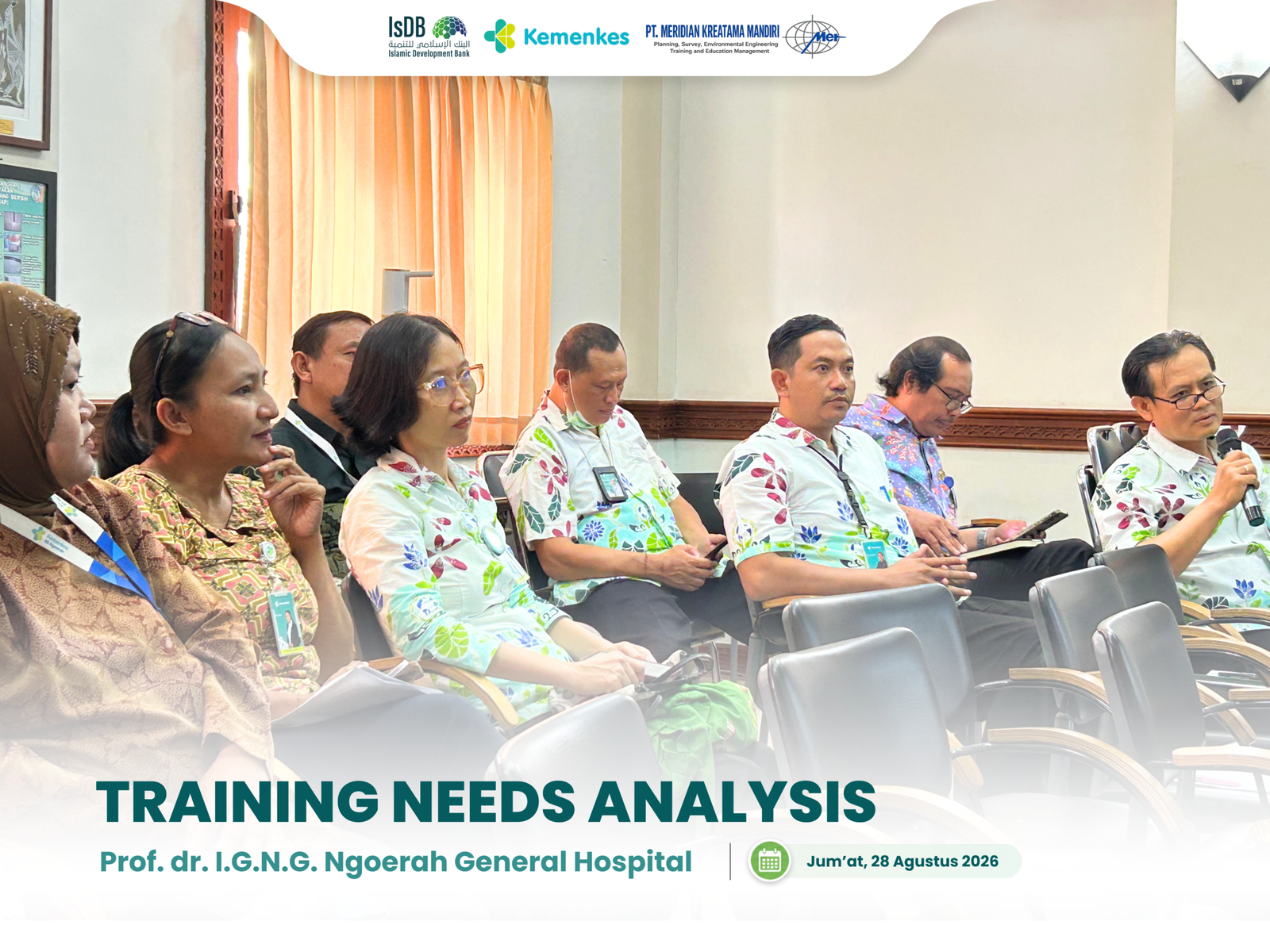
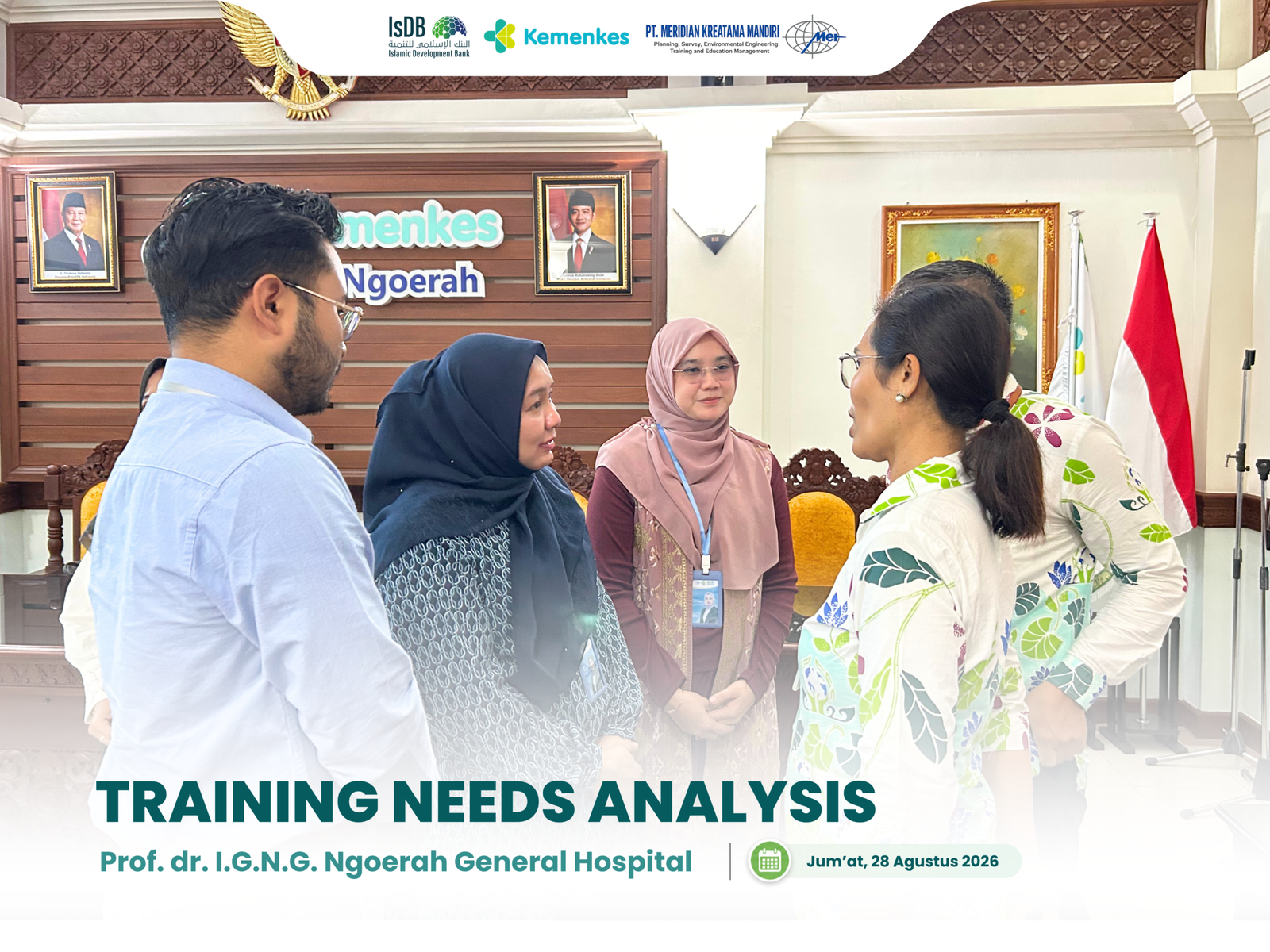
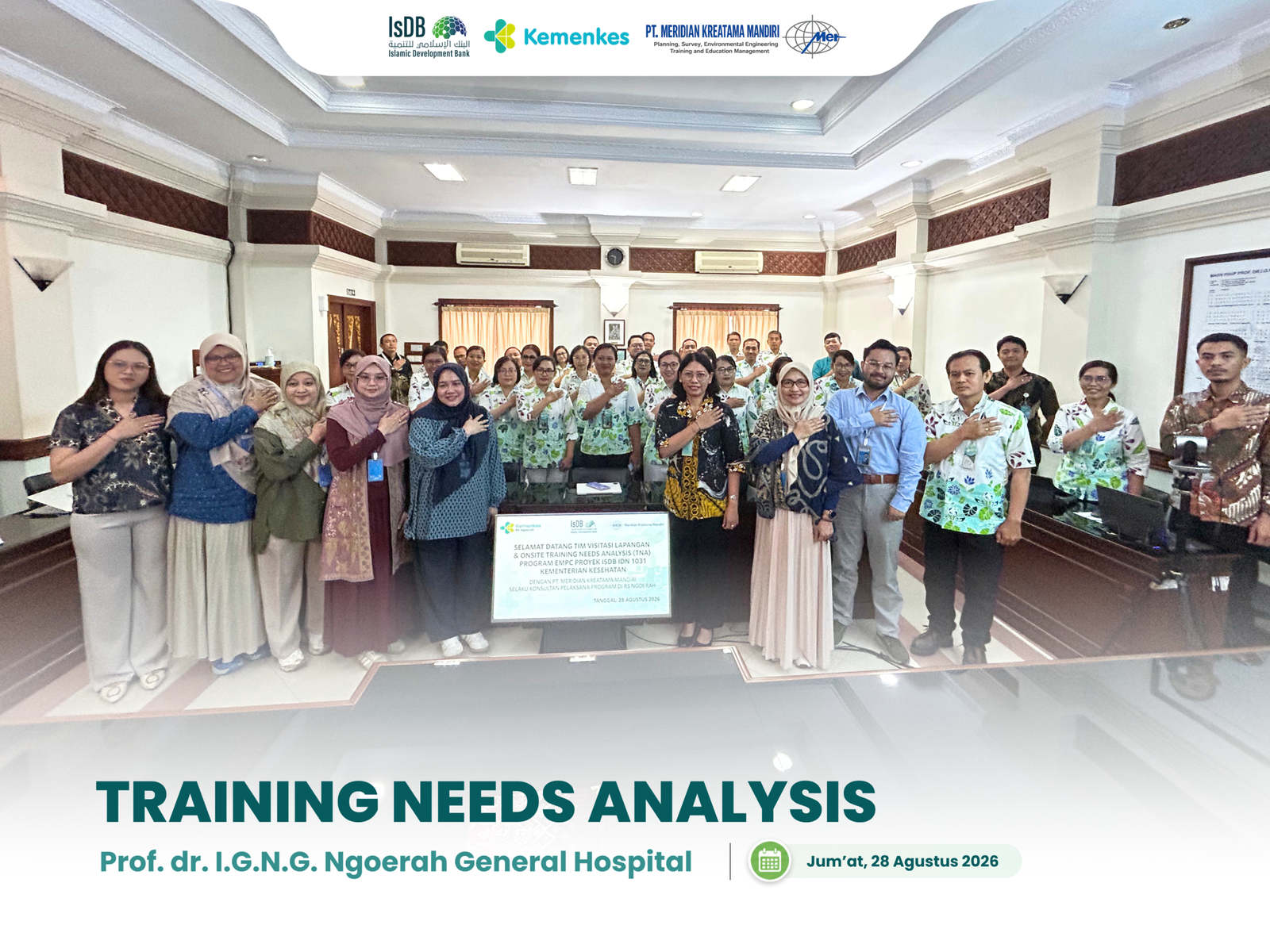
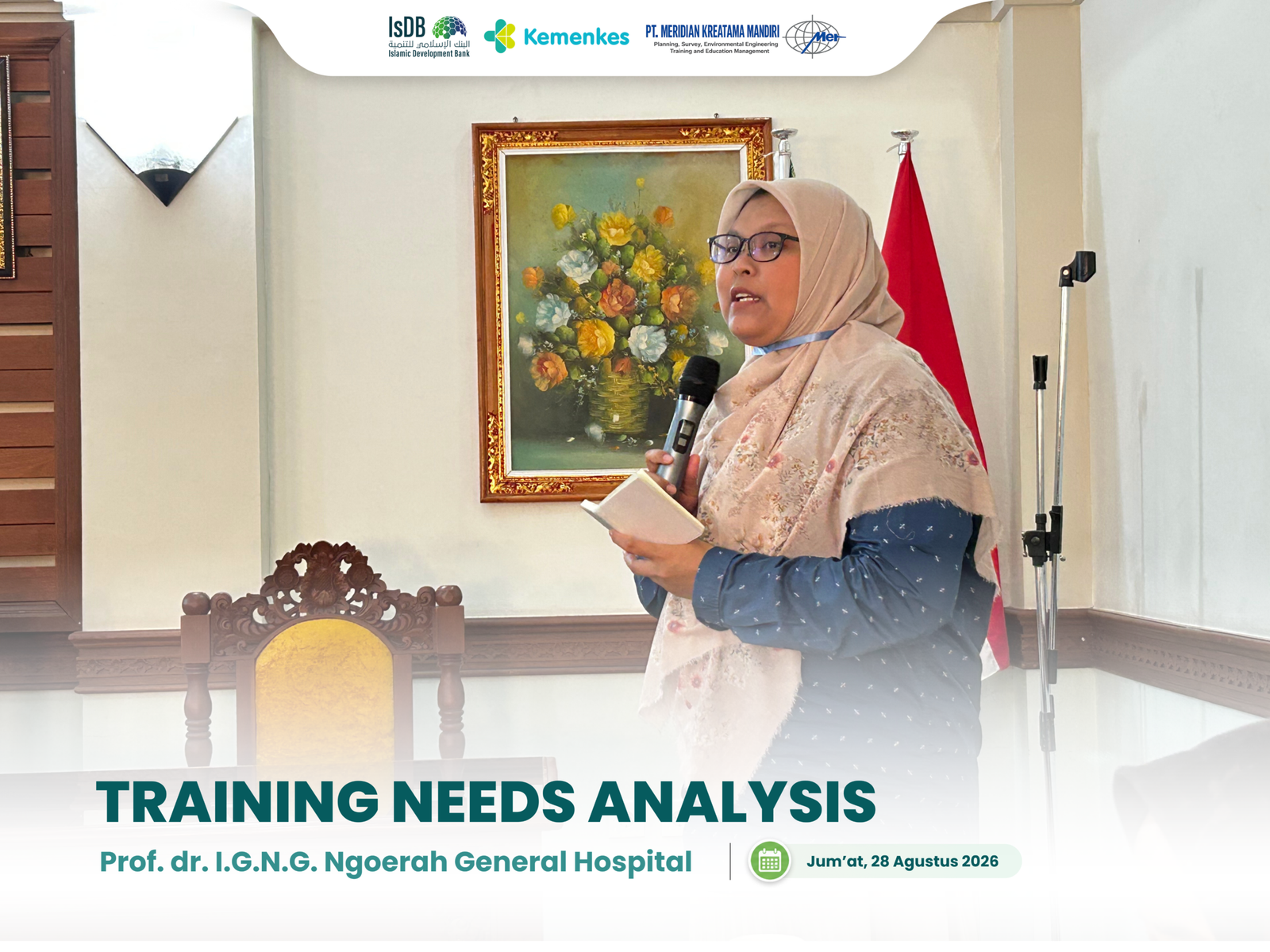
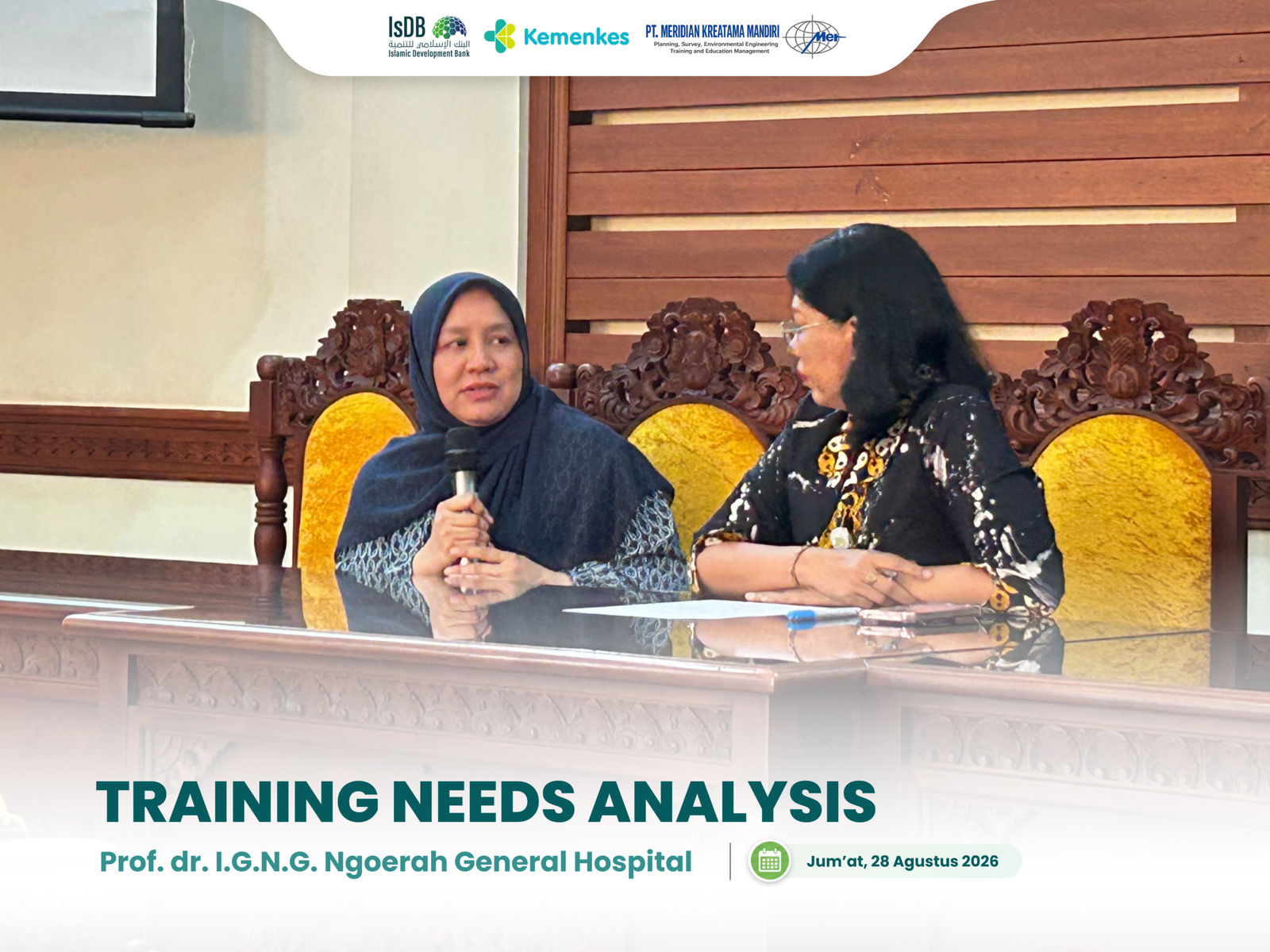
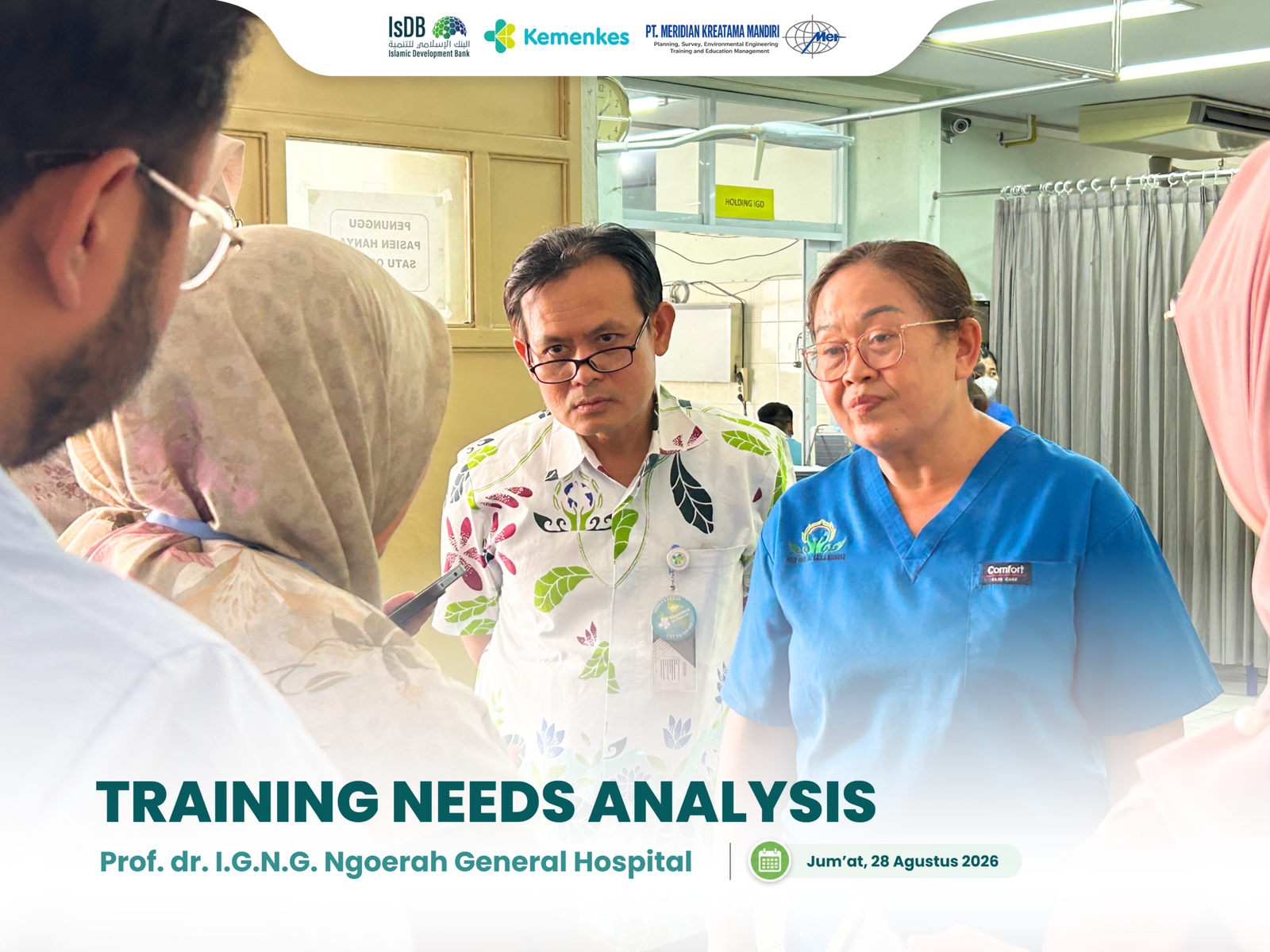
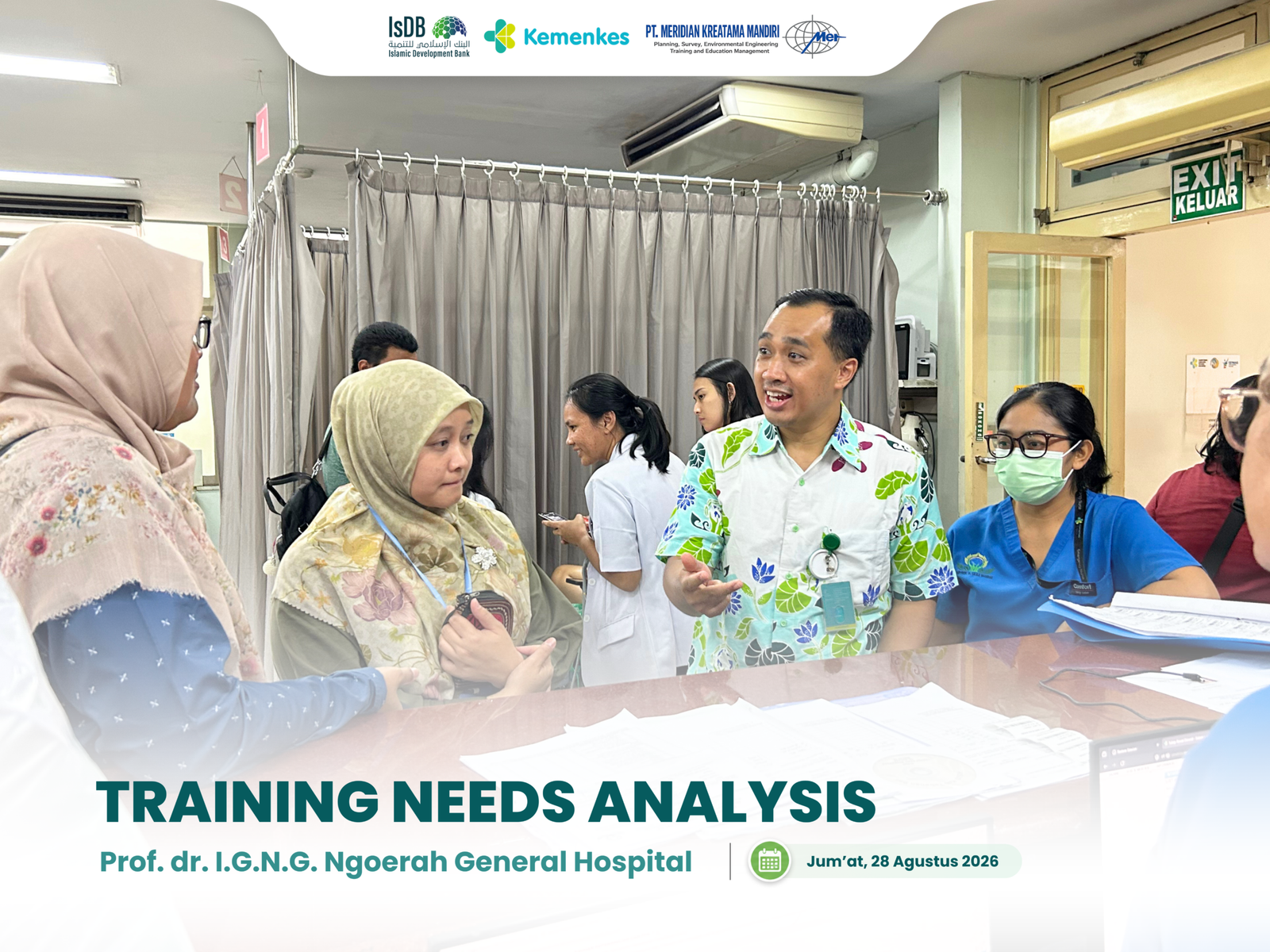
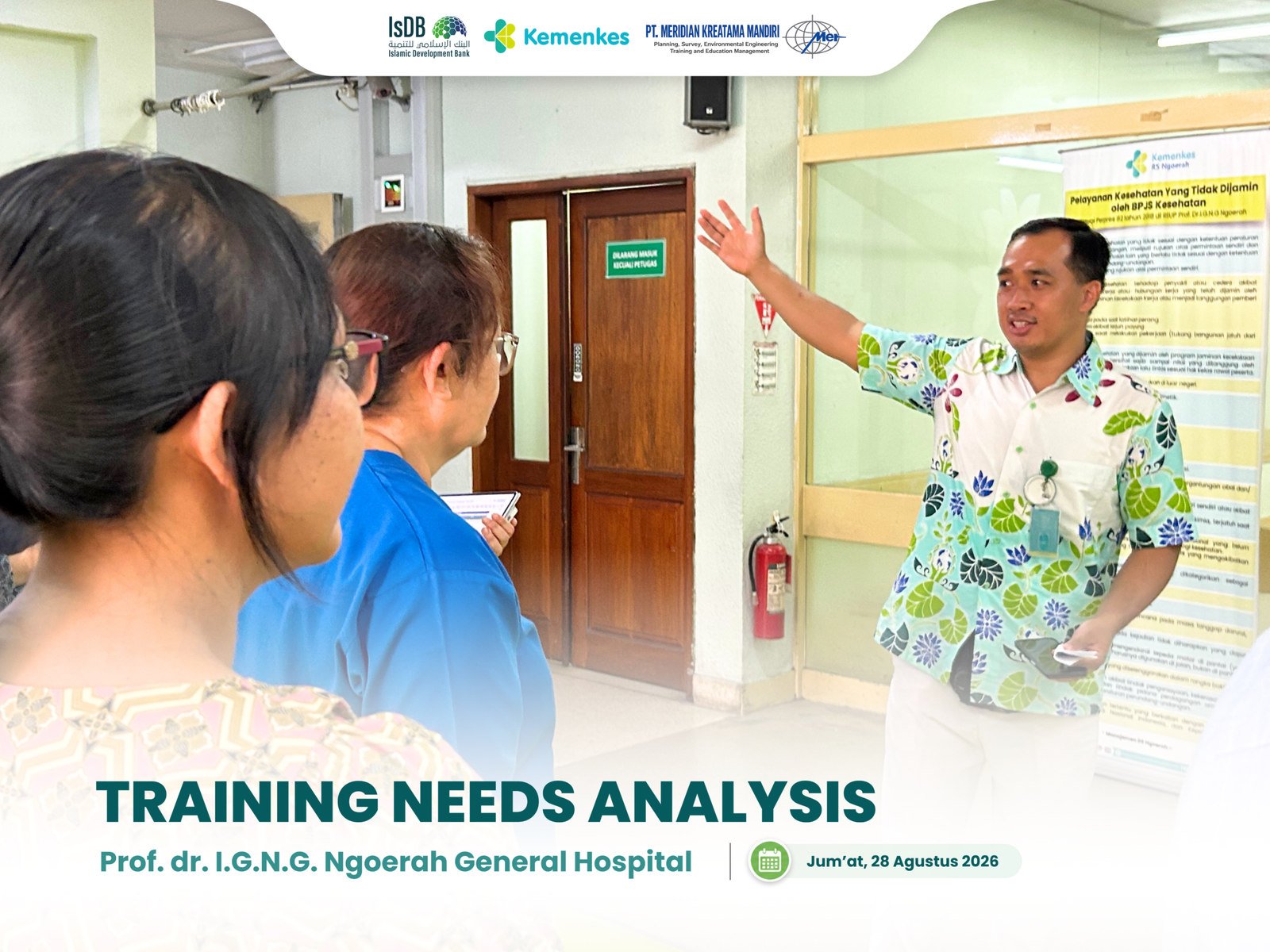
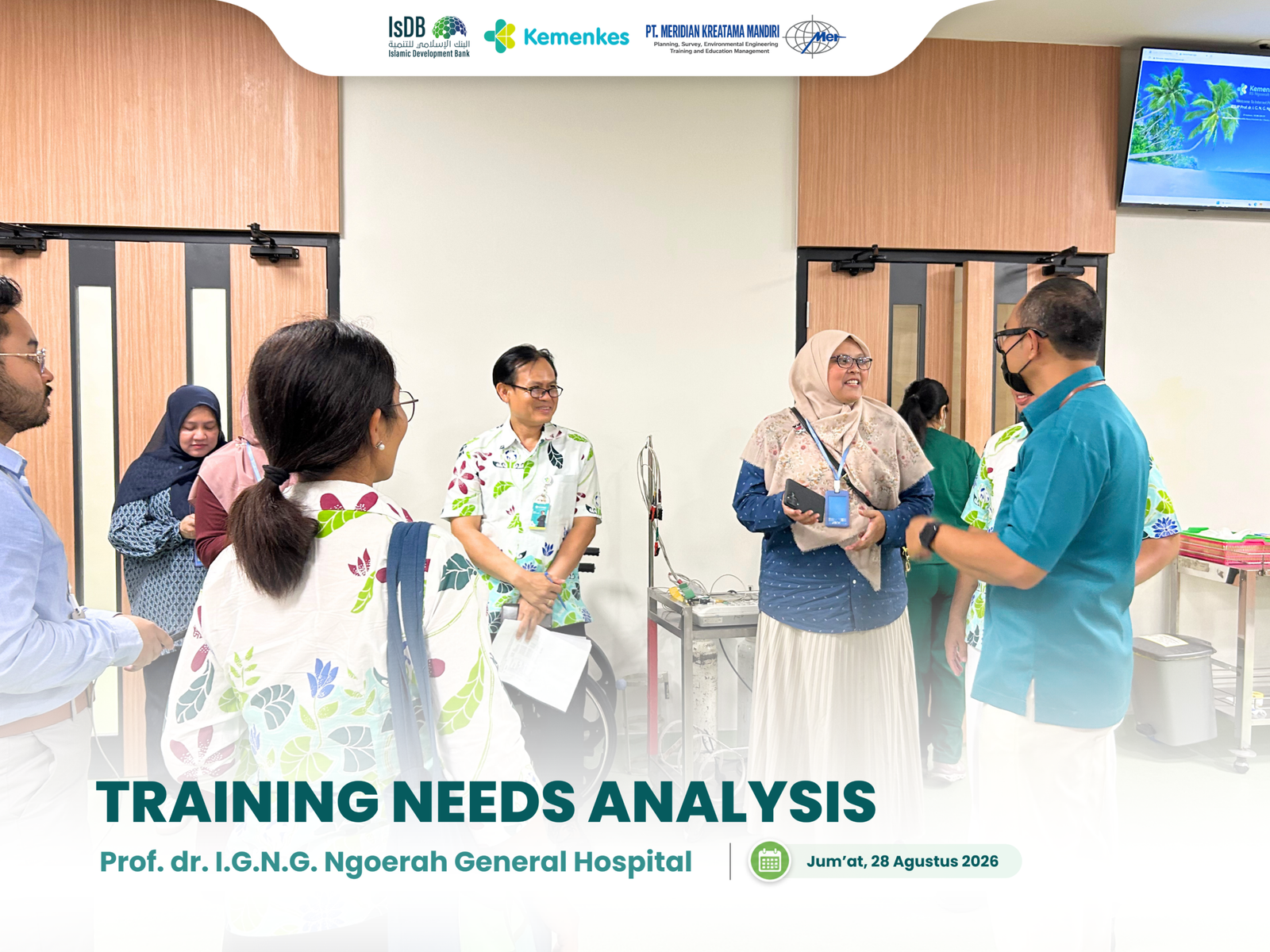
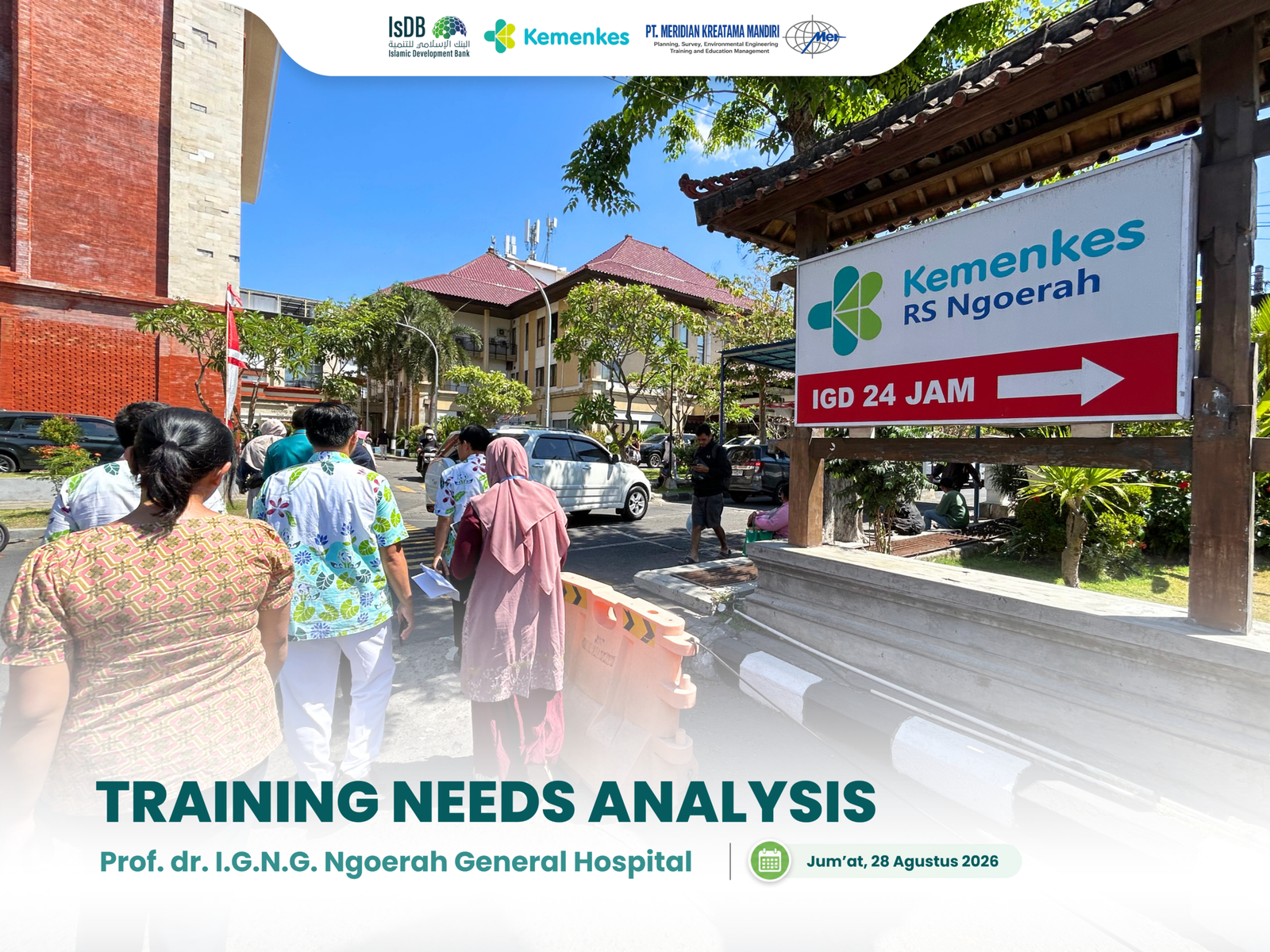
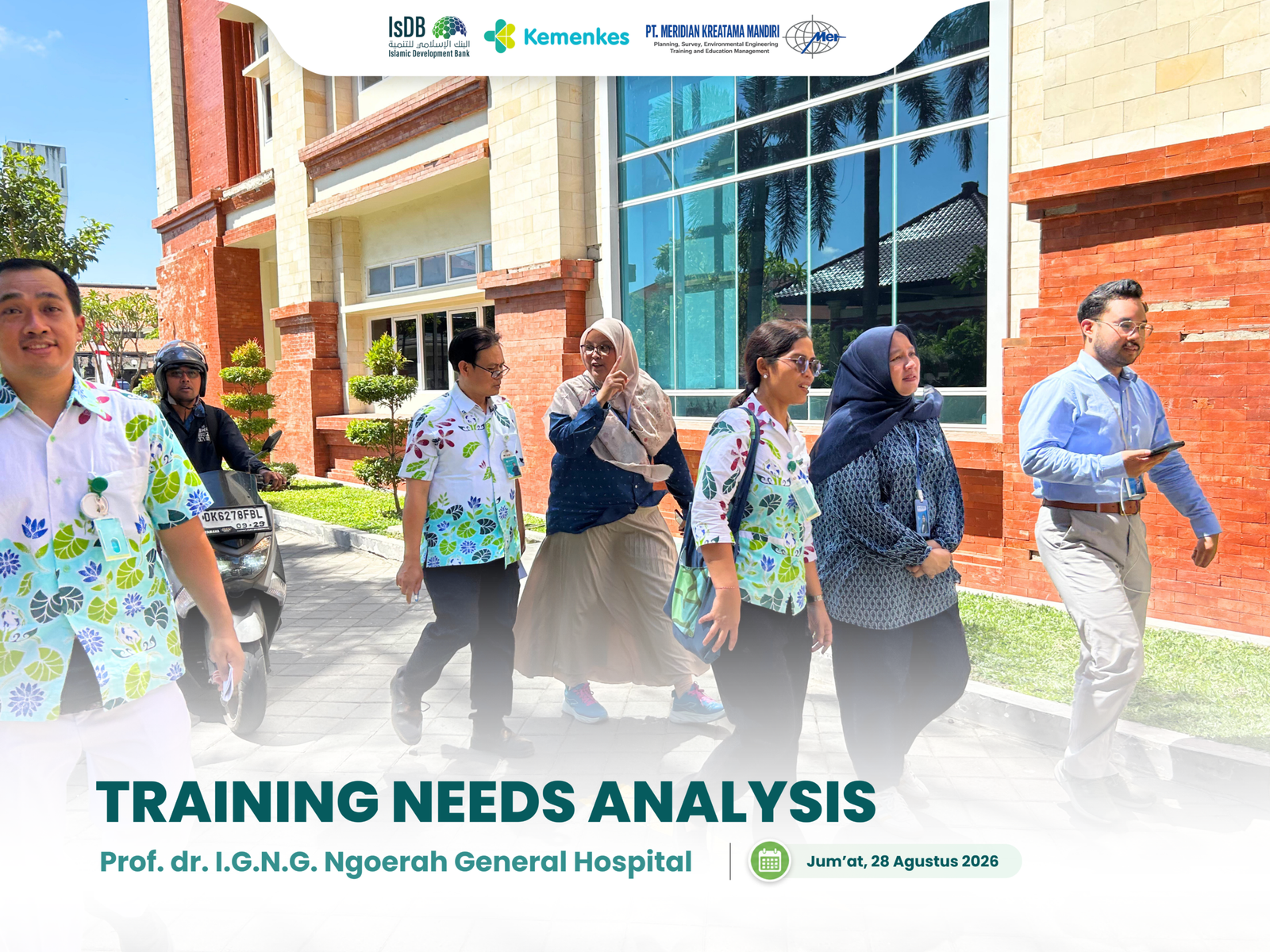
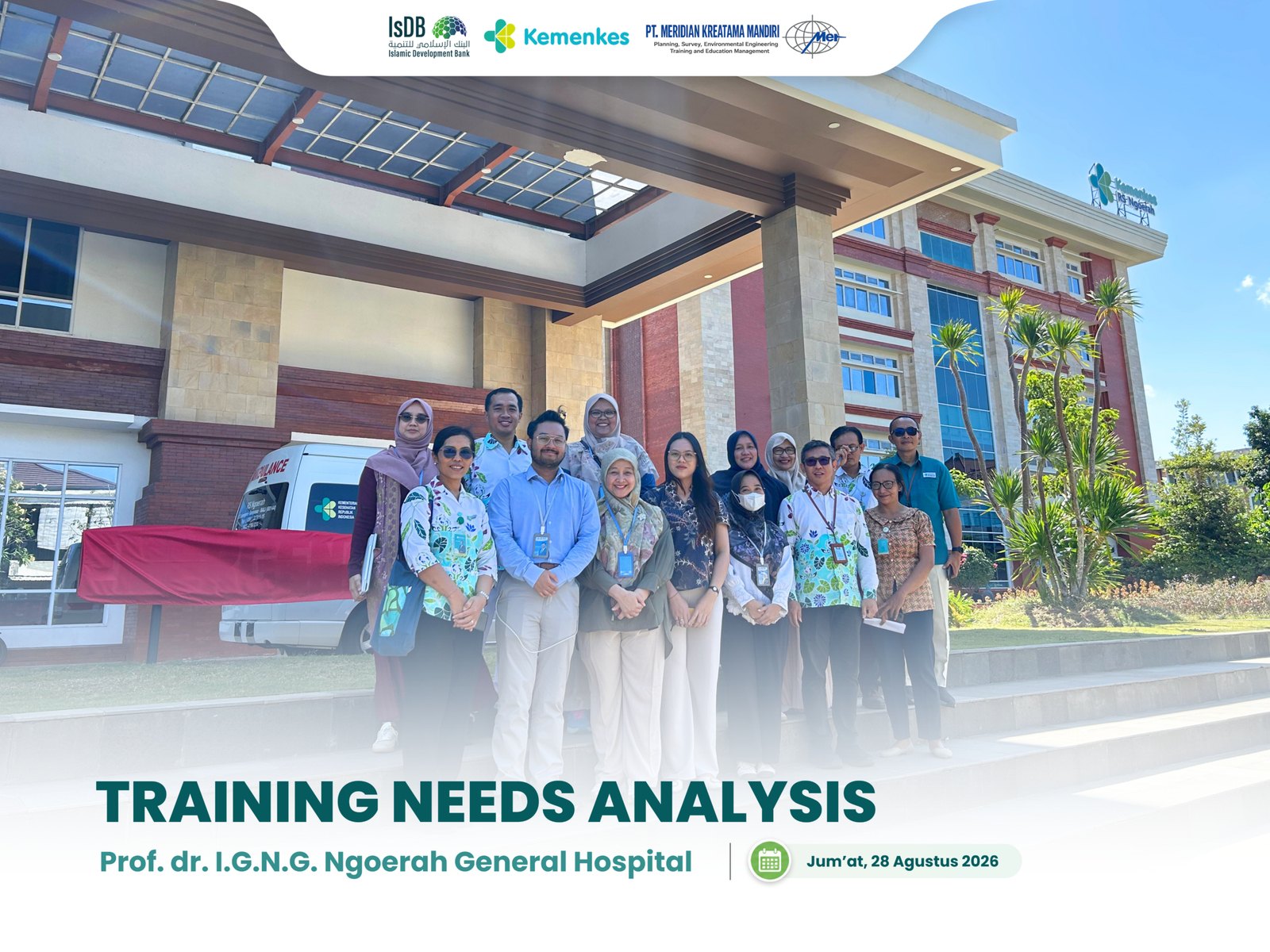
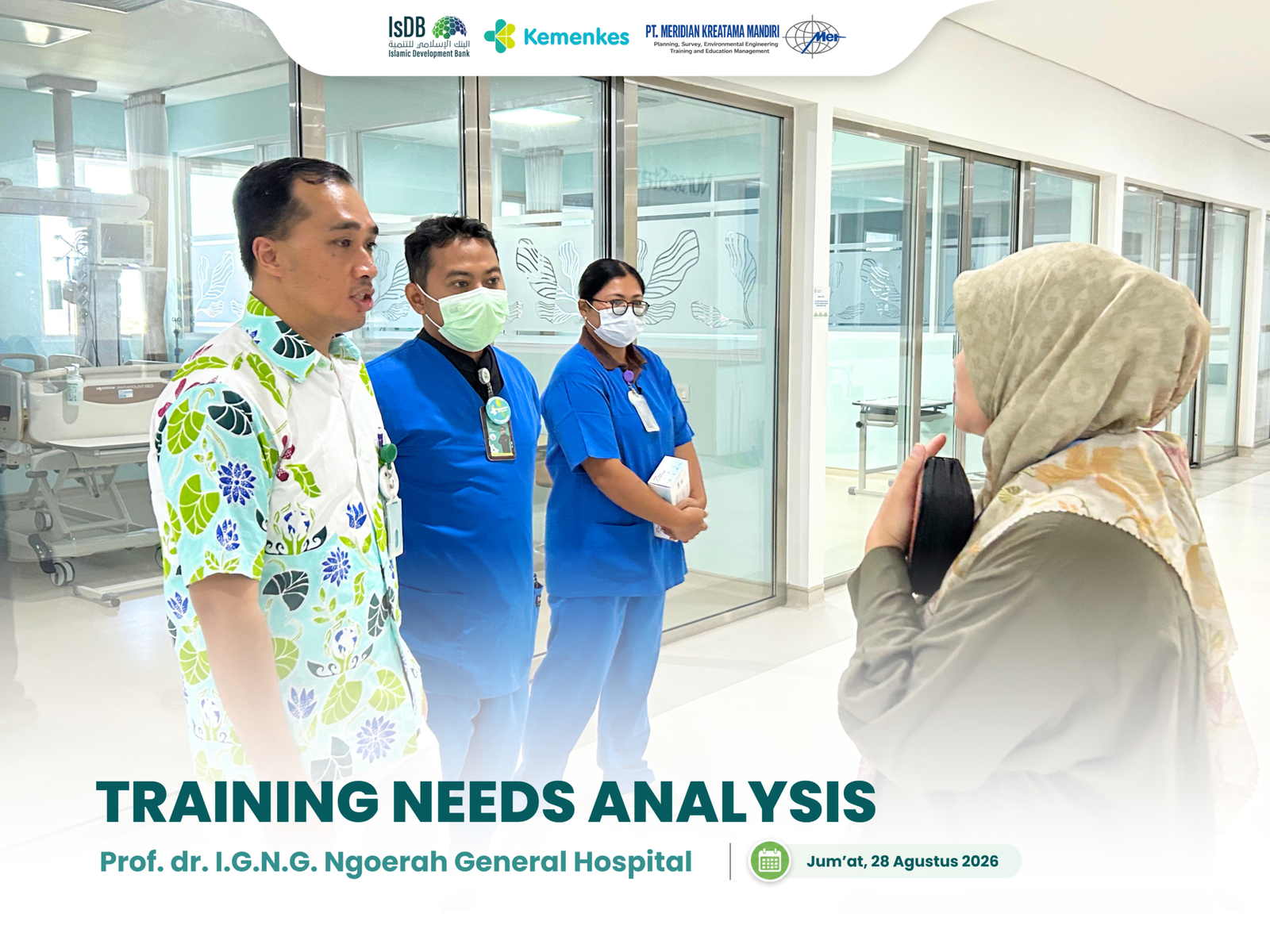
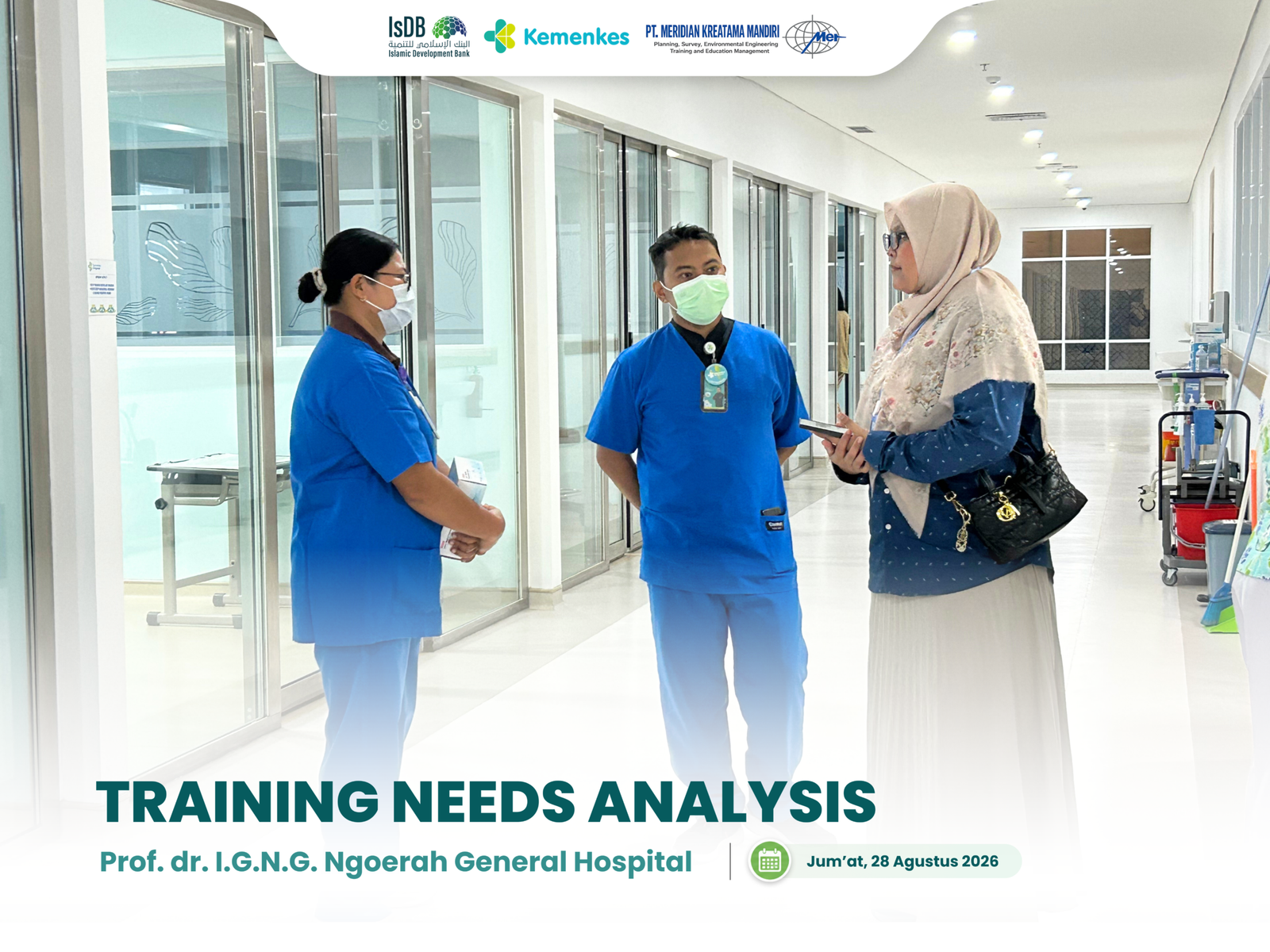
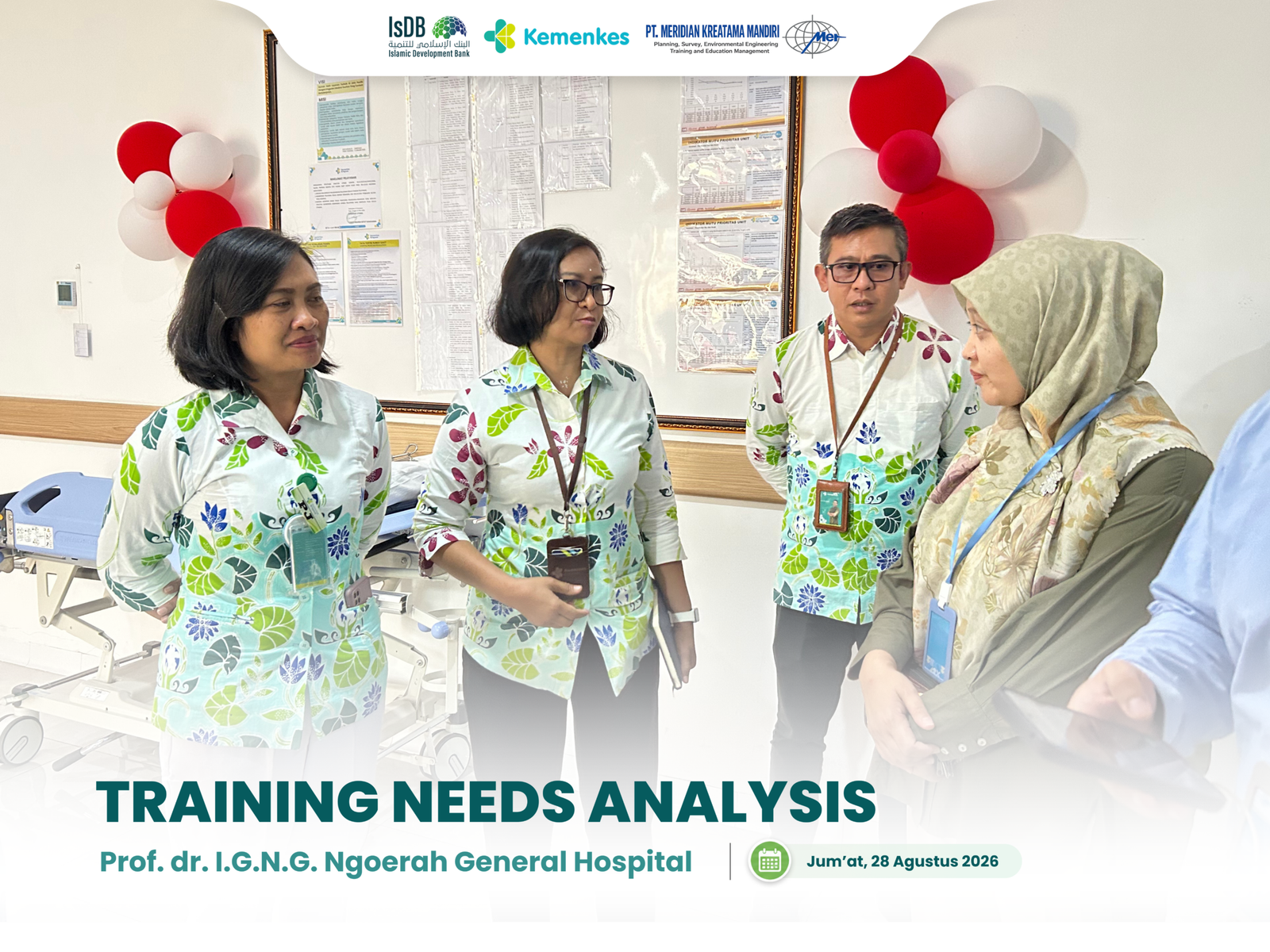
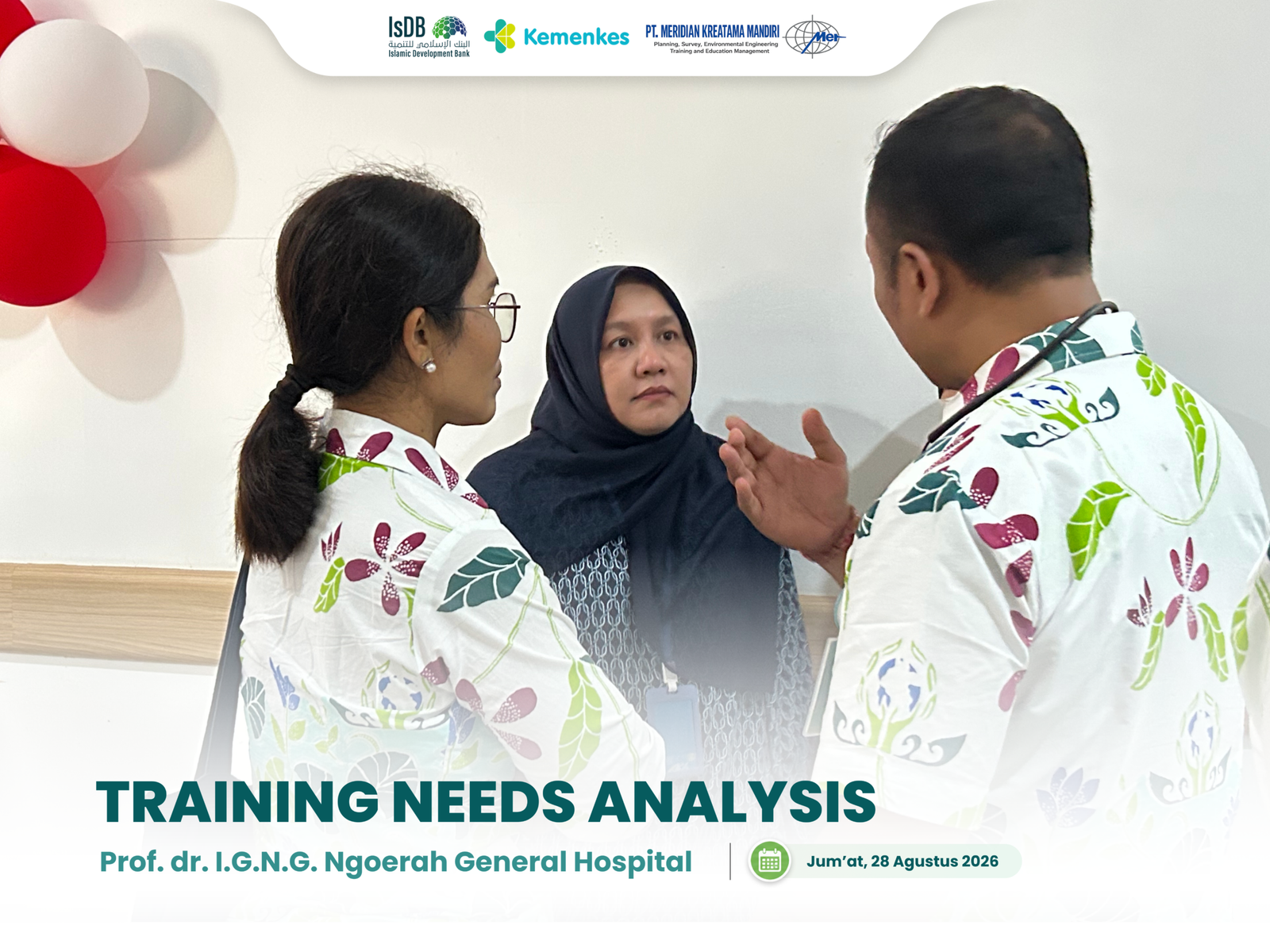
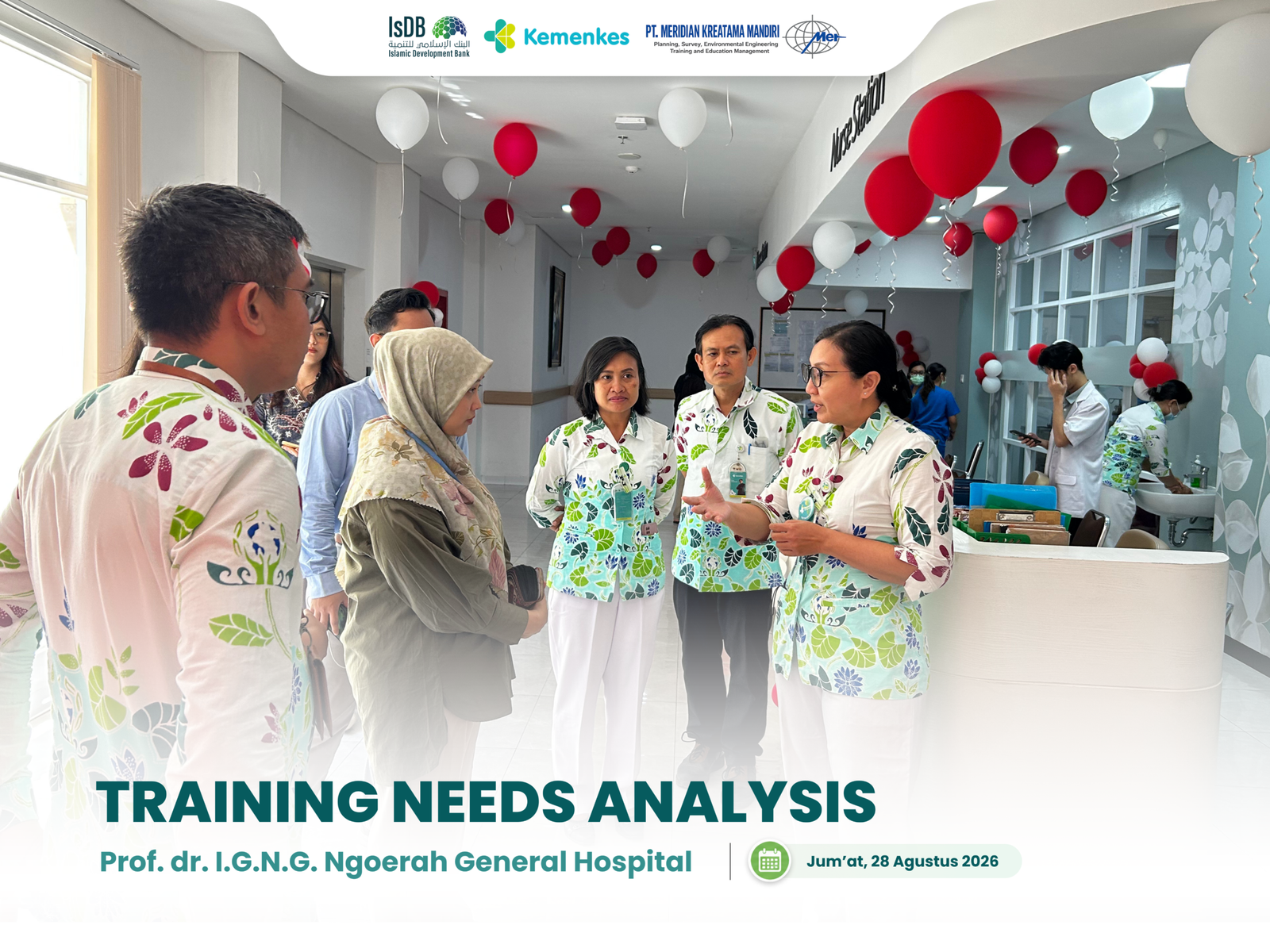
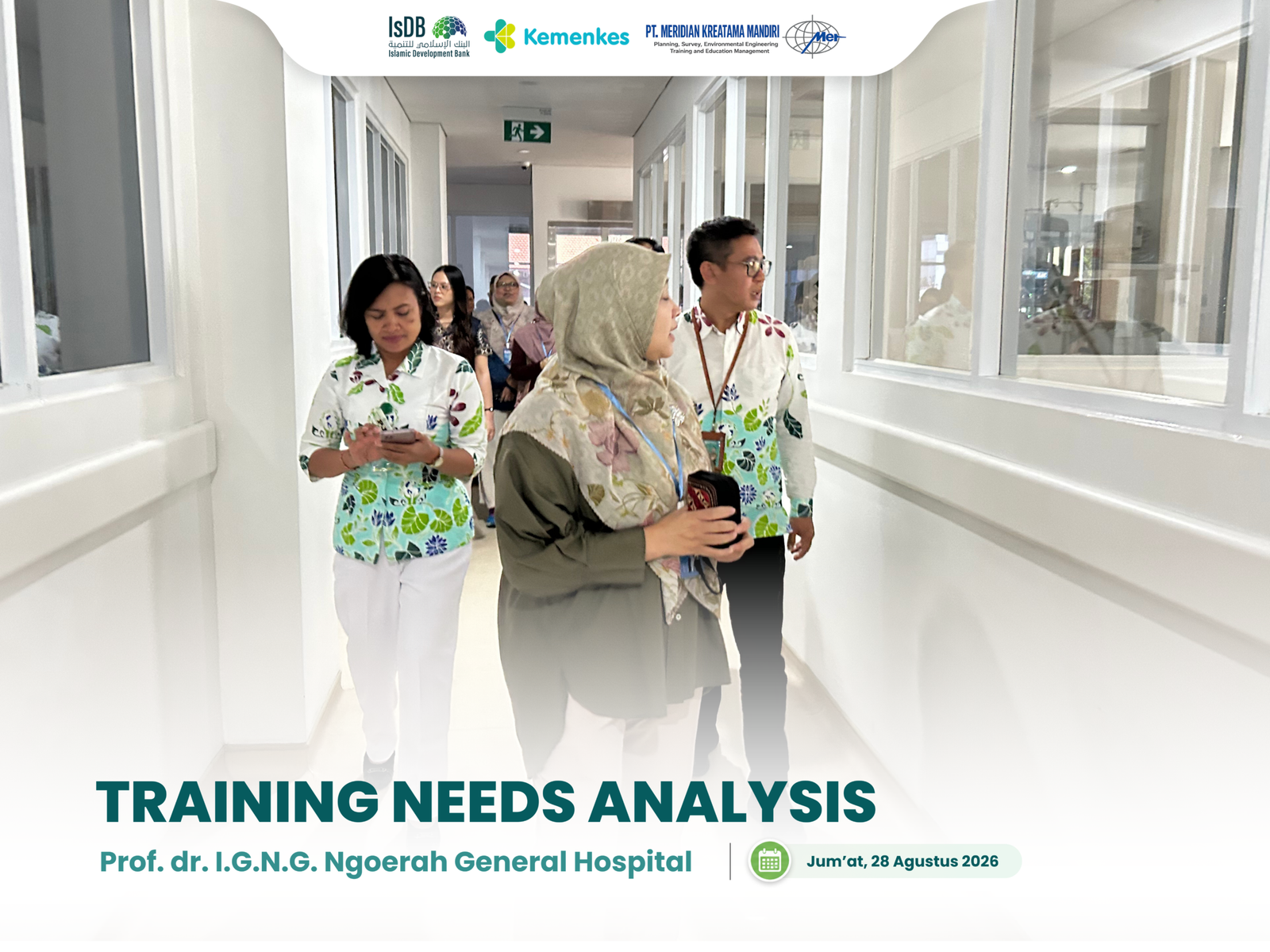
The Emergency Preparedness Consultant (EMPC) Project, IsDB IDN 1031 conducted a Field Visit and Onsite Training Needs Analysis (TNA) at RSUP Prof. Dr. I.G.N.G. Ngoerah on Friday, 28 August 2026. The activity was carried out to assess the hospital’s existing disaster preparedness capacity and identify areas for further development through the upcoming training program.
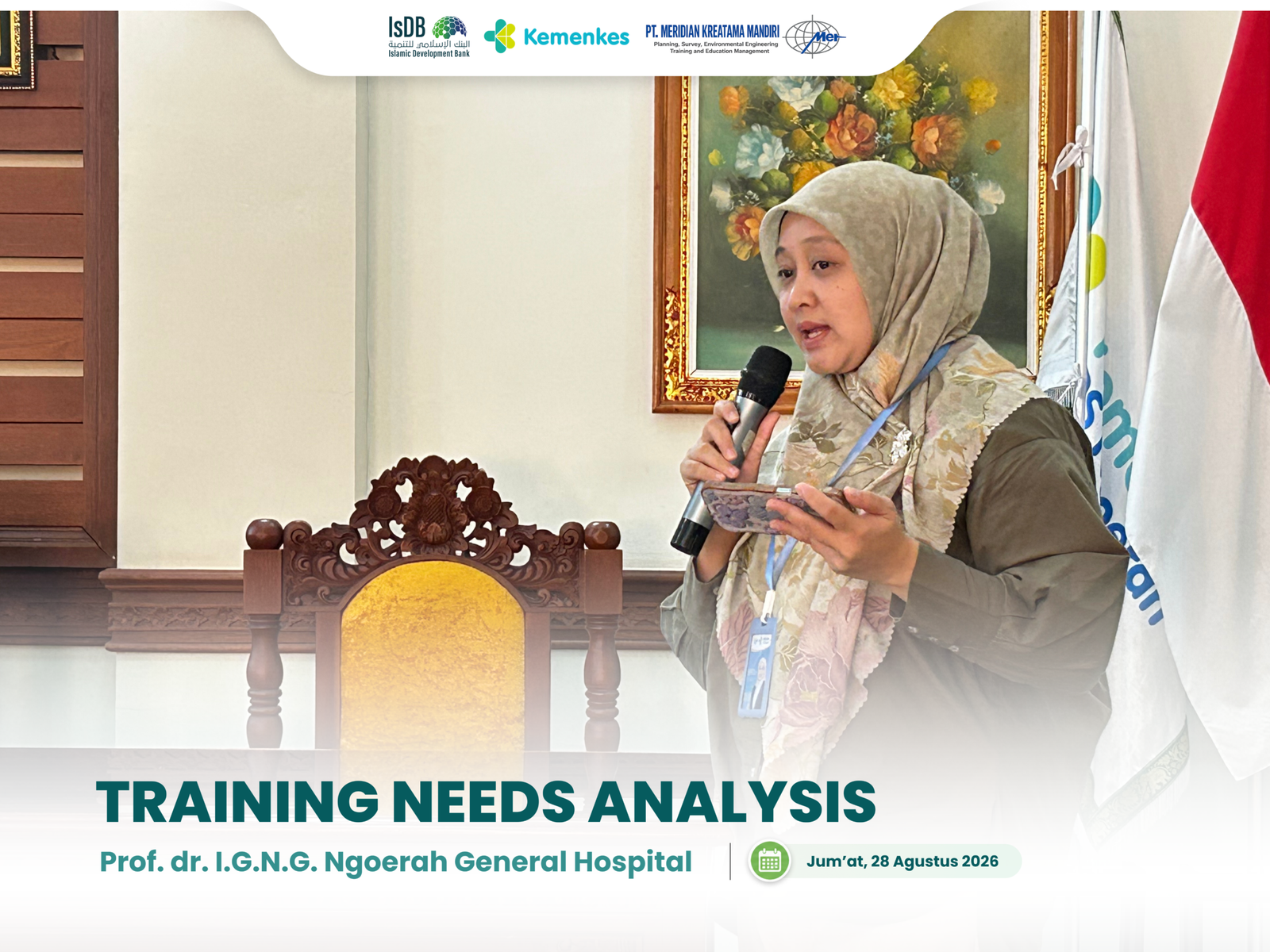
The activity commenced with an opening and welcoming remarks from the hospital leadership, followed by remarks from PT. Meridian Kreatama Mandiri (MKM) as the implementing consultant. The EMPC team then delivered a technical presentation on the TNA process, providing an overview of the assessment approach and the aspects that would be examined throughout the visit.
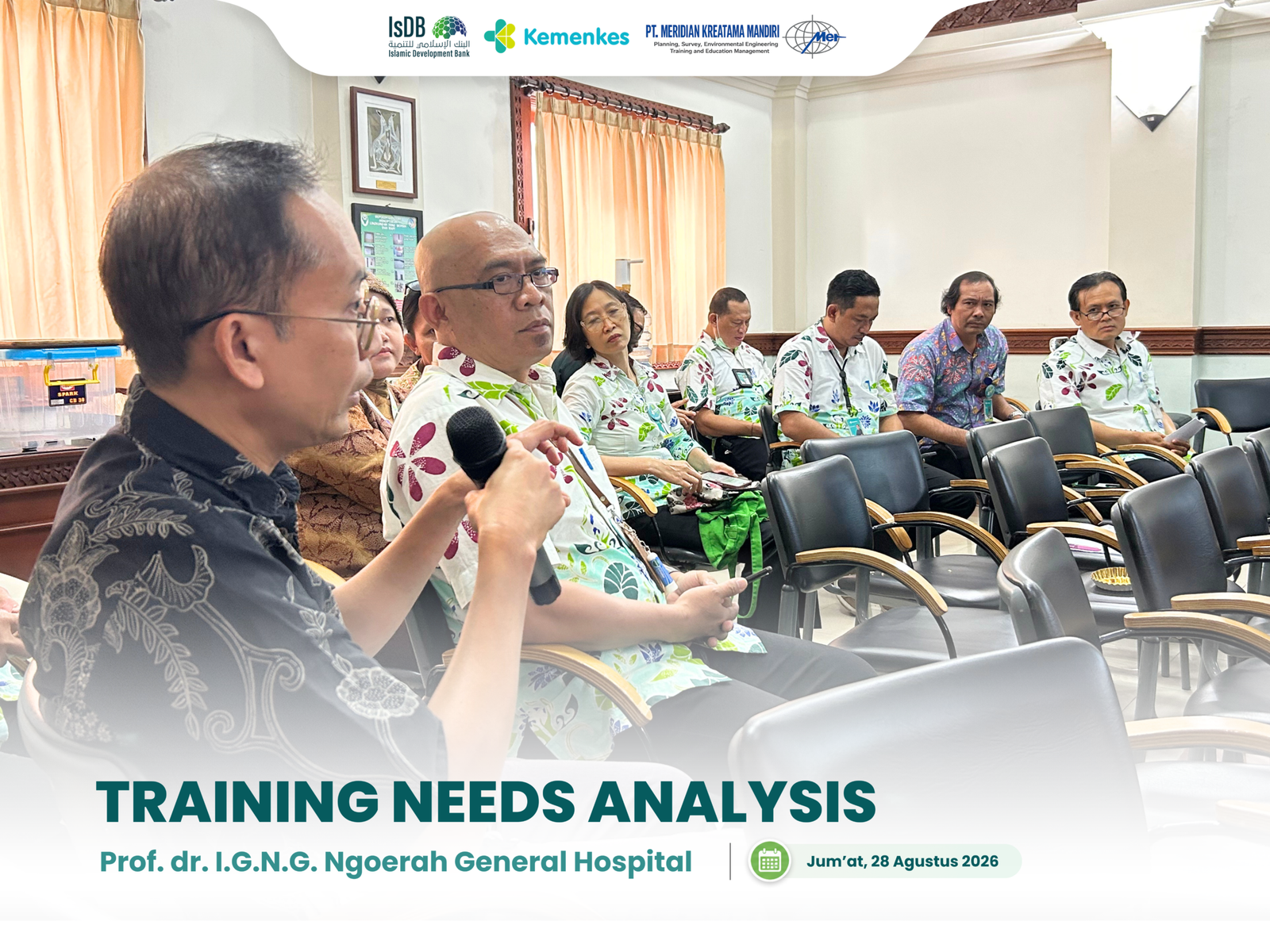
The assessment continued with a review of key hospital preparedness documents, including the Hospital Disaster Plan (HDP), emergency SOPs, and contingency plans. This session allowed the assessment team to examine the existing preparedness framework and understand how the hospital has established its emergency and disaster response planning.
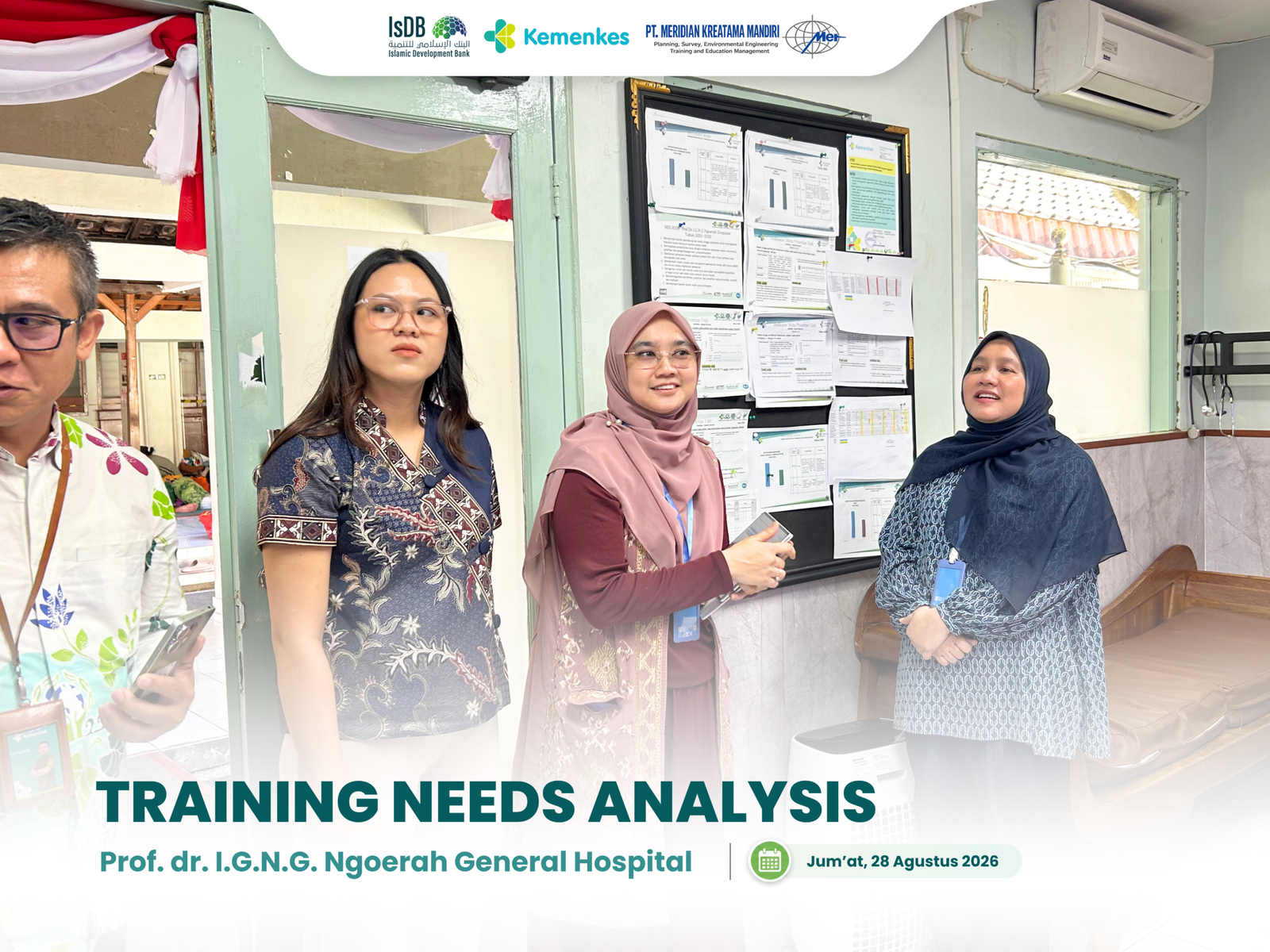
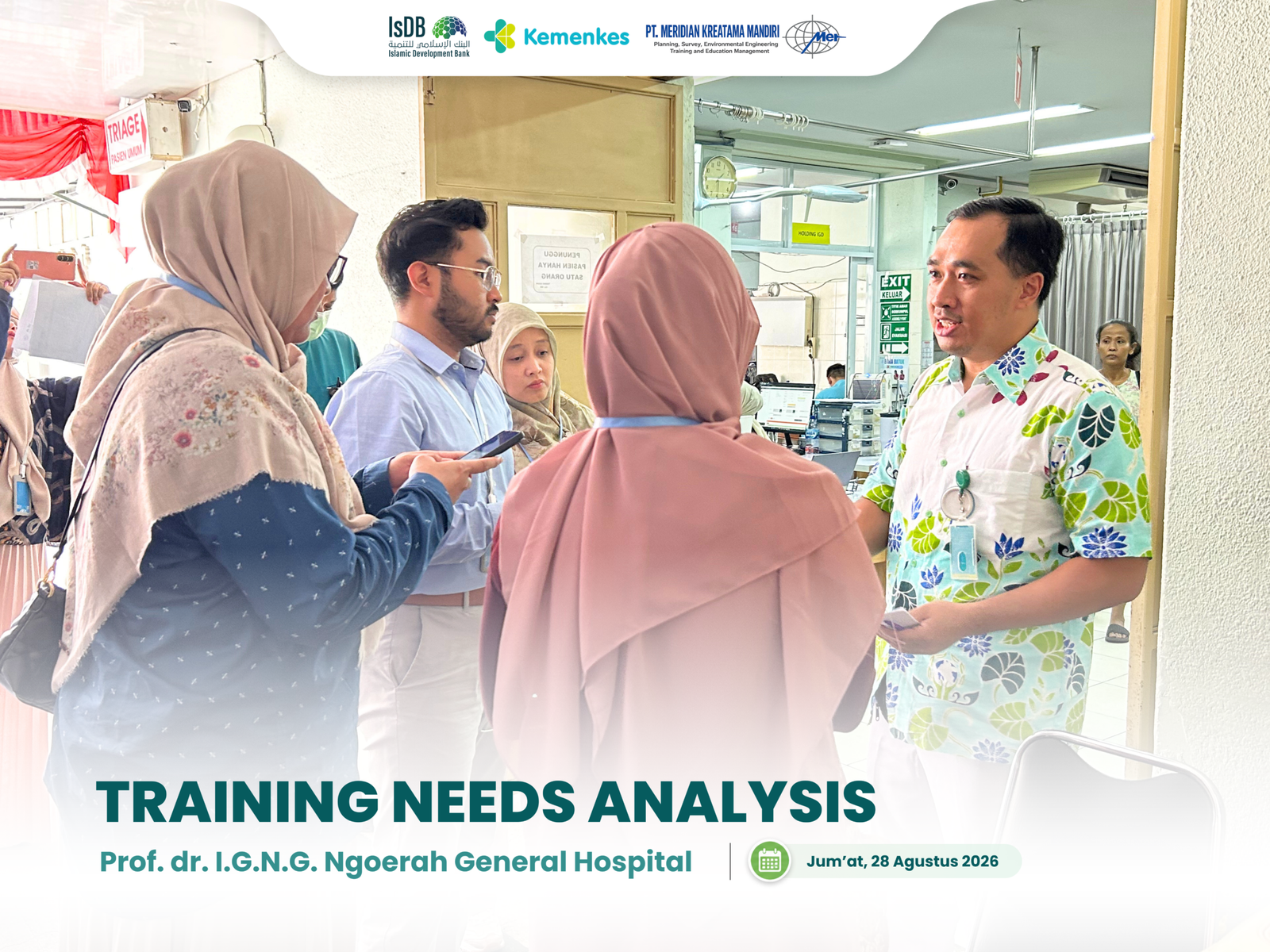
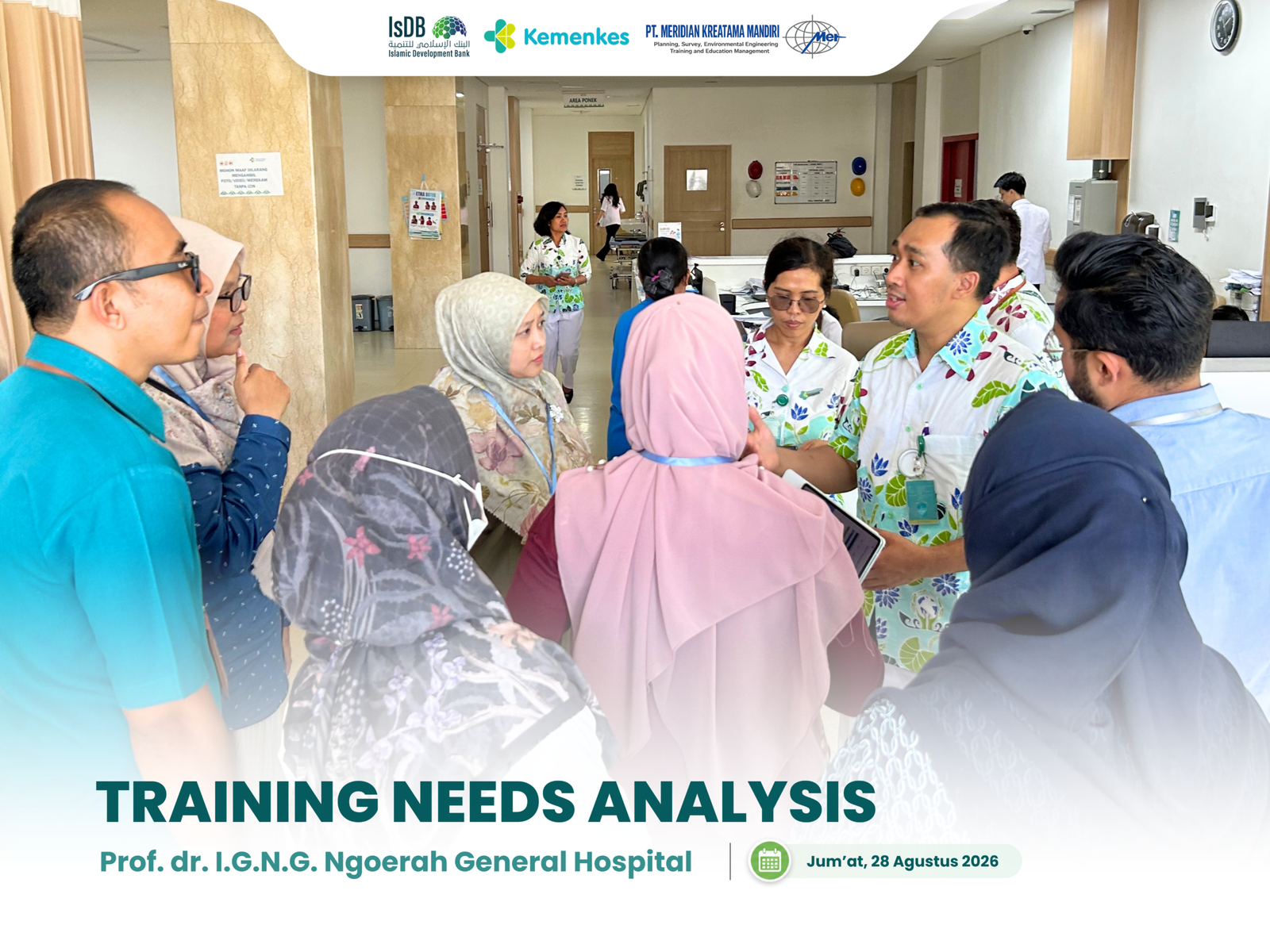
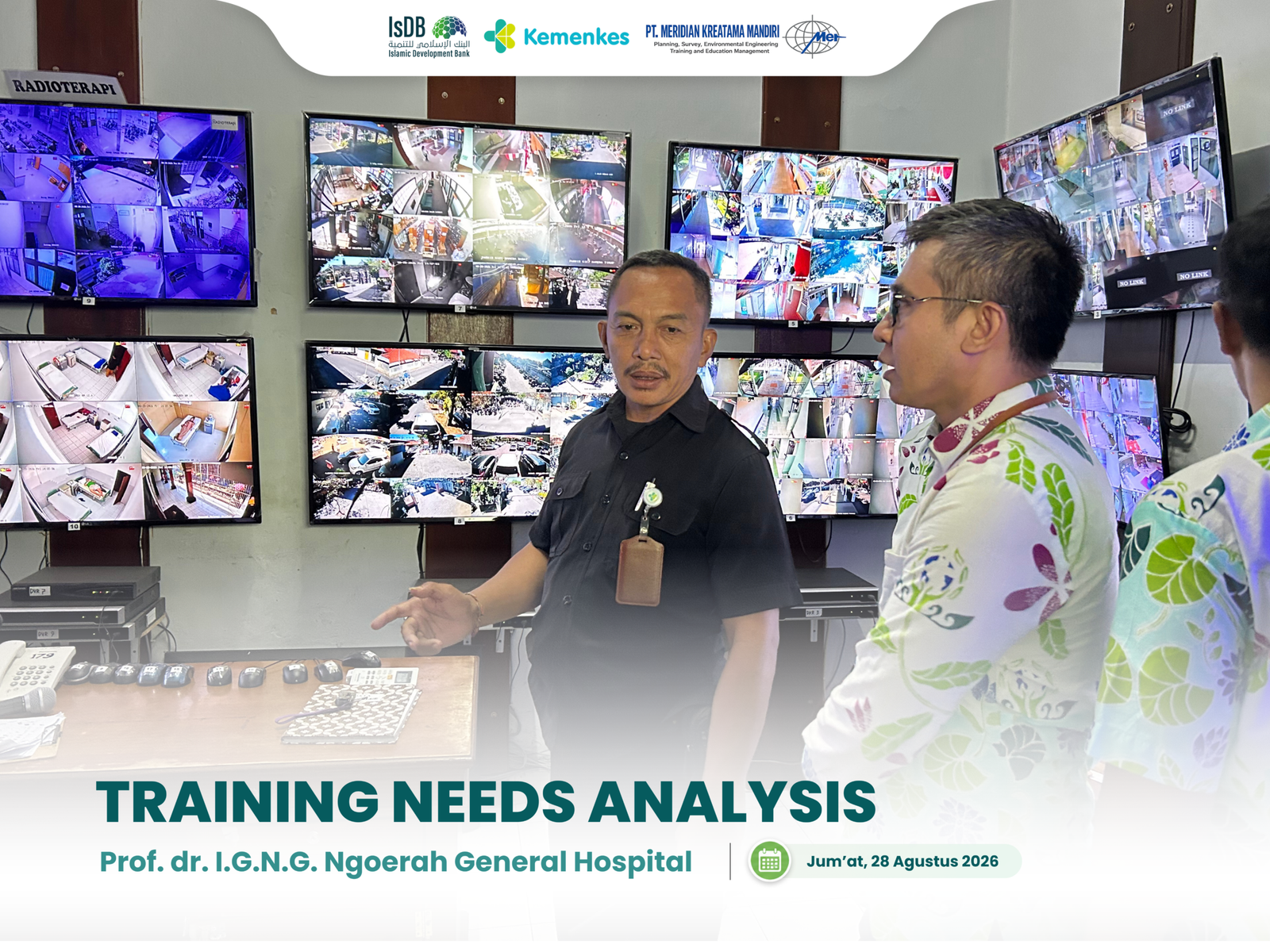
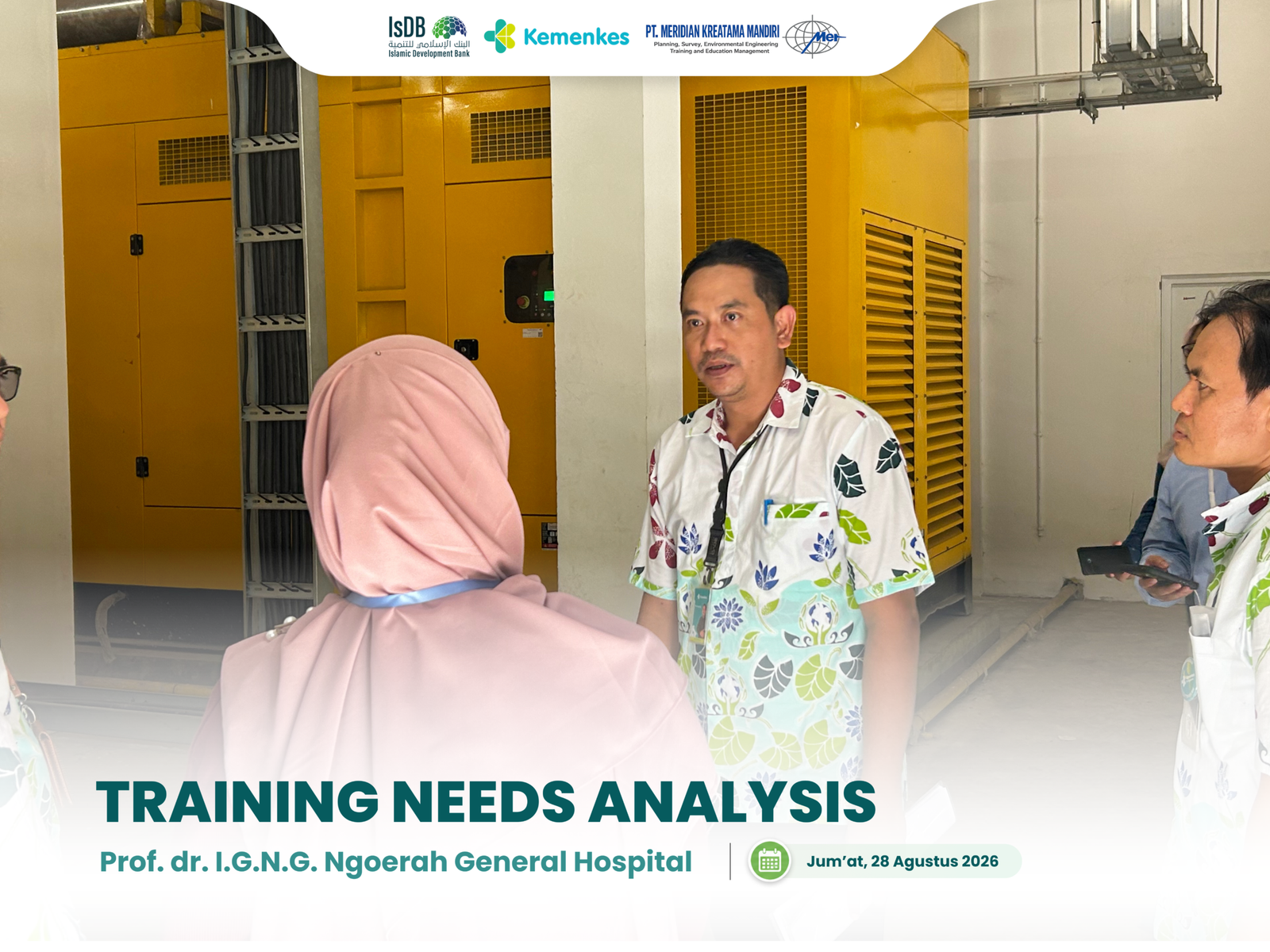
Following the document review, the EMPC team conducted direct observations across several non-clinical and vital clinical areas of the hospital. The non-clinical assessment covered emergency logistics, security, engineering and utilities, as well as IT infrastructure. The team subsequently visited critical clinical areas, including the Emergency Department, ICU/PICU/NICU, operating rooms, Command Centre, and evacuation routes.
The field assessment provided an opportunity for the team to observe the hospital’s facilities and operational processes directly while engaging with relevant personnel from different sectors. These observations contributed practical insights into the hospital’s preparedness, coordination mechanisms, infrastructure, and operational capacity in responding to potential emergency and disaster situations.
The findings from the field observation were then discussed through a Preliminary Gap Analysis, involving the EMPC consultant team and the hospital’s internal K3/Quality team. The initial findings were subsequently presented and validated through a Validation Meeting involving hospital management, managers, and relevant K3/Quality representatives.
The activity concluded with a discussion of the next steps, including the completion of the online TNA questionnaire. The overall assessment provided valuable baseline information regarding the hospital’s current preparedness and areas requiring further strengthening, which will support the development of relevant and targeted training interventions under the EMPC Project.
28 August 2026


















TRAINING NEEDS ANALYSIS
Wahidin Sudirohusodo Hospital
Wahidin Sudirohusodo Hospital, Makassar
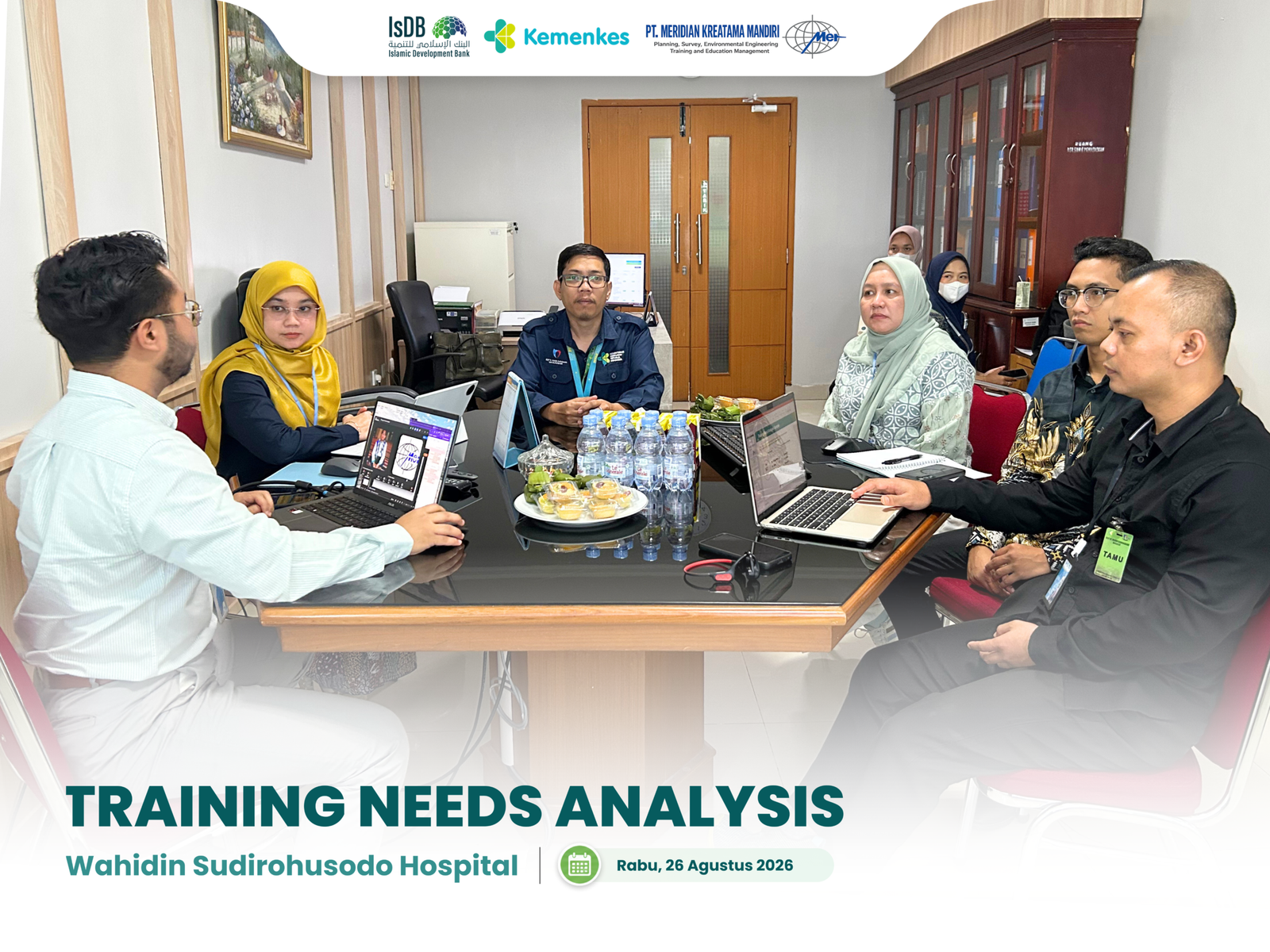
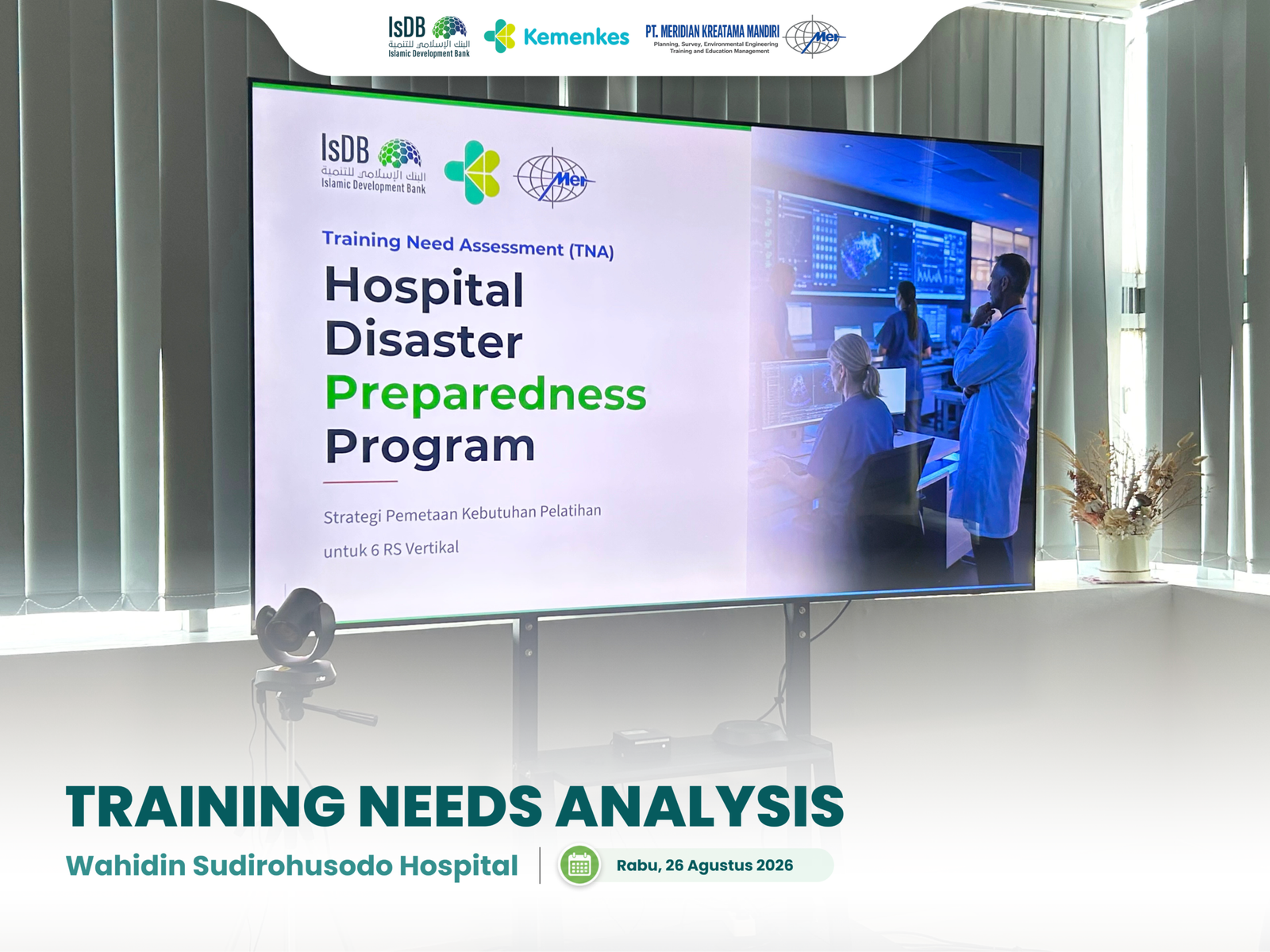
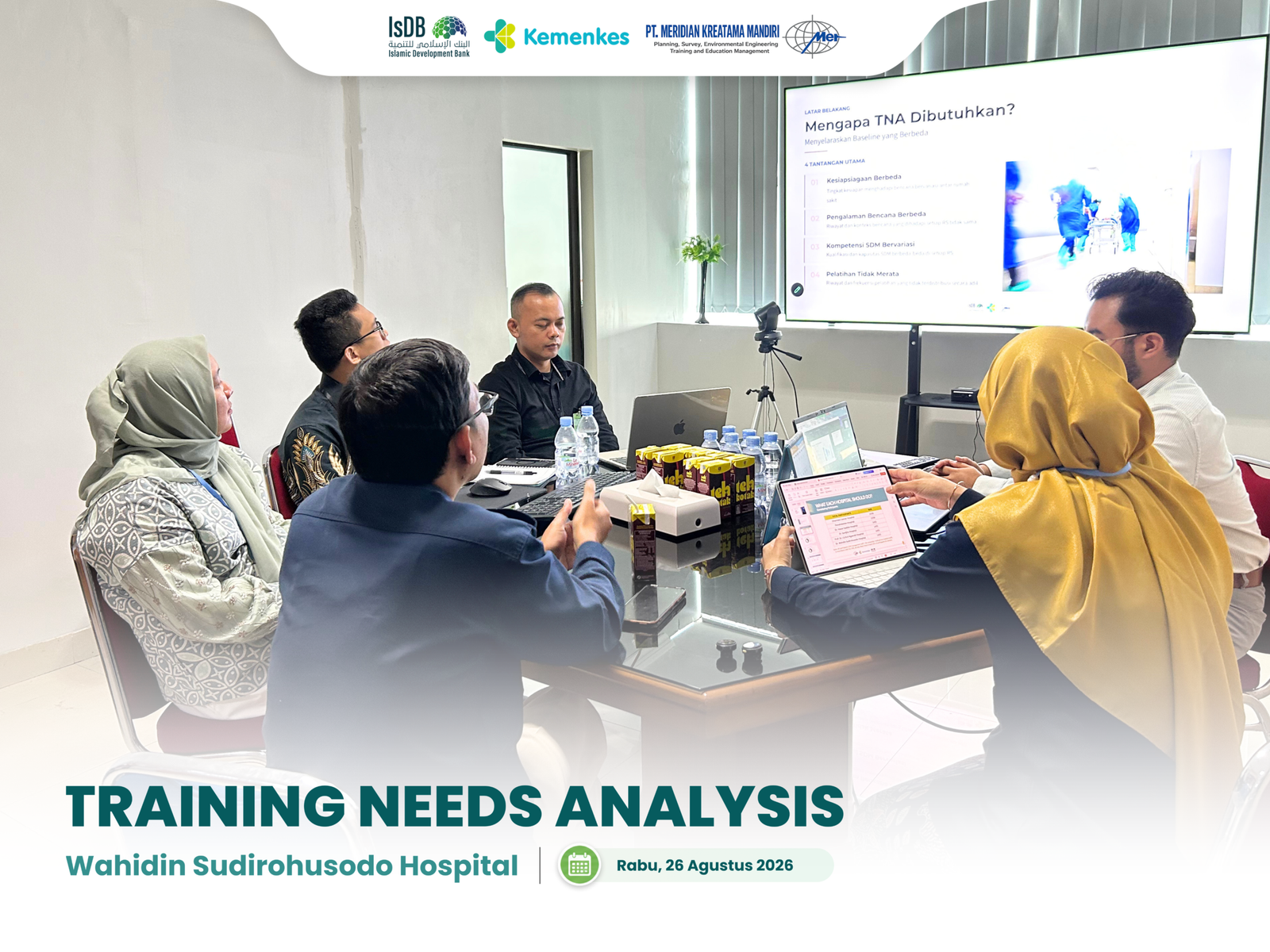
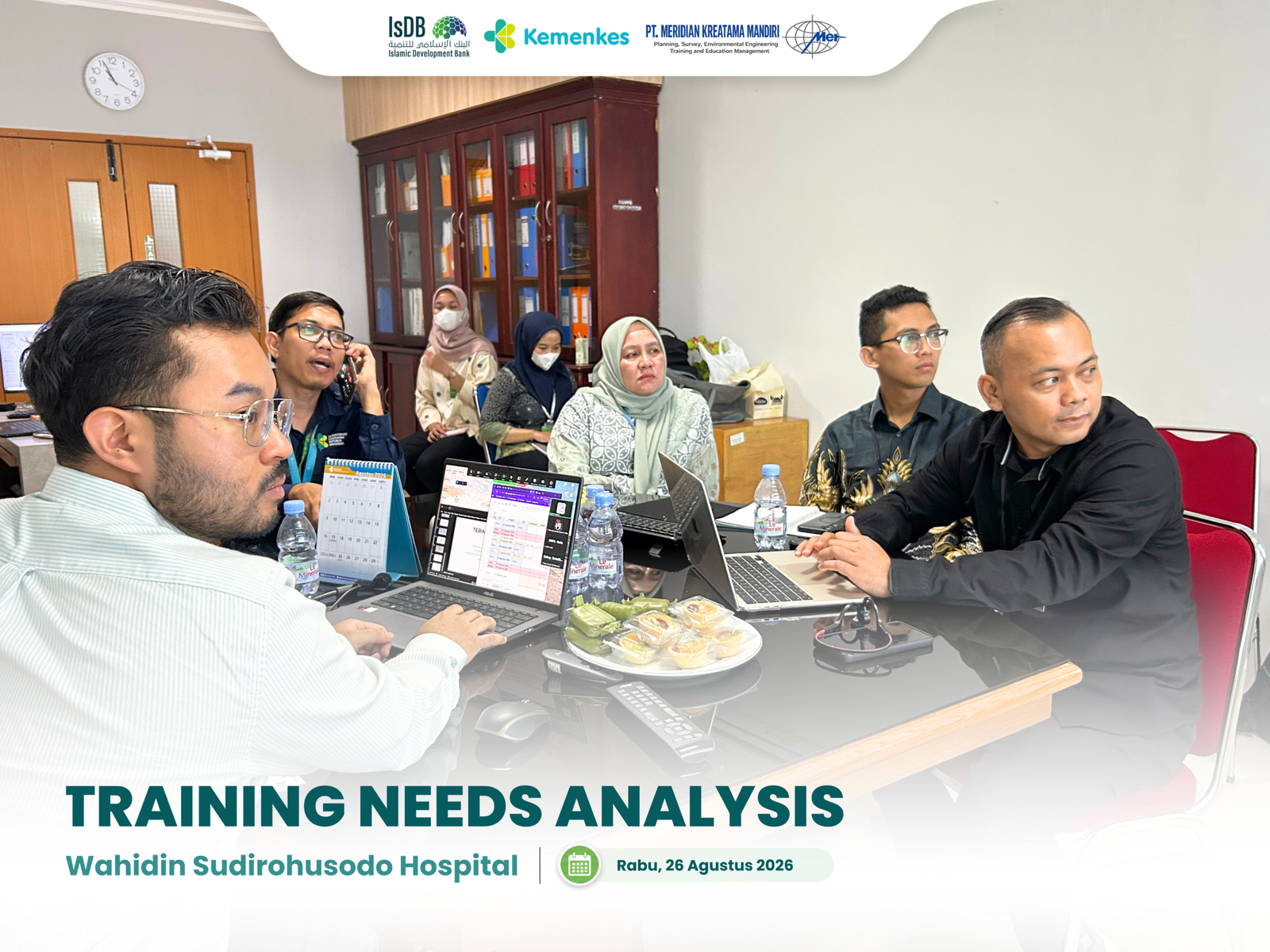
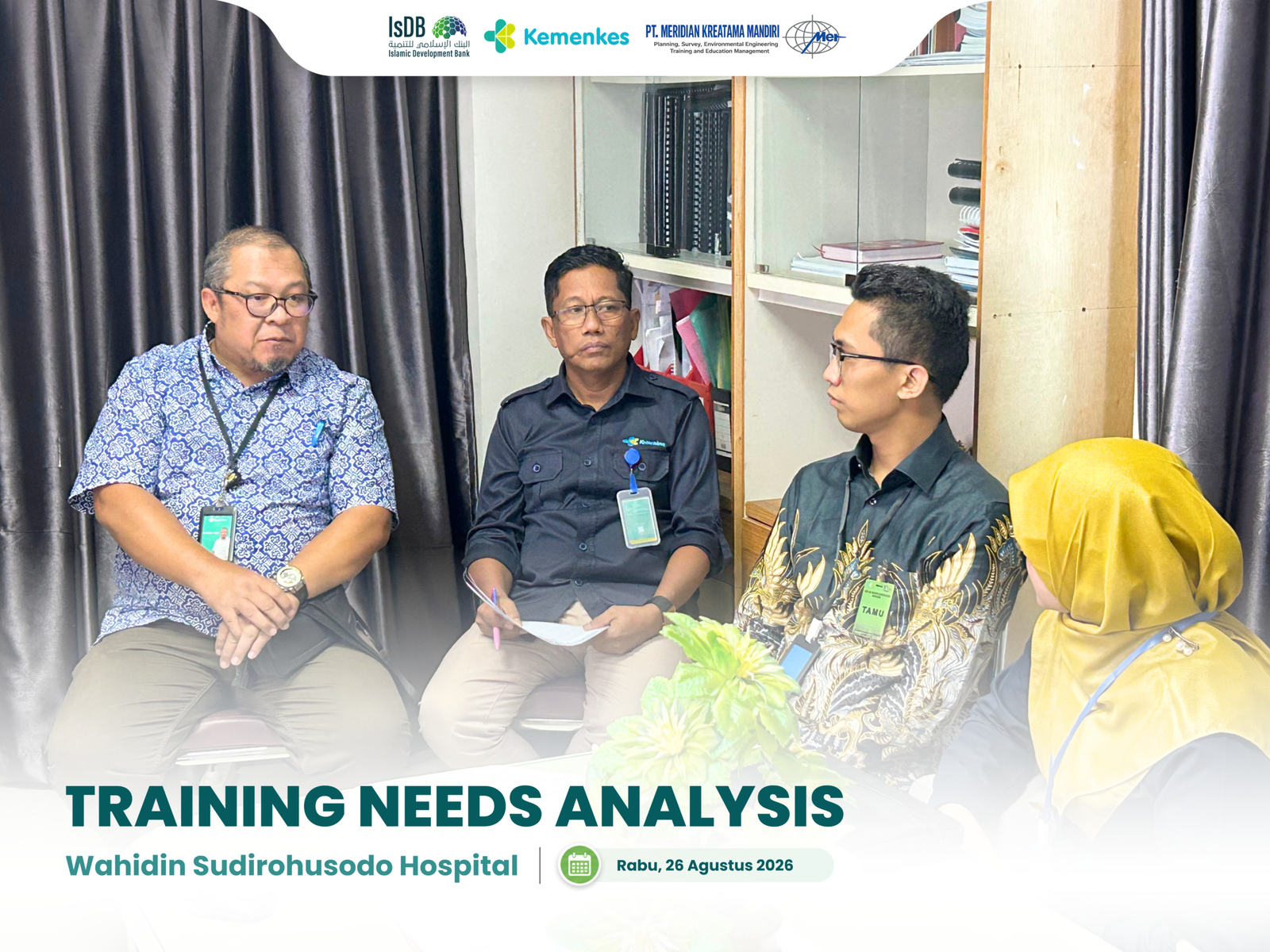
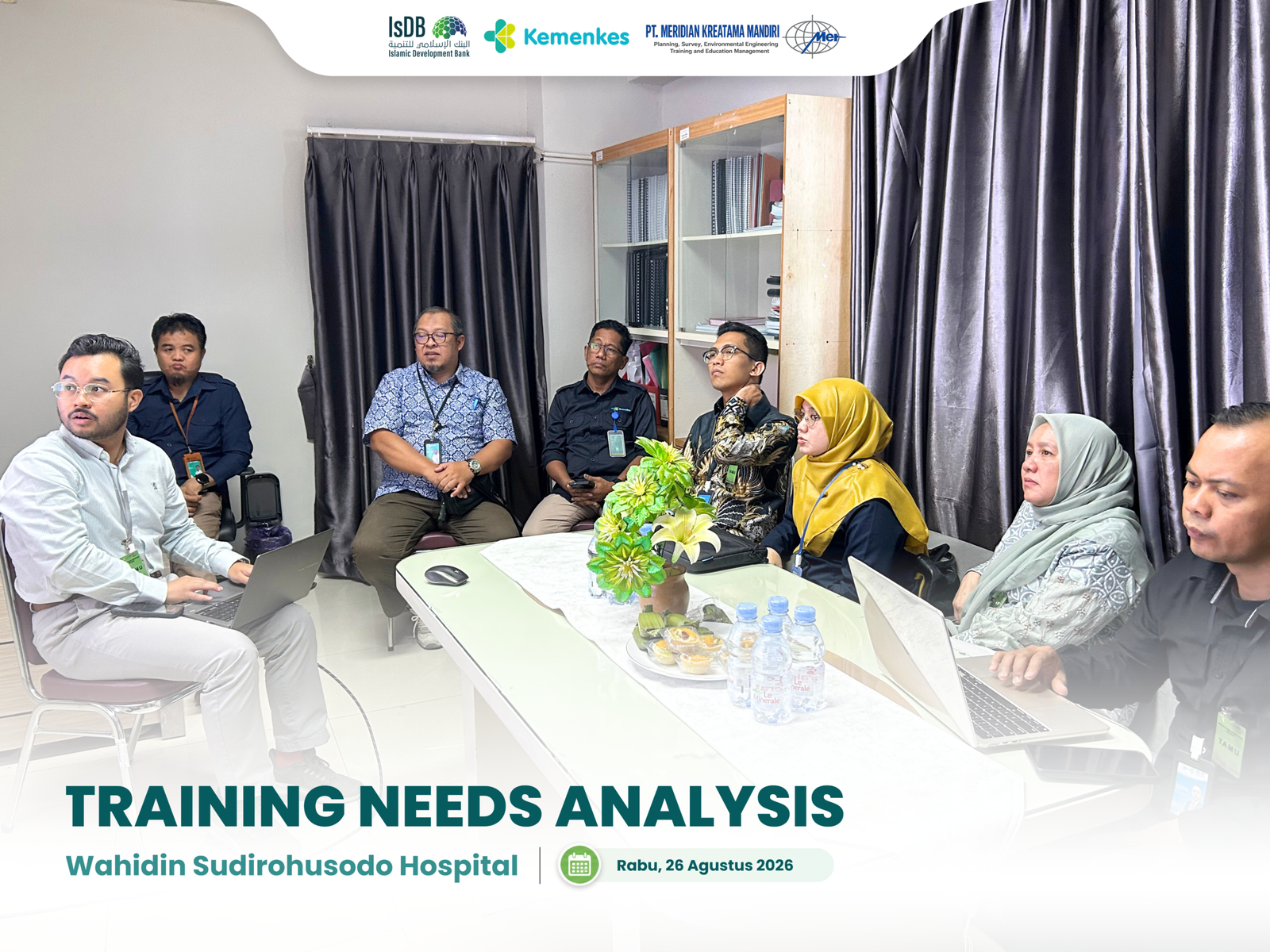
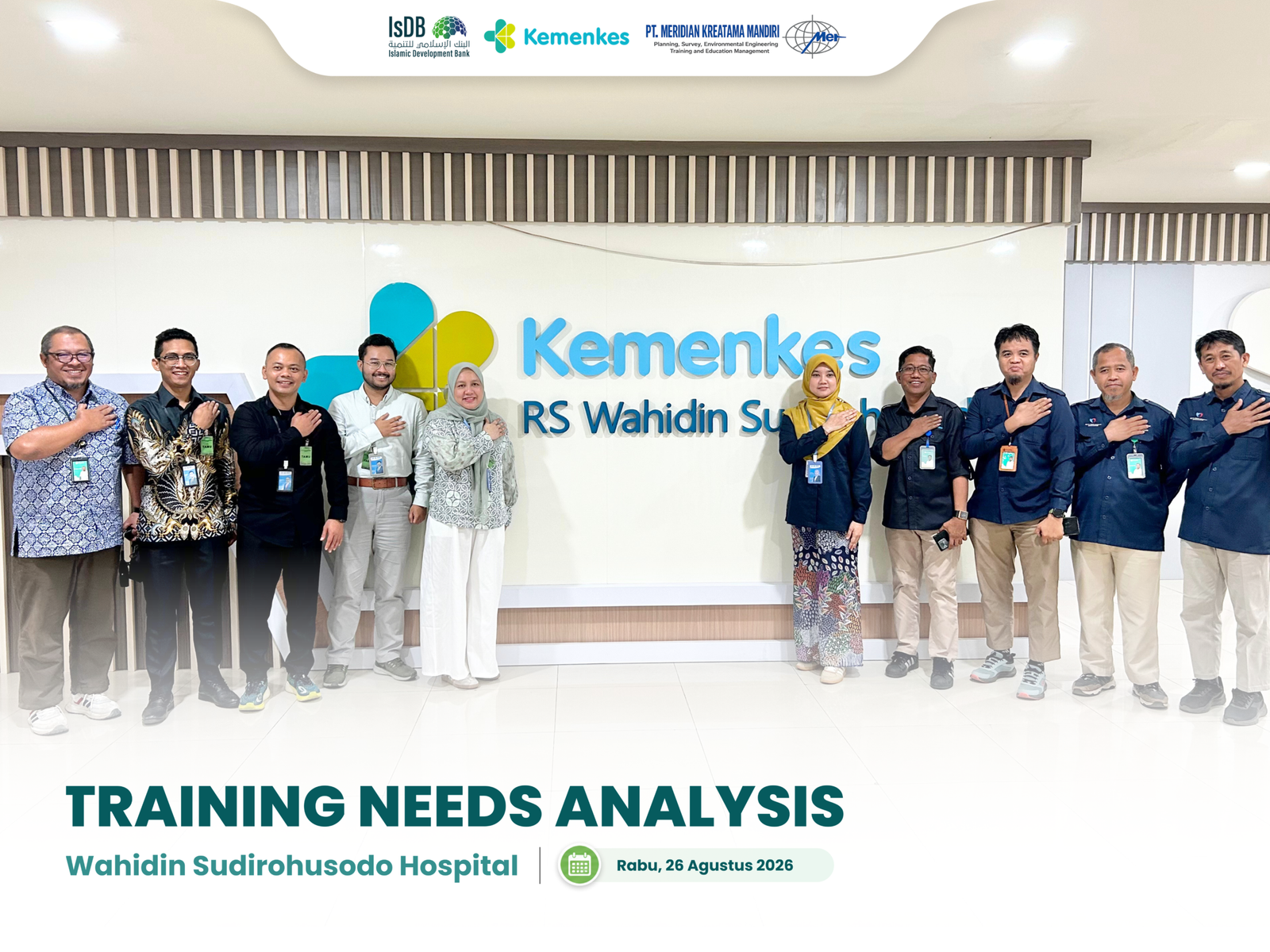
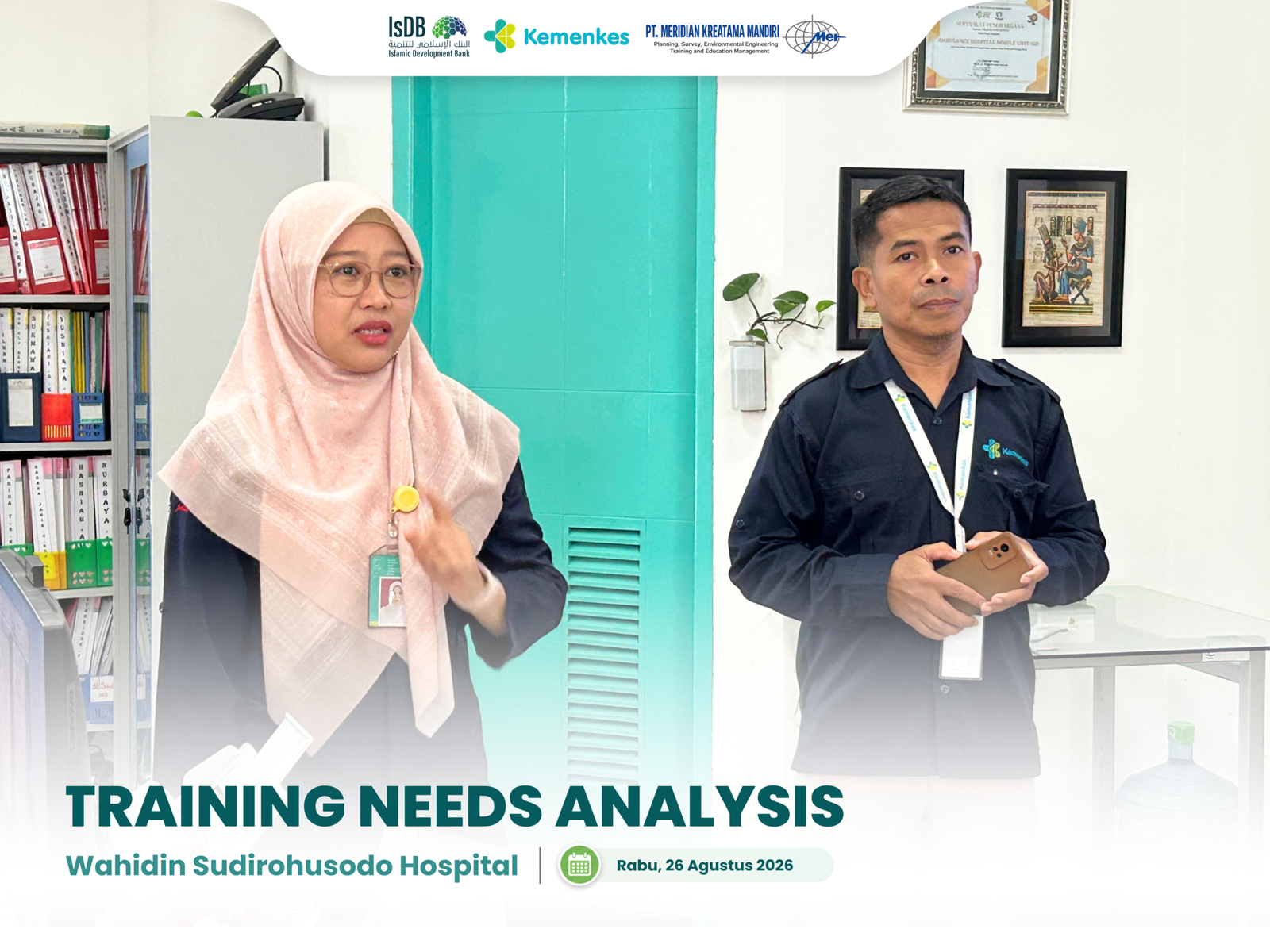
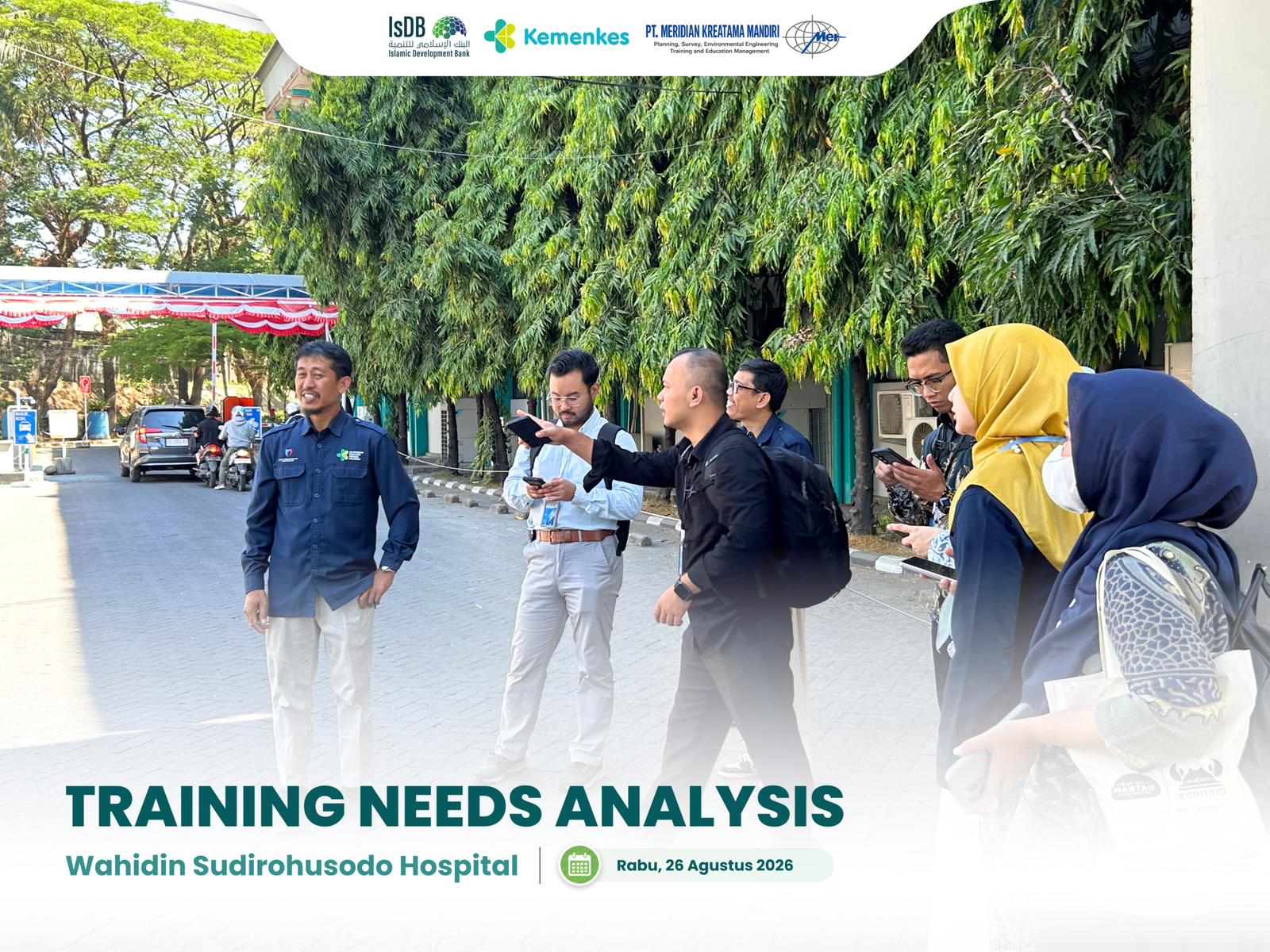
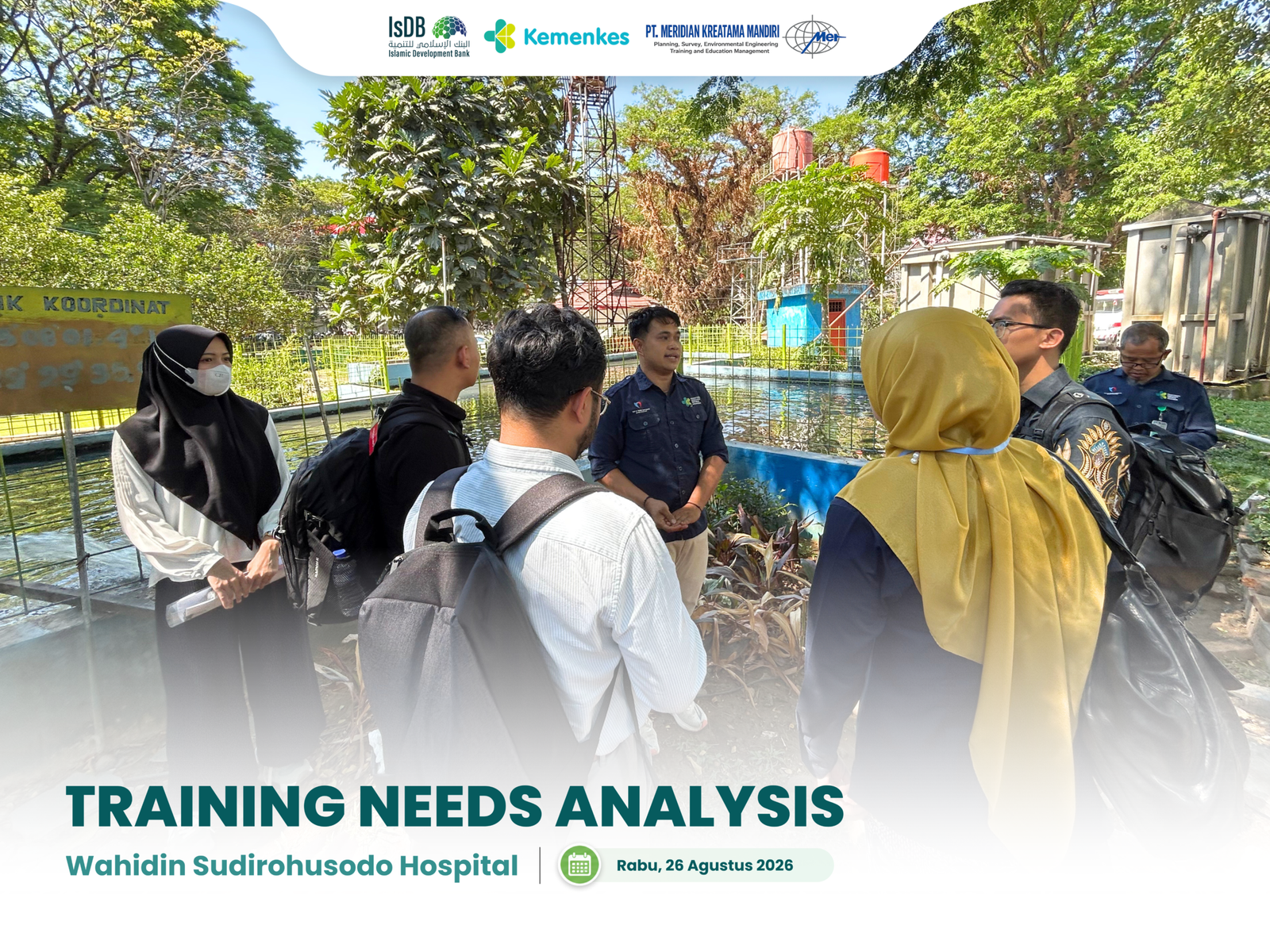
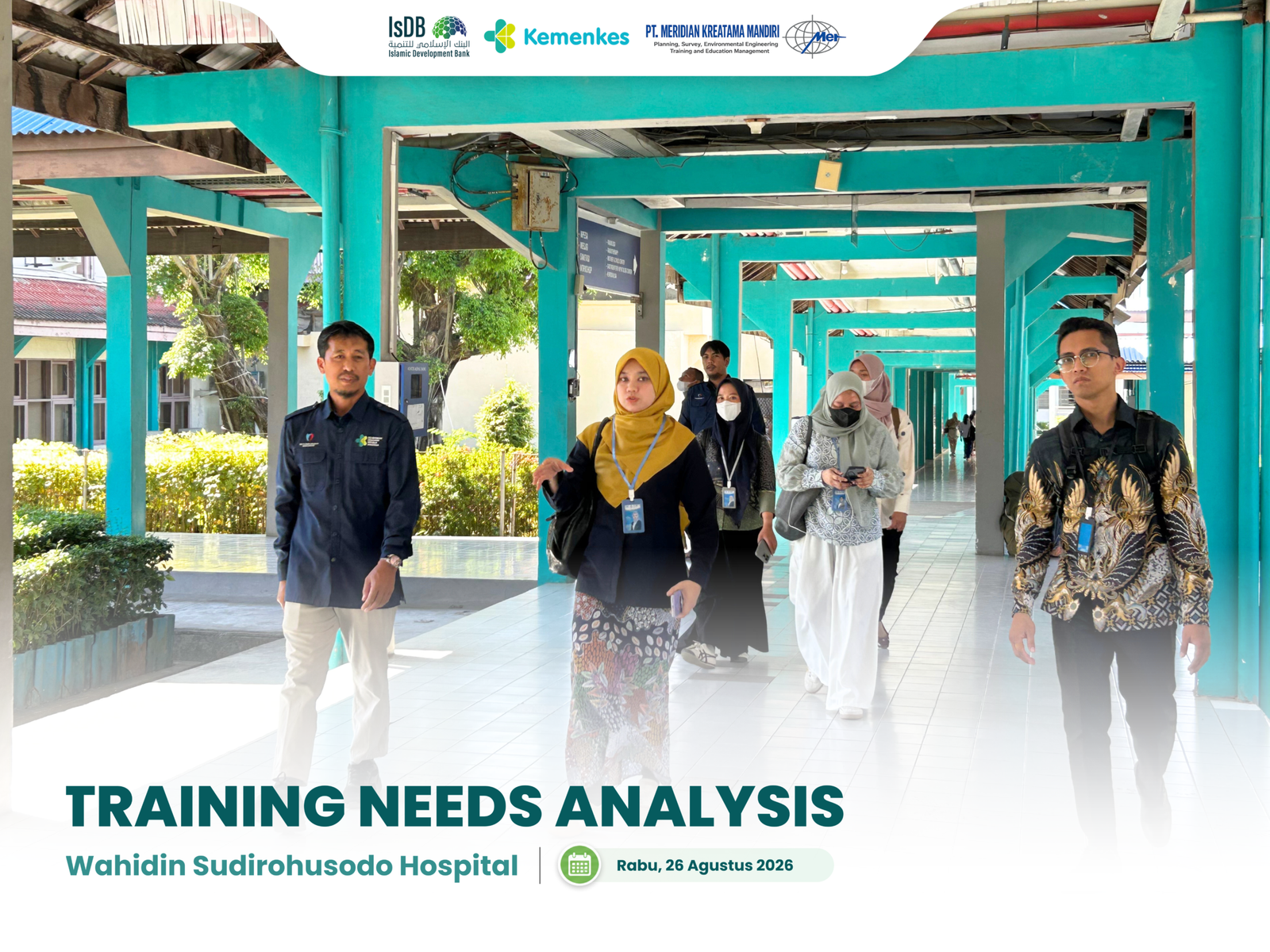
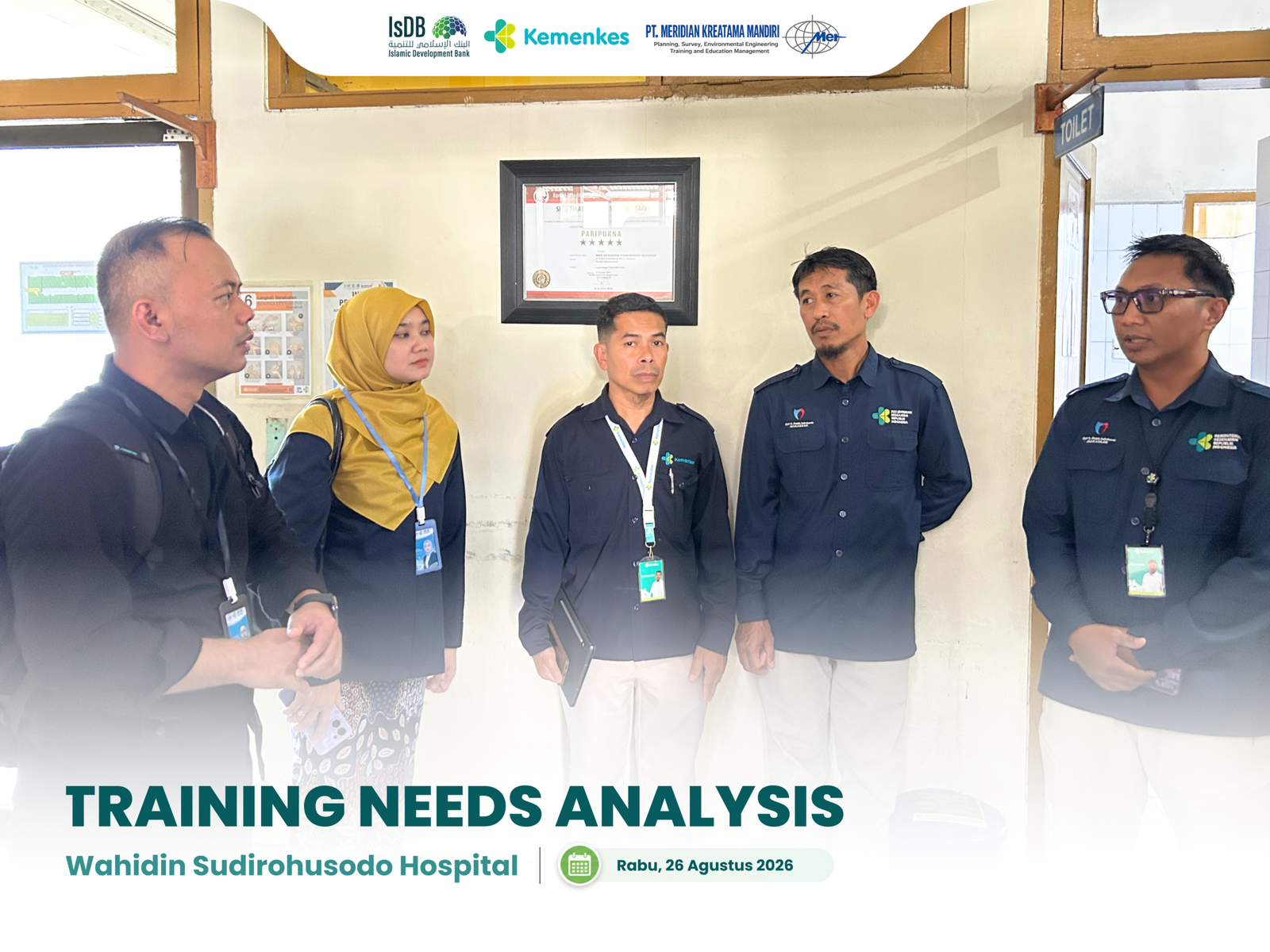
As part of the program’s hospital readiness assessment, the EMPC team conducted a Training Needs Analysis (TNA) at Wahidin Sudirohusodo General Hospital in Makassar on Wednesday, 26 August 2026. The visit focused on gaining a practical understanding of the hospital’s current preparedness, workforce capabilities, and areas that can be strengthened through the upcoming training program.
The session opened with an introduction to the TNA process, including an overview of the program, the planned training activities, and the expected role of the hospital throughout the implementation. The discussion also created an opportunity for the hospital representatives and the EMPC team to exchange perspectives regarding the current situation and expectations for the program.
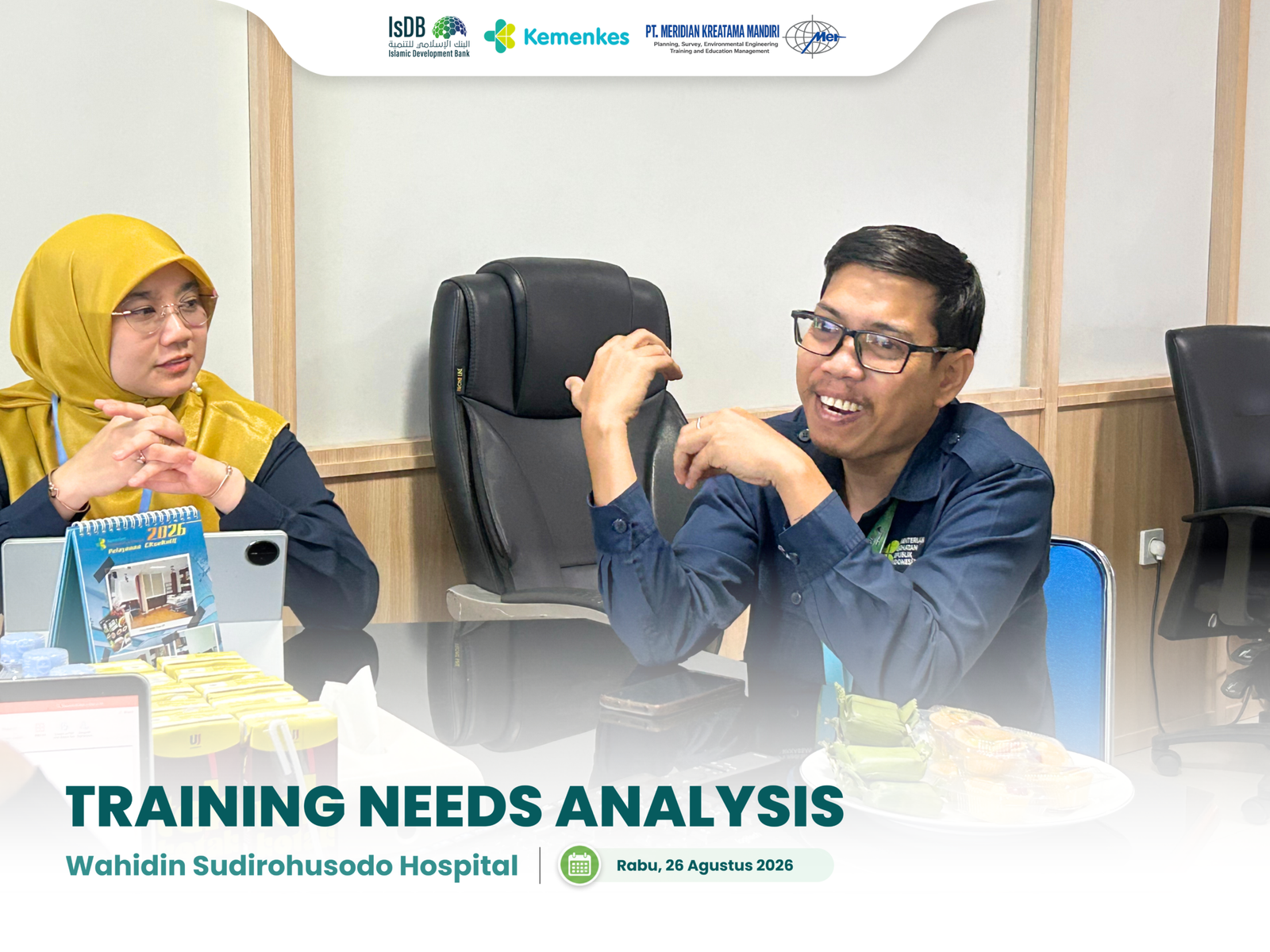
The assessment then continued through a series of interviews and focused discussions with hospital representatives. Rather than relying solely on existing documentation, the team explored how emergency preparedness is understood and applied in actual hospital operations. Questions and discussions covered organizational roles, coordination, response mechanisms, workforce readiness, and potential challenges that may arise during emergency or disaster situations.
To complement the discussions, the EMPC team carried out a walkthrough of selected hospital facilities and operational areas. The field observation allowed the team to see firsthand how different areas function and how healthcare and non-healthcare personnel contribute to hospital operations. Interactions with staff during the visit also provided valuable perspectives on their responsibilities, experiences, and practical training needs.
The combination of dialogue and on-site assessment provided a more contextual picture of the hospital’s existing strengths and development areas. The insights gathered during the TNA will be used to help shape training priorities and ensure that the upcoming activities are aligned with the hospital’s operational environment, workforce needs, and overall efforts to strengthen disaster preparedness and emergency response.
26 August 2026






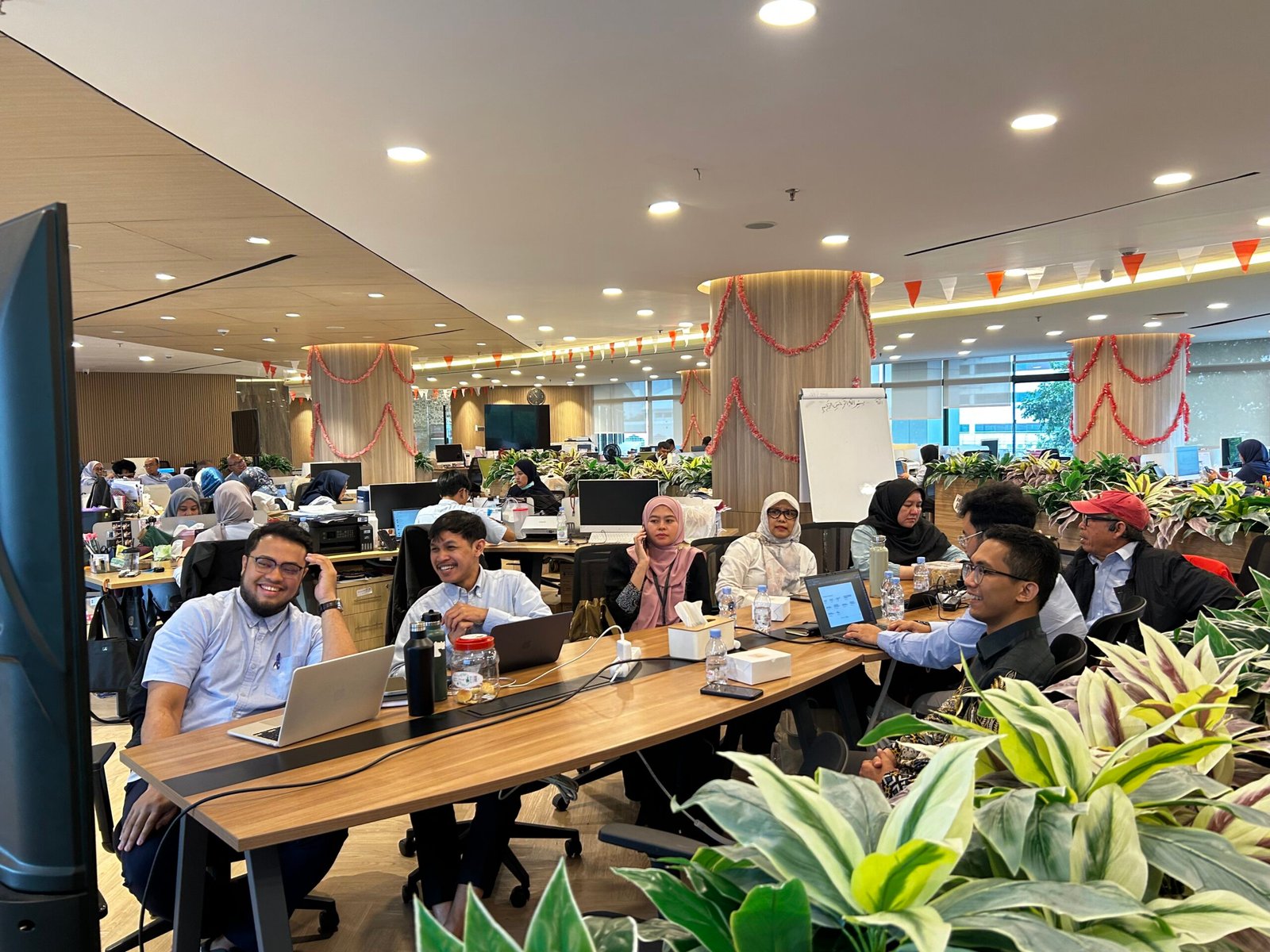
EMPC Progress Meeting
Kemenkes, Jakarta
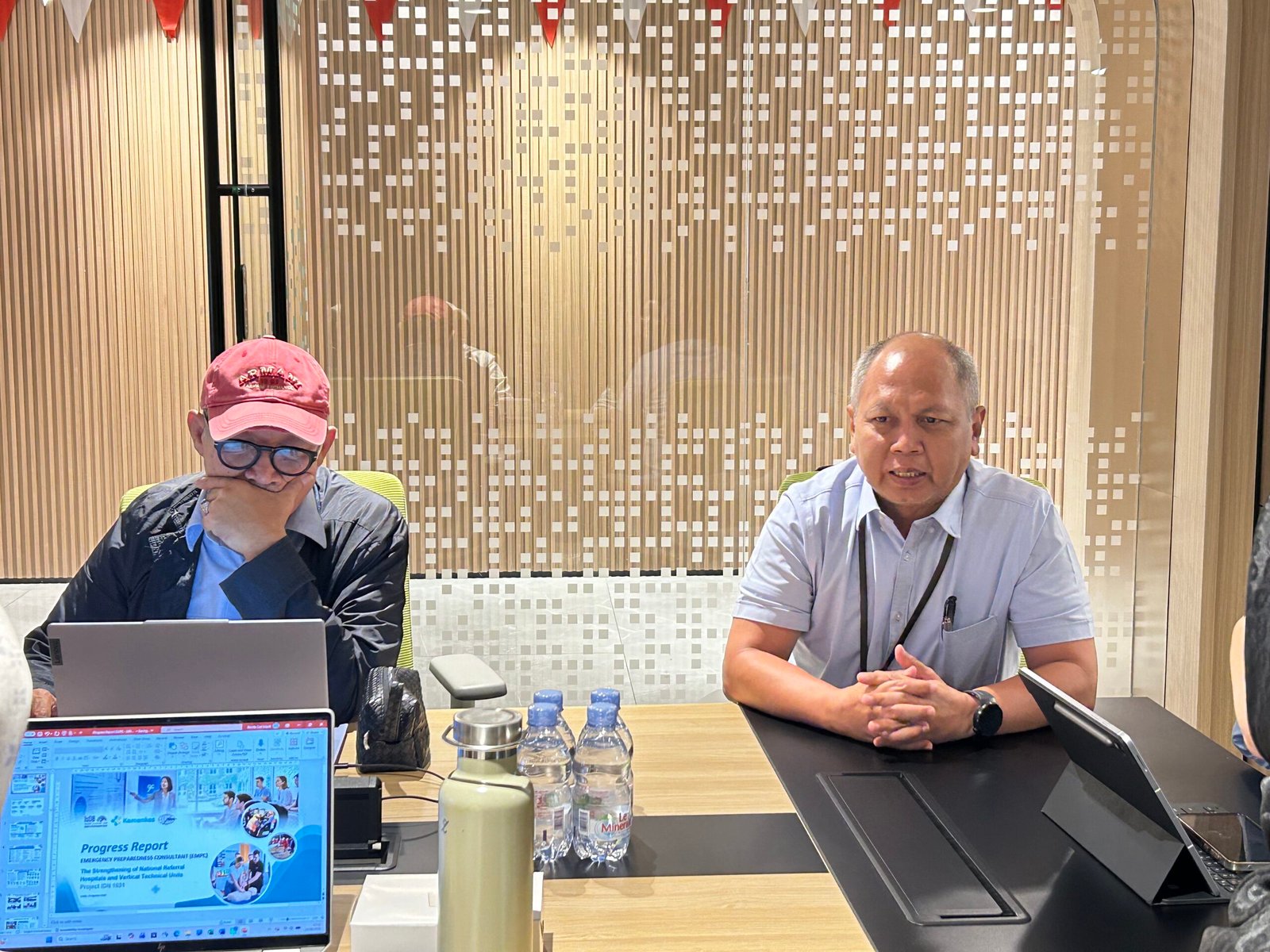
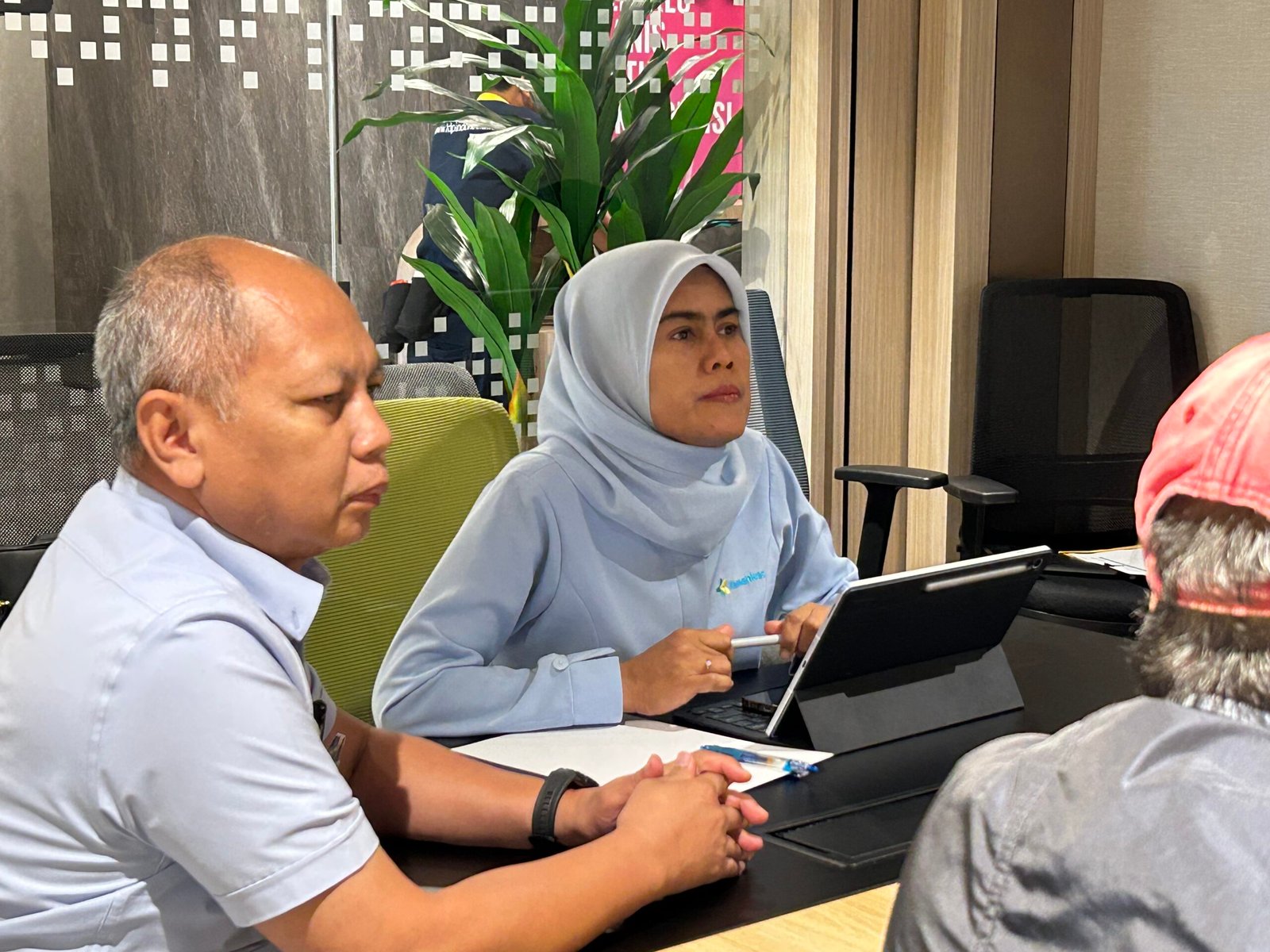
EMPC Progress Meeting was conducted with Ms. Nursiah, S.Sos., MM., MARS, Director of Planning, Finance, and Operational Services. The meeting focused on reviewing the progress of the EMPC program, including updates on ongoing activities, implementation status, and key matters requiring further coordination.
The discussion provided an opportunity to review current developments, exchange information, and gather input regarding the implementation of the program. The meeting also addressed follow-up actions and coordination needed to support the continued progress of EMPC activities in line with the project objectives and implementation plan.
24 August 2026




TRAINING NEEDS ANALYSIS
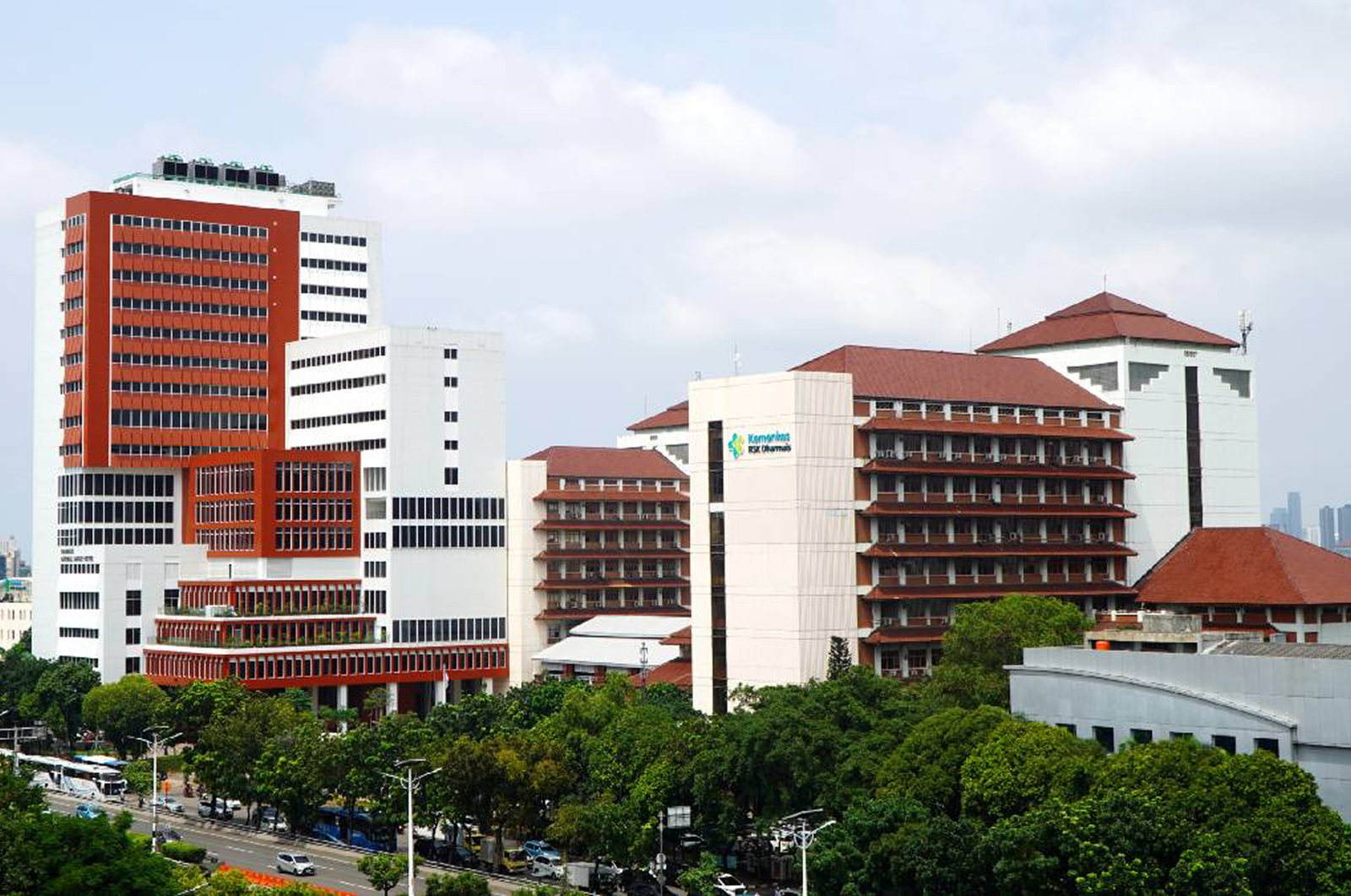
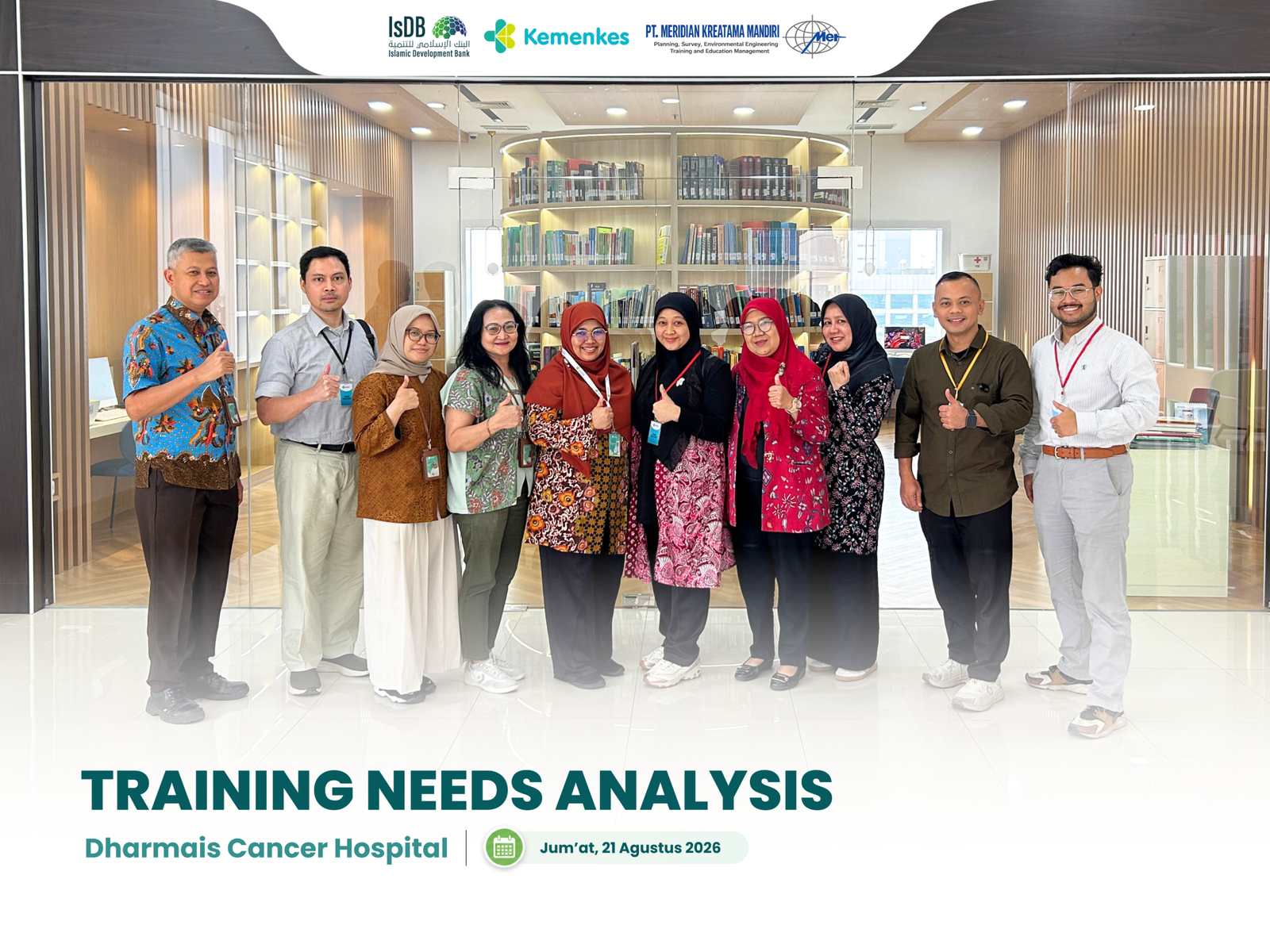
Dharmais Cancer Hospital
Dharmais Cancer Hospital, Jakarta
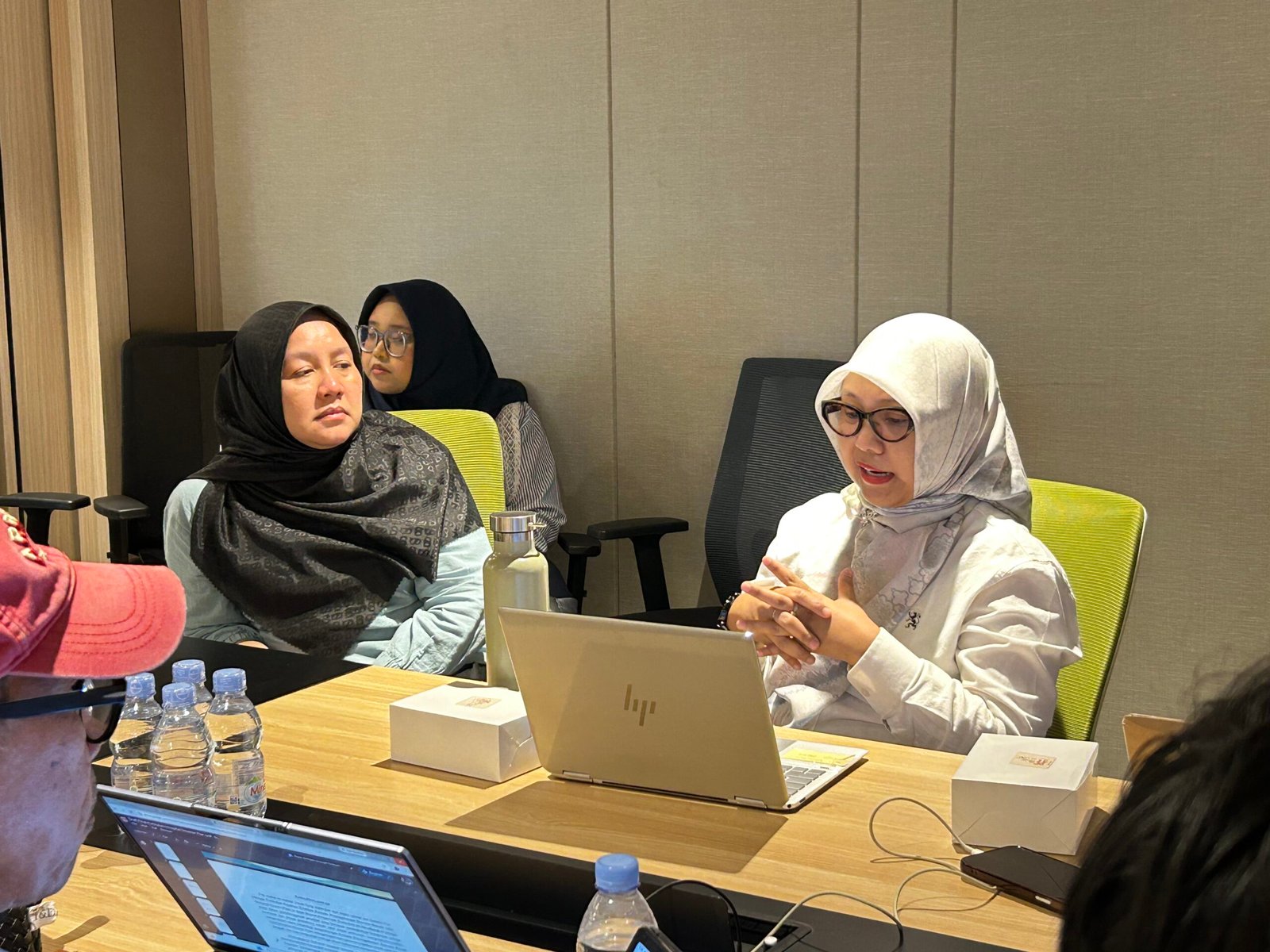
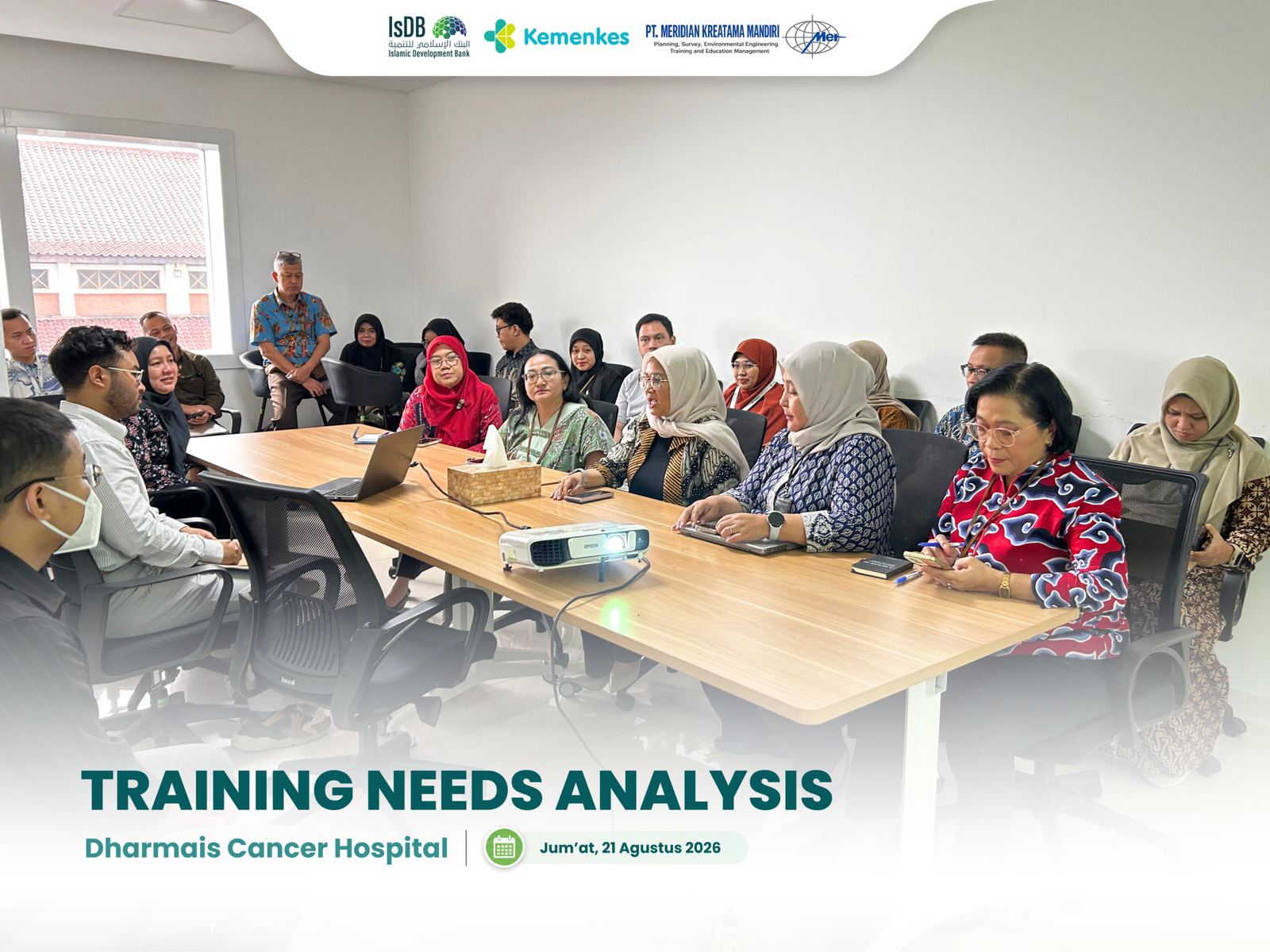
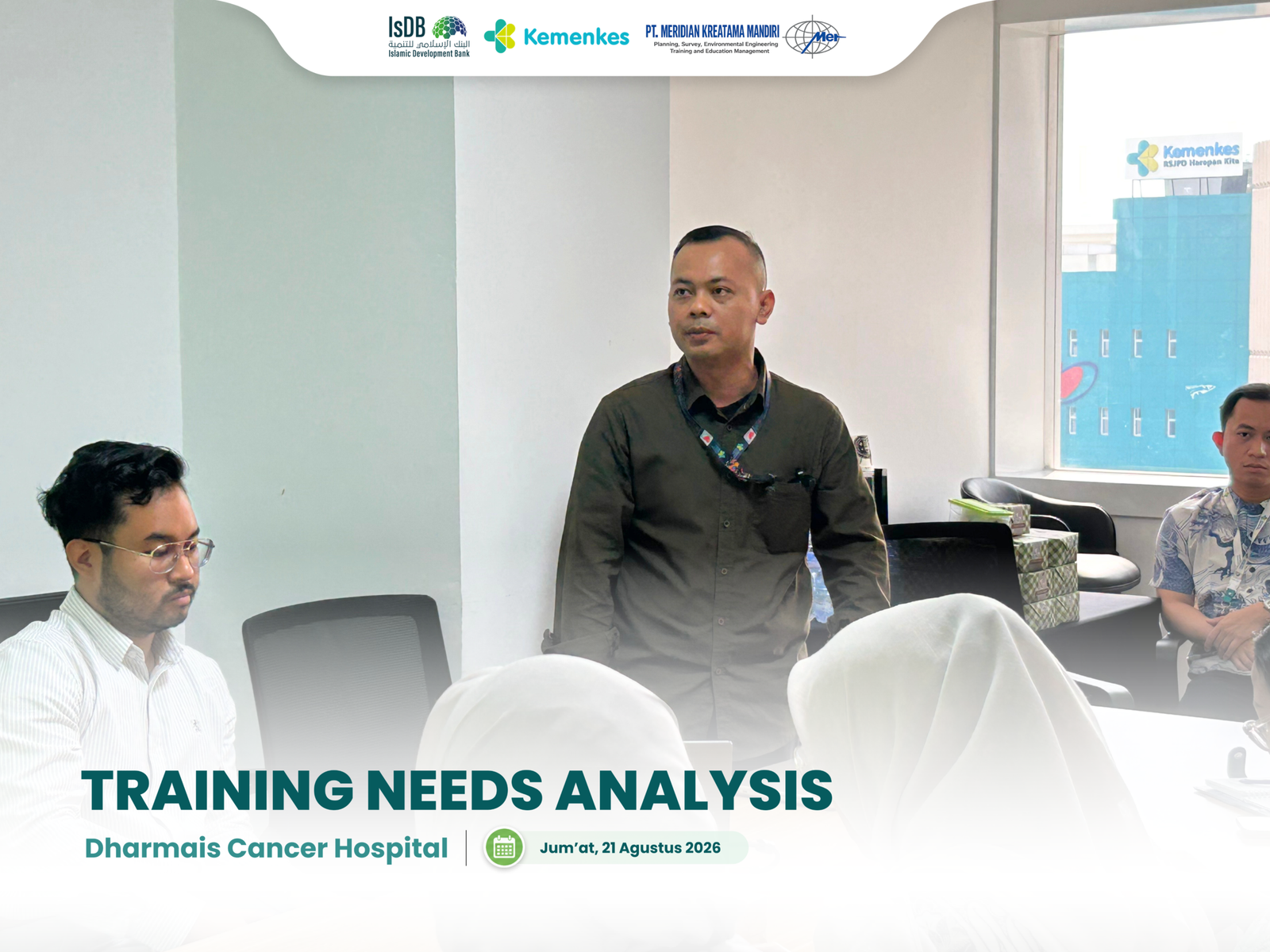
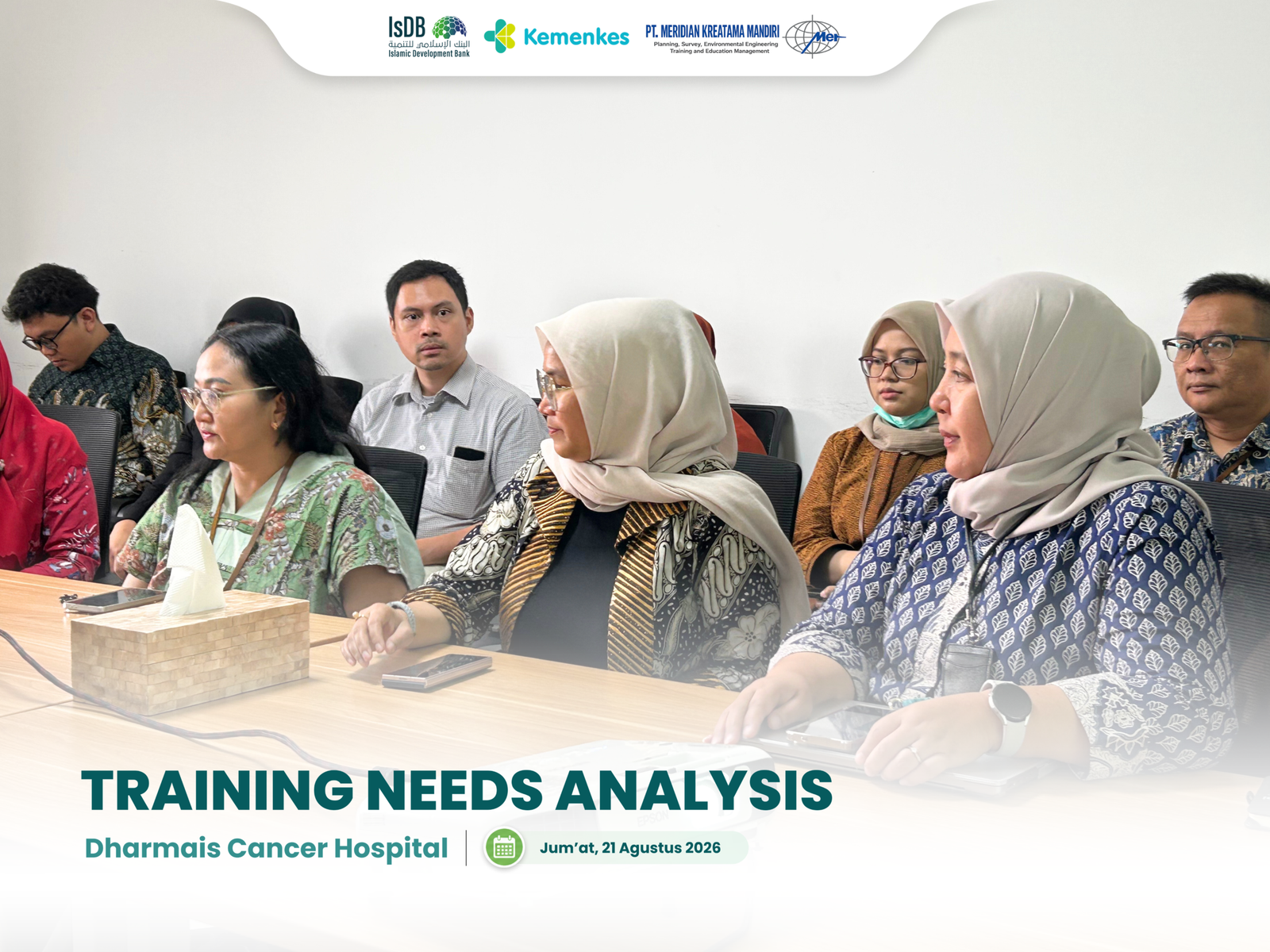
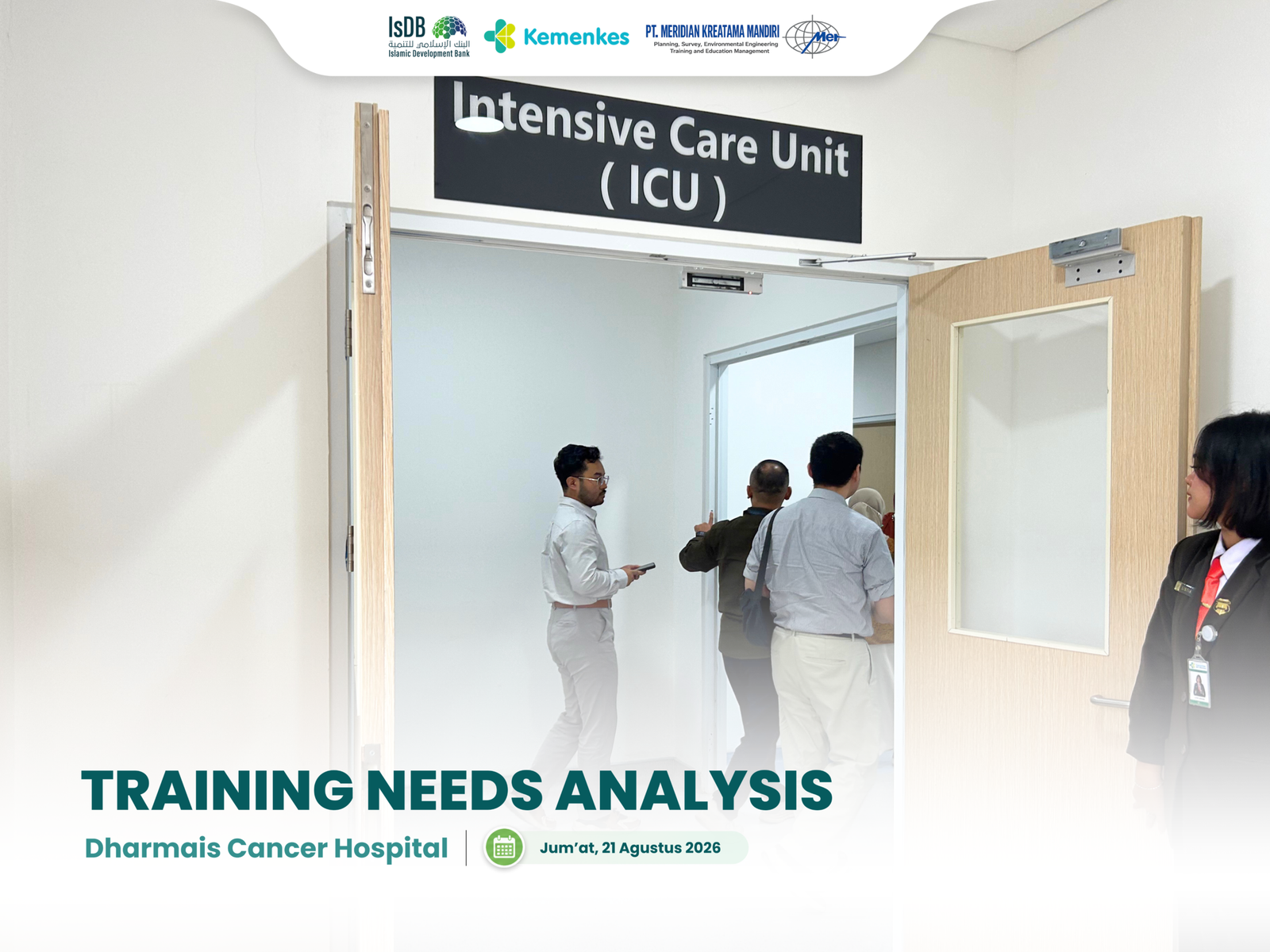
The Training Needs Analysis (TNA) at Dharmais Cancer Hospital was conducted on 21 August 2026 as part of the program’s initial assessment to identify training needs, existing capabilities, and areas for improvement in hospital disaster preparedness and emergency response.
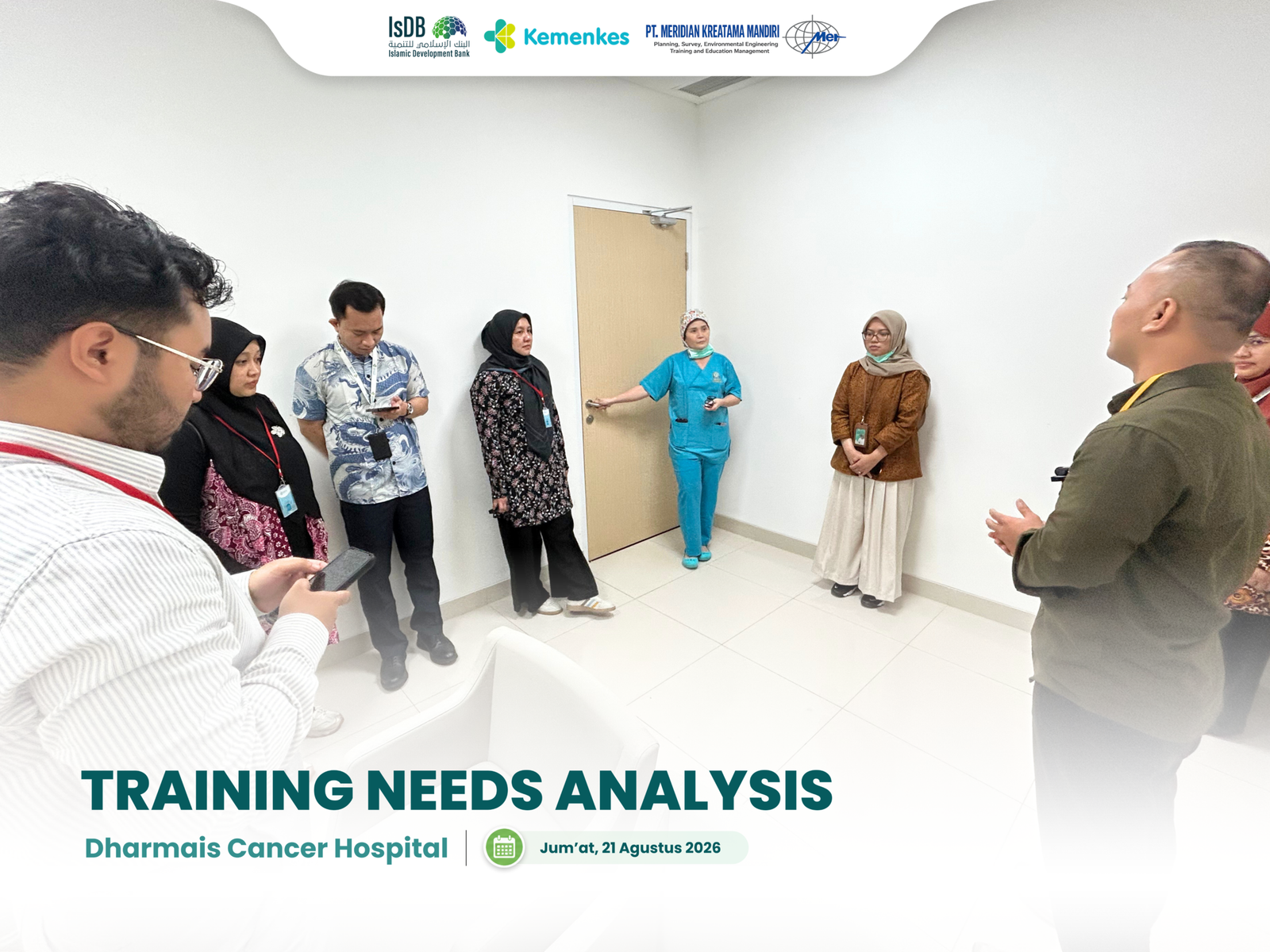
The activity began with a presentation from the EMPC team introducing the objectives and methodology of the Training Needs Analysis, as well as an overview of the training programs that will be implemented. The session provided the hospital team with an understanding of the overall program, expected outcomes, and how the assessment would contribute to the development of relevant and effective training activities.
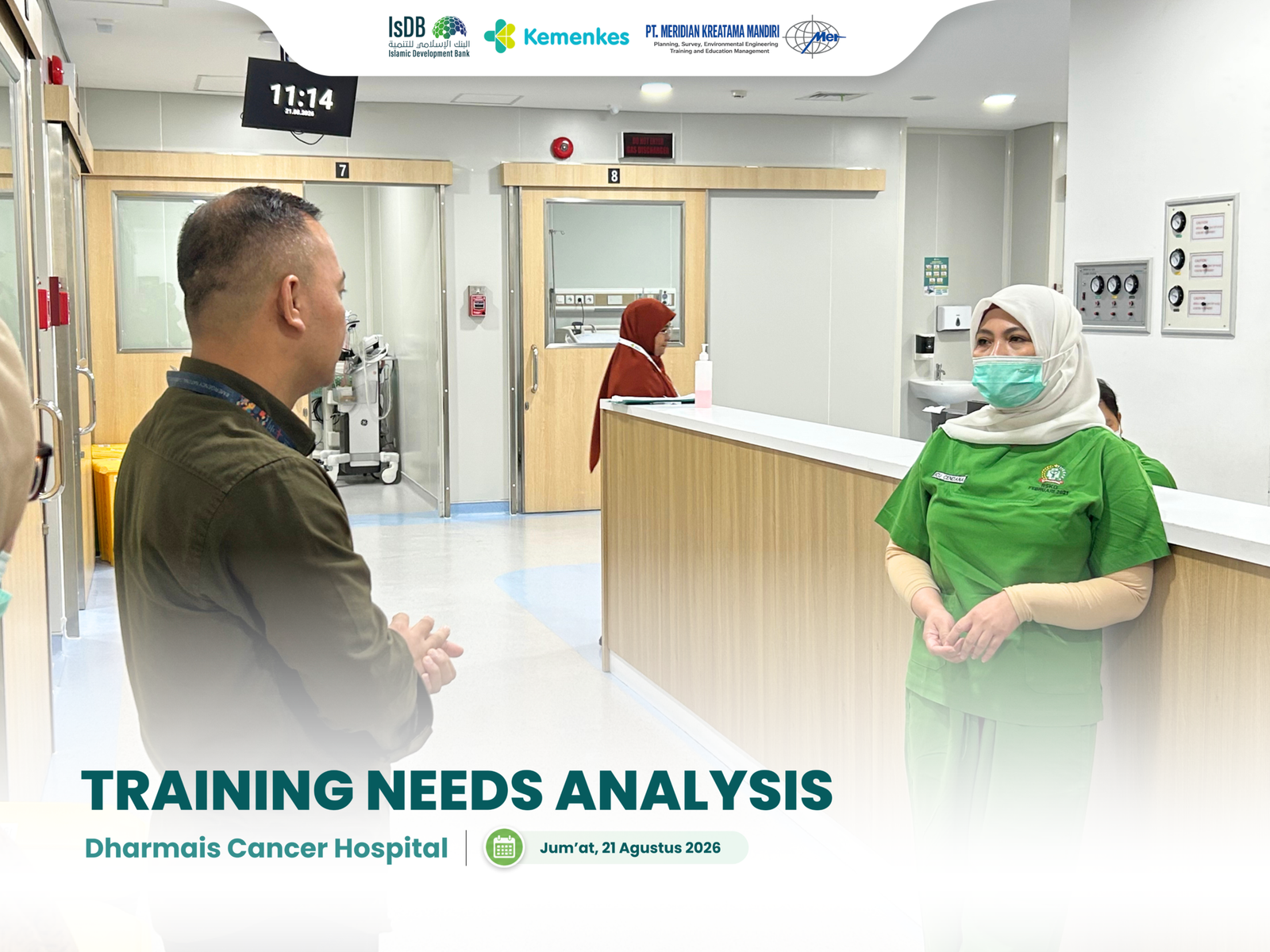
Following the presentation, the EMPC team conducted interviews and discussions with representatives from Dharmais Cancer Hospital to gain a deeper understanding of the hospital’s current practices, preparedness, challenges, and training requirements. The discussions covered various aspects of hospital operations and emergency preparedness, allowing the team to identify specific needs from the hospital’s perspective.
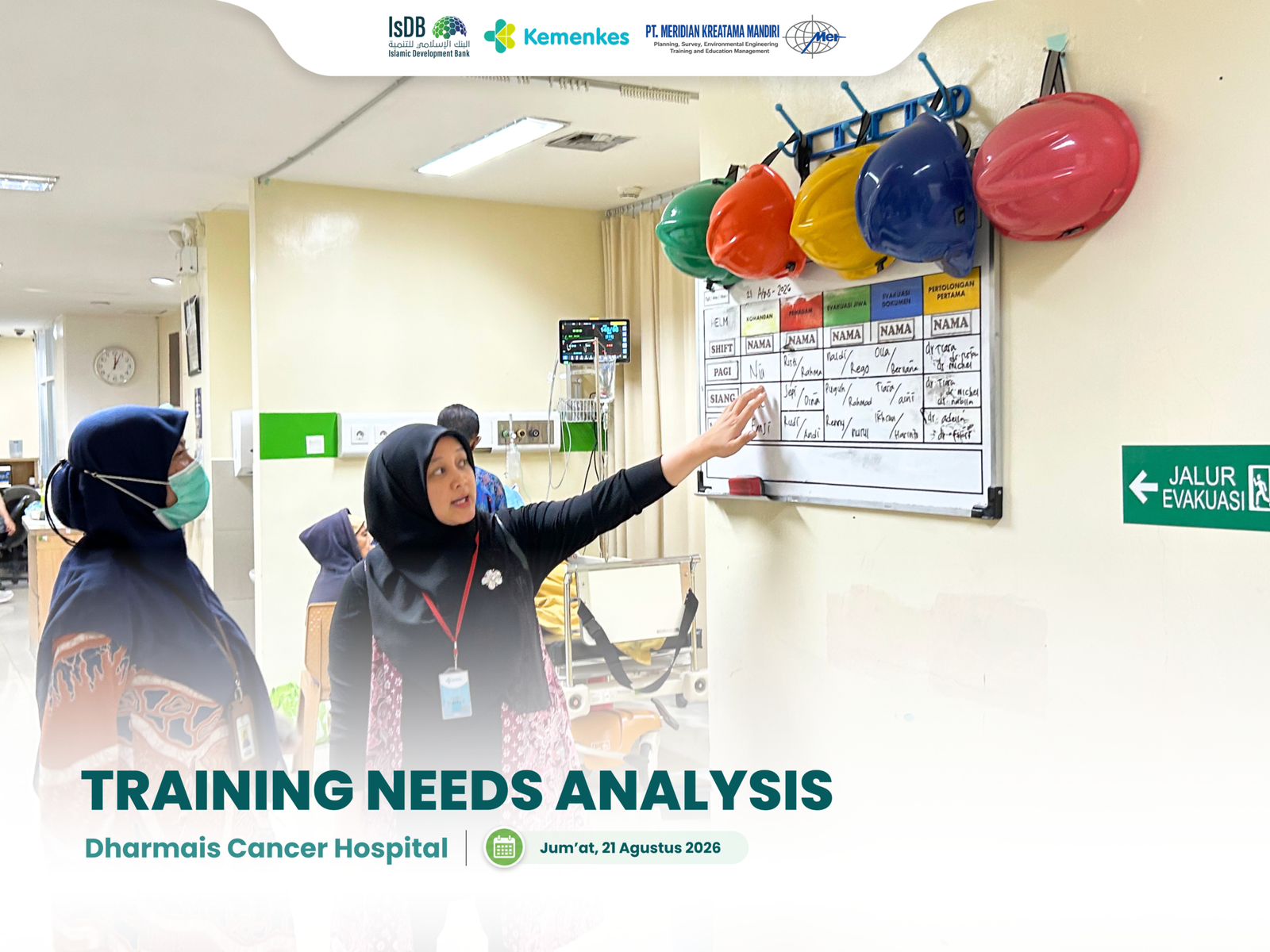
The assessment was also complemented by a direct observation of the hospital’s facilities and operational areas. During the site visit, the EMPC team interacted with healthcare and non-healthcare personnel across different functions to understand their roles, responsibilities, current practices, and level of preparedness in responding to emergency and disaster situations.
Through a combination of presentation, interviews, discussions, and direct facility observations, the TNA provided a comprehensive overview of the hospital’s current conditions and training needs. The findings from this activity will serve as an important foundation for designing and delivering targeted training programs that are relevant to the hospital’s operational context and support the strengthening of its disaster preparedness and response capacity.
21 August 2026
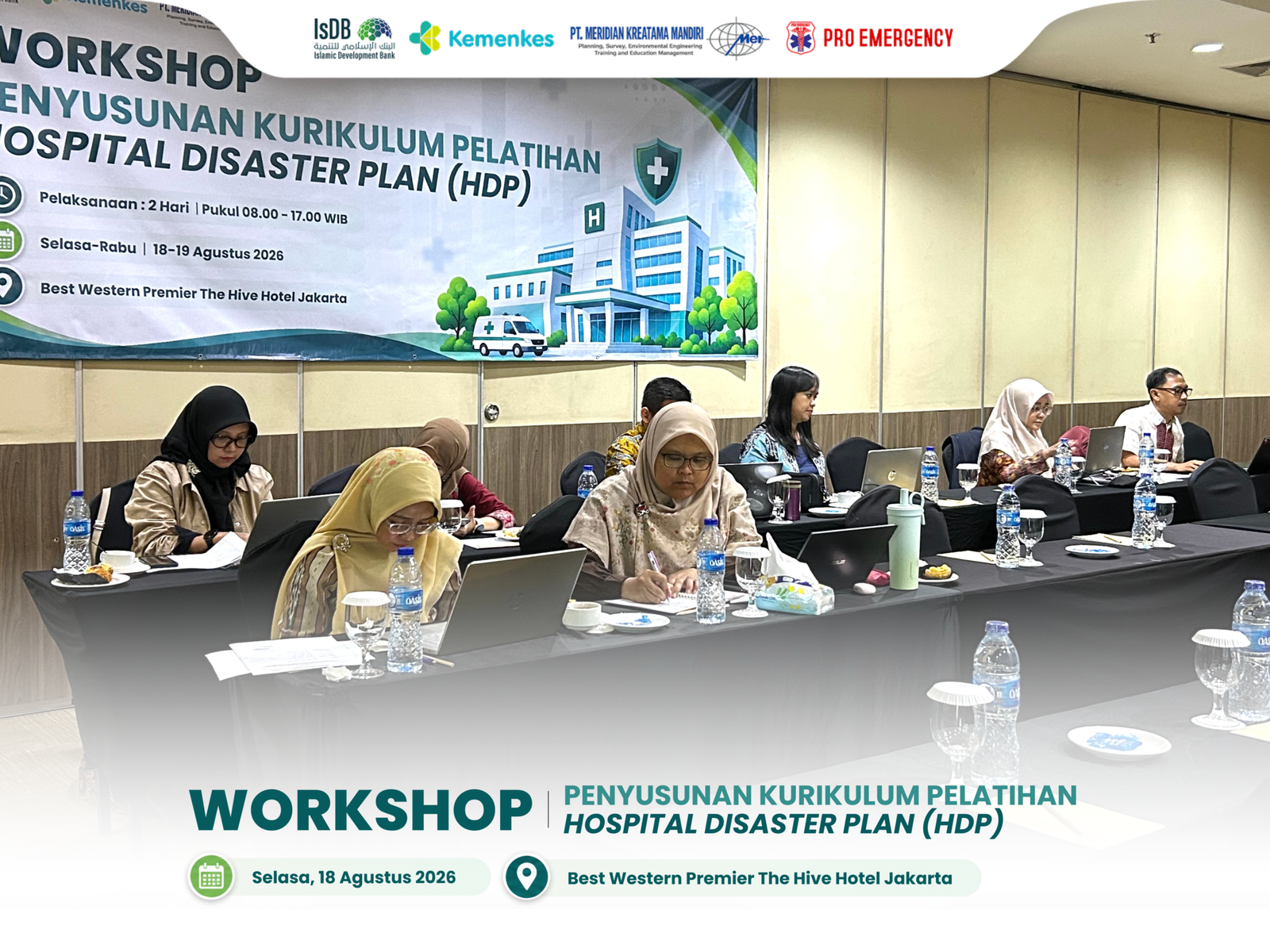
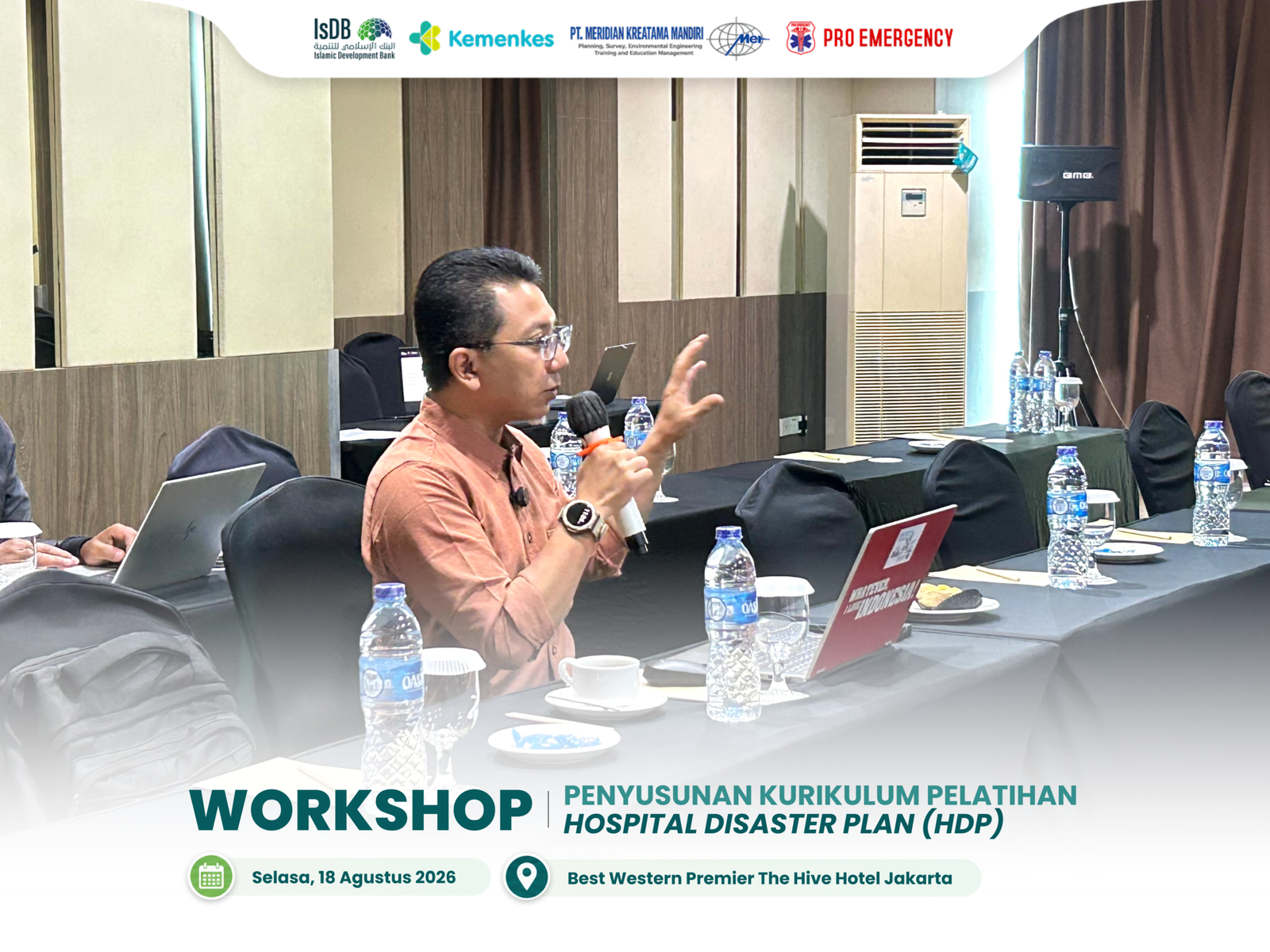
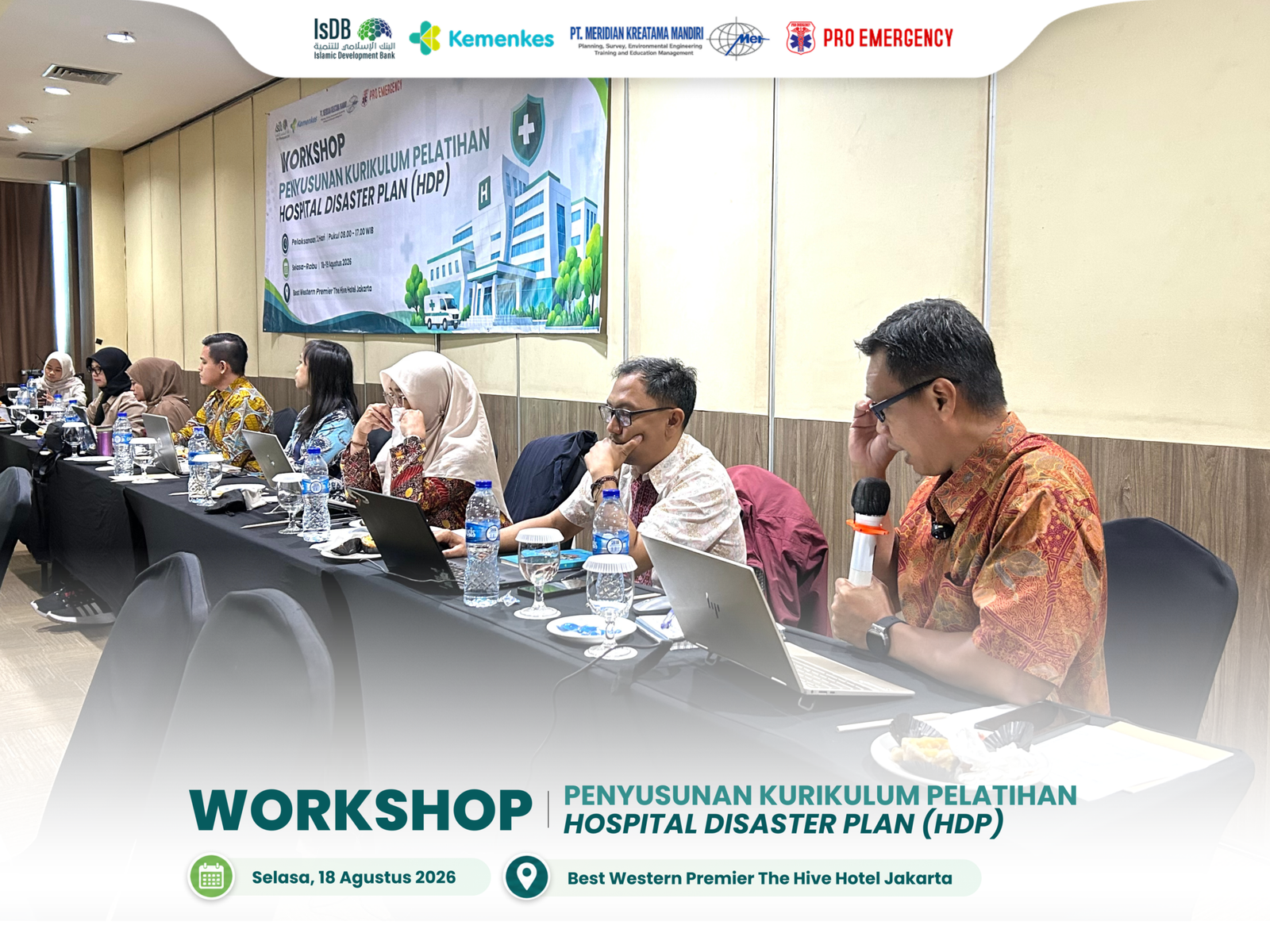
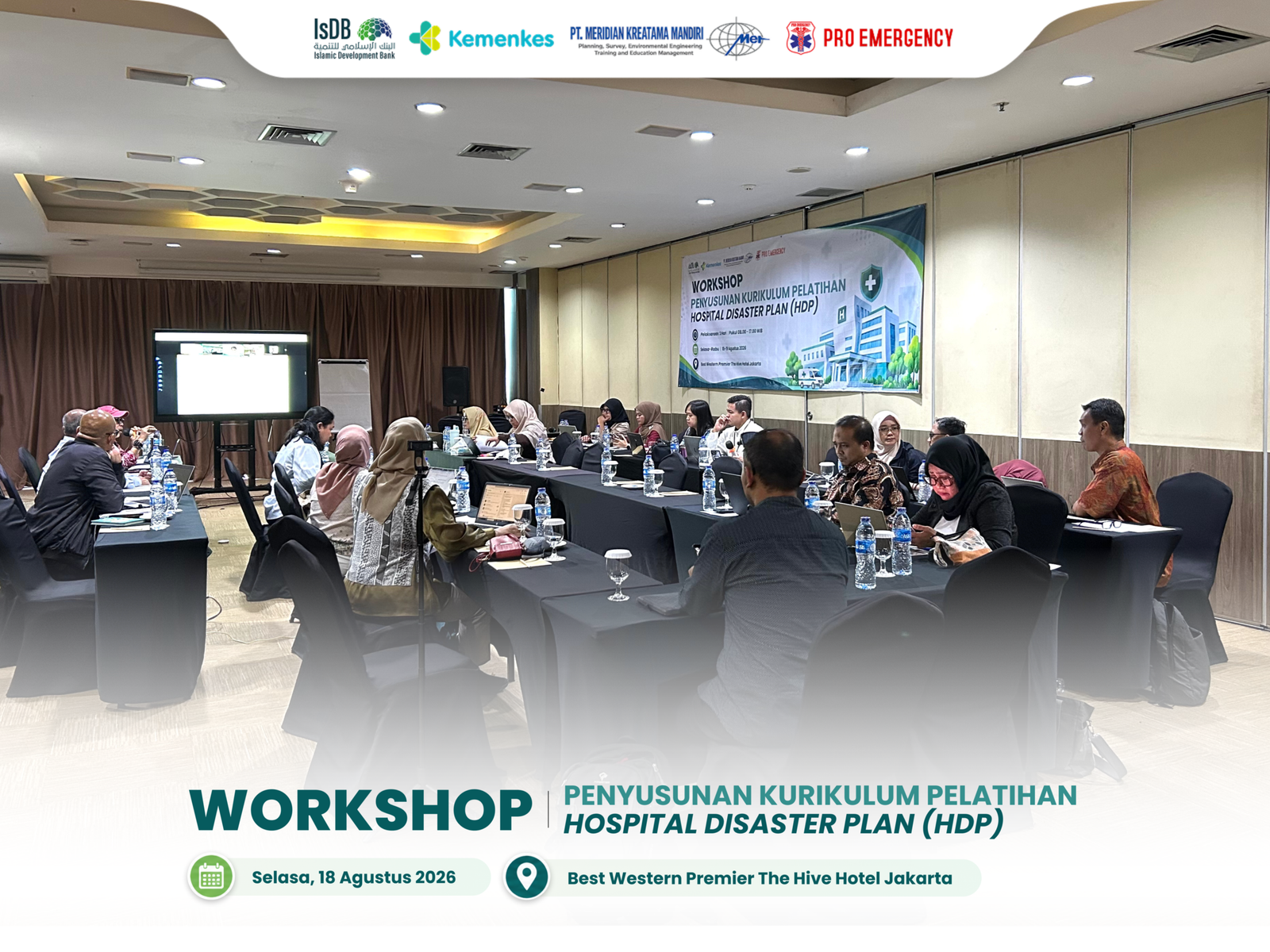
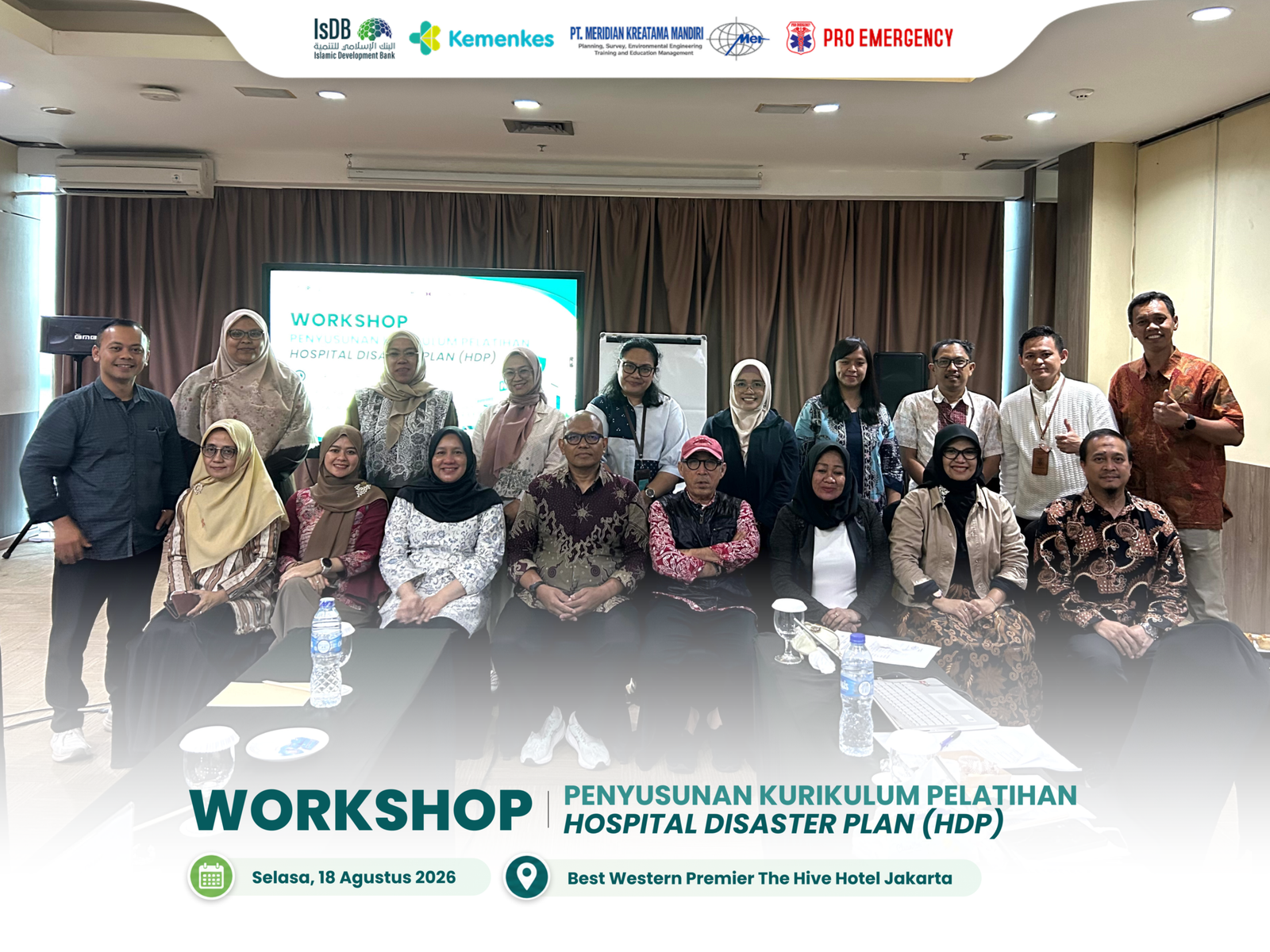
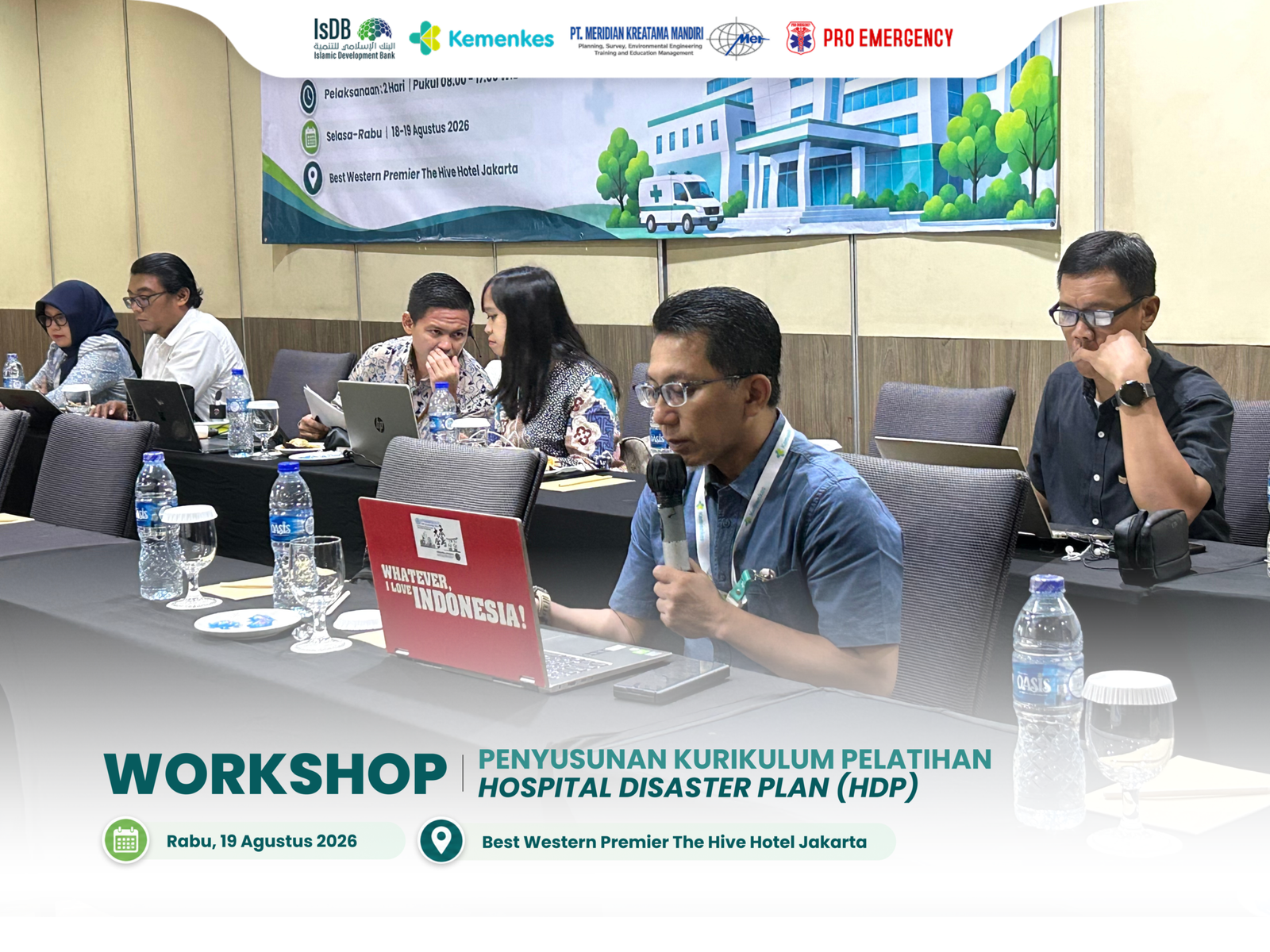
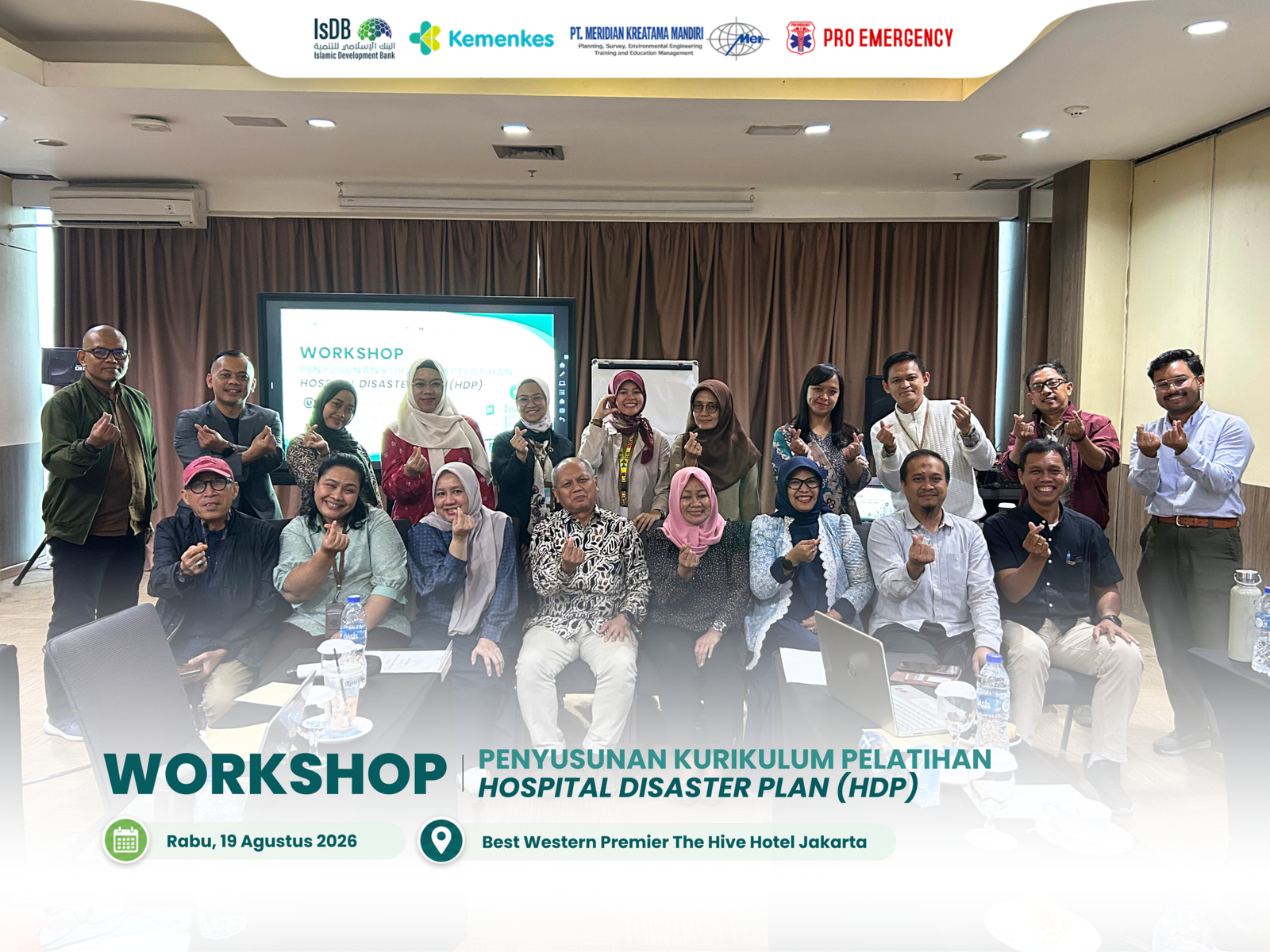
Workshop Penyusunan Kurikulum Hospital Disaster Plan (HDP)
Best Western Premier The Hive, Jakarta
A defining moment for the EMPC journey. Two full days dedicated to shaping the very foundation of how Indonesia’s hospitals will learn to prepare for the unexpected.
Building on the momentum of our earlier meetings, the Workshop on the Development of the Hospital Disaster Plan (HDP) Training Curriculum Module brought together experts, policymakers, and practitioners from across the country. Together, they turned months of planning into concrete progress, drafting the curriculum that will train more than 8,000 healthcare and non-healthcare personnel across our six national referral hospitals.
Why This Workshop Matters
Every hospital, no matter how well-equipped, must be ready when disaster strikes. Yet the HDP training that will soon reach our six referral hospitals does not yet hold national accreditation. This workshop was designed to change that; by building a standardized, accredited curriculum that can not only serve the six hospitals of Project IDN-1031, but also be replicated across hospitals throughout Indonesia.
A Voice from the Field
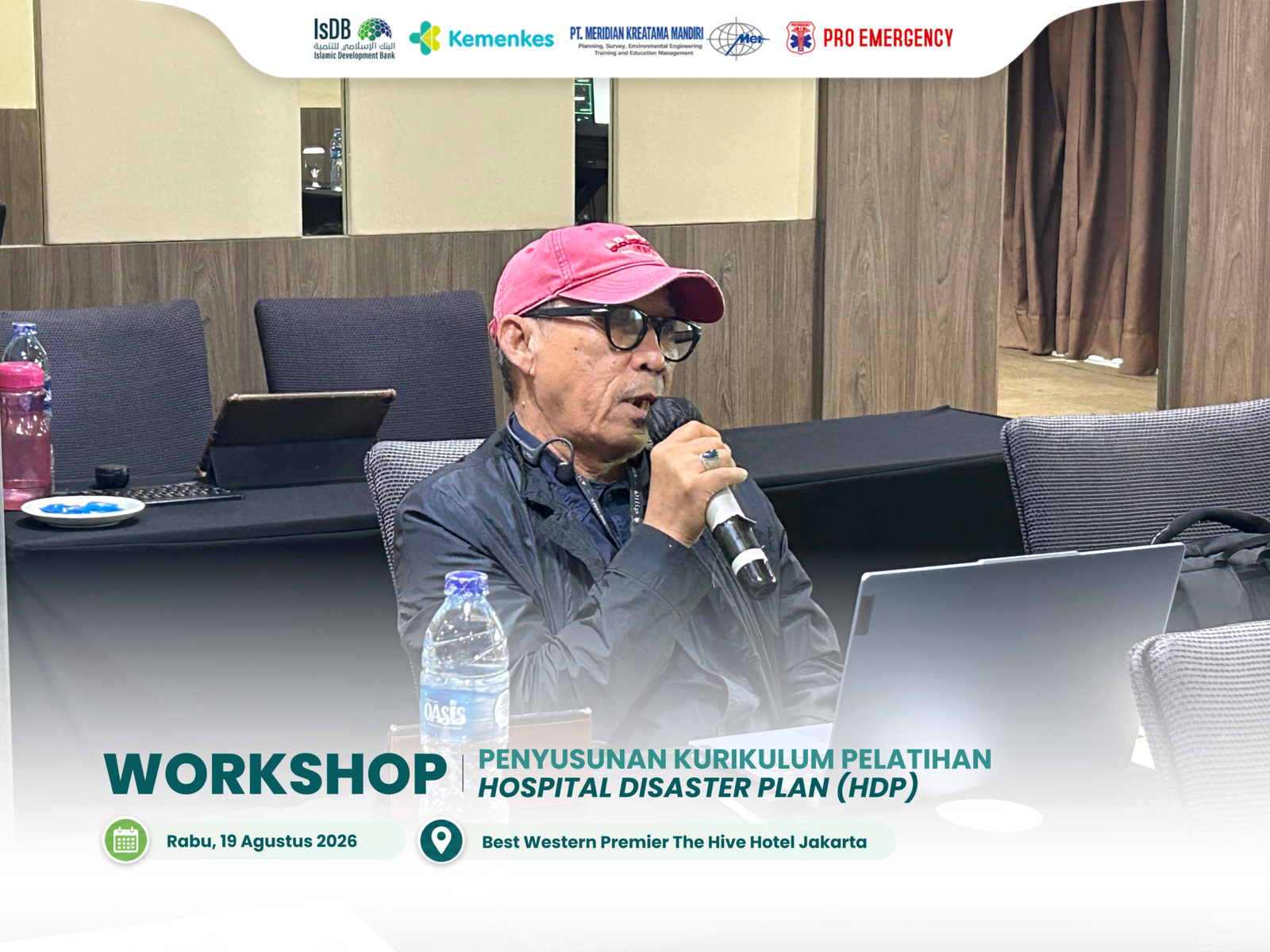
We were honored to welcome dr. Corona Rintawan, Sp. EM from the Muhammadiyah Disaster Management Center (MDMC, Lembaga Resiliensi Bencana PP Muhammadiyah) as our expert resource person. With years of frontline experience in disaster response and emergency medicine, dr. Corona brought invaluable insight to the curriculum’s structure, learning objectives, and real-world applicability.
What We Set Out to Achieve
The workshop was built around four clear goals:
- Align understanding among stakeholders on the direction of hospital disaster preparedness policy in Indonesia
- Strengthen the technical and institutional capacity of Ditmutu Yankes Rujukan, OSDM Keslan, and related units in developing the HDP training curriculum
- Formulate contextual, practical steps for developing an HDP curriculum tailored to Indonesian hospitals
- Produce a nationally accredited HDP training curriculum module, ready for implementation across the six national referral hospitals under EMPC IsDB IDN-1031, and beyond
Two Days, One Curriculum
Across 17 learning hours (JPL), the workshop moved from foundation to finalization:
- Day 1 focused on shaping the curriculum’s structure: agreeing on titles, target participants, scope, and mapping competencies to training modules (MPD, MPI, MPP), along with the principles of learning evaluation.
- Day 2 turned the framework into finished documents: developing the RBPMP for each training subject, the master schedule, assignment guides, evaluation instruments, and the final presentation of results.
In the Room
Over 20 stakeholders took part, representing:
- Pusat Krisis Kesehatan (Puskris), Kemenkes
- Direktorat Mutu Sumber Daya Manusia Kesehatan (Ditmutu SDM)
- Ketua Tim Kerja Organisasi & Sumber Daya Manusia, Setditjen Kesehatan Lanjutan
- Ketua Tim Kerja Pembinaan Pengawasan dan Pengelolaan Pengaduan
- Tim Kerja Mutu Pelayanan Kesehatan Rumah Sakit dan UTD
- Project Management Unit (PMU) & Sekretariat PMU, IsDB IDN 1031
- dr. Corona Rintawan, Sp. EM, Lembaga Resiliensi Bencana PP Muhammadiyah (Expert Resource Person)
- Team Leader & EMPC Team, PT. Meridian Kreatama Mandiri
The Road Ahead
The output of these two days is more than a document, it is a national standard in the making. Once accredited, this curriculum will guide HDP training across the six referral hospitals of Project IDN-1031 and stand ready to be adopted by hospitals throughout Indonesia, strengthening our nation’s collective readiness for whatever tomorrow may bring.
18-19 August 2026



Formation of the Module Curriculum Development Committee
Ministry of Health; Advance Health Services, 4th Floor
Every strong training program begins with a strong curriculum. This meeting marked a defining moment for the EMPC Project, the formation of the Module Curriculum Development Committee, a collaborative effort to shape the Hospital Disaster Plan (HDP) training that will strengthen emergency preparedness across Indonesia’s healthcare system.
Representatives from the Ministry of Health, the Health Crisis Center (Puskris), the Project Management Unit of IsDB IDN 1031, and the EMPC team of PT. Meridian Kreatama Mandiri came together to review progress on the HDP Curriculum Module and Training Needs Analysis (TNA) and to chart the road ahead.
A Clear Mandate
Ibu Ruri, Executive Secretary of Project 1031, set the tone for the discussion: the EMPC work plan must be completed before the project contract concludes in January 2028. To meet that goal, the team will accelerate curriculum development through a joint workshop with Ditmutu and Ditjen Nakes, Kemenkes.
Voices from the Room
Participants brought thoughtful insights to strengthen the curriculum’s impact; the mapping of potential disasters unique to each project-locus hospital; and, at the suggestion of Puskris, the inclusion of satellite regional hospitals (RSUDs) in the workshop.
The Path Forward
By the end of the meeting, a clear roadmap had taken shape. The committee agreed to accelerate the development of the HDP curriculum module through a joint workshop with Ditmutu and Ditjen Nakes, all to be completed well before the project contract closes in January 2028.
Five commitments were made to move the vision into action:
- Establish the Surat Keputusan (SK) for the curriculum drafting team by 7 August 2026
- Hold a coordination meeting with Ditmutu and Ditjen Nakes to align on the workshop plan
- Conduct an accelerated curriculum development workshop
- Issue an official notification letter from Sesditjen Keslan to Ditmutu SDM, Ditjen Nakes
- Form the Curriculum Module Drafting Team
“One meeting. One shared mission. A curriculum that will help shape how Indonesia’s hospitals prepare for the unexpected.”
Participants
- MoH (Setjen Keslan): Head of Working Team for Program Planning, Evaluation & Reporting; Head of Working Team for Organization and Human Resources; Head of Working Team for Oversight, Supervision, and Complaint Management; Head of Working Team for Hospital and Blood Transfusion Unit (UTD) Health Service Quality
- Health Crisis Center (Puskris), Secretariat General
- Project Management Unit (PMU), IsDB IDN 1031: PMU Expert, PMU Secretariat
- EMPC Team, PT. Meridian Kreatama Mandiri: Team Leader and Project Team
04 August 2026
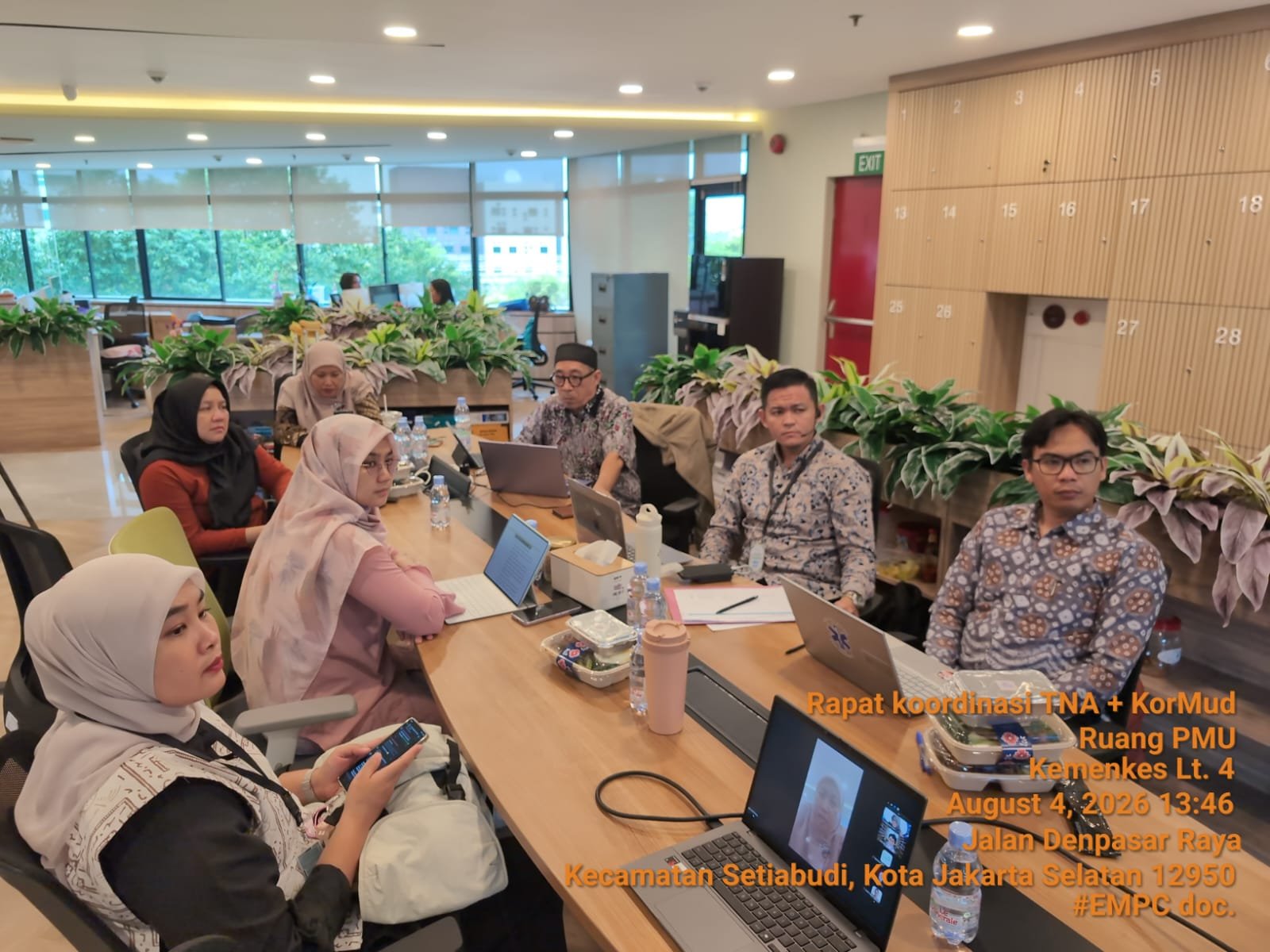
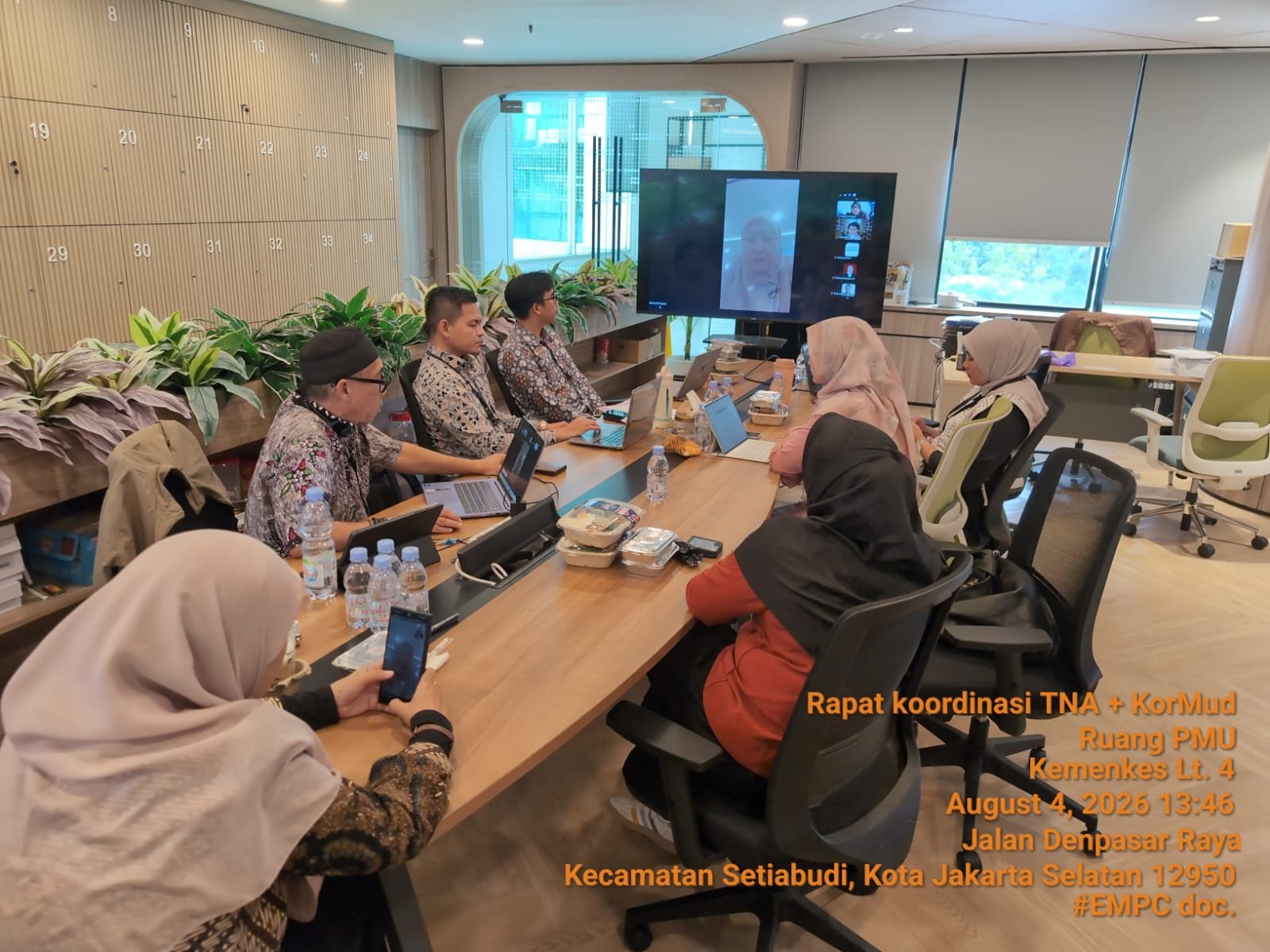
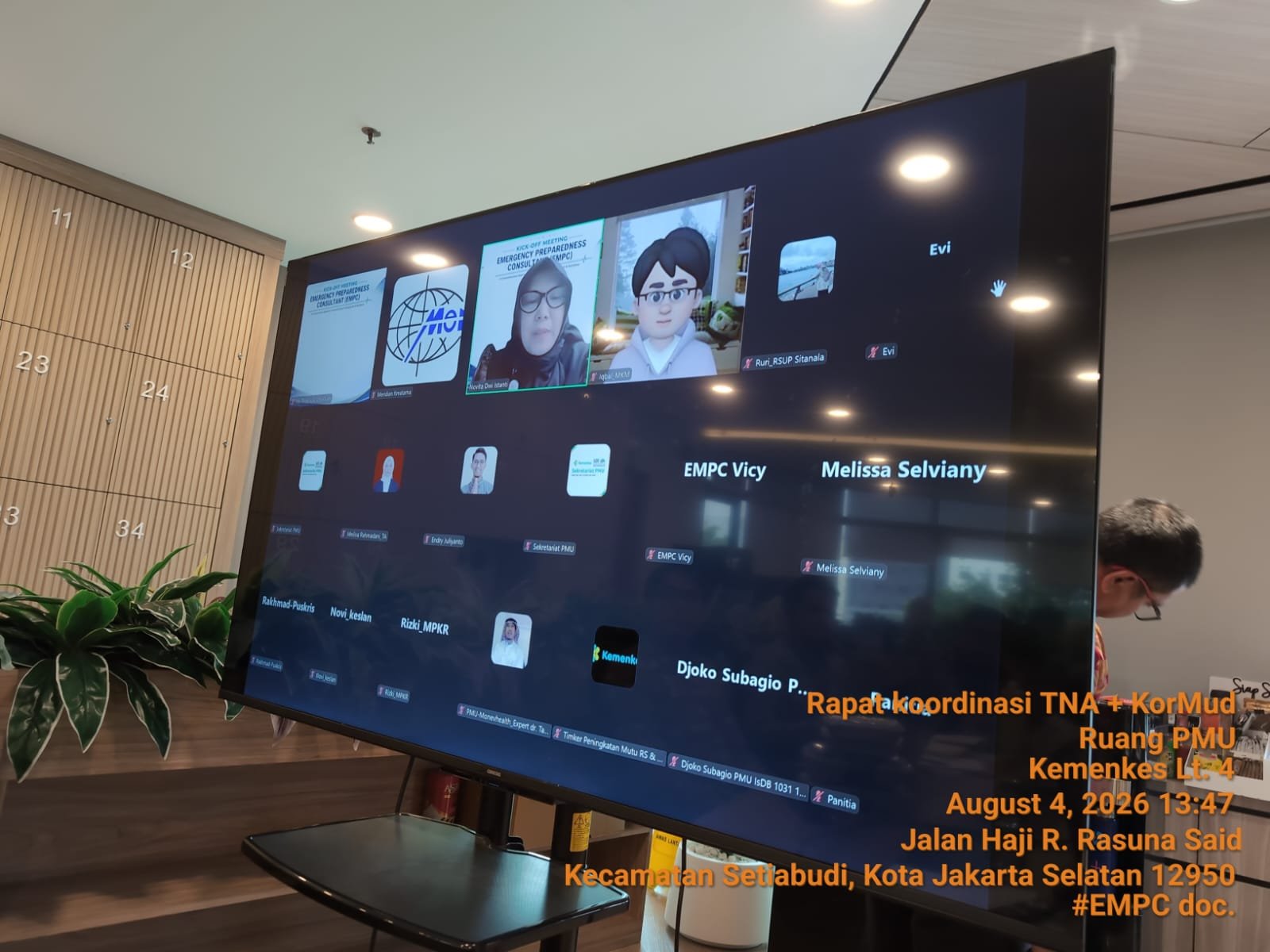
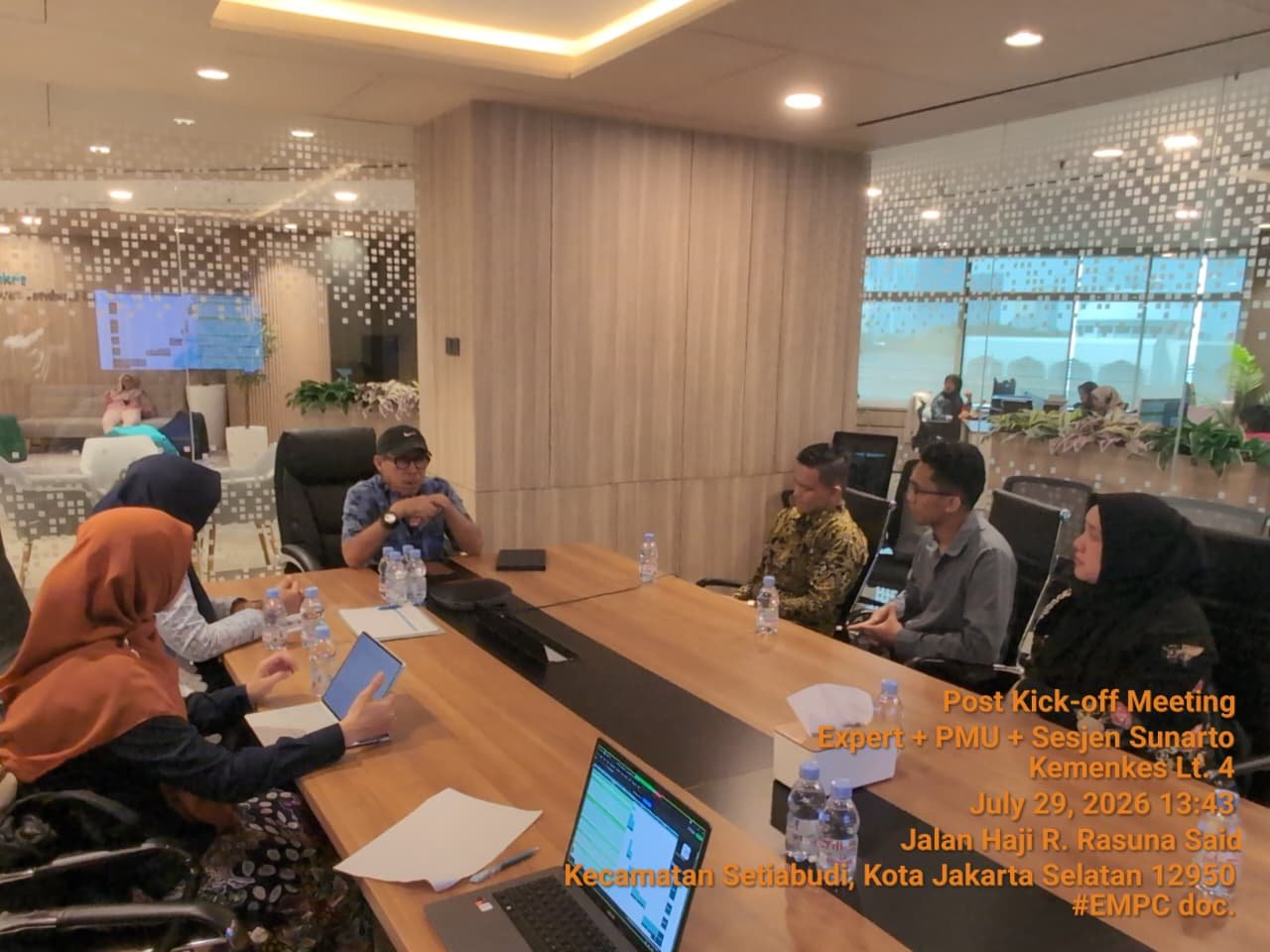
Post Kick-Off Meeting
Ministry of Health; Advance Health Services, 4th Floor
Aligning on the Road Ahead
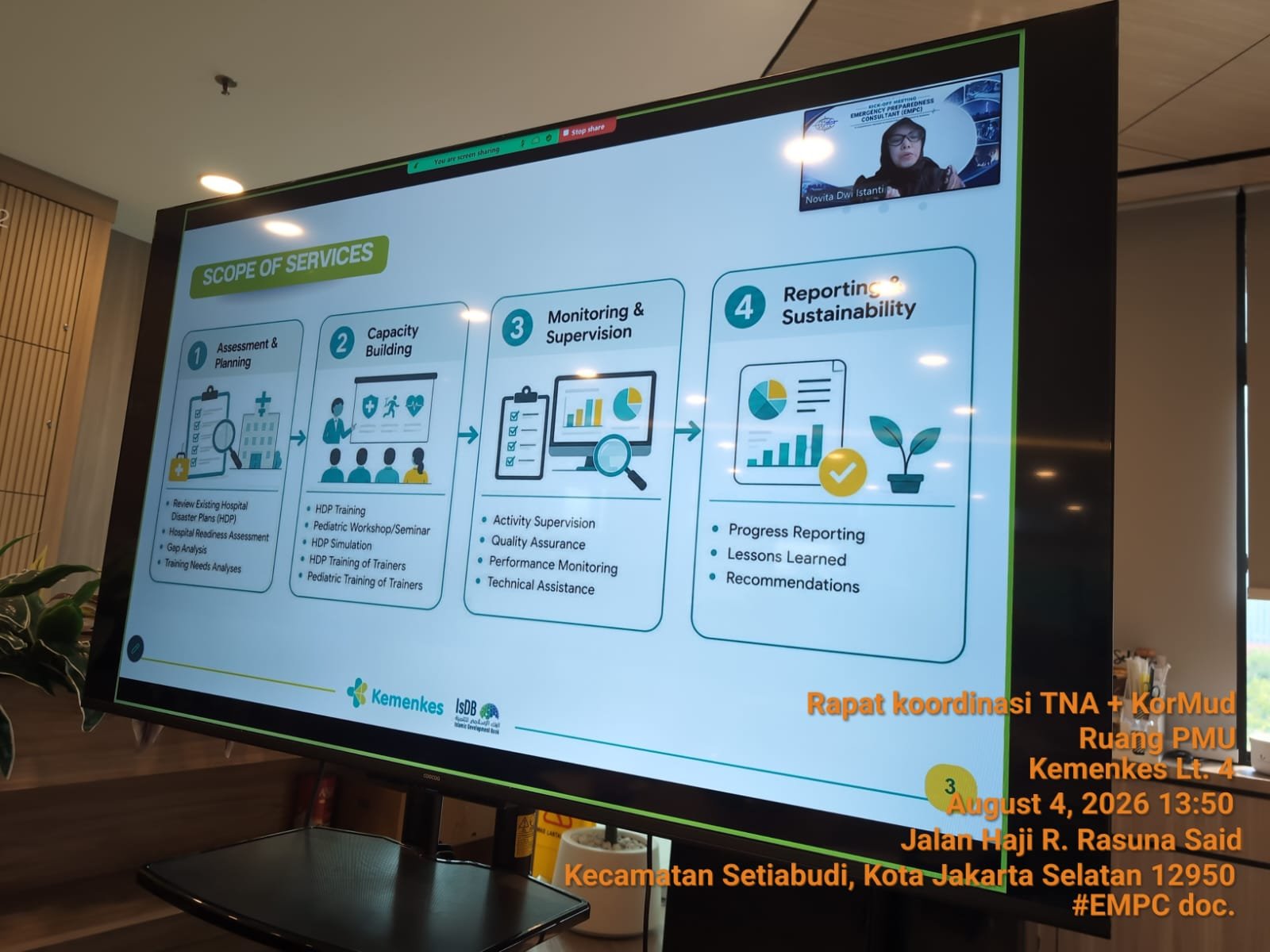
Building on the momentum from our kick-off, key representatives from Kemenkes, the PMU, and PT. Meridian Kreatama Mandiri came together for a focused coordination session.
The discussion set the stage for the next phase: a follow-up meeting where the detailed Work Plan, Schedule, and Deliverables will be presented to all project stakeholders; ensuring every partner moves forward with clarity and shared purpose.
Present at the meeting were dr. Sunarto, M.Kes (Sekretaris Ditjen, Kemenkes); dr. Taufiq and Bapak Djoko representing the PMU; and the EMPC team from PT. Meridian Kreatama Mandiri: Ibu Ista (Team Leader), Ibu Tahani (Co-Team Leader), Ibu Hawa (Project Director), Bapak Iqbal, Bapak Christian, Ibu Robiyatul, and Bapak Endry.
29 July 2026

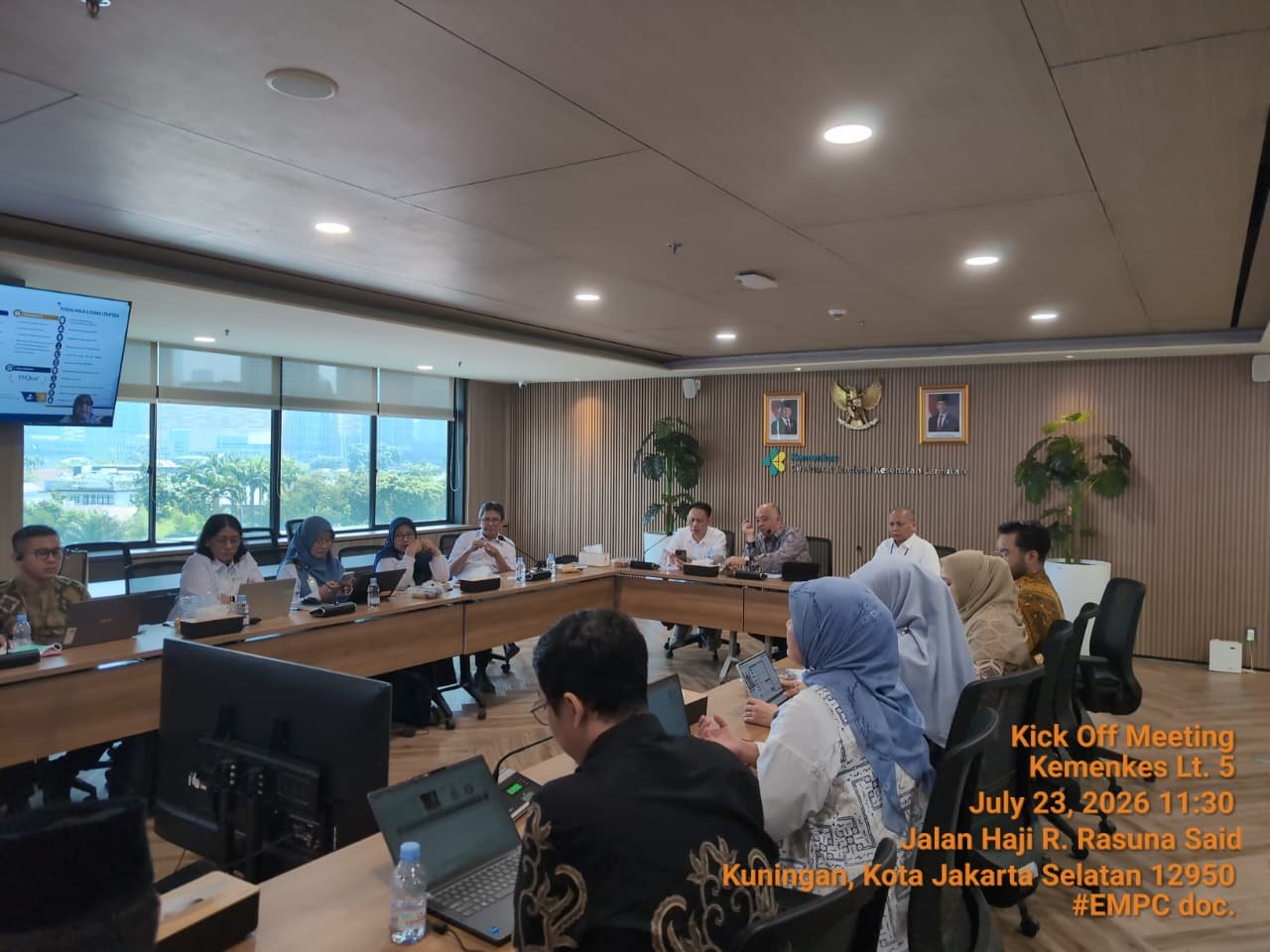
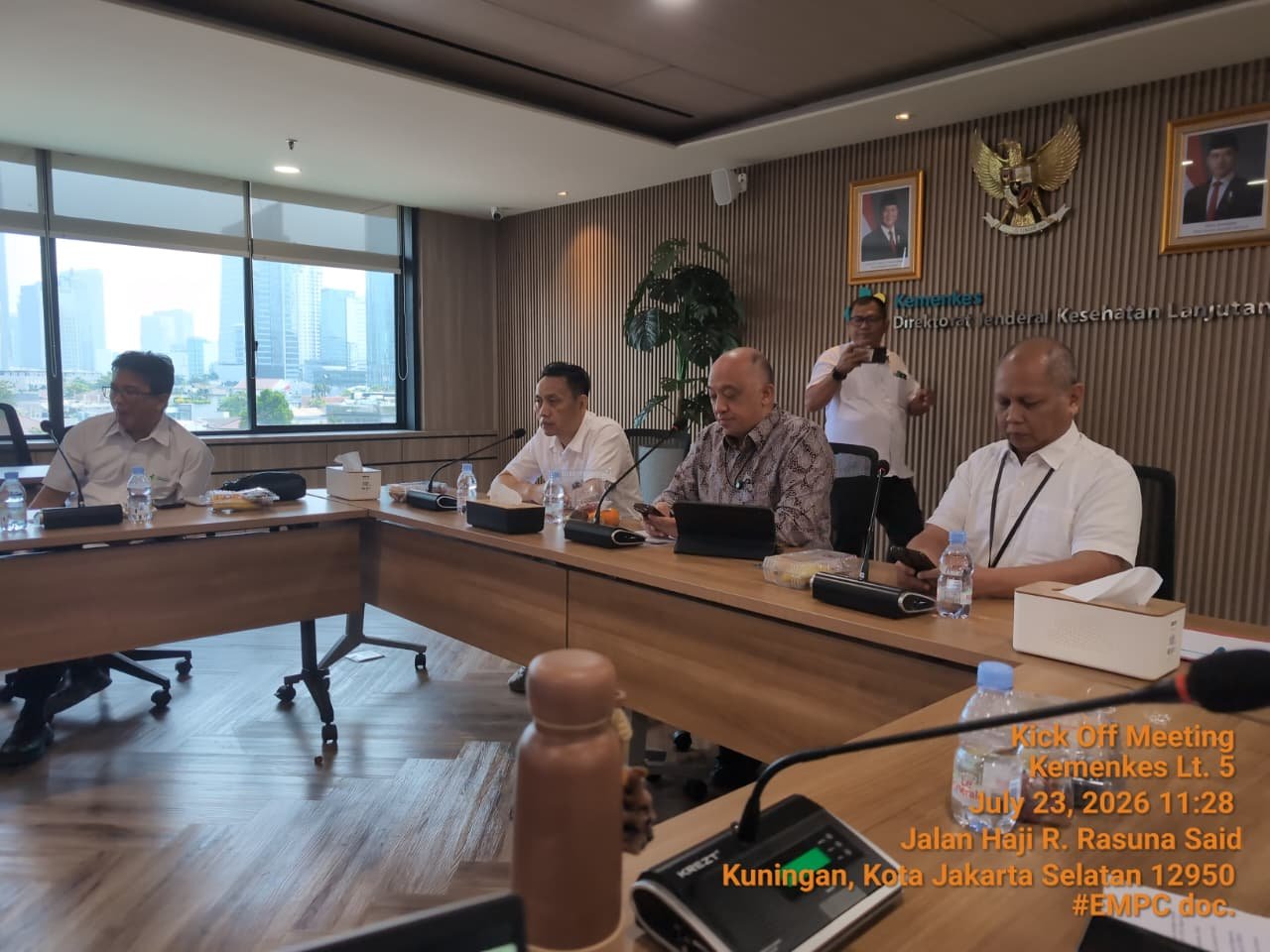
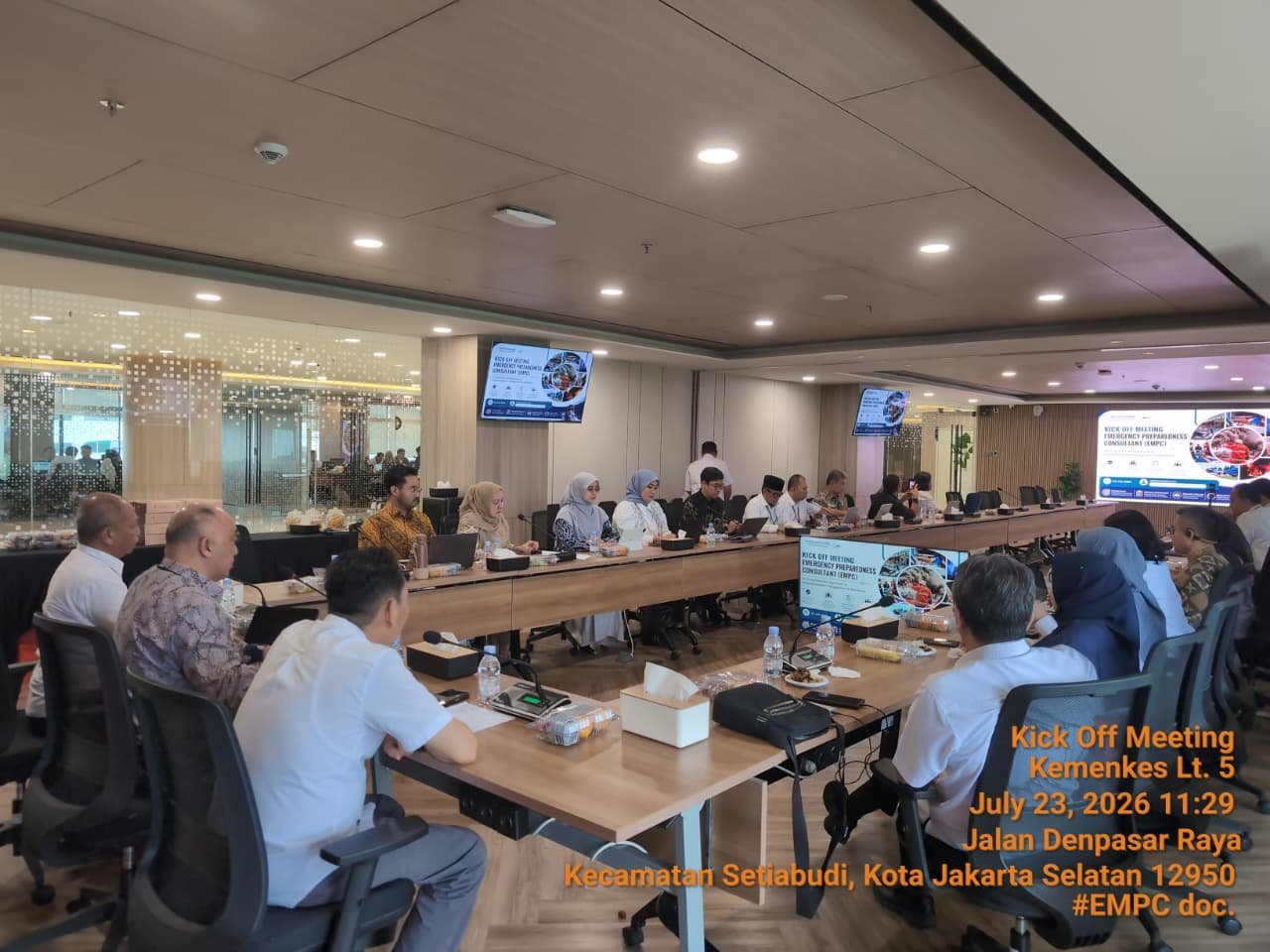
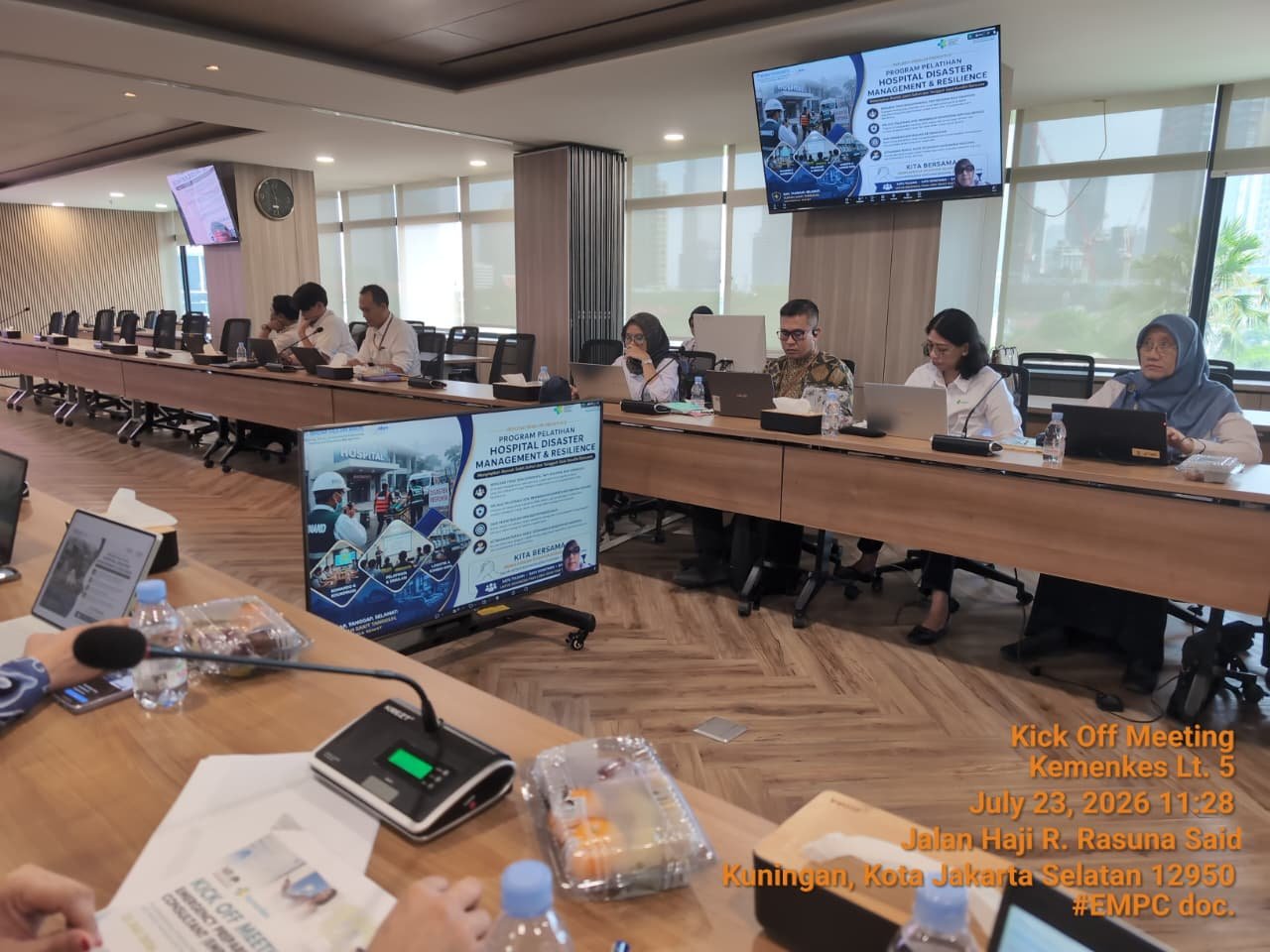
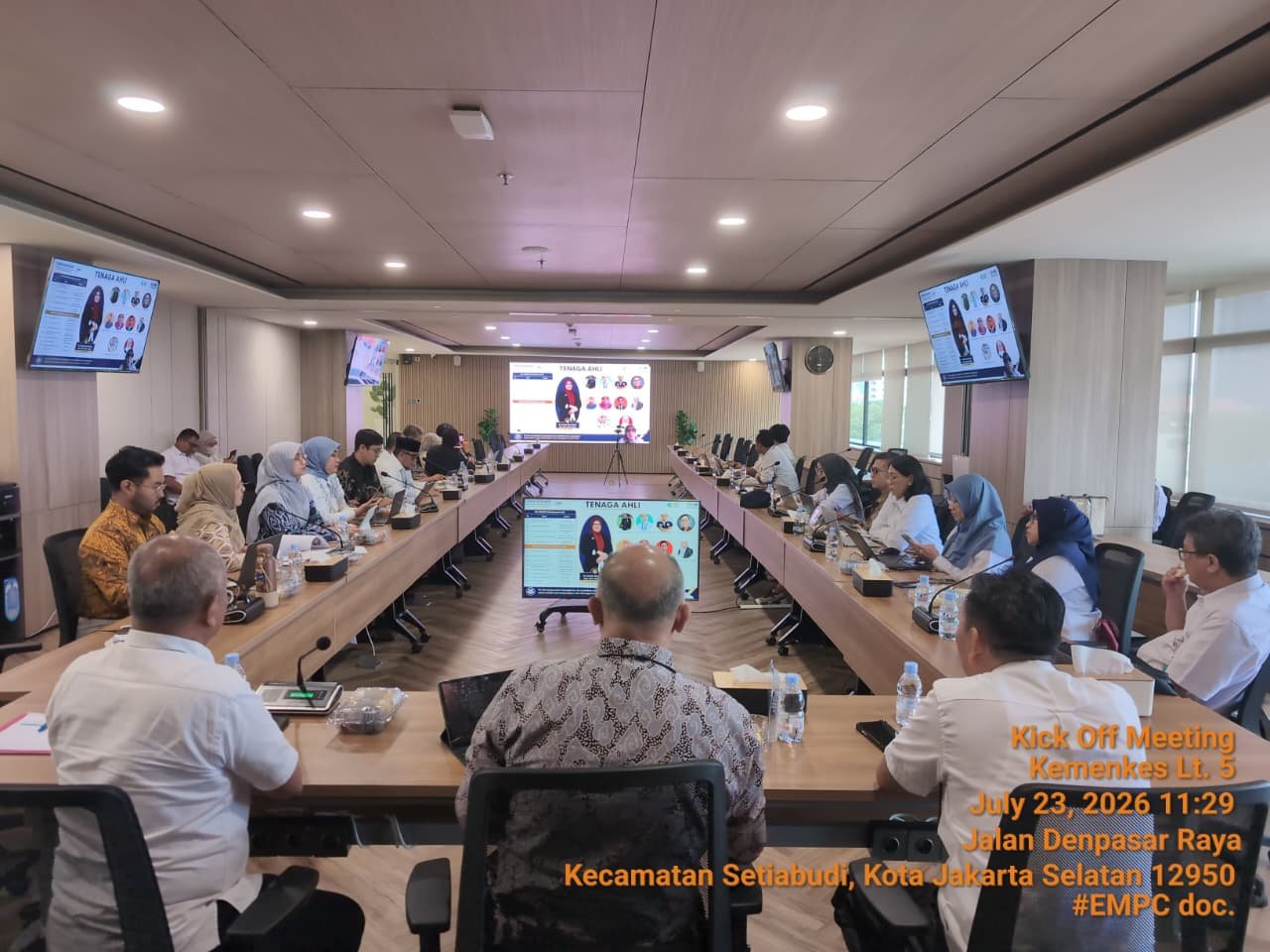
Kick-Off Meeting
Ministry of Health; Advance Health Services, 4th Floor
The Journey
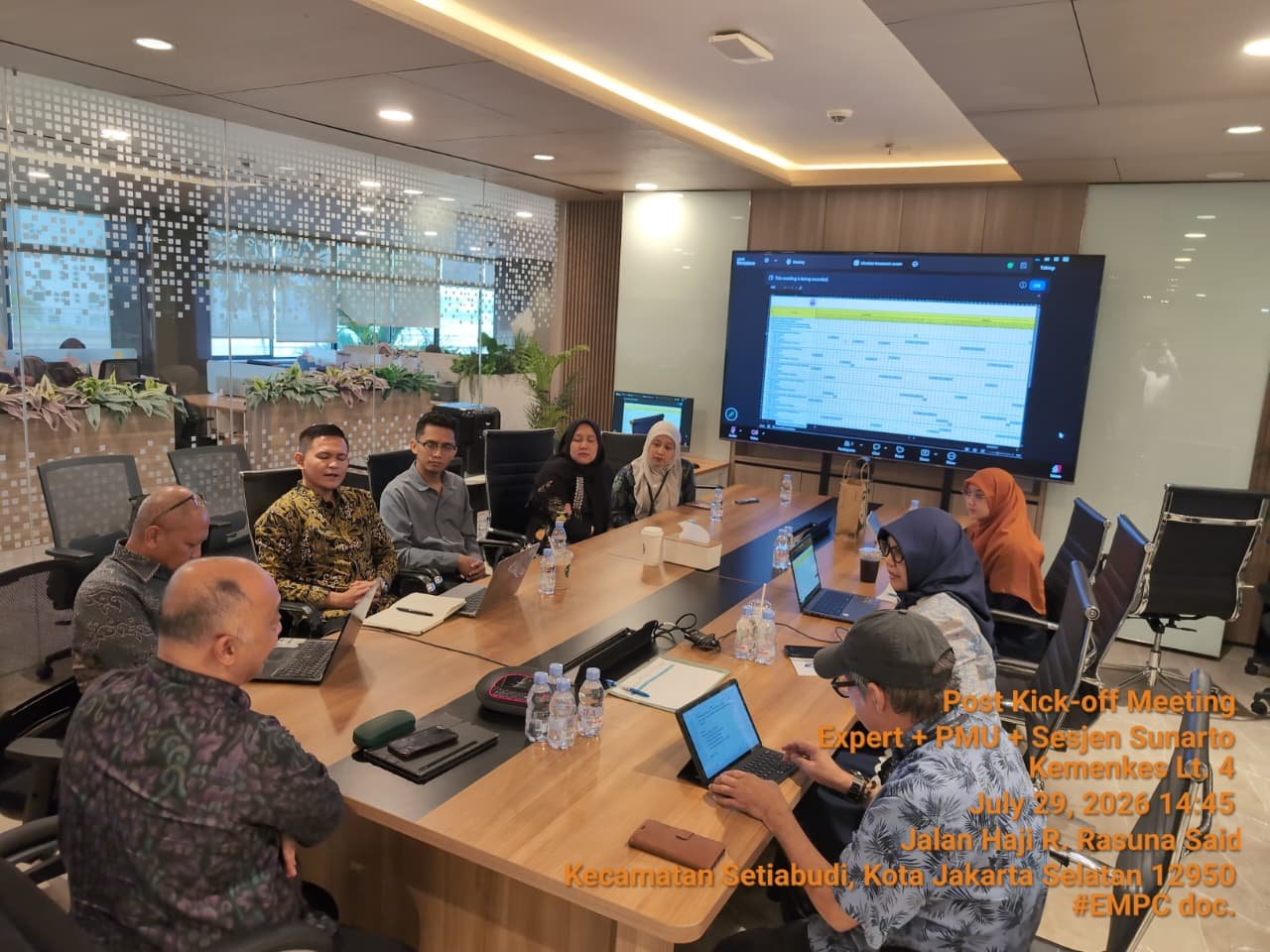
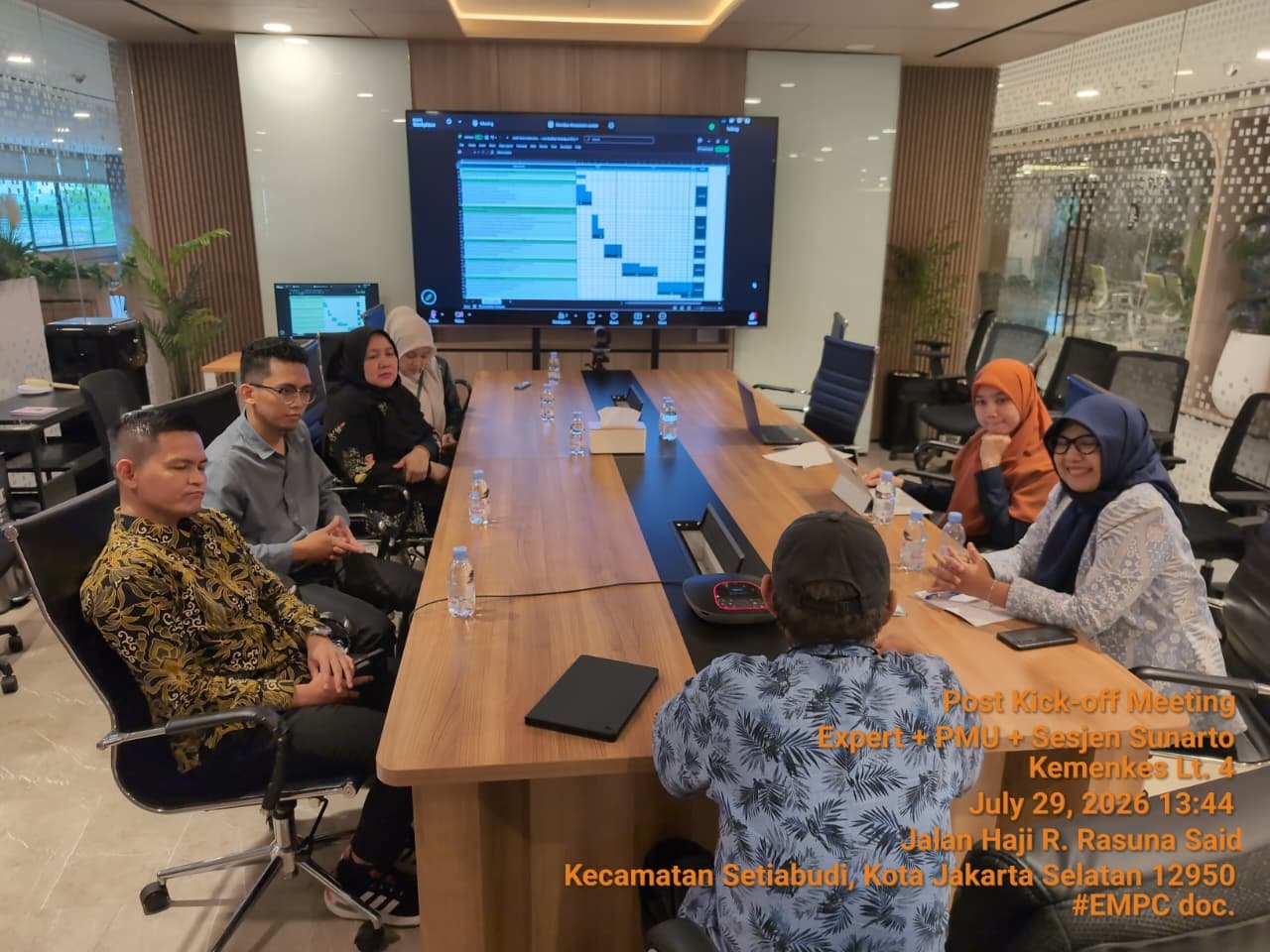
Officially began on this day, as leaders, experts, and healthcare partners from across Indonesia came together for the kick-off meeting of the IsDB Project IDN 1031, Emergency Preparedness and Management Consulting (EMPC).
Meeting Agenda
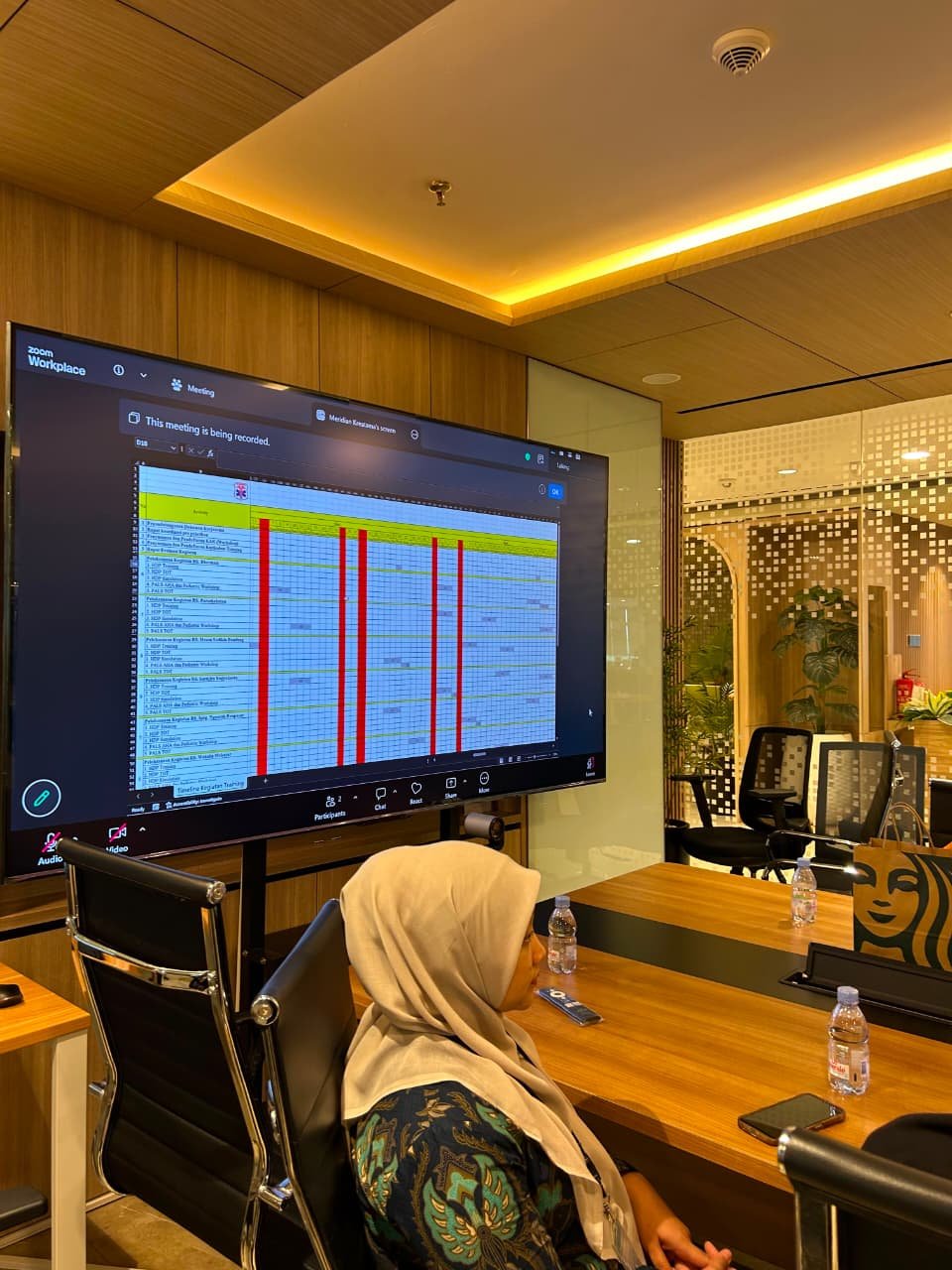
The EMPC team from PT. Meridian Kreatama Mandiri presented their team introduction, methodology, scope of work, deliverables, and implementation schedule to representatives of the six partner hospitals across Indonesia:
- Jakarta: Dharmais Cancer Hospital & Persahabatan General Hospital
- Bandung: Hasan Sadikin General Hospital
- Yogyakarta: Sardjito General Hospital
- Bali: Ngoerah General Hospital
- Makassar: Wahidin Sudirohusodo General Hospital
Who Was in the Room
The meeting brought together over 30 key stakeholders, including leadership from the Ministry of Health’s Directorate General of Advanced Health Services, the Health Crisis Center (PUSKRIS), the Islamic Development Bank (IsDB) Project Management Unit, the EMPC consulting team, and Heads of PIU, PIU Secretariats, and Directors of HR, Education and Research from all six partner hospitals.
Together, they laid the foundation for a shared mission
“One meeting. Six hospitals. One mission: to strengthen Indonesia’s emergency preparedness for years to come”
23 July 2026

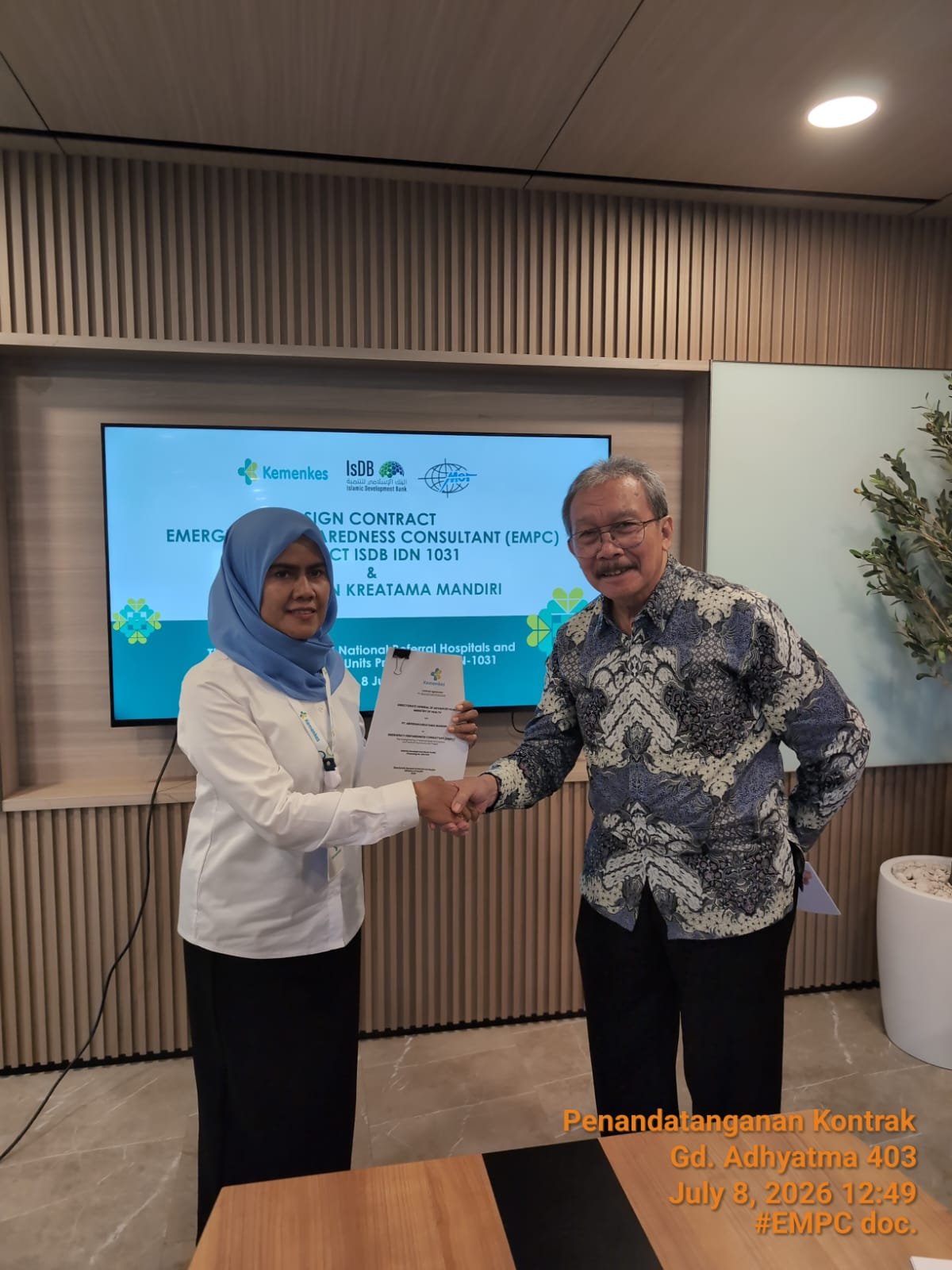
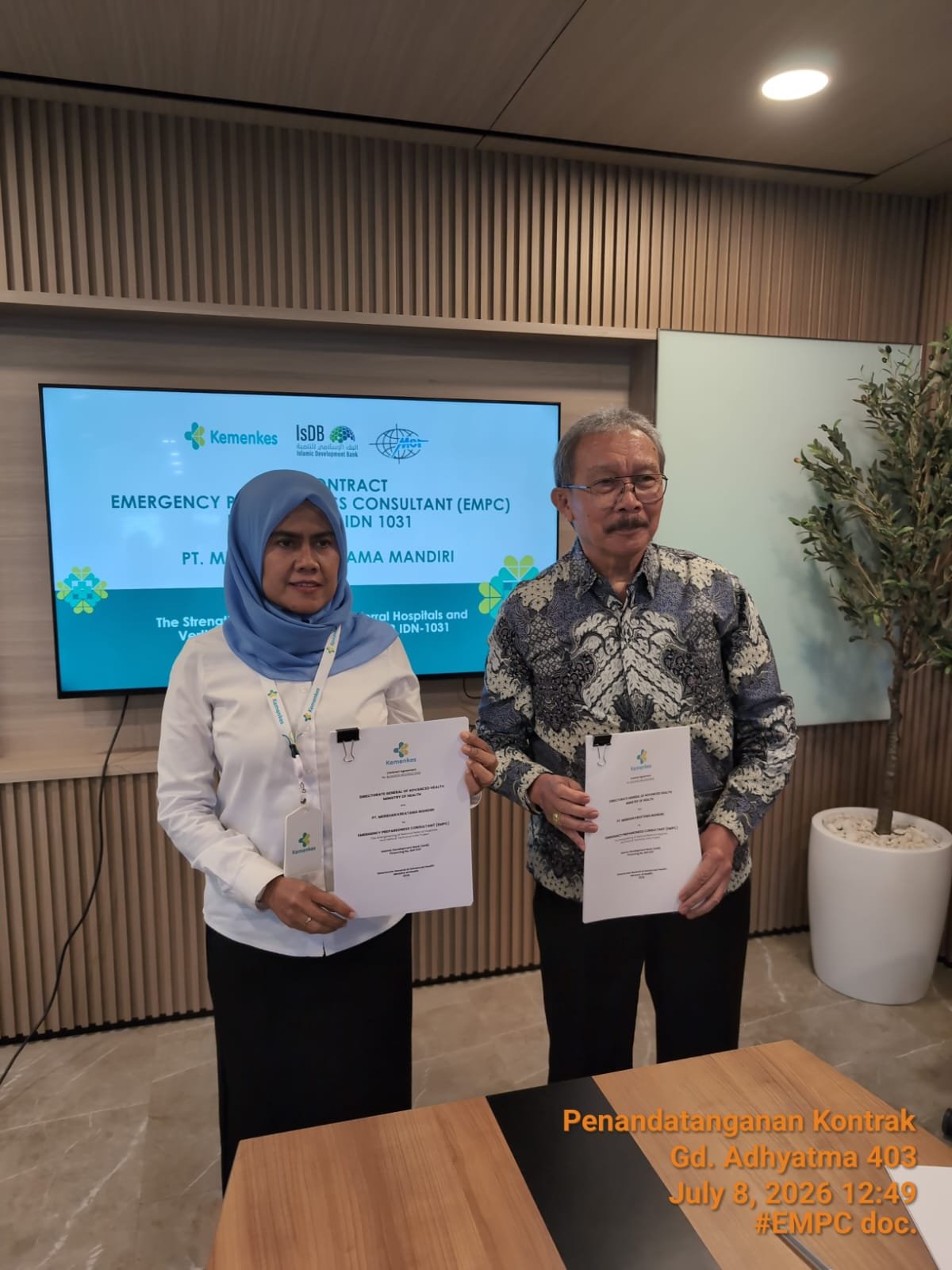
Contract
Signing
Ministry of Health; Advance Health Services, 4th Floor
Where It All Began
It started with a signature. On that day, leaders from across Indonesia’s healthcare ecosystem came together with a shared purpose — to strengthen the nation’s emergency preparedness and advance health services for all.
Present at the signing were:
dr. Sunarto, M.Kes., Executive Director of the Project Management Unit (PMU) under the Directorate General of Advanced Health Services;
Nursiah, S.Sos., MM., MARS, Commitment Making Officer Representative of the Ministry of Health;
Djoko Subagio, PMU Representative of the Islamic Development Bank (IsDB);
Dr. Ir. Anton Leonard SP, MM, President Director of PT Meridian Kreatama Mandiri, the Emergency Preparedness Consulting (EMPC) partner of this project.
Siti Hawa, Project Director Representative of the Emergency Preparedness Consulting (EMPC);
One signature. three leaders. A shared mission that would shape the years to come.
08 July 2026